admin
admin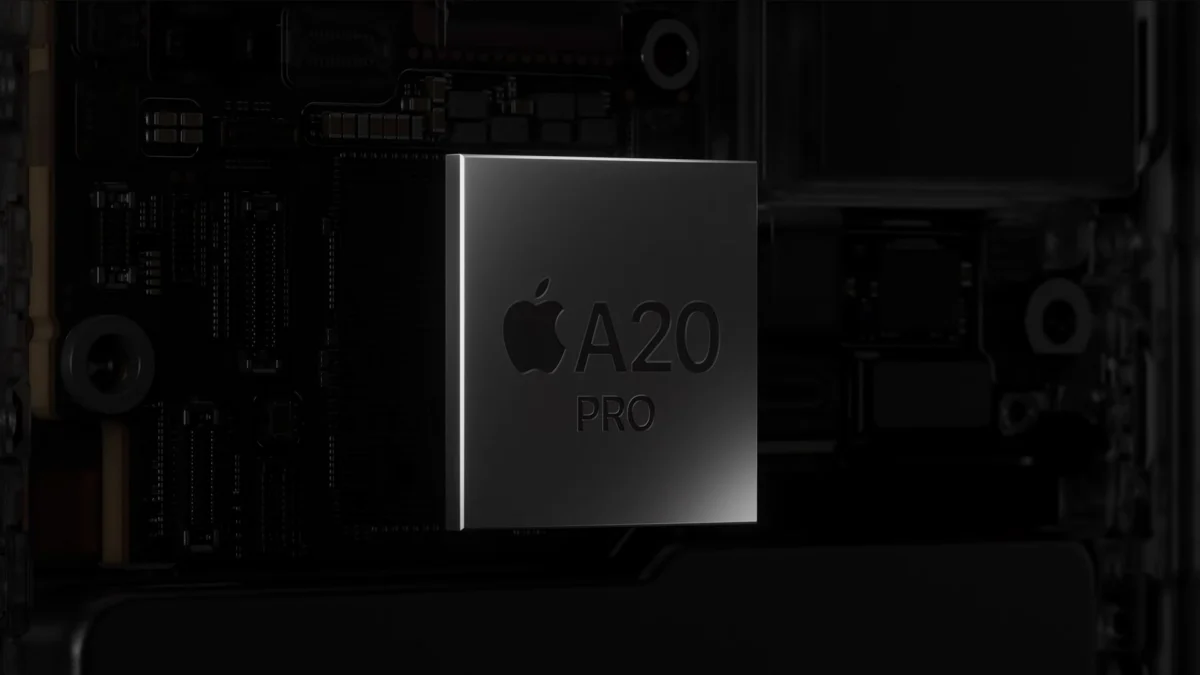
The recent unveiling of Apple’s A20 Pro chipset, manufactured on a pioneering 2nm process, has signaled a paradigm shift in mobile thermal management and semiconductor packaging. While the technology industry has historically relied on extreme cooling methods, such as liquid nitrogen (LN2), to unlock the theoretical maximum performance of high-end silicon, recent benchmarking data indicates that Apple’s latest system-on-chip (SoC) has nearly eliminated the performance delta between standard operation and sub-zero cooling. This development suggests that Apple’s transition to Wafer-Level Multi-Chip Module (WMCM) custom packaging, combined with an overhauled internal thermal architecture, has brought the iPhone’s performance closer to its native silicon potential than any previous generation.
Data compiled from rigorous testing conducted by the hardware analysis channel Geekerwan reveals that the A20 Pro exhibits a remarkably low sensitivity to extreme cooling. In Geekbench 6 environments, the A20 Pro demonstrated less than a 3 percent performance improvement when subjected to liquid nitrogen. This stands in stark contrast to its predecessors and contemporary rivals from Qualcomm and MediaTek, which showed significantly higher performance "headroom" when their thermal limits were artificially removed. The findings underscore a successful engineering effort by Apple to address the long-standing issue of thermal throttling in the compact form factor of a smartphone.
The Architecture of Thermal Efficiency: WMCM and 2nm Integration
The primary catalyst for this performance stability is the move to Wafer-Level Multi-Chip Module (WMCM) packaging. In traditional smartphone SoC designs, including previous iterations of the A-series, Apple utilized a Package-on-Package (PoP) configuration. In a PoP setup, the Dynamic Random Access Memory (DRAM) is stacked directly on top of the processor. While this saves space on the logic board, it creates a "thermal sandwich" effect where the heat generated by the CPU and GPU is trapped beneath the RAM layer. This configuration often leads to rapid heat accumulation, forcing the processor to downclock—or throttle—to prevent hardware damage.
With the A20 Pro, Apple has moved the DRAM to the side of the SoC rather than stacking it vertically. This lateral placement significantly increases the surface area available for heat dissipation from the primary silicon die. By removing the insulating layer of memory from the top of the processor, Apple has allowed the 2nm silicon to make more direct contact with the device’s integrated cooling solutions. Furthermore, the A20 Pro is the first mobile chip to leverage TSMC’s 2nm process node, which utilizes Gate-All-Around (GAA) nanosheet transistors. This architecture inherently offers better electrostatic control and lower power leakage compared to the FinFET designs used in 3nm and 5nm nodes, resulting in a chip that runs cooler at higher clock speeds.
Comparative Benchmarking: Liquid Nitrogen Results
To quantify the efficacy of Apple’s new thermal strategy, Geekerwan compared the A20 Pro against the A19 Pro, the Snapdragon 8 Elite Gen 5, and the Dimensity 9500. The experiment involved running Geekbench 6 at standard room temperature and then repeating the process while the devices were submerged in or exposed to liquid nitrogen to eliminate any possibility of thermal throttling.

The results for the A20 Pro were unprecedented in the mobile sector:
- Single-Core Performance: The A20 Pro saw a marginal increase of only 0.76 percent under liquid nitrogen.
- Multi-Core Performance: The multi-threaded uplift was recorded at 2.49 percent.
These figures indicate that the A20 Pro is capable of maintaining its peak theoretical performance under standard conditions. In contrast, the previous generation A19 Pro, which utilized older packaging techniques, saw a 5.77 percent increase in single-core scores and a 10.06 percent jump in multi-core results when cooled with LN2. This suggests that the A19 Pro was losing approximately 10 percent of its potential power to heat-induced throttling during intensive tasks—a bottleneck the A20 Pro has largely resolved.
The performance gap was even more pronounced among Apple’s primary competitors. The Snapdragon 8 Elite Gen 5, despite its high raw performance, saw a 12.62 percent improvement in multi-threaded workloads under LN2. The MediaTek Dimensity 9500 showed the highest sensitivity to cooling, with a 9.14 percent increase in single-core performance and a 12.66 percent increase in multi-core results. These figures suggest that while the Android flagship SoCs are exceptionally powerful, they remain more constrained by the thermal limitations of their respective hardware environments than the A20 Pro.
Chronology of Apple’s Thermal Evolution
The journey to the A20 Pro’s thermal efficiency was prompted by significant challenges faced during the 2023-2024 product cycle.
- Late 2023: Following the launch of the iPhone 15 Pro and the A17 Pro (the first 3nm chip), users reported significant overheating issues during basic tasks and intensive gaming. This was attributed to the transition to a titanium frame, which has lower thermal conductivity than stainless steel, and the limitations of the PoP packaging.
- Early 2024: Apple released software updates to tune the thermal envelope of the A17 Pro, but hardware analysts noted that the chip was still heavily reliant on aggressive throttling.
- Late 2024: With the A19 Pro, Apple began experimenting with improved graphite sheets and internal heat spreaders, but the core packaging architecture remained a limitation.
- 2025-2026 Development Cycle: Apple R&D focused on the "Silicon-First" thermal approach. This led to the adoption of WMCM for the A20 Pro and the integration of a significantly larger vapor chamber within the iPhone chassis.
- September 2026: The A20 Pro is released, showcasing the first 2nm SoC that effectively matches its liquid-nitrogen performance benchmarks in a consumer-ready form factor.
Technical Analysis of Sustained Performance
The implications of these test results extend beyond benchmark scores. In the context of mobile gaming and professional video editing, "sustained performance" is a more critical metric than "peak performance." Most mobile chips can hit high speeds for the first few minutes of a task but eventually slow down as heat builds up.
By achieving a less than 3 percent variance between ambient and liquid nitrogen cooling, Apple has essentially guaranteed that the A20 Pro can maintain its maximum clock speeds for extended durations. This is particularly vital for the growing market of "AAA" mobile gaming, where titles like Resident Evil and Assassin’s Creed require consistent GPU throughput. The larger vapor chamber serves as a secondary defense, ensuring that the heat moved away from the WMCM-packaged chip is efficiently dissipated through the device’s frame.

Industry analysts suggest that Apple’s decision to move the DRAM to the side of the SoC also facilitates faster data transfer rates between the memory and the processor cores. This reduced latency, combined with the thermal benefits, creates a compounding effect on performance that benchmarks like Geekbench 6—which are relatively short "burst" tests—may not even fully capture.
Broader Industry Impact and Future Implications
Apple’s success with 2nm WMCM packaging is expected to force a response from the broader semiconductor industry. For years, the mobile industry has focused on "peak" numbers to drive marketing, often ignoring the fact that those numbers drop significantly after five minutes of use. Apple’s shift toward "native potential" performance sets a new standard for transparency in mobile computing.
The 2nm process node itself is a major milestone. As the lead customer for TSMC’s 2nm capacity, Apple has secured a multi-year advantage in transistor density. However, the Geekerwan tests prove that the process node is only half of the story. The packaging technology is what allows that 2nm efficiency to actually reach the end-user.
We can expect Qualcomm and MediaTek to explore similar multi-chip module (MCM) or side-by-side memory configurations in their upcoming 2nm designs. However, Apple’s vertical integration—designing the chip, the packaging, the thermal hardware, and the operating system—gives it a unique ability to tune these variables in unison.
Furthermore, this level of thermal headroom is a prerequisite for the next generation of on-device Artificial Intelligence (AI). Generative AI models are notoriously "compute-heavy" and generate significant heat. A chip that is already running at its thermal limit would struggle to process complex AI queries without significant delays. The A20 Pro’s thermal stability ensures that Apple’s "Apple Intelligence" suite can operate at peak speed without the device becoming uncomfortably hot to the touch.
Conclusion
The A20 Pro represents a milestone where hardware engineering has finally caught up to silicon potential. By utilizing 2nm technology and WMCM packaging, Apple has created a processor that is essentially "unthrottled" in its natural environment. While liquid nitrogen will always be the gold standard for extreme overclocking, its diminishing returns on the A20 Pro serve as a testament to the sophistication of modern mobile engineering. For the consumer, this translates to a device that does not just start fast, but stays fast, regardless of the workload. As the industry moves further into the 2nm era, the focus will likely shift from how many transistors can fit on a die to how effectively those transistors can be cooled in the palm of a hand.