Evan Lee Salim
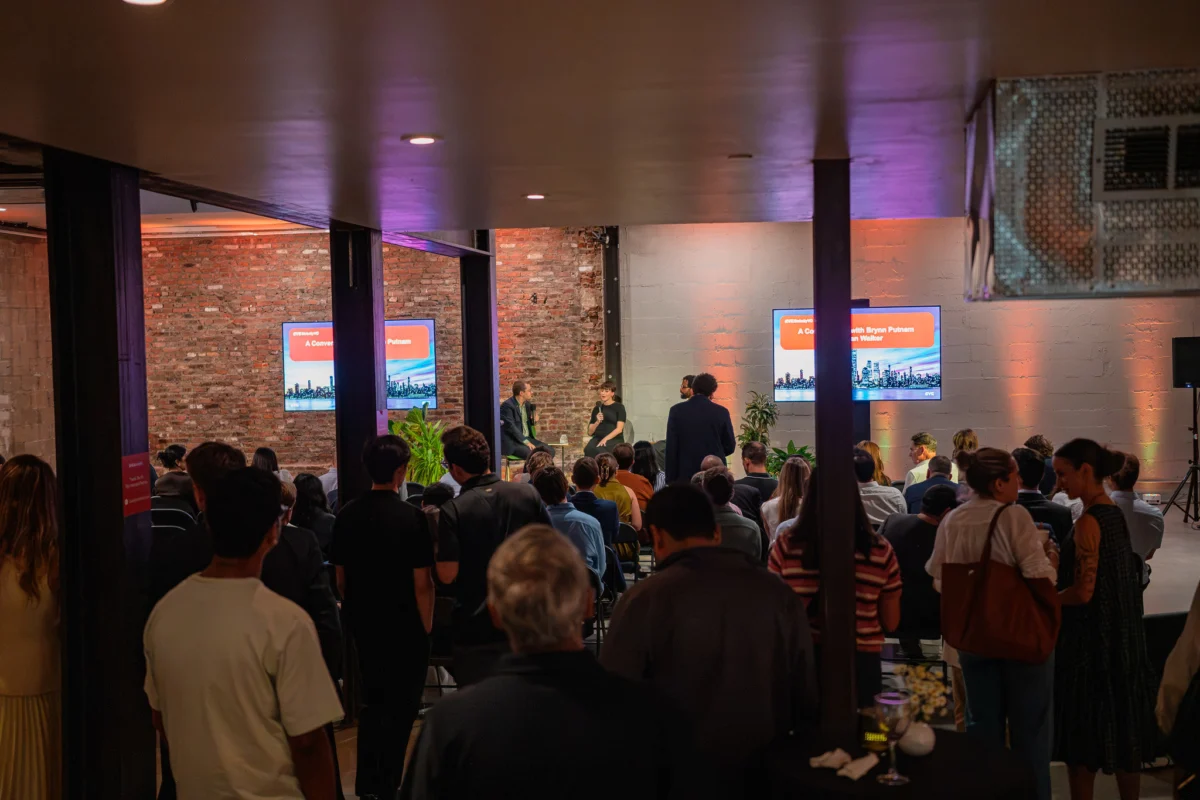
The All In conference, a prominent gathering for innovators and investors in the burgeoning artificial intelligence sector, recently hosted a panel that inadvertently peeled back a layer of the AI world’s most mysterious corner: "world models." Moderated by industry analyst Russell Brandom, the discussion highlighted a fascinating paradox: immense funding and intellectual buzz surrounding technologies with profoundly unclear commercialization pathways. At the forefront of this enigmatic domain are ventures led by AI luminaries like Yann LeCun’s AMI Labs and Fei-Fei Li’s World Labs, both of which have garnered significant attention and capital, yet notably lag on what some wryly refer to as "the trying-to-make-money scale."
Understanding World Models: The Quest for Spatial Intelligence
At their conceptual core, world models represent a paradigm shift in AI’s pursuit of intelligence. Moving beyond processing abstract data or language, these models aim to automate and master "spatial intelligence." This involves creating comprehensive, navigable digital representations of the physical world – or even hypothetical worlds – allowing AI systems to understand, predict, and interact with their environments in a profoundly more intuitive and robust manner. Imagine an AI that doesn’t just recognize objects in an image but understands their physical properties, their relationships in three-dimensional space, and how they would behave under different forces or actions. This capability is seen as a foundational step towards truly autonomous and intelligent systems, mimicking how humans build internal models of their surroundings to navigate and make decisions.
The field draws inspiration from cognitive science, where the brain is thought to continuously build and update internal "world models" to anticipate sensory input and plan actions. For AI, this translates into building systems that can learn the physics, geometry, and semantics of an environment, enabling predictive capabilities that are orders of magnitude more sophisticated than current reactive AI systems. This ambition fuels projections for world models to unlock transformative applications across numerous sectors, from hyper-realistic interactive video games and advanced CGI effects to more nuanced robotic manipulation, complex self-driving systems that can anticipate unseen scenarios, and even virtual training environments for intricate medical procedures.
The Titans of Tomorrow: AMI Labs and World Labs
The two entities most frequently cited as leaders in this nascent field are AMI Labs, co-founded by AI pioneer Yann LeCun, and Fei-Fei Li’s World Labs. Yann LeCun, widely recognized for his foundational work in convolutional neural networks, brings decades of deep learning expertise and a visionary approach to AMI Labs. His involvement signals a serious commitment to pushing the boundaries of AI capabilities. Similarly, Fei-Fei Li, a leading voice in computer vision and human-centered AI, lends her considerable academic and industrial gravitas to World Labs. Both labs operate with significant venture capital backing, reflecting investor confidence in the long-term potential of their research. Industry reports suggest AMI Labs, despite being less than a year old, has already secured an initial funding round exceeding $150 million, while World Labs, with its slightly more established presence, is estimated to have raised upwards of $300 million across multiple rounds. These figures underscore the high stakes and the belief that these ventures are cultivating the next generation of AI.
However, despite this substantial financial and intellectual investment, tangible commercial products remain elusive. This stark contrast led to the observation at the All In conference regarding their low ranking on the "trying-to-make-money scale." Unlike many other AI startups that quickly pivot to monetizable SaaS solutions or specialized applications, these world model pioneers appear to be in a deep, foundational research phase, prioritizing capability development over immediate revenue generation.
A Veil of Silence: Commercialization Challenges and Strategic Secrecy
The question of when and how world model technology would transition from research to commercial application proved particularly challenging during the All In panel. Michael Rabbat, a co-founder of AMI Labs and its VP of World Models, epitomized the industry’s guarded stance. When pressed on specific product plans, Rabbat offered a succinct, "We’ll talk about it when we’re ready to talk about it." He later elaborated via email, clarifying, "We’re still in a research and building phase, so we’re not talking publicly about any product plans or timeline."
This caginess, while understandable for a company as young as AMI Labs (founded in late 2025), is not an isolated incident. It permeates the entire world-modeling space. World Labs’ "Marble" platform, arguably the most developed offering in the sector, primarily serves as a demonstration of capabilities rather than a clear commercial product. Demos showcase its ability to generate explorable environments for video games, create complex CGI effects, and even simulate robotics use cases. While impressive, these demonstrations often lack the specific market focus that typically accompanies imminent commercial launches. The industry seems to be collectively holding its breath, developing foundational technologies behind a curtain of strategic silence.
Ecosystem Under Wraps: The Supplier’s Dilemma
The ripple effect of this pervasive secrecy extends far beyond the core development labs, impacting even their vital suppliers. Alex de Vigan, CEO of Physicl, a company specializing in data provision for the burgeoning world model business, shared his frustrations on the sidelines of the All In conference. "I wish they would tell us more," de Vigan confided. "We could build more useful data if we knew what they were working on."
Physicl’s role involves supplying vast datasets – ranging from real-world sensor data to synthetically generated environmental information – that are crucial for training and validating these complex world models. Without specific insights into the precise applications or target environments their clients are building, Physicl operates largely in the dark, relying on generalized requirements. This dynamic highlights a unique challenge in this sector: the very secrecy intended to protect competitive advantage inadvertently hinders potential synergies within the supply chain, potentially slowing down overall progress. It suggests a future where deeper, trust-based collaborations might be necessary to optimize development, but only once the competitive landscape is more clearly defined.
The Multifaceted Promise: Diverse Applications and Unfocused Potential
Part of the mystery surrounding world models stems from their inherent versatility. The concept is remarkably broad, encompassing a spectrum of applications. At its simplest, a world model can be a highly sophisticated, navigable digital map of an environment, akin to the advanced AI models underpinning self-driving cars. For instance, the same core modeling approach that enables a Waymo vehicle to navigate dense urban traffic with predictive safety could be adapted to allow a humanoid robot to meticulously organize warehouse inventory or perform delicate surgical procedures. The technology could transform minutes of video footage into an interactive, explorable virtual environment, revolutionizing media creation, education, and entertainment.
AMI Labs, in particular, has hinted at an incredibly diverse portfolio of interests, dipping its toes into manufacturing, biomedicine, advanced robotics, and even AI software for medical diagnostics through its Nabia partnership. This wide-ranging exploration, while demonstrating the technology’s expansive potential, also contributes to the lack of a singular, identifiable commercial focus. While it’s unlikely AMI will pursue all these avenues simultaneously, the current strategy suggests an ongoing exploration of which "killer app" will emerge as the most promising. This broad approach is a double-edged sword: it allows for thorough exploration of the technology’s capabilities but delays the focused development needed for rapid market penetration.
Funding Fueling the Mystery: The AI Investment Boom
The current climate of abundant venture capital for AI startups plays a significant role in enabling this prolonged period of research and development without immediate pressure to commercialize. In 2023 and 2024, global AI investments soared, with venture funding reaching unprecedented levels, estimated to be well over $100 billion annually. This flood of capital allows companies like AMI Labs and World Labs to operate with considerable financial runway, affording them the luxury of patience.
As long as fundraising remains relatively easy and investors are willing to back long-term, high-risk, high-reward ventures, there is little immediate pressure for these labs to narrow their focus to a single, revenue-generating product. In fact, there’s a compelling strategic argument against doing so prematurely. Publicly declaring a specific commercial application – for example, announcing the development of a humanoid "OpenClaw" robot that could revolutionize logistics, or a next-generation Hollywood rendering system that sets new standards for visual effects – would immediately draw intense scrutiny and competition.
The "Dark Forest" Strategy: Navigating a Competitive Landscape
This strategic silence can be best understood through the lens of what fans of Cixin Liu’s science fiction novel, The Dark Forest, would recognize as a "dark forest hypothesis." In this theory, advanced civilizations in the universe remain silent to avoid attracting the attention of other potentially hostile civilizations. Applied to the cutthroat world of AI development, if a lab doesn’t know who else is "in the woods" – meaning, which other highly capable and well-funded entities are working on similar world model breakthroughs – it’s often best not to attract attention by revealing your own advanced capabilities or specific market intentions.
The moment a breakthrough application is announced, a cascade of events is likely to follow. Competitors, including other world model companies, newly formed "neolabs," and even established giants like OpenAI and Anthropic (who possess immense resources and a track record of rapid innovation), would suddenly become intensely interested. The very same easy fundraising environment that allows the pioneering labs to develop under the radar also empowers these potential rivals to quickly mobilize resources, acquire talent, and pivot their own research to target the newly identified market opportunity.
While competition is ultimately inevitable in a field with such vast potential, delaying its onset for as long as possible is a sound strategic move. This necessitates maintaining a high degree of secrecy about specific product plans and timelines, allowing the lead developers to consolidate their technological advantage and build a more robust, defensible position before exposing themselves to the market’s full glare. This "dark forest" strategy is a calculated risk, betting that the benefits of prolonged, stealth development outweigh the costs of delayed commercialization.
Implications for the Future of AI
The secretive development of AI world models presents profound implications for the future of artificial intelligence and the industries it is poised to transform. For investors, it signifies a need for extreme patience and a deep understanding of foundational research cycles, distinct from the faster-paced monetization strategies seen in other AI subfields. The current funding spree suggests a widespread acceptance of this long game, but sustained investor confidence will eventually demand tangible progress.
For developers and researchers, it fosters an intensely competitive environment where stealth and proprietary advancements are paramount. It also underscores the importance of interdisciplinary collaboration, even if veiled, as the complexity of world models requires expertise spanning computer vision, robotics, natural language processing, and physics simulation.
For end-users and the broader public, this period of secrecy means a potentially transformative technology is being forged behind closed doors. When world models finally emerge into the commercial sphere, they are likely to do so with disruptive force, reshaping industries from logistics and healthcare to entertainment and urban planning. The implications for spatial computing, augmented reality, and truly autonomous systems are immense, promising a future where AI can interact with and understand our physical world with unprecedented fidelity.
In essence, the world of AI world models is a testament to the high-stakes innovation defining the current AI era. It is a landscape defined by brilliant minds, vast capital, and a strategic silence that hints at revolutionary breakthroughs just beyond our immediate sight. The paradox of immense potential shrouded in secrecy will likely persist until a truly market-ready application is robust enough to withstand the inevitable onslaught of competition, illuminating a path through the "dark forest" of AI development.