admin
admin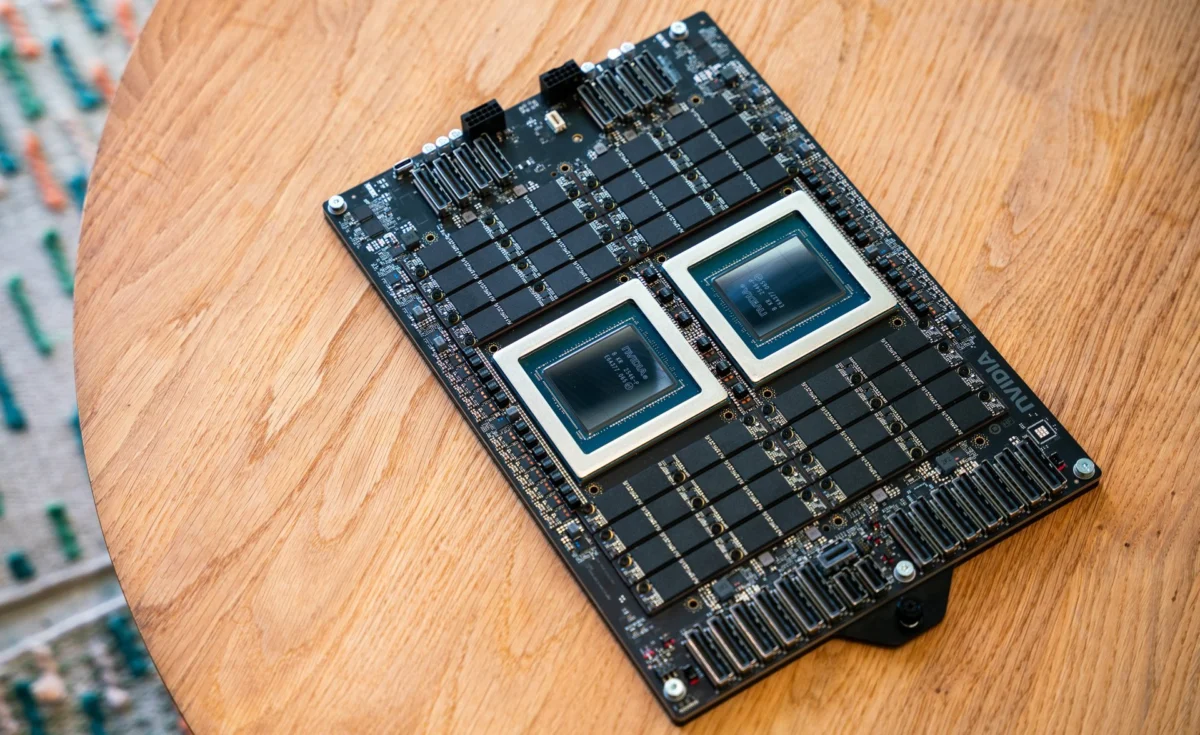
DuckDB recently published comprehensive performance data following early access testing of NVIDIA’s next-generation Vera CPU, demonstrating that the Arm-based processor holds a significant lead over Intel’s x86-based Xeon 6 architecture in traditional database workloads. The evaluation utilized the TPC-H benchmark, a gold standard for decision-support systems, to determine how the 88-core Vera chip compares against a 96-core Intel Xeon 6 processor. The results indicate that NVIDIA’s silicon is not merely an accelerator for artificial intelligence but a formidable contender in the broader enterprise and High-Performance Computing (HPC) markets.
According to the data released by DuckDB on September 15, 2026, the NVIDIA Vera CPU achieved a performance throughput approximately 1.5 times faster than the x86 baseline. This comparison is particularly noteworthy because it shifts the focus away from Large Language Models (LLMs) and generative AI—where NVIDIA already maintains market dominance—toward the fundamental data processing tasks that power global logistics, financial services, and retail analytics.
The TPC-H Benchmark: A Rigorous Standard for Enterprise Data
To understand the significance of these results, it is essential to define the parameters of the TPC-H benchmark. Maintained by the Transaction Processing Performance Council (TPC), the TPC-H is a decision-support benchmark consisting of a suite of business-oriented ad-hoc queries and concurrent data modifications. Unlike simple synthetic tests, these queries are designed to simulate complex business questions, such as identifying supply chain bottlenecks or analyzing customer buying patterns across massive datasets.
The primary metric reported is the TPC-H Composite Query-per-Hour Performance Metric (QphH@Size). This score reflects the system’s ability to process queries in a single stream as well as its throughput when multiple concurrent users submit requests. By excelling in this specific suite, the NVIDIA Vera CPU proves its utility in handling large volumes of data with a high degree of query complexity, which is the backbone of decision-support systems used by Fortune 500 companies.
Experimental Setup and Hardware Specifications
The testing environment was meticulously standardized to ensure an objective comparison between the two architectures. Both systems utilized identical storage and operating system configurations to isolate the performance of the processors and their respective memory subsystems.
The Intel baseline featured a 96-core Xeon 6 processor equipped with Hyper-Threading technology. The system was supported by 768 GB of system memory and a high-speed NVMe SSD with a capacity exceeding 3 TB. The software environment was powered by Ubuntu 26.04.
In contrast, the NVIDIA Vera platform utilized an 88-core configuration. Despite having eight fewer physical cores than its Intel rival, the Vera CPU employs a proprietary Spatial Multi-Threading (SMT) architecture designed to optimize resource allocation across the silicon. The NVIDIA system was paired with 768 GB of LPDDR5x memory, which typically offers higher bandwidth and lower power consumption compared to standard server-grade DDR5. Like the Intel setup, it utilized a 3 TB+ NVMe SSD and Ubuntu 26.04.

The tests were performed using two versions of the DuckDB database engine: the stable v1.5.5 release and the experimental v2.0.0-Alpha release. DuckDB is an in-process SQL OLAP (Online Analytical Processing) database management system designed for fast analytical queries.
Detailed Benchmark Results and Statistical Analysis
The researchers conducted multiple runs to ensure data consistency, excluding the initial "warm-up" run to account for caching effects. The following table illustrates the median scores achieved across three subsequent runs, measured in QphH (Queries per Hour):
| Hardware / Software | Setup 1 (Intel + v1.5.5) | Setup 2 (Intel + v2.0.0-α) | Setup 3 (Vera + v1.5.5) | Setup 4 (Vera + v2.0.0-α) |
|---|---|---|---|---|
| CPU | Intel Xeon 6 (96-C) | Intel Xeon 6 (96-C) | NVIDIA Vera (88-C) | NVIDIA Vera (88-C) |
| Run 1 | 1,643,610.87 | 2,120,588.82 | 2,488,209.48 | 3,073,292.99 |
| Run 2 | 1,700,471.78 | 2,022,795.01 | 2,389,726.36 | 3,131,306.27 |
| Run 3 | 1,673,422.48 | 2,109,782.19 | 2,482,589.73 | 3,052,102.87 |
| Median Score | 1,673,422.48 | 2,109,782.19 | 2,482,589.73 | 3,073,292.99 |
The data reveals that using the DuckDB v1.5.5 release, the 88-core NVIDIA Vera outperformed the 96-core Intel Xeon 6 by approximately 48.3%. When both systems were upgraded to the v2.0.0-Alpha version of DuckDB, the performance gap remained consistent, with Vera delivering a 45.6% advantage over the Intel baseline.
Interestingly, the software optimization in the DuckDB v2.0.0-Alpha release provided a significant "rising tide" for both architectures, increasing performance by roughly 25-26% across the board. However, even with these software improvements, the Intel Xeon 6’s optimized score (2.11M) could not match the performance of the NVIDIA Vera running the older software version (2.48M).
Technical Analysis: Spatial Multi-Threading vs. Hyper-Threading
A key takeaway from this showdown is NVIDIA’s efficiency per core. The Vera CPU achieved higher throughput despite having a lower core count (88 vs. 96). Analysts attribute this to several architectural advantages inherent in the Vera design, which is part of NVIDIA’s broader "Rubin" platform roadmap.
The use of Spatial Multi-Threading (SMT) appears to be a decisive factor. While Intel’s Hyper-Threading allows two threads to share the resources of a single physical core to improve utilization, NVIDIA’s Spatial Multi-Threading approach is designed to better manage the data-heavy demands of modern analytics. By prioritizing data locality and minimizing the latency associated with memory access, Vera can keep its execution units fed more consistently than traditional x86 designs.
Furthermore, the integration of LPDDR5x memory is a critical differentiator. In database workloads, performance is often "memory-bound," meaning the CPU is frequently waiting for data to be retrieved from RAM. The high-bandwidth nature of LPDDR5x, which is soldered close to the CPU in NVIDIA’s Grace and Vera architectures, significantly reduces these bottlenecks compared to the traditional DIMM-based memory slots found in most Xeon servers.
Chronology of NVIDIA’s CPU Evolution
The emergence of the Vera CPU marks a significant milestone in NVIDIA’s multi-year strategy to become a full-stack data center provider.

- The Grace Era (2021-2023): NVIDIA introduced the Grace CPU Superchip, its first high-performance ARM-based processor designed specifically for the data center. Grace was often paired with the Hopper GPU (H100) to create the GH200 Grace Hopper Superchip.
- Blackwell Integration (2024-2025): NVIDIA refined its CPU offerings to complement the Blackwell GPU architecture, focusing on energy efficiency and massive memory coherence via NVLink.
- The Vera Disclosure (2025-2026): As part of the "Rubin" architecture announcement, NVIDIA signaled that its next generation of CPUs, codenamed Vera, would move beyond being a "companion" to GPUs and instead serve as a standalone powerhouse for general-purpose computing.
- Early Access Benchmarking (September 2026): The DuckDB results represent the first independent verification that Vera can outperform flagship x86 hardware in non-AI, industry-standard benchmarks.
Market Implications and the x86 vs. ARM Conflict
The TPC-H results pose a direct challenge to the long-standing dominance of Intel and AMD in the server market. Historically, ARM-based processors were viewed as energy-efficient alternatives that lacked the "raw power" of x86 for complex enterprise queries. NVIDIA’s Vera has effectively dismantled this narrative.
For enterprise customers, the 48% performance advantage translates into tangible business benefits. A server cluster powered by Vera could theoretically process the same volume of data as an Intel-based cluster using roughly two-thirds of the hardware. This leads to lower capital expenditure (CapEx) and reduced operational costs (OpEx) through lower power consumption and cooling requirements.
Industry analysts suggest that Intel and AMD will need to accelerate their own architectural shifts to remain competitive. While Intel’s Xeon 6 (Sierra Forest and Granite Rapids) represents a major leap forward for the company, the DuckDB benchmarks suggest that the performance ceiling for ARM-based silicon is rising faster than anticipated.
Official Responses and Industry Outlook
While Intel has not issued a formal rebuttal to the DuckDB findings, sources within the company point toward the Xeon 6’s broad software compatibility and established ecosystem as key advantages that benchmarks alone do not capture. The x86 instruction set architecture (ISA) remains the standard for legacy enterprise applications, many of which may not yet be optimized for ARM.
Conversely, the DuckDB team’s successful implementation on Vera suggests that the "software gap" is closing rapidly. Because DuckDB is written in highly portable C++, it can leverage the strengths of new architectures with minimal friction.
"Our experiments have two key findings," the DuckDB team stated in their summary. "First, Vera outperforms the x86 baseline by ~1.5x… Vera is a very performant chip for analytics and decision-support databases."
As NVIDIA continues to roll out the Vera CPU to more partners, the industry expects further benchmarks involving other major database engines like PostgreSQL, ClickHouse, and Snowflake. If Vera continues to demonstrate a 40-50% performance lead in these environments, it could signal a permanent shift in how data centers are provisioned, moving away from a GPU-centric AI focus back toward a balanced, high-performance heterogeneous computing model.
With the "Rubin" platform on the horizon, NVIDIA appears poised to capture a larger share of the general-purpose CPU market, further insulating its business from potential fluctuations in the AI-specific hardware cycle. The Vera CPU is no longer just an experiment in ARM-based computing; it is a validated leader in the enterprise data landscape.