admin
admin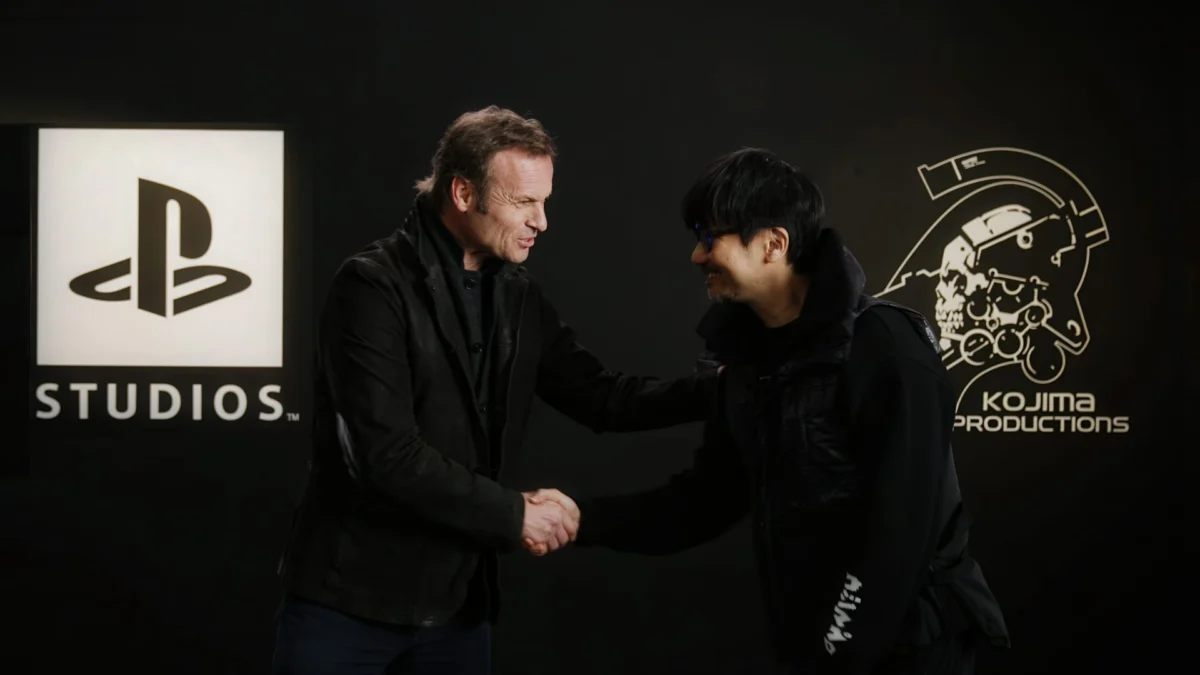
The landscape of the triple-A gaming industry experienced a significant tremor following the revelation that Hideo Kojima, the visionary creator behind the Metal Gear and Death Stranding franchises, has transitioned his upcoming action-espionage project, Physint, from Sony Interactive Entertainment (SIE) to Xbox. In a comprehensive disclosure that has sent ripples through the development community, Kojima detailed the unorthodox manner in which his decades-long partnership with Sony reached a critical impasse, leading to a new alliance with Microsoft’s gaming division.
The development follows a series of high-profile announcements from Kojima Productions. Ten days prior to this revelation, reports surfaced that Sony had withdrawn its support for Physint, a project positioned as a spiritual successor to the tactical espionage genre Kojima pioneered. Shortly thereafter, Kojima confirmed that rising Hollywood star Bill Skarsgård, known for his roles in "It" and "John Wick: Chapter 4," had been cast as the game’s protagonist. However, the most striking aspect of the transition remains the sudden nature of the corporate separation between the legendary designer and the Japanese tech giant.
The June Zoom Call: An Abrupt End to a Legacy Partnership
According to an exclusive interview with IGN, the decision to terminate Sony’s involvement in Physint was delivered with startling brevity. Kojima revealed that in June, SIE leadership requested a video conference call without prior indication of its agenda. During this meeting, Sony executives informed Kojima that the corporation would no longer provide funding or development support for the Physint IP.
Kojima described the moment as one of profound professional shock, noting that the news was so unexpected he struggled to process the information in real-time. "My mind went blank when SIE told me," Kojima stated during the interview. He emphasized that while he was acutely aware of the broader economic instability within the gaming industry—characterized by widespread studio closures and project cancellations throughout 2023 and 2024—he believed Physint was insulated from such risks due to its prestige and his long-standing history with the brand.
The designer noted that the meeting lacked a detailed explanation for the cancellation, leaving his team at Kojima Productions in a state of immediate uncertainty. The lack of clarity was particularly jarring given that the project had previously received an initial "green light" from former SIE President and CEO Jim Ryan before his departure from the company.
A Thirty-Year History Interrupted
The fracture in the relationship is significant not only because of the project’s scale but because of the historical weight of the Kojima-Sony alliance. Since the release of "Metal Gear Solid" on the original PlayStation in 1998, Kojima has been a cornerstone of the Sony ecosystem. His titles have frequently served as technical showcases for Sony’s hardware, from the cinematic leaps of the PlayStation 2 era to the foundation of the independent Kojima Productions in 2015, which was established with significant backing from Sony following Kojima’s public departure from Konami.
Kojima reflected on this history, noting that he had maintained close personal and professional ties with generations of Sony leadership, including Ken Kutaragi (the "Father of PlayStation"), Kazuo Hirai, and Jim Ryan. He suggested that the current leadership structure at Sony may represent a cultural shift away from the relationship-driven model of the past. While Kojima clarified that he harbors no personal animosity toward the corporation, he expressed a professional disappointment regarding the lack of transparency. He argued that a thirty-year partnership warranted more than a "final notice" delivered via a sudden digital meeting, suggesting that earlier communication would have allowed for a smoother transition.
The Pivot to Xbox and the Vision for Multimedia Expansion
Following the withdrawal of Sony’s support, Kojima sought a new partner to realize the ambitious scope of Physint. The search led him to Microsoft, a company with which he was already collaborating on the experimental horror title "OD." Kojima reported that Xbox leadership, including Microsoft Gaming CEO Phil Spencer and the newly appointed Xbox CEO Asha Sharma, responded to the Physint pitch with immediate enthusiasm.
The partnership with Xbox appears to be driven by a shared vision for the future of the IP. Unlike traditional gaming contracts, the agreement with Microsoft reportedly encompasses a broader multimedia strategy. Kojima has long expressed a desire to blur the boundaries between interactive gaming and cinematic storytelling. Xbox’s infrastructure and its increasing interest in cross-media synergy—evidenced by the success of the "Fallout" television series—align with Kojima’s goal of expanding Physint into the realms of film and television.

Kojima noted that despite the departure of his long-time associate Phil Spencer from the immediate day-to-day oversight of the project, he found a quick professional rapport with Asha Sharma. This synergy was a deciding factor in moving the 200-person studio’s focus toward the Xbox ecosystem for this specific intellectual property.
Technical Hurdles: The Decima Engine vs. Unreal Engine 5
One of the most complex implications of the split involves the underlying technology used to build the game. For the "Death Stranding" series, Kojima Productions utilized the Decima Engine, a proprietary technology developed by Guerrilla Games, a first-party Sony studio. The use of Decima was a testament to the deep integration between Kojima and Sony’s internal resources.
With the transition to Xbox, the continued use of the Decima Engine for Physint is highly improbable, as the engine remains a closely guarded asset of Sony Interactive Entertainment. Kojima confirmed in the interview that a final decision regarding the game’s engine has not yet been reached. However, industry analysts suggest a move to Epic Games’ Unreal Engine 5 is the most logical path forward. Unreal Engine 5 offers the high-fidelity graphical capabilities required for Kojima’s cinematic style and is already being utilized by Kojima Productions for the development of "OD."
A shift in engine architecture mid-development can often lead to delays, as assets must be ported or recreated. However, given that Physint was in the relatively early stages of production when the split occurred, the transition may serve as an opportunity to optimize the game for Microsoft’s hardware and cloud-based delivery systems.
Chronology of the Physint Transition
To understand the magnitude of this shift, it is essential to look at the timeline of events leading up to the current state of the project:
- 2015: Kojima Productions is reformed as an independent studio with Sony’s support; "Death Stranding" development begins using the Decima Engine.
- 2019-2021: "Death Stranding" and its "Director’s Cut" are released as PlayStation exclusives (later coming to PC).
- Late 2023: Jim Ryan, then-CEO of SIE, reportedly gives the initial green light for Physint, envisioned as a return to the action-espionage genre.
- January 2024: Kojima officially announces Physint during a State of Play presentation, describing it as a "next-generation action-espionage" title.
- June 2024: Sony holds a Zoom call with Kojima Productions, officially terminating funding and support for the project.
- July-August 2024: Kojima enters negotiations with Microsoft to rescue the IP.
- Late 2024: Xbox is confirmed as the new partner; Bill Skarsgård is announced as the lead actor.
Broader Industry Implications and the Rise of "Third-Party" Independence
The separation of Kojima and Sony serves as a case study for the current volatility of the video game industry. In 2024 alone, the industry has seen over 10,000 layoffs across major publishers, including Sony, Microsoft, and Electronic Arts. The cancellation of a high-profile project like Physint by Sony suggests a strategic pivot toward lower-risk, established franchises and a potential tightening of budgets for experimental or high-cost "prestige" titles.
For Sony, losing the "spiritual successor to Metal Gear" to its primary competitor, Xbox, is a notable blow to its portfolio of exclusive content. For Microsoft, the acquisition of Physint represents a major coup in its ongoing effort to bolster the Xbox brand’s appeal in the Japanese market and among "hardcore" gaming demographics.
Furthermore, the situation highlights the evolving nature of studio independence. While Kojima Productions remains an independent entity, its reliance on platform holders for funding and technology creates a precarious balance. By diversifying his partnerships—developing "Death Stranding 2" with Sony while moving "OD" and "Physint" to Xbox—Kojima is effectively insulated against the strategic shifts of any single corporate entity.
Conclusion: A New Era for Action-Espionage
As development on Physint continues under the Xbox banner, the industry will be watching closely to see how the change in partnership affects the final product. Kojima has promised that Physint will be the "culmination" of his work, utilizing cutting-edge technology to create an experience that transcends the traditional definition of a video game.
The involvement of Bill Skarsgård and the shift toward a multimedia franchise suggest that Physint remains one of the most ambitious projects in active development. While the "Zoom call" of June 2024 marked the end of an era for the Kojima-Sony relationship, it has simultaneously opened a new chapter in the creator’s career—one defined by platform agnosticism and a renewed focus on global, multi-platform storytelling. For now, the gaming world awaits further technical details and a glimpse into the world that Kojima is building with his new partners at Microsoft.