Sisilia Frederika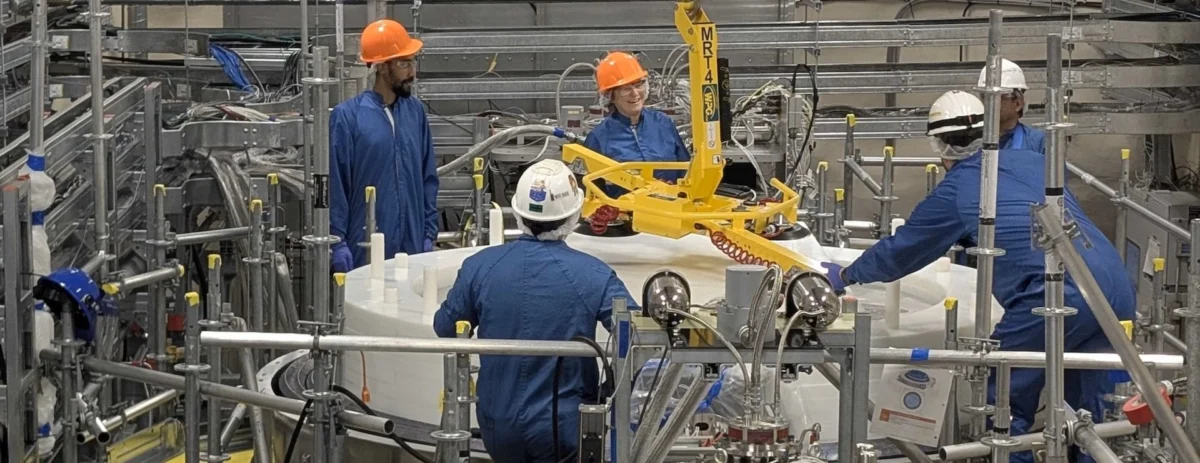
The search for the most elusive substance in the known universe has entered a critical new phase as the Super Cryogenic Dark Matter Search (SuperCDMS) SNOLAB officially began its scientific operations in Ontario, Canada. Located nearly two kilometers beneath the Earth’s surface, this state-of-the-art detector represents the culmination of over a decade of international collaboration and engineering. The facility is specifically designed to hunt for "light" dark matter—hypothetical particles with significantly lower masses than the Weakly Interacting Massive Particles (WIMPs) that have been the primary focus of particle physics for the past thirty years. By achieving "early-science" status, the project team has begun the delicate process of activating detectors and calibrating instruments to capture the faintest whispers of particle interactions that could fundamentally alter our understanding of the cosmos.
The Quest for the Invisible Universe
Dark matter remains one of the most profound mysteries in modern science. Despite accounting for approximately 85% of the matter in the universe and about 27% of its total energy density, it has never been directly observed. Its existence is inferred from gravitational effects that cannot be explained by the visible matter in stars, gas, and dust. Galactic rotation curves, gravitational lensing, and the Cosmic Microwave Background all point toward a vast, invisible scaffolding of matter that holds galaxies together.
For decades, the leading candidate for dark matter was the WIMP—a particle with a mass roughly 10 to 1,000 times that of a proton. However, as increasingly sensitive detectors have failed to find WIMPs in the expected mass ranges, the scientific community has pivoted toward "light" or low-mass dark matter. These particles are theorized to have masses ranging from a fraction of a proton’s mass down to the mass of an electron. Detecting such lightweight entities requires a level of sensitivity and background noise suppression that was previously unattainable, a challenge the SuperCDMS SNOLAB was specifically built to meet.
Subterranean Sanctuary: The SNOLAB Facility
The choice of location for SuperCDMS is as critical as the technology itself. The experiment is housed within SNOLAB, an ultra-clean underground laboratory located in the Vale Creighton nickel mine near Sudbury, Ontario. Situated 1.6 kilometers (approximately 1 mile) below the surface, the laboratory uses the Earth’s crust as a natural shield against cosmic radiation.
On the surface, the planet is constantly bombarded by high-energy muons and other cosmic rays that would easily overwhelm the sensitive detectors of SuperCDMS. By placing the experiment deep underground, the flux of cosmic ray muons is reduced by a factor of more than a million. This "quiet" environment is essential for distinguishing the incredibly rare and weak signals of dark matter from the background noise of the universe.
The environment within the mine is paradoxically warm due to the geothermal gradient of the Earth. While the ambient rock temperature at that depth can exceed 40 degrees Celsius (104 degrees Fahrenheit), the experiment requires temperatures at the opposite end of the spectrum. This necessitates a massive cooling infrastructure to maintain the detectors at temperatures just a fraction of a degree above absolute zero.
Technical Architecture: Crystals and Phonons
At the heart of SuperCDMS are 24 ultra-pure crystals made of silicon and germanium. Each crystal is roughly the size of a hockey puck—a fitting unit of measurement for a Canadian-based project. These crystals serve as the "target" for dark matter particles.
The detection method relies on a phenomenon known as phonon detection. When a dark matter particle—despite its "weakly interacting" nature—occasionally strikes the nucleus or an electron within the crystal lattice, it deposits a tiny amount of energy. This energy causes the crystal to vibrate, creating quasiparticles called phonons. Simultaneously, the impact liberates a small number of charge carriers, creating a faint electrical signal.
To capture these minute vibrations and charges, each crystal is equipped with Transition Edge Sensors (TES). These superconducting sensors are maintained at their "critical temperature"—the precise point where they transition between being a superconductor and a normal conductor. At this threshold, even the slightest increase in temperature caused by a phonon vibration will cause a dramatic change in the sensor’s electrical resistance. This allows scientists to measure energy deposits that are millions of times smaller than those detectable by conventional radiation sensors.
The Shielding Strategy: Ancient Lead and Modern Engineering
To reach the sensitivity required for light dark matter, the SuperCDMS team had to eliminate almost every possible source of terrestrial interference. This involved a multi-layered shielding strategy that combines modern chemical engineering with archaeological artifacts.
The innermost layers of the experiment are constructed from high-purity copper and polyethylene, which shield against neutrons and gamma rays. The facility also employs a specialized system to mitigate the presence of radon gas, a naturally occurring radioactive byproduct of uranium decay in the surrounding rock. Radon is a particular menace to dark matter experiments because its decay products can mimic the signal of a dark matter interaction.
Perhaps the most unique component of the shielding is the use of ancient Roman lead. Lead is an excellent radiation shield, but modern lead often contains trace amounts of the isotope Lead-210, which is itself radioactive. Lead-210 has a half-life of about 22.2 years. To find lead that is "radio-pure," scientists often look to lead recovered from shipwrecks that have been submerged for centuries or millennia. The lead used in SuperCDMS, sourced from Roman-era ships, has been underwater for over 2,000 years, allowing its intrinsic radioactivity to decay to negligible levels. This ancient material provides a level of "darkness" from radiation that modern smelting processes cannot achieve.
Project Chronology and the Road to 2027
The activation of early-science operations marks a pivotal moment in a timeline that spans more than a decade. The SuperCDMS collaboration, which includes over 100 scientists from 28 institutions across the United States, Canada, France, Spain, and India, has moved through several distinct phases:
- 2012–2017: Design and R&D: Engineers and physicists refined the Transition Edge Sensor technology and finalized the cryogenic designs.
- 2018: Construction Commencement: Work began on the infrastructure at SNOLAB, including the installation of the massive "fridge" (dilution refrigerator) and the shielding layers.
- 2020–2023: Testing and Integration: Despite delays caused by the global pandemic, the team successfully integrated the detector towers and tested the cooling systems to ensure they could reach the required milliKelvin temperatures.
- Late 2024: Early Science Phase: The current phase involves turning on the detectors for initial data collection, calibration, and characterization of the background environment.
- 2025–2026: Optimization and Commissioning: The team will refine the data acquisition systems and address any technical anomalies discovered during the early science phase.
- 2027: Full Science Operations: The official start of the primary three-year search period, during which the experiment will reach its peak sensitivity.
Official Responses and Collaborative Impact
The transition to active science has been met with enthusiasm from the global physics community. Spokespersons for the SLAC National Accelerator Laboratory, which manages the project for the U.S. Department of Energy, emphasized that even the preliminary data collected this year could yield significant insights.
"We are entering a regime where we are no longer just testing the equipment, but actually listening to the universe," noted one project researcher in a statement following the commencement of operations. "The sensitivity of SuperCDMS SNOLAB allows us to probe mass ranges that were previously invisible to us. Whether we find a signal or not, the data we collect will be the most precise ever recorded in this energy range."
The project is a flagship example of international scientific cooperation. Major funding has been provided by the U.S. Department of Energy’s Office of Science, the National Science Foundation, and the Canada Foundation for Innovation. The collaboration between the U.S. and Canada is particularly vital, as it combines the experimental expertise of American national labs with the world-class underground facilities of SNOLAB.
Broader Implications for Particle Physics
The success of SuperCDMS SNOLAB could herald a paradigm shift in physics. If light dark matter is detected, it would provide the first direct evidence of physics beyond the Standard Model—the current theoretical framework that describes all known particles and forces. Such a discovery would likely point toward a "Dark Sector" of particles that interact with our world only through gravity and perhaps a new, yet-to-be-discovered force.
Even if the experiment does not yield a direct detection of a dark matter particle, it will serve a crucial scientific purpose by "setting limits." In science, knowing where something is not is often as important as knowing where it is. By failing to find a particle at a certain sensitivity, SuperCDMS will rule out various theoretical models, forcing physicists to refine their hypotheses and narrowing the search for the true nature of dark matter.
As the early science phase continues through the fall of 2024, the team at SNOLAB remains vigilant. In the silence of the Creighton mine, shielded by billions of tons of rock and ancient Roman lead, the world’s most sensitive "ears" are finally open, waiting for a signal that has been traveling through the void for billions of years. The next three years may well provide the answer to one of humanity’s oldest questions: what, exactly, is the universe made of?