Sonny Valindra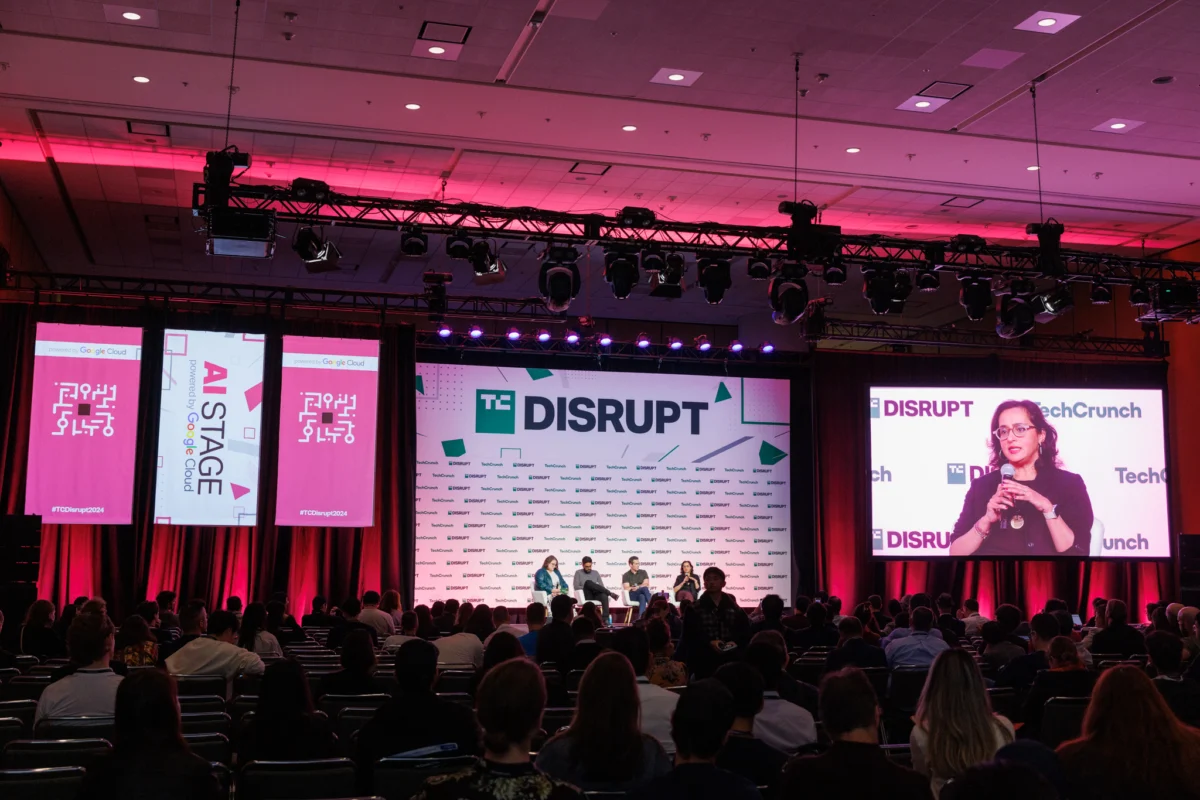
The rapid evolution of Artificial Intelligence (AI) has moved beyond theoretical discussions and into tangible applications that impact daily life and critical business operations. As AI agents gain access to company systems, autonomous vehicles navigate our roads, and robots interact with unpredictable physical environments, the paramount importance of safety and security has become an undeniable product requirement. This crucial intersection of innovation and responsibility will be a central theme at TechCrunch Disrupt 2026, with five dedicated sessions across the AI Stage and Real World AI Stage addressing the challenges and opportunities for founders building the next generation of trustworthy AI.
TechCrunch Disrupt, a flagship event for the startup ecosystem, has consistently provided a platform for emerging technologies and groundbreaking ideas. For over a decade, it has served as a critical launchpad for thousands of companies, fostering connections between entrepreneurs, investors, and industry leaders. This year’s focus on AI safety and trust is particularly timely, reflecting a growing industry consensus that the successful adoption of AI hinges not just on its capabilities, but on its reliability, security, and ethical deployment. The event, scheduled to take place from October 13-15 at Moscone West in San Francisco, anticipates over 10,000 attendees, including founders, venture capitalists, and tech executives, making it a pivotal gathering for understanding the future trajectory of AI.
The urgency of these discussions is underscored by the increasing investment in AI. Global AI market size was valued at USD 136.6 billion in 2022 and is projected to grow at a compound annual growth rate (CAGR) of 37.3% from 2023 to 2030, according to Grand View Research. This exponential growth necessitates a corresponding focus on the foundational aspects of trust and safety to ensure sustainable and responsible development.

One of the most pressing questions facing enterprises today is the successful transition of AI from experimental pilots to full-scale production. Cat de Jong, Head of Applied AI at Anthropic, will delve into this critical area in her session, "What Anthropic Sees When Enterprises Actually Deploy Claude." De Jong, who works directly with businesses integrating Claude, an AI assistant developed by Anthropic, into their workflows, offers a unique vantage point on the successes and roadblocks encountered during enterprise AI adoption. Her insights are invaluable for founders aiming to navigate the complex sales cycles and integration challenges inherent in the enterprise AI market. The session will explore the tangible metrics of success and the common pitfalls that can stall deployments, providing a roadmap for companies looking to move beyond theoretical benefits to measurable value.
"Many enterprises are still running pilots 18 months later," noted a representative from a leading AI consulting firm, speaking anonymously. "The gap between a successful demo and a robust, integrated production system is significant. It often comes down to understanding the operational realities, the security implications, and the organizational readiness for AI." De Jong’s session promises to shed light on these operational realities, offering practical advice based on real-world deployments.
As AI agents become more sophisticated and autonomous, the security landscape shifts dramatically. The session, "The Agent Security Problem Nobody Is Talking About," will feature Ric Smith, President of Products and Technology at Okta, and Gavriel Cohen, co-founder and CEO of NanoCo. This discussion will address the emerging security vulnerabilities associated with AI agents that can take action. Key questions to be explored include defining appropriate access levels, establishing permissible actions, and understanding the limitations of traditional application-level permissions when dealing with intelligent agents. Smith and Cohen are expected to provide an in-depth analysis of the infrastructure-level security considerations and architectural decisions necessary for deploying agentic AI responsibly.
The increasing sophistication of AI agents presents a new frontier in cybersecurity. Experts estimate that the global cybersecurity market will reach over $300 billion by 2027, with AI-driven threats and defenses playing an increasingly significant role. The challenges highlighted in this session underscore the need for proactive security measures tailored to the unique capabilities of AI agents. The potential for misuse or unintended consequences necessitates a robust framework for agent security that goes beyond existing protocols.

The integration of AI into enterprise systems also introduces significant complexities to cloud security. Rudy Mitra, VP of Security Services at AWS, Katie Moussouris, CEO of Luta Security, and cybersecurity veteran Wendy Nather will lead the AI Stage session, "Securing the AI Enterprise: Why the Cloud Just Got a Lot More Complicated." This panel will examine the evolving infrastructure requirements for enterprises adopting AI, focusing on security, governance, and observability. As AI takes on more autonomous roles, organizations must grapple with the inherent risks and implement comprehensive security strategies.
"The cloud has always been a dynamic environment, but the proliferation of AI services and the increased data processing demands are introducing new layers of complexity," commented a cybersecurity analyst. "Founders need to understand that enterprise-grade AI deployment isn’t just about the algorithm; it’s about building a secure, auditable, and observable system within existing IT frameworks." This session is crucial for founders seeking to understand the security prerequisites that can often be a gating factor for enterprise adoption.
The stakes are dramatically raised when AI operates in the physical world. Failures in systems governing vehicles, aircraft, or industrial machinery can have immediate and severe real-world consequences. The Real World AI Stage will host a critical discussion titled "Building AI Systems When Failure Is Not an Option," featuring Nathan Michael, CTO of Shield AI; Mikell Taylor, Director of Robotics Strategy at General Motors; and Raquel Urtasun, founder and CEO of Waabi. These leaders, with extensive experience in defense and autonomous systems, will tackle the fundamental question of how to determine when an autonomous system is sufficiently safe for deployment.
The development of autonomous vehicles alone has seen billions invested globally, with safety testing and validation forming a significant portion of these expenditures. The session will explore the creation of safety cultures, rigorous testing methodologies, the navigation of regulatory landscapes, and the strategies for building organizations that can earn public trust in high-stakes environments. The implications extend beyond self-driving cars to a broad range of physical AI applications, where the margin for error is exceptionally thin.

A significant hurdle for the widespread adoption of physical AI, particularly in robotics, is the availability of robust training data. Les Karpas, Global Head of Physical AI at Nvidia, will address this challenge in the Real World AI session, "Robots Are Waiting for Their ChatGPT Moment. Here Is What Is Standing in the Way." Unlike language models, which benefit from vast text and code datasets, robots often struggle to acquire the comprehensive, real-world data needed to train complex physical interaction models.
Karpas is expected to discuss how data pipelines, advanced simulation environments, and the development of foundation models can help bridge this data gap. The session will explore the technical and strategic considerations for building, testing, and deploying more capable and reliable robots. The ultimate goal is to enable robotics to achieve a transformative leap akin to the "ChatGPT moment" for language AI, fostering the trust necessary for widespread real-world application. The challenge lies in translating the successes of simulated environments into reliable performance in the unpredictable dynamics of the physical world.
Collectively, these five sessions at TechCrunch Disrupt 2026 underscore a critical industry imperative: building AI that is not only intelligent but also fundamentally trustworthy. The event provides a vital forum for founders, investors, and industry professionals to engage with these complex issues, share insights, and forge pathways toward responsible AI innovation. The success of AI’s integration into our lives and economies will ultimately depend on our collective ability to address the safety, security, and ethical considerations that underpin its deployment.
Attendees of TechCrunch Disrupt 2026 will have the opportunity to gain firsthand insights from leading figures in the AI industry, covering a spectrum of challenges from enterprise adoption and agent security to the complexities of physical AI and autonomous systems. The event aims to equip participants with the knowledge and strategies necessary to navigate these evolving landscapes and build AI solutions that can earn the confidence of users and the market alike. The early bird ticket pricing, offering savings up to $200 before September 25, encourages proactive engagement with these critical industry conversations. By prioritizing these discussions, TechCrunch Disrupt 2026 positions itself as an essential event for anyone looking to shape the future of artificial intelligence responsibly and effectively.