
 George Chandra Eka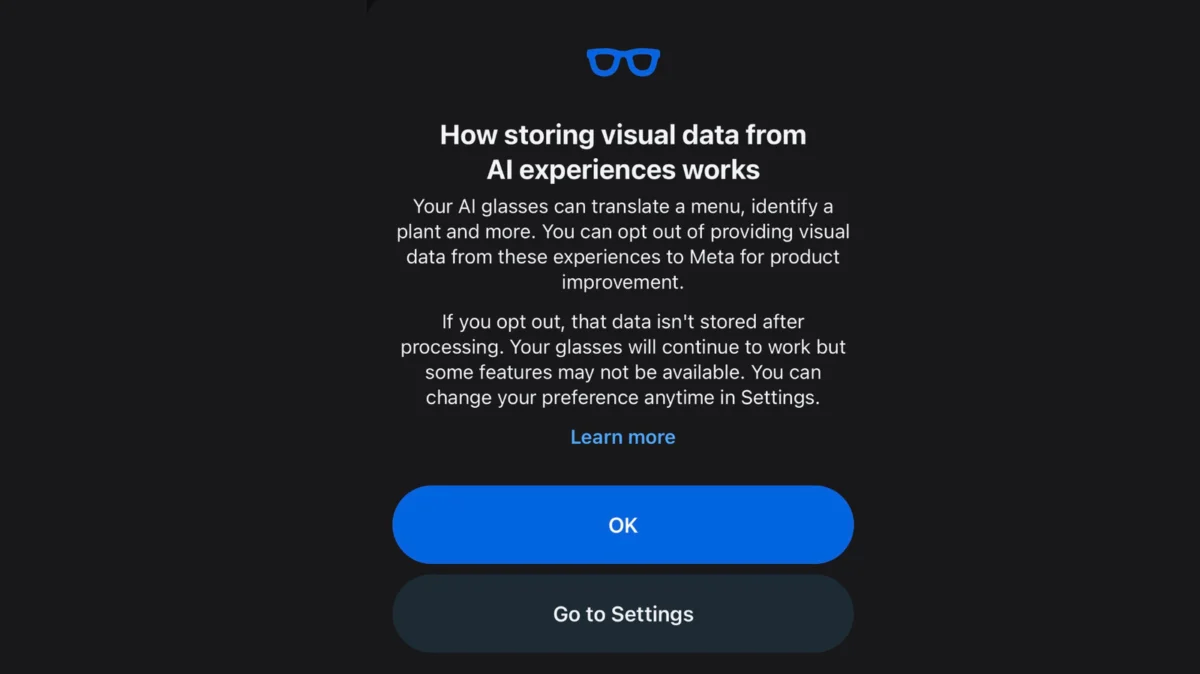
Meta has initiated the rollout of a new privacy setting for owners of its smart glasses, enabling them to opt out of allowing the company to utilize "visual data" collected by the device for artificial intelligence (AI) model training. This significant update, now accessible within the Meta AI app, represents a pivotal moment in the ongoing discourse surrounding data privacy in the age of pervasive smart wearables and advanced AI. The setting, which directly influences whether Meta’s employees or automated systems can review photos and videos captured by the glasses, underscores the company’s efforts to balance innovative AI functionalities with user control over personal data.
The Mechanism of Opting Out: A User’s Guide
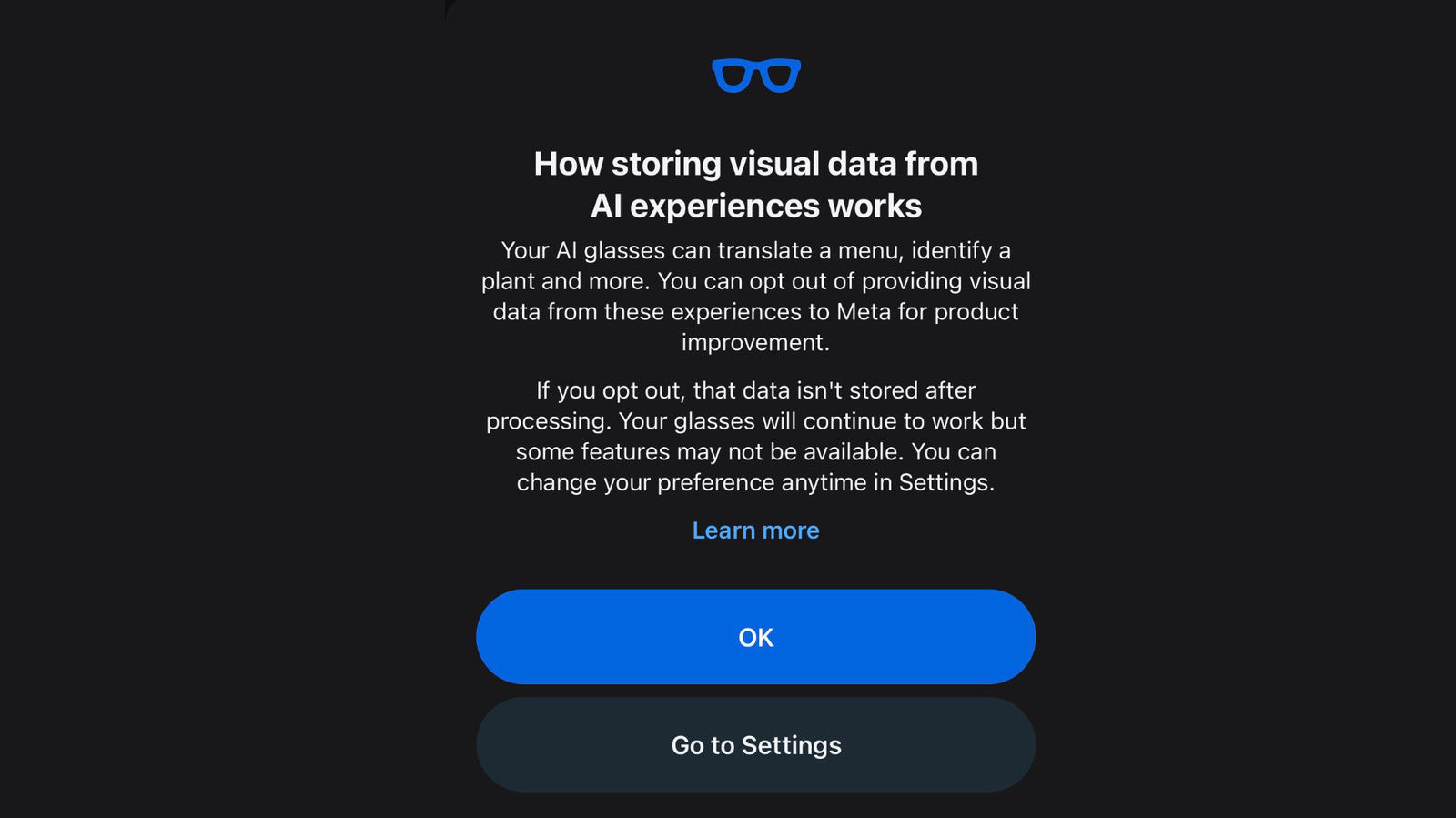
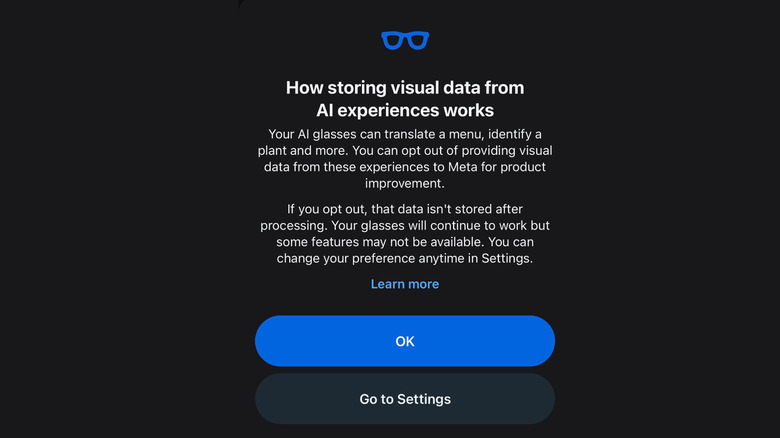
The introduction of this opt-out feature has been communicated to smart glasses owners via a prominent pop-up notification within the Meta AI app. This notification succinctly states, "Your AI glasses can translate a menu, identify a plant and more. You can opt out of providing visual data from these experiences to Meta for product improvement. If you opt out, that data isn’t stored after processing." This direct approach aims to inform users immediately about their new privacy options.
For users seeking to modify this setting, the process is designed to be straightforward, though it requires specific conditions to be met. The notification guides users directly to the relevant settings page. Alternatively, individuals can navigate to the settings for their glasses within the Meta AI app, select "Meta AI," and then scroll down to the option labeled "store visual data from AI experiences." It is crucial for users to ensure their smart glasses are out of their charging case and actively connected to their smartphone to enable the modification of this setting. Furthermore, for users who own multiple pairs of Meta smart glasses, this opt-out procedure must be individually repeated for each device, highlighting the device-specific nature of the privacy configuration.
Defining "Visual Data" and the Nuance of Human Review
Central to this privacy update is Meta’s more detailed articulation of what constitutes "visual data" and how it is processed. Alongside the new opt-out setting, Meta has updated its help center article, providing an explicit description of its data utilization practices. The company explains, "When you use AI experiences on your Meta glasses — like asking about something you’re looking at or using live AI — Meta stores the resulting visual data and may use it to power glasses features and improve Meta products." Crucially, the explanation continues, "This includes the process of training and improving AI models, which may be automated or manual (human)."
This specific mention of "manual (human)" review has drawn particular attention. It confirms that, under certain circumstances, human reviewers employed by Meta could potentially access and analyze visual data captured by users’ smart glasses. This aspect has historically been a point of contention for privacy advocates across various smart device categories, as it raises questions about the extent of human access to potentially sensitive personal environments and interactions. Meta clarifies that it only stores "visual data" collected while using specific AI features, such as Live AI, which provides real-time information about objects the user is viewing. Importantly, the company states that "visual data" does not encompass "photos and videos you capture with your glasses when the capture LED is on," differentiating between passively collected AI-driven data and user-initiated media capture. This distinction attempts to assuage concerns that all user-generated content might be subject to AI training or human review.
Implications of Opting Out: Functionality Versus Privacy
While the new opt-out option empowers users with greater control over their visual data, Meta has indicated that choosing to opt out may affect the functionality of certain features. Specifically, the company notes that "visual reminders" — for instance, looking at an object and asking Meta AI to remind you to purchase it later — might be impacted. The precise scope of other features that could be limited or rendered inoperable by opting out remains somewhat unclear, leaving users to weigh the trade-off between enhanced privacy and full access to the glasses’ AI capabilities. This scenario is common in the tech industry, where advanced features often rely on continuous data input and analysis to refine performance and personalization.
A Brief History of Meta’s Smart Glasses and Evolving Privacy Stance
The journey of Meta’s smart glasses began with the launch of Ray-Ban Stories in September 2021, a collaboration with EssilorLuxottica. These initial glasses offered basic photo and video capture, along with audio capabilities. From their inception, the devices faced scrutiny over privacy, particularly concerning the small, sometimes inconspicuous, LED indicator light that illuminated when recording was active. Critics argued that the light was insufficient to adequately alert bystanders that they were being recorded, leading to ethical debates about consent in public and semi-public spaces.
In September 2023, Meta unveiled the second generation, the Meta Ray-Ban Smart Glasses, significantly enhancing their capabilities with more advanced cameras, improved audio, and, crucially, the integration of Meta AI. This integration marked a pivot towards a truly "smart" wearable, capable of understanding context and responding to user queries through multimodal AI, allowing users to interact with their environment in unprecedented ways. Features like "Look and Ask," which enables users to query the AI about objects they are seeing, brought the concept of contextual AI to the forefront of wearable technology.
Throughout this evolution, Meta has consistently emphasized its commitment to privacy and transparency, often in response to public feedback and regulatory pressures. Early privacy policies for Ray-Ban Stories focused on the LED indicator and user control over captured media. However, with the introduction of Meta AI, the scope of data collection expanded dramatically to include visual data processed for AI training, necessitating a more robust and transparent privacy framework. This latest opt-out feature can be seen as a direct consequence of this increased data collection and the broader industry trend towards more granular user control over personal information used for AI development.
The Broader Landscape of AI Training and Data Collection
The practice of collecting user data, including visual and auditory information, to train AI models is a fundamental component of modern AI development across the tech industry. Companies like Google, Amazon, and Apple routinely collect voice commands, search queries, and interactions with smart devices to refine their AI assistants (Google Assistant, Alexa, Siri) and other AI-powered services. The goal is to improve accuracy, understanding of natural language, contextual awareness, and overall user experience.
For multimodal AI, which is at the heart of Meta’s smart glasses, visual data is indispensable. To enable the AI to "see" and interpret the world, it must be trained on vast datasets of images and videos, often annotated to help the AI identify objects, scenes, and activities. The unique challenge with smart glasses is that this data is captured from a first-person perspective, directly reflecting the user’s daily life, making it inherently more personal and potentially sensitive than data collected from a stationary smart speaker or a web browser.
The increasing scrutiny over data privacy in the age of generative AI has intensified debates around how this data is collected, stored, and used. Privacy advocates frequently call for "data minimization," advocating that companies collect only the data strictly necessary for their services, and for "opt-in" consent mechanisms rather than default "opt-out" policies. Meta’s current approach, while offering an opt-out, still maintains an opt-in default, a common industry practice that often faces criticism for placing the burden of privacy protection on the user.
Chronology of Privacy Adjustments and Public Discourse
The rollout of this new opt-out setting is not an isolated event but rather a point in a longer timeline of Meta’s privacy adjustments concerning its smart glasses:
- September 2021: Launch of Ray-Ban Stories. Initial privacy concerns centered on the recording indicator light and the potential for surreptitious recording. Meta published guidelines and policies emphasizing ethical use.
- Late 2021 – Early 2023: Ongoing discussions and reports from privacy organizations in Europe and the US regarding the adequacy of privacy safeguards, particularly in public spaces. Meta reiterated its commitment to user education and control.
- September 2023: Introduction of Meta Ray-Ban Smart Glasses with integrated Meta AI. This significantly expanded the data collection capabilities, moving beyond simple photo/video capture to real-time visual data processing for AI. Initial privacy policies covered AI data use but perhaps less explicitly detailed the human review aspect.
- Early 2024: As Meta AI features became more prominent on the glasses, the need for clarity on visual data usage for AI training grew.
- June 2024 (Approximate): Meta announces and begins rolling out the explicit opt-out setting for visual data used in AI training, coupled with a more detailed explanation of human review possibilities. This move appears to be a proactive step to address anticipated or existing privacy concerns as the AI capabilities of the glasses mature and become more widely adopted.
Statements and Reactions from Related Parties
- Meta’s Stance: From Meta’s perspective, the introduction of this opt-out setting is framed as an enhancement of user control and transparency. A company spokesperson, if providing a statement, would likely emphasize Meta’s commitment to building AI responsibly and providing users with tools to manage their data. They would highlight the balance between product improvement – which relies on data for AI training – and individual privacy preferences. The opt-out mechanism is presented as a response to evolving user expectations and the complex nature of AI development in personal devices.
- Privacy Advocates and Experts: Privacy organizations and independent experts are likely to welcome the introduction of an opt-out option, acknowledging it as a step in the right direction. However, they would likely voice reservations about the default "opt-in" nature of the setting, arguing that sensitive visual data from a first-person perspective should require explicit "opt-in" consent from the user. Concerns would also persist regarding the implications of "manual (human)" review, even with assurances of anonymization or data minimization, given the deeply personal nature of visual data captured from a user’s perspective. Experts might call for greater transparency on the volume of data collected, the specifics of anonymization techniques, and the auditing processes for human review.
- Industry Analysts: Technology industry analysts might view Meta’s move as a pragmatic response to the increasing regulatory and public scrutiny surrounding AI and data privacy. They would likely note that companies developing advanced AI-powered wearables must navigate a delicate balance: innovating with powerful features that require extensive data, while simultaneously building and maintaining user trust. This opt-out could be seen as a strategy to mitigate potential backlash and position Meta as a more privacy-conscious player in the competitive smart device market, especially as it continues to invest heavily in its metaverse vision, which relies on seamless integration of digital and physical realities.
Broader Impact and Implications
The rollout of this opt-out setting carries significant broader implications for user trust, the regulatory environment, and the future trajectory of wearable AI:
- User Trust and Adoption: The success of smart glasses and other AI-powered wearables heavily depends on user trust. If users feel their privacy is adequately protected, they are more likely to adopt and consistently use these devices. Conversely, perceived privacy infringements can severely hamper adoption rates. Meta’s proactive (albeit opt-out) measure could help build a stronger foundation of trust, encouraging users to experiment with the glasses’ advanced AI capabilities without constant apprehension about data exploitation.
- Regulatory Environment: This development may influence future privacy regulations. As AI becomes more integrated into daily life through wearables, regulators worldwide (e.g., those overseeing GDPR in Europe, CCPA in California) are increasingly scrutinizing how personal data, especially biometric or highly contextual visual data, is collected and used. The existence of explicit opt-out mechanisms might become a baseline expectation, and there could be a push for more stringent "privacy by design" principles, potentially shifting towards default "opt-in" consent for such sensitive data.
- Future of Wearable AI: The tension between enabling innovative AI features and ensuring robust privacy safeguards will continue to define the future of wearable AI. Developers are constantly seeking to create more intelligent, predictive, and helpful AI experiences, which often demand more data. However, the ethical imperative to protect user privacy means companies must find increasingly sophisticated ways to train AI with minimal intrusion, perhaps through federated learning or advanced anonymization techniques that do not compromise model performance. The clarity (or lack thereof) regarding features lost upon opting out also highlights the ongoing challenge of communicating the true cost of privacy in terms of functionality.
- Ethical Considerations: The explicit mention of "human review" continues to spark ethical debates. While human review is often essential for refining AI models and correcting errors that automated systems might miss, the idea of human eyes reviewing potentially intimate visual data from a user’s life raises significant ethical questions. Even with assurances of anonymization and strict protocols, the potential for de-anonymization or misuse, however slight, can be a source of anxiety. This pushes companies to develop and communicate stringent ethical guidelines for their data handling practices, particularly when human involvement is part of the AI training pipeline.
In conclusion, Meta’s introduction of an opt-out setting for visual data collection for AI training on its smart glasses marks a critical juncture in the evolution of privacy in wearable technology. It reflects an industry grappling with the immense potential of AI against the equally immense responsibility of safeguarding user data. While offering users more control, the default opt-in nature and the implications of human review ensure that the conversation around data privacy in the age of pervasive AI wearables is far from over. As smart glasses become more sophisticated and deeply integrated into our daily lives, the balance between innovation and privacy will remain a paramount challenge for Meta and the broader tech community.







