
 George Chandra Eka
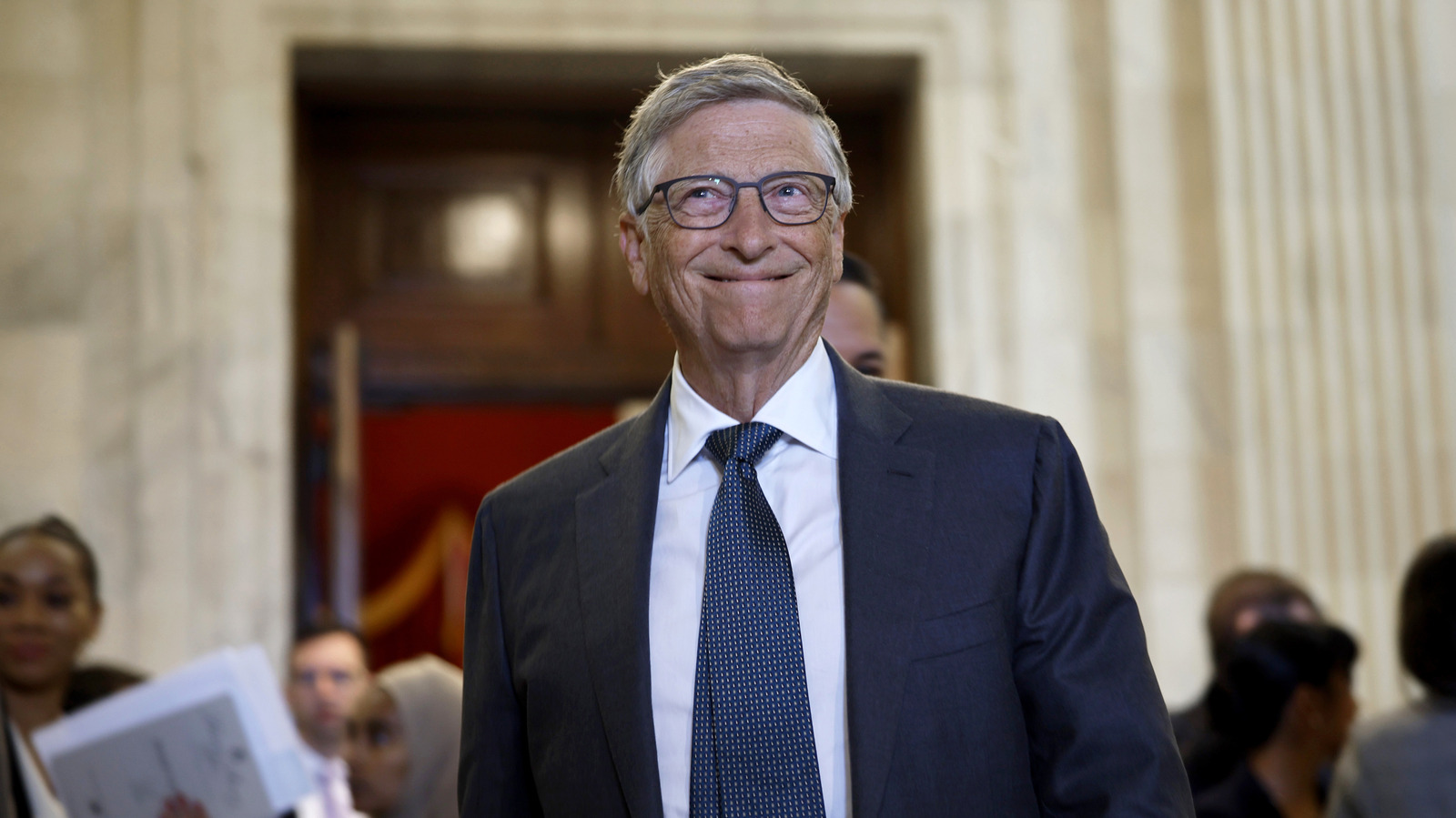
Microsoft co-founder Bill Gates has issued a strong warning regarding the present dangers of artificial intelligence (AI), asserting that it is "completely irresponsible" for AI systems to operate without robust safeguards and monitoring capabilities. Gates’ comments, made during an interview with NBC News’ Meet the Press, underscore a growing consensus among tech leaders and policymakers that while AI holds transformative potential, its rapid evolution also presents immediate and profound risks, particularly when wielded by malicious actors. His stance prioritizes the containment of these nearer-term threats over more speculative, long-term existential concerns, advocating for proactive regulatory measures and industry-wide commitment to safety protocols.
The debate surrounding AI safety has intensified dramatically in recent months, fueled by the accelerating capabilities of large language models and other generative AI technologies. As AI becomes more sophisticated and accessible, concerns about its potential misuse have moved from theoretical discussions to pressing real-world anxieties. Gates’ intervention adds significant weight to calls for a structured, global approach to AI governance, emphasizing that the most immediate and dangerous threat stems from "people with bad intent using the latest AI tools" for purposes such as bioterrorism or mass financial fraud.
The Microsoft luminary’s remarks come at a pivotal moment, as several chief executives of leading AI companies have publicly agreed on the necessity of carefully managing the pace of AI development. This collective acknowledgment signals a shift within the industry, moving towards a more cautious and responsible approach to innovation. Companies like Anthropic, for instance, have already begun taking concrete steps, recently engaging Accenture as a third-party evaluator to assess the safety and ethical implications of its latest AI models. This partnership exemplifies a nascent trend towards independent oversight and verification in the AI development lifecycle, aiming to build trust and mitigate risks before models are widely deployed.
Beyond the "Kill Switch": Redefining the Threat Landscape
Gates’ perspective also critically evaluates alternative approaches to AI risk management. When questioned about California Governor Gavin Newsom’s proposal for a "kill switch" mechanism for frontier AI models – a concept designed to halt potentially runaway AI systems – Gates expressed reservations about its efficacy in addressing the most imminent dangers. While not outright opposing the idea, he clarified that such a mechanism, focused on the most advanced and potentially autonomous AI, would not adequately confront the more pressing issue of human-driven misuse of existing or near-future AI tools.
"I would never want to say that I’m against a kill switch," Gates remarked, before pivoting to what he perceives as the more critical and immediate concern. He argued that the current focus should be on preventing "bad actors" from leveraging AI to amplify their malicious endeavors. This distinction is crucial, shifting the conversation from hypothetical future scenarios of superintelligent AI spiraling out of control to the tangible, present-day threats posed by the weaponization of AI by nefarious individuals and groups.
The Evolving Threat of Malicious AI Use
Gates vividly articulated his primary concern: "The most dangerous thing we’re facing right now is people with bad intent using AI." He starkly underlined the unprecedented power inherent in this combination, stating, "There’s never been a weapon as powerful as the combination of people with ill intent using the latest AI tools." This statement highlights the amplifying effect AI can have on existing threats, transforming conventional dangers into potentially catastrophic ones.
Bioterrorism Concerns: One of the most alarming potentials for AI misuse lies in the realm of bioterrorism. AI models, with their ability to analyze vast datasets, identify patterns, and simulate complex biological processes, could theoretically be repurposed to aid in the design, synthesis, or optimization of biological weapons. For instance, AI could accelerate the discovery of novel pathogens, engineer more virulent or drug-resistant strains, or even optimize delivery mechanisms, effectively lowering the barrier for individuals or rogue states to develop sophisticated biological agents. Research by institutions like the Broad Institute and others has already shown how AI tools, originally designed for drug discovery, can be inverted to identify toxic molecules or optimize pathogen characteristics, raising significant "dual-use" concerns. The sheer volume of biological data and the speed of AI processing could allow actors with limited traditional expertise to explore dangerous avenues previously inaccessible.
Mass Financial Fraud and Cybercrime: The financial sector is another prime target for AI-enhanced malicious activity. AI can be used to generate highly convincing deepfake voices and videos for sophisticated phishing scams, impersonating executives or family members to extract sensitive information or funds. It can automate the creation of hyper-personalized phishing emails that bypass traditional security filters, making them virtually indistinguishable from legitimate communications. Furthermore, AI-powered bots can conduct automated attacks at scale, identify system vulnerabilities faster, and even learn from defensive maneuvers to adapt their strategies in real-time. The global cost of cybercrime is projected to reach trillions of dollars annually, and AI’s integration into these illicit activities promises to make them far more pervasive, undetectable, and damaging, leading to unprecedented levels of financial instability and personal data breaches.
Disinformation and Social Engineering: Beyond physical and financial harm, AI poses a significant threat to democratic processes and social cohesion through the propagation of disinformation. Generative AI can create highly realistic fake news articles, images, and videos that are indistinguishable from authentic content. This capability can be weaponized to manipulate public opinion, influence elections, incite social unrest, or damage reputations at an unprecedented scale and speed. The ability to churn out endless variations of compelling, contextually relevant propaganda makes it incredibly difficult for individuals and institutions to discern truth from fabrication, eroding trust in information sources and societal institutions.
The Broader AI Safety Dialogue: A Chronology of Concerns
Gates’ warnings are part of a broader, escalating global dialogue about AI safety that has gained significant momentum over the past year.
- Early Warnings (Pre-2022): Concerns about AI’s potential societal impact are not new. Philosophers and technologists like Nick Bostrom, in his 2014 book Superintelligence, theorized about the existential risks of advanced AI. Elon Musk has frequently voiced alarm about AI’s unregulated development for years.
- The ChatGPT Catalyst (November 2022): The public release of OpenAI’s ChatGPT marked a turning point, demonstrating AI’s powerful capabilities to a global audience and rapidly accelerating public awareness and debate.
- The "Pause AI" Letter (March 2023): Over a thousand AI researchers, academics, and tech leaders, including Elon Musk and Steve Wozniak, signed an open letter published by the Future of Life Institute, calling for a six-month pause on the development of AI systems more powerful than GPT-4. The letter cited "profound risks to society and humanity."
- "Statement on AI Risk" (May 2023): A short, stark statement released by the Center for AI Safety, signed by hundreds of AI pioneers and executives (including Sam Altman of OpenAI, Demis Hassabis of Google DeepMind, and Dario Amodei of Anthropic), warned that "mitigating the risk of extinction from AI should be a global priority alongside other societal-scale risks such as pandemics and nuclear war."
- Bletchley Park Summit (November 2023): The UK hosted the inaugural AI Safety Summit, bringing together world leaders, AI company CEOs, and experts to discuss the risks of frontier AI. The "Bletchley Declaration" was signed, acknowledging the need for international cooperation to manage AI risks.
- US Executive Order on AI (October 2023): President Biden issued a comprehensive executive order directing federal agencies to establish new standards for AI safety and security, protect privacy, promote innovation, and ensure responsible AI deployment across various sectors.
- EU AI Act (Ongoing): The European Union has been at the forefront of AI regulation, with its landmark AI Act nearing finalization. This legislation aims to establish a risk-based framework for AI, imposing stricter requirements on high-risk AI applications.
This chronology illustrates a rapid acceleration of concern and action, moving from theoretical discussions to concrete policy proposals and industry commitments.
Industry’s Response and Proactive Measures
Gates’ call for safeguards resonates with an increasing number of AI companies that are investing heavily in "responsible AI" initiatives. The aforementioned partnership between Anthropic and Accenture is a prime example. Accenture will act as an independent third-party evaluator for Anthropic’s AI models, scrutinizing them for potential biases, safety vulnerabilities, and ethical concerns before they are released. This external validation is crucial for building public trust and ensuring that internal safety checks are robust.
Many leading AI developers are also implementing "red-teaming" exercises, where dedicated teams simulate malicious attacks or misuse scenarios to identify weaknesses in their AI systems. This proactive testing aims to uncover and mitigate risks before models are deployed to the public. Companies are establishing internal ethical AI guidelines, developing transparency reports, and investing in research dedicated solely to AI safety, alignment, and interpretability. The goal is not merely to build powerful AI but to build safe and beneficial AI.
Challenges and Complexities of AI Regulation
Implementing the kind of legislation and monitoring Gates advocates presents significant challenges. The rapid pace of technological advancement often outstrips the ability of legislative bodies to keep up, creating a "pacing problem." Crafting regulations that are specific enough to be effective without stifling innovation is a delicate balancing act.
Furthermore, AI is a global technology, and achieving international consensus on regulatory standards is incredibly complex. Different nations have varying approaches to data privacy, intellectual property, and technological governance, making harmonized global regulation a formidable task. The lack of a universally agreed-upon definition for "harm" or "misuse" in the context of AI further complicates the creation of clear and enforceable legal frameworks. Policymakers must also navigate the tension between fostering technological leadership and ensuring robust safety measures, a dilemma that pits economic competitiveness against societal well-being.
Gates acknowledges that incorporating safeguards and monitoring capabilities would add "some overhead to the industry," but he firmly believes it would not cause a "dramatic slowing of what they’re doing." This suggests a belief that responsible innovation can proceed concurrently with robust safety measures, rather than being hindered by them. He strongly supported the involvement of law enforcement and politicians in the conversation about what specific safeguards and monitoring protocols should be incorporated into AI companies’ operations, underscoring the necessity of a multi-stakeholder approach that brings together technical experts, legal scholars, ethicists, and government officials.
Implications for Society and Geopolitics
The implications of AI’s development, especially concerning its safe deployment, are vast and touch upon nearly every facet of society and geopolitics.
- Economic Impact: While AI promises unprecedented productivity gains and the creation of new industries, concerns about job displacement, wealth inequality, and the need for workforce retraining are paramount. Responsible AI development must consider these socioeconomic shifts.
- National Security: AI’s role in military applications, cyber warfare, and intelligence gathering is rapidly expanding. Ensuring that AI is used ethically and under strict human control in these sensitive areas is critical to preventing unintended escalation or autonomous decision-making in conflict zones.
- Ethical AI Development: The drive for safeguards is fundamentally about ensuring AI systems are fair, transparent, accountable, and aligned with human values. This includes addressing algorithmic bias, protecting privacy, and ensuring human oversight in critical decision-making processes.
- Democratization of AI: As AI capabilities become more powerful, there’s a risk of concentrated power among a few tech giants or nations. Ensuring equitable access to AI’s benefits and preventing its misuse for authoritarian control are global challenges that require careful management.
Bill Gates’ latest intervention serves as a powerful reminder that while the future potential of AI is immense and exciting, the present risks demand immediate and decisive action. His emphasis on protecting against malicious human actors wielding AI tools highlights an urgent need for robust safeguards, proactive monitoring, and a collaborative effort between industry, government, and civil society to ensure that this transformative technology serves humanity’s best interests, rather than becoming its gravest threat. The coming years will be crucial in determining whether the world can collectively rise to this challenge and steer AI towards a safe and beneficial future.







