admin
admin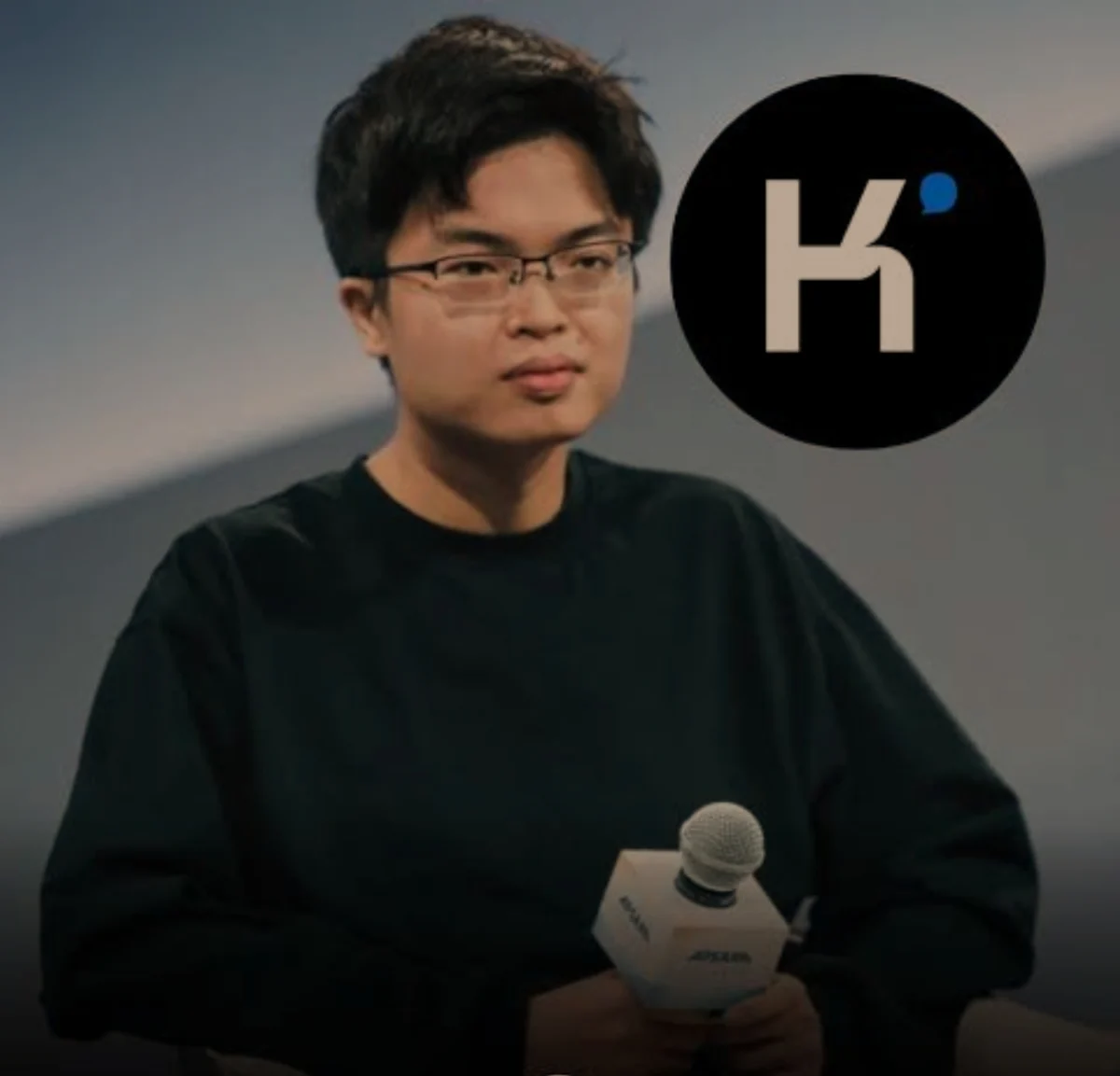
The Chinese artificial intelligence landscape is currently witnessing a strategic escalation as Moonshot AI, a prominent Beijing-based startup, reportedly seeks to secure a significant cache of NVIDIA’s next-generation Blackwell GPUs. This move, intended to power the development of its upcoming Kimi K4 model, arrives at a time of extreme geopolitical sensitivity, with the United States government intensifying its scrutiny of high-end semiconductor exports to China. Moonshot’s pursuit of Western hardware, despite increasingly stringent trade barriers, underscores the critical role that advanced compute resources play in the global race for frontier-scale artificial intelligence.
The Successor to Kimi K3: Scaling to New Heights
Moonshot AI recently garnered international attention with the release of its Kimi K3 model, an open-weight large language model (LLM) that features a staggering 2.8 trillion parameters. This model was designed for "frontier-scale intelligence," offering multi-modal capabilities and a massive context window of approximately one million tokens. The architectural sophistication of Kimi K3 allows it to compete with, and in some metrics outperform, established models from US-based laboratories like OpenAI and Anthropic.
A defining characteristic of Kimi K3 is its operational efficiency. By distributing its 896 experts across a vast array of GPUs and implementing a significantly reduced Key-Value (KV) cache, Moonshot achieved a high degree of optimization for per-token memory usage. These technical feats make the model remarkably cost-effective to run at data center scales. The economic implications of this efficiency are profound; internal calculations from Microsoft suggest that the tech giant could potentially save up to $600 million in inference costs by transitioning its Copilot service away from proprietary models like GPT-4 and Claude 3 toward Moonshot’s Kimi K3.
However, the ambition for the Kimi K4 model suggests a leap in complexity that necessitates hardware beyond what is currently available within China’s domestic supply chain. While Moonshot has successfully utilized domestic AI chips—reportedly linking multiple eight-chip servers across disparate data centers to train Kimi K3—the projected scale of Kimi K4 is expected to dwarf its predecessor’s 2.8 trillion parameters. This requirement has led the startup to seek NVIDIA’s Blackwell architecture, specifically the B200 and GB300 units, which offer a generational leap in throughput and energy efficiency for training trillion-parameter models.
Geopolitical Friction and Export Control Defiance
The pursuit of Blackwell GPUs places Moonshot AI directly in the crosshairs of the US Department of Commerce and the incoming Trump administration’s trade policies. Under existing regulations, NVIDIA is prohibited from exporting its most advanced chips, including the H100, H200, and the new Blackwell series, to Chinese entities. These restrictions are designed to prevent the advancement of Chinese military and surveillance capabilities through high-end AI development.
Reports from The Information and various industry analysts suggest that Moonshot may be attempting to bypass these controls through a "furtive strategy" involving third-party countries. Specifically, allegations have surfaced from members of the US administration claiming that Moonshot has managed to access NVIDIA GB300 servers via Thailand. This tactic, often referred to as "compute laundering," involves Chinese engineers or shell companies leasing server time or physically relocating hardware to US-friendly jurisdictions to perform reinforcement learning and model fine-tuning on restricted hardware.
The Trump administration has signaled a desire to close these loopholes. Official statements suggest a looming crackdown on "cloud-based circumvention," where Chinese firms access the compute power of restricted chips through remote data centers located in the Middle East or Southeast Asia. Moonshot’s apparent willingness to continue this path suggests either a high tolerance for risk or a desperate need for the computational "moat" that only NVIDIA hardware can currently provide.
The Controversy of Model Distillation
Compounding the geopolitical tension is the accusation that Moonshot AI has engaged in "model distillation" to accelerate its development timelines. Distillation is a process where a smaller or newer model (the student) is trained to mimic the outputs of a larger, established model (the teacher). Earlier this year, Anthropic and certain US officials alleged that Kimi K3 was distilled from Anthropic’s "Fable" model.

The timeline of these events provides a complex narrative. Anthropic’s Fable was unbanned for certain uses in late June, while Moonshot unveiled Kimi K3 in mid-July. Given the massive scale of Kimi K3, many industry experts argue that there was insufficient time for a full distillation process to occur between these dates. Furthermore, Kimi K3 possesses unique architectural optimizations, such as its specific expert-routing mechanism, which are not present in Fable. Nevertheless, the consensus among many Western observers is that Moonshot likely used Fable-generated data to fine-tune Kimi K3’s responses, a practice that, while common in the AI industry, raises significant intellectual property and ethical concerns when it involves cross-border competitors.
The Great Open-Weight Debate
The rise of Kimi K3 has also reignited a fierce debate within the United States regarding the safety and strategic implications of "open-weight" models. Unlike closed-source models (such as Claude or GPT-4), open-weight models disclose their weights—the numerical values that determine how the neural network processes information. This transparency allows developers worldwide to study, modify, and run the models on their own hardware.
The Trump administration is currently deliberating whether to implement a total ban on open-weight models originating from China, viewing them as a national security threat that could democratize advanced AI capabilities for malicious actors. Critics of this potential ban, including an alliance of tech leaders from NVIDIA, Meta, Microsoft, Dell, and Mistral AI, recently issued a collective letter urging the government to protect the open-weight ecosystem. They argue that open-source AI is essential for American innovation, transparency, and maintaining a competitive edge over closed proprietary systems.
For Moonshot AI, the open-weight nature of Kimi K3 is a double-edged sword. While it has allowed for rapid global adoption and integration into Western platforms (as seen with Microsoft’s interest), it also provides US regulators with a clear target for restrictive legislation. If the US moves to ban Chinese open-weight models, Moonshot’s primary avenue for international influence and revenue could be severed.
Chronology of Recent Events
To understand the current state of Moonshot’s operations, it is necessary to look at the timeline of the past several months:
- Late 2023 – Early 2024: Moonshot AI secures significant funding from investors, including Alibaba and HongShan (formerly Sequoia China), valuing the company at over $2.5 billion.
- June 2024: Anthropic’s Fable model is released/unbanned, providing a new benchmark for frontier intelligence.
- July 2024: Moonshot AI officially launches Kimi K3, surprising the industry with its 2.8 trillion parameter count and open-weight availability.
- August 2024: Reports emerge detailing Microsoft’s internal review of Kimi K3 as a cost-saving alternative for Copilot inference.
- September 2024: Allegations surface regarding Moonshot’s use of GB300 servers in Thailand to circumvent US export bans.
- October 2024: Tech industry leaders (Meta, NVIDIA, etc.) sign a letter to the US government defending open-weight AI models amidst rumors of a crackdown on Chinese software.
- Present: Moonshot AI is reported to be actively seeking thousands of NVIDIA Blackwell GPUs for the Kimi K4 training cycle.
Implications for the Global AI Market
The situation surrounding Moonshot AI serves as a microcosm of the broader "AI Cold War." If Moonshot succeeds in acquiring Blackwell resources and launching Kimi K4, it will prove that current export controls have significant "leakage" points that are difficult to plug without total digital isolation. Conversely, if the US successfully blocks Moonshot’s access to compute and bans its open-weight models, it could force Chinese startups to rely entirely on domestic hardware, potentially slowing their progress but also fostering a completely independent and opaque AI ecosystem.
From a corporate perspective, the financial stakes are immense. Microsoft’s potential $600 million saving highlights the desperation of Western tech giants to find high-performance AI that does not carry the "OpenAI tax." If Moonshot can provide frontier-level performance at a fraction of the cost, the economic gravity may pull more Western firms toward Chinese models, regardless of the political fallout.
As Moonshot AI doubles down on its strategy, the coming months will be a decisive period. The training of Kimi K4 will not only test the limits of neural network architecture but also the resilience of international trade barriers and the resolve of the Trump administration to maintain a technological lead through regulatory force. For now, Moonshot remains a high-stakes player in a game where the chips are literally and figuratively the most valuable currency on earth.