Sonny Valindra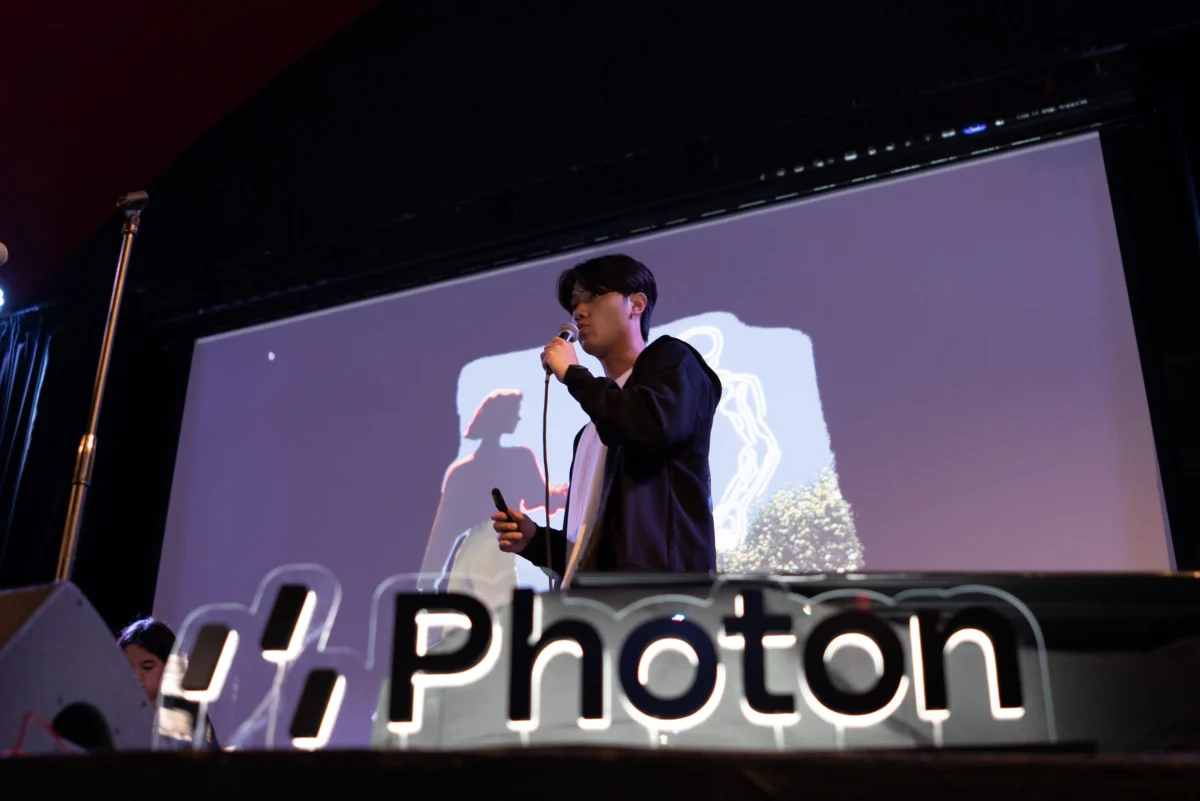
The AI startup Photon, a company boldly predicting the obsolescence of traditional mobile applications in favor of intelligent agents, recently punctuated its vision with a striking, albeit metaphorical, "app funeral." This unconventional event, held in a San Francisco church on September 17th, served as both a dramatic declaration of Photon’s core thesis and a developer day for the burgeoning company. The ceremony, complete with speeches and a symbolic coffin adorned with app icons, underscored Photon’s conviction that users will increasingly interact with services through conversational agents embedded within familiar messaging platforms like iMessage and WhatsApp, rather than downloading dedicated applications.
This provocative stance coincides with a significant financial milestone for Photon. The company has successfully closed a $4.5 million seed funding round, a testament to its rapid growth and the investor confidence in its agent-building platform. This capital infusion is poised to accelerate the development of Photon’s product suite and expand its reach within the developer community. The raise follows an impressive trajectory for the startup, which reports signing up over 40,000 developers and achieving a tenfold increase in revenue within a mere four-month period.

The Genesis of an Agent-Centric Future
The "app funeral" was not merely a publicity stunt; it was a deeply symbolic act rooted in the observations and experiences of Photon’s co-founder and CEO, Daniel Tian. Speaking at the event, which also featured panels with industry heavyweights such as Vercel, Stripe, and OpenAI, Tian elaborated on his belief that the era of app installation is gradually drawing to a close. "Honestly, it’s going to take a while, but I think, directionally, it’s inevitable," Tian stated, referring to the anticipated transition from standalone applications to integrated agent experiences.
The underlying philosophy driving Photon is that user behavior is evolving. In an increasingly saturated digital landscape, consumers are exhibiting a diminishing appetite for downloading and managing numerous individual applications. Instead, the demand is shifting towards seamless access to functionalities and services delivered through the messaging applications they already frequent daily. This includes platforms like Apple’s iMessage, Meta’s WhatsApp, Telegram, and others, which are becoming the de facto interfaces for a wide range of digital interactions.
Photon’s Platform: Empowering Developers in the Agent Economy
Photon positions itself as a crucial enabler for developers navigating this paradigm shift. The company offers a comprehensive suite of tools designed to facilitate the creation and deployment of intelligent agents capable of operating across multiple messaging channels. This platform includes a unified API, an extensible channel framework, a command-line interface (CLI), and an observability suite. Collectively, these components empower developers to build and manage agent experiences that can function seamlessly across iMessage, WhatsApp, Telegram, SMS, RCS, email, voice, and potentially other communication protocols.

The impetus for Photon’s creation stems from the co-founders’ own experiences as student developers. Daniel Tian and CTO Ryan Zhu frequently encountered a significant bottleneck when developing consumer applications: discoverability. Despite investing considerable effort into building functional apps, they struggled to attract users in a crowded marketplace. This challenge led them to explore alternative distribution models.
A pivotal moment arrived when Tian developed a bot that could impersonate him, responding to his friends’ messages over iMessage. Recognizing the potential of leveraging existing messaging infrastructure, they made the technology open-source on GitHub. The response was overwhelming, with thousands of developers adopting and contributing to the project. This early success validated their hypothesis and prompted Tian to defer his studies at UPenn’s M&T program, while Zhu left high school to pursue his research at MIT’s Media Lab.
A Timeline of Growth and Evolution
The journey of Photon can be traced through several key phases:

- Early Explorations (Pre-2023): Co-founders Daniel Tian and Ryan Zhu engage in student hackathons and develop consumer applications, encountering discoverability challenges.
- Open-Source Genesis (2023): Tian develops an iMessage bot, which is subsequently open-sourced on GitHub, leading to rapid developer adoption.
- Platform Development (Early 2024): The core technologies are refined, and the foundation for a managed platform begins to take shape.
- Managed Platform Launch (April 2024): Photon introduces a subscription-based hosted version of its product, offering enhanced reliability and compliance features.
- Significant Growth and Funding (Late 2024): The company reports substantial developer sign-ups, 10x revenue growth, and secures $4.5 million in seed funding.
Currently, the open-source version of Photon remains a cornerstone of its ecosystem, accounting for an impressive 98% of its overall usage. This indicates a strong community foundation and a robust developer interest in the underlying technology.
The Managed Platform: Reliability and Compliance for Enterprise Adoption
In April of this year, Photon transitioned to offering a managed platform, a move designed to cater to developers and businesses seeking a more robust and scalable solution. This hosted version boasts a remarkable 99.95% uptime, a significant improvement over the self-hosted open-source alternative. Furthermore, the platform is SOC 2 Type II and HIPAA-compliant, opening avenues for its application in sensitive sectors like healthcare, where regulatory adherence is paramount.
The introduction of paid subscription tiers has proven to be a catalyst for commercial adoption. Photon reports over 40,000 developer sign-ups across both its open-source and managed offerings. While specific revenue figures remain undisclosed, the company highlights a significant 10x increase in revenue. Additionally, Photon is experiencing less than 3% churn among its paying customers, signaling strong customer retention. The volume of messaging processed through its platform has also seen a dramatic surge, growing by 5x in the last month alone.

Diverse Applications and Strategic Partnerships
Photon’s platform is already being utilized by a diverse range of companies across various industries. Notable customers include Corgi Insurance, the social introductions app Boardy, Gen Z dating platform Ditto, business banking platform Rho, finance AI assistant Fliptexts, and AI email client Slashy. These examples illustrate the versatility of Photon’s technology in building agents for fintech, consumer AI, and other specialized vertical use cases.
The company has also forged significant technology integration partnerships, further solidifying its position in the AI ecosystem. Vercel, a prominent frontend cloud platform, is both a partner and a new investor in Photon. Vercel’s own offerings, Eve and ChatSDK, leverage Photon’s capabilities. Nous Research’s Hermes agent has adopted Photon as its default iMessage layer. Photon’s technology also serves as a foundational layer for Tencent’s QClaw and NanoClaw products. Furthermore, Photon has integrated with popular frameworks and infrastructure providers such as LangChain, Mastra, Convex, Render, Railway, and Telnyx, demonstrating its interoperability and adaptability within the broader developer landscape.
Investor Confidence and the Future of Agent-to-Agent Communication
The recent seed funding round, co-led by Gradient and A*, with significant participation from Vercel, HongShan, Z-Fellows, Llama Ventures, Karman, and various angel investors, underscores the market’s enthusiasm for Photon’s vision. Vercel’s involvement as both a strategic partner and investor is particularly noteworthy, indicating a shared belief in the future of conversational interfaces.

Across both its managed and open-source versions, Photon’s technology is estimated to reach millions of end-users, reflecting the scale of its current impact. However, Photon’s ambitions extend beyond facilitating human-to-agent interactions. Daniel Tian envisions a future where agents themselves will be able to autonomously discover and interact with other agents to fulfill complex user requests.
"I think, in the future, agents will be able to find you the agent that can do the right things – so it’s going to be the A-to-A communication layer," Tian explained. He provided a compelling example: an individual conversing with their AI travel assistant might see that assistant seamlessly pull in other specialized agents, such as a flight-booking agent or a hotel-booking agent, to manage different aspects of the travel planning process. "It’s been pretty powerful to observe the whole A-to-A-to-P [agent-to-agent-to-person] space," he added, highlighting the transformative potential of this evolving communication paradigm. This forward-looking perspective positions Photon not just as a builder of interfaces, but as a foundational architect of the next generation of digital interaction, where intelligent agents orchestrate a complex web of services on behalf of human users.