George Chandra Eka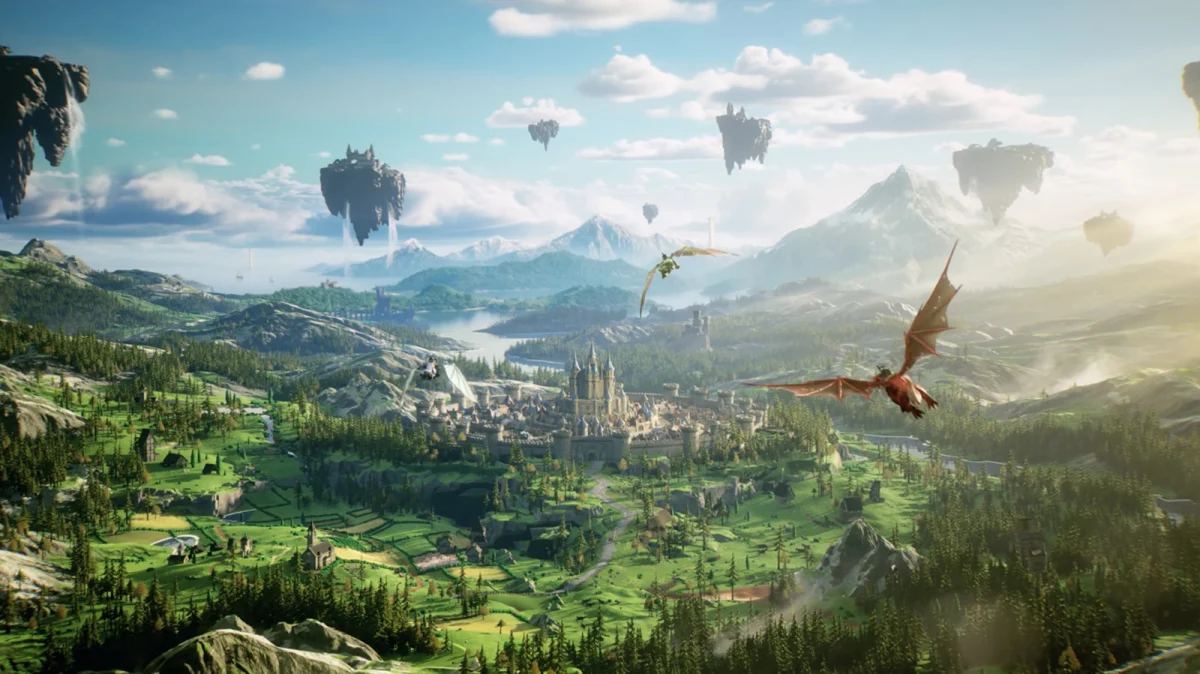
Jagex, the Cambridge-based developer renowned for its venerable massively multiplayer online role-playing game (MMORPG) RuneScape, has officially unveiled its next major installment, tentatively dubbed "RS4." The announcement, made during the company’s annual fan convention, RuneFest, signifies a significant technological and strategic pivot for the long-running franchise. While specific details remain under wraps, Jagex has confirmed that more information regarding the highly anticipated title will be revealed next year, building anticipation among its dedicated player base and the broader gaming community.
The fourth major entry into the expansive world of Gielinor marks a groundbreaking shift for Jagex, as it will be developed using Epic Games’ cutting-edge Unreal Engine. This departure from Jagex’s proprietary "RuneTek" engine, which has powered the RuneScape universe for over two decades, signals a profound commitment to modernizing the visual fidelity and gameplay mechanics of the beloved franchise. A minute-long accompanying trailer, showcased during RuneFest, offered a tantalizing glimpse into the new MMO, featuring dynamic visuals that suggest players will engage in epic encounters, including the ability to ride and combat formidable dragons. This immediate reveal, while brief, successfully set a tone of renewed ambition and enhanced graphical capabilities for the forthcoming title.
A Legacy Forged in Code: Jagex and the Evolution of RuneScape
To fully appreciate the significance of RS4, it is essential to contextualize Jagex’s storied history and the unique evolution of the RuneScape franchise. Founded in 1999 by Andrew Gower, Paul Gower, and Ian Gower, Jagex quickly rose to prominence with the release of RuneScape in 2001. Initially a browser-based Java game, it quickly garnered a massive following due to its accessibility, depth, and persistent online world. RuneScape earned a Guinness World Record for the most popular free MMORPG, a testament to its widespread appeal.
Over the years, RuneScape has undergone several transformative iterations. RuneScape 2 (later rebranded as RuneScape Classic upon the launch of RuneScape 3) introduced significant graphical and gameplay enhancements, solidifying its position as a genre giant. In 2013, Jagex launched RuneScape 3, a major overhaul that brought further graphical updates, a new combat system, and a narrative shift known as the "Sixth Age." Crucially, in response to overwhelming player demand for the game’s 2007 version, Jagex made the unprecedented decision to release Old School RuneScape in 2013, maintained and updated independently by a dedicated team. Old School RuneScape has since flourished, often eclipsing RuneScape 3 in player count, demonstrating the power of nostalgia and community-driven development. Both RuneScape 3 and Old School RuneScape have successfully expanded to mobile platforms, further broadening their reach.
Jagex’s proprietary RuneTek engine, developed internally, has been a cornerstone of these titles, allowing for efficient development and optimization across various platforms, especially important in its browser-based origins. While robust and highly optimized for its specific needs, RuneTek had inherent limitations in competing with the graphical prowess and advanced physics capabilities of modern game engines. The decision to transition to Unreal Engine for RS4 therefore represents not just an upgrade, but a strategic leap forward, aligning Jagex with contemporary industry standards for visual fidelity and development toolsets.
The Dawn of a New Era: Embracing Unreal Engine
The adoption of Unreal Engine for RS4 is arguably the most transformative aspect of the announcement. Unreal Engine is synonymous with high-fidelity graphics, advanced lighting, realistic physics, and sophisticated animation systems. For a franchise often characterized by its distinctive, albeit sometimes dated, art style, this move promises a dramatic visual overhaul. Players can anticipate a more immersive and visually stunning rendition of Gielinor, with detailed environments, character models, and special effects that were previously unattainable within the confines of RuneTek.
Beyond aesthetics, Unreal Engine brings a suite of powerful development tools that can streamline production, facilitate complex gameplay mechanics, and potentially attract a broader pool of development talent experienced with industry-standard engines. This shift could enable more dynamic combat, intricate environmental interactions, and a level of world design sophistication that aligns with modern MMORPG expectations. The move is a clear signal that Jagex intends for RS4 to compete not just within its own franchise, but also within the broader, highly competitive landscape of contemporary online gaming, where titles like World of Warcraft, Final Fantasy XIV, Guild Wars 2, and newer entrants like New World consistently push technological boundaries. The investment in Unreal Engine underscores Jagex’s ambition to position RS4 as a cutting-edge MMORPG capable of attracting both long-time fans and new players accustomed to visually rich gaming experiences.
Navigating Gielinor’s Sixth Age: Lore and Setting
While embracing modern technology, RS4 remains deeply rooted in the rich lore of Gielinor. Jagex has confirmed that the new MMO will be set in the Sixth Age, a pivotal period in RuneScape‘s narrative chronology. The history of Gielinor is traditionally divided into several "Ages," each marked by significant cosmic or world-altering events:
- First Age: The era of the Elder Gods and the creation of Gielinor.
- Second Age: The Age of the Mahjarrat and the rise of ancient empires.
- Third Age: The God Wars, a devastating conflict that reshaped the world.
- Fourth Age: A period of mortal ascendance following the withdrawal of the gods.
- Fifth Age: An era of rediscovery, exploration, and the re-emergence of forgotten powers.
- Sixth Age: The current era in RuneScape 3, characterized by the return of the gods, their subsequent banishment, and the resulting power vacuum, leading to new threats and opportunities for mortals.
RS4 will specifically take place years after the events of RuneScape: Dragonwilds. Dragonwilds was Jagex’s previous foray into the open-world survival genre, expanding the Gielinor universe in a different direction. The new game will begin in the Ashenfall area, a region first introduced in Dragonwilds. This strategic choice allows RS4 to leverage established lore and world-building from a recent Jagex title, providing a familiar yet fresh starting point for players. Setting the game firmly within the Sixth Age allows Jagex to explore new narrative avenues, introduce fresh challenges, and delve into the consequences of the gods’ actions and subsequent absence, offering a rich tapestry for new player adventures while honoring the extensive history of the franchise.
A Strategic Expansion: RS4’s Role in the RuneScape Ecosystem
One of the most crucial statements from Jagex regarding RS4 is its explicit positioning: it is not intended to replace any of the existing RuneScape titles. Instead, Jagex is "designing RS4 to sit alongside them as an additional way to experience RuneScape and the world of Gielinor." This multi-game strategy reflects a sophisticated approach to IP management, acknowledging the diverse preferences within its player base.
The success of Old School RuneScape, which thrives on its retro appeal and community-led development, stands in contrast to RuneScape 3‘s continuous evolution with modern content. By introducing RS4, Jagex is effectively expanding its portfolio to cater to a new demographic: players who seek a cutting-edge MMORPG experience with modern graphics and gameplay, while still being rooted in the familiar lore of Gielinor. This strategy mitigates the risk of alienating existing player bases, a common pitfall when developers attempt to replace a beloved game. Instead, Jagex aims to offer distinct experiences under the RuneScape umbrella, allowing players to choose the version that best suits their preferences.
From a business perspective, this diversification could lead to an expanded total addressable market. RS4 could attract players who have never engaged with RuneScape due to its older graphics, as well as lapsed players looking for a fresh take on the universe. It also provides an additional revenue stream for Jagex, potentially through subscriptions, cosmetic microtransactions, or expansion packs, complementing the existing monetization models of RuneScape 3 and Old School RuneScape. This approach positions Jagex not merely as a custodian of an old IP, but as an innovator actively growing and adapting its franchise for future generations of gamers.
From Expansion to Standalone: The Development Journey
The development trajectory of RS4 reveals an interesting evolution. Initially, the project was conceived as an expansion for RuneScape: Dragonwilds, titled Shadows of Ashenfall. However, as development progressed, the scope and vision for the game expanded significantly. According to reports, the project began to lean more towards the traditional MMORPG mechanics that characterize Jagex’s past successes, rather than remaining purely an open-world survival expansion. This organic shift led to the pivot towards creating a full-fledged, standalone MMORPG.
This evolutionary development process is not uncommon in the games industry, particularly for ambitious projects. It suggests a willingness by Jagex to adapt its plans based on creative vision and development realities, rather than rigidly adhering to initial concepts. The decision to make it a standalone title, rather than an expansion, implies a greater scale, deeper systems, and a more expansive world than originally envisioned. This also aligns with the "hugely ambitious project" descriptor given by Jagex. Such ambition inherently implies a longer development cycle, as confirmed by the statement that the game is "still a few years away." Developing a modern MMORPG from the ground up, especially with a new engine, requires substantial investment in time, resources, and talent, encompassing everything from world design and quest creation to backend infrastructure and server stability.
Beyond Gaming: The RuneScape Animated Series
Adding another layer to Jagex’s ambitious plans for the RuneScape IP, the company also announced the development of an animated series. This project is a collaboration between Lyrical Animation and the prominent YouTuber and content creator, MoistCr1TiKaL (Charles White Jr.). While still in its early stages, with more details promised for next year, this venture signifies Jagex’s intent to broaden the RuneScape universe beyond its gaming roots and into other forms of media.
Partnering with a figure like MoistCr1TiKaL is a savvy move. With millions of subscribers across platforms, he brings a massive, engaged audience that overlaps significantly with the gaming community. His involvement can generate considerable buzz and introduce the RuneScape lore to viewers who might not traditionally engage with MMORPGs. Lyrical Animation’s involvement suggests a commitment to quality production values for the series, aiming to translate the rich narratives and distinctive characters of Gielinor into an appealing visual format. This expansion into transmedia storytelling is a common strategy for major IPs, allowing for deeper immersion and new avenues for fan engagement, ultimately strengthening the overall brand presence of RuneScape.
Industry Implications and Future Outlook
The announcement of RS4 and the animated series signals a renewed and aggressive strategy from Jagex to revitalize and expand its core intellectual property. In an MMORPG market that has seen both long-standing titans and innovative newcomers, RS4 aims to carve out a unique space by combining a revered legacy with cutting-edge technology. The "years away" timeline provides ample opportunity for Jagex to refine its vision, build a robust game, and manage player expectations effectively.
Industry analysts will be watching closely to see how RS4 positions itself against its competitors and how Jagex manages its multiple RuneScape titles without cannibalizing its own player base. The success of this multi-pronged approach could serve as a blueprint for other developers with established but aging IPs. For the millions of RuneScape players worldwide, the future promises an exciting blend of nostalgia and innovation, with new ways to experience the magic and danger of Gielinor, both within the game world and through new narrative mediums. The coming year, with its promise of further details, will undoubtedly be a pivotal period for Jagex and the enduring legacy of RuneScape.