
 Clarissa Hana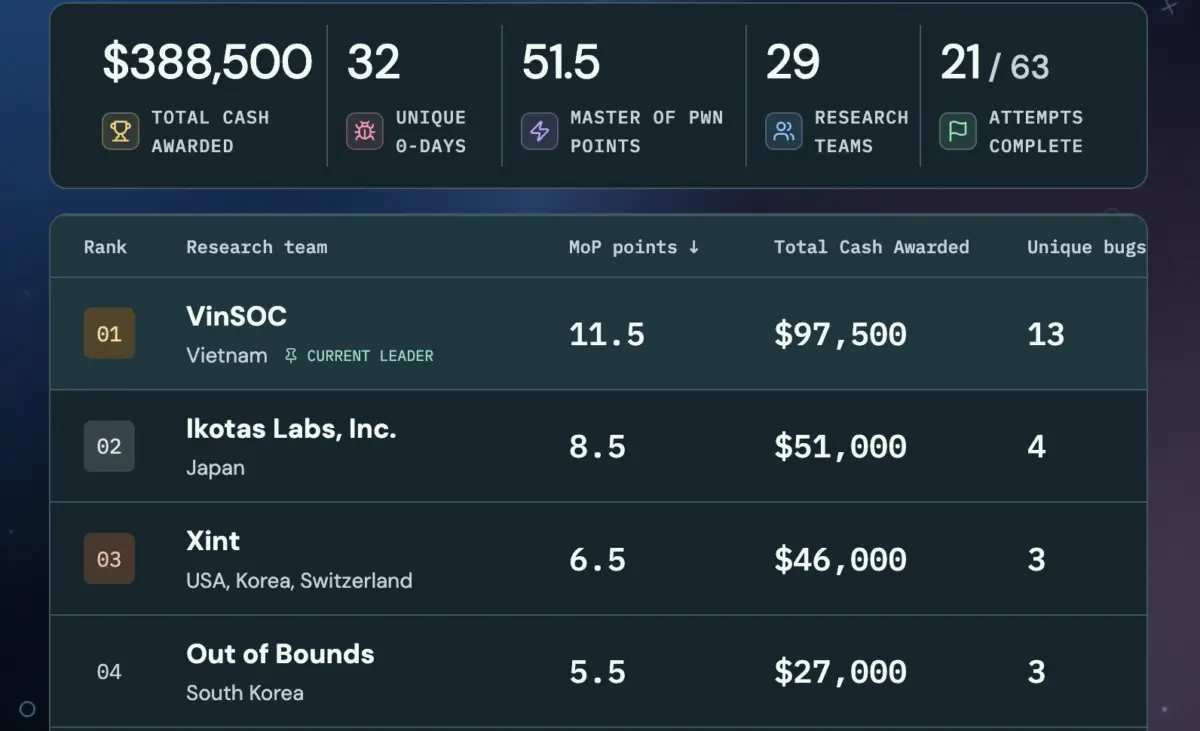
The highly anticipated Pwn2Own Ireland 2026 competition kicked off with a significant display of cybersecurity prowess, as security researchers demonstrated remarkable skill by successfully hacking the Samsung Galaxy S26 device on multiple occasions. The first day of the prestigious hacking contest concluded with researchers amassing a substantial $388,500 in prize money, a testament to the discovery and exploitation of 32 previously unknown vulnerabilities, commonly referred to as zero-days. This impressive haul underscores the persistent challenges in securing modern consumer electronics and sophisticated enterprise systems against determined attackers.
The Pwn2Own Ireland competition, a key event in the cybersecurity calendar, serves as a crucial platform for identifying and mitigating critical security flaws before they can be exploited by malicious actors. Organized by The Zero Day Initiative (ZDI), a program of Trend Micro, the contest brings together top security researchers from around the globe to test the security of a wide array of products across various categories. For Pwn2Own Ireland 2026, the scope was particularly broad, encompassing seven distinct categories designed to reflect the evolving landscape of digital threats. These included mobile phones, with the latest flagships from Apple (iPhone 17), Samsung (Galaxy S26), and Google (Pixel 10) under scrutiny. Beyond mobile devices, the competition also targeted printers, smart home devices, messaging applications, AI infrastructure, AI coding applications, and a novel category focused on wellness healthcare devices, highlighting the increasing intersection of technology and personal health.
Day One’s Highlights: A Deep Dive into Exploits
The initial day of Pwn2Own Ireland 2026 was marked by several significant breakthroughs, with the Samsung Galaxy S26 emerging as a primary target and a source of substantial earnings. Teams like Interrupt Labs, Ikotas Labs, and Nguyen Thanh Dat of Viettel Cyber Security successfully demonstrated exploits against the flagship Samsung device. While the specifics of each exploit chain are meticulously documented by ZDI, it was noted that in some instances, the underlying vulnerabilities, though zero-days in the context of the competition, were already known to the vendor, Samsung. This aspect of the competition often involves researchers chaining together previously undisclosed bugs with known vulnerabilities to achieve a successful compromise, demonstrating complex attack vectors.
The most notable success story of the day, however, belonged to V Chà Thà nh and Huỳnh Äức Tin from VinSOC. This formidable duo secured the top position on the leaderboard, not only for their technical prowess but also for the sheer volume and complexity of the vulnerabilities they uncovered. Their achievements included a staggering $40,000 prize for chaining seven zero-day vulnerabilities to successfully exploit a Philips Hue Bridge Pro smart lighting hub. This exploit highlights the potential for attackers to gain access to and control of smart home ecosystems, raising concerns about the security of interconnected living spaces. Adding to their remarkable day, they secured another $40,000 for a separate exploit chain involving five zero-day vulnerabilities targeting the Oracle Autonomous AI Database. This attack vector demonstrates the critical need for robust security measures within enterprise-level cloud infrastructure, particularly for sensitive data repositories.
The competition’s scope extended beyond mobile devices and smart home hubs. Security researchers also showcased zero-day exploits against LiteLLM, a framework that simplifies interaction with various large language models. Furthermore, the security of everyday office equipment was put to the test, with researchers successfully hacking Lexmark CX532adwe and Canon imageFORCE 1643F multifunction printers. These exploits could potentially allow attackers to gain network access through compromised printers, a common entry point in corporate environments.
In the burgeoning field of artificial intelligence, the competition saw researchers take down the OpenAI Codex cloud-based AI coding agent with a single argument-injection bug. This demonstration is particularly concerning, as it suggests that even advanced AI tools, designed to aid developers, could be manipulated for malicious purposes. Additionally, a Sonos Era 300 smart speaker was once again compromised, with researchers exploiting four vulnerabilities in a demonstration of persistent security challenges within smart audio devices.
Not all attempts were successful on the first day. Mikhail Evdokimov, Polina Smirnova, and Mate Zombor of White Noise Club targeted the Google Pixel 10, but unfortunately, their exploit did not function as intended within the allotted time. This underscores the highly competitive and time-sensitive nature of the Pwn2Own competition, where even minor timing issues or unexpected behaviors can thwart an otherwise well-prepared exploit.
Understanding Pwn2Own and Its Significance
The Pwn2Own competition, now in its latest iteration in Ireland, has a long-standing reputation for its rigorous testing of cybersecurity defenses. Its primary objective, as spearheaded by The Zero Day Initiative (ZDI), is to proactively identify zero-day vulnerabilities in commercially available software and hardware. By incentivizing researchers to discover and disclose these flaws in a controlled environment, ZDI aims to provide vendors with a critical window to develop and deploy patches before these vulnerabilities can be weaponized by cybercriminals.
The process is structured to ensure that vendors are given ample opportunity to address the discovered issues. Following a successful exploit demonstration at Pwn2Own, vendors are typically afforded a 90-day grace period to release security updates. If a vendor fails to provide a fix within this timeframe, ZDI reserves the right to publicly disclose the details of the vulnerability, thereby raising awareness and encouraging broader industry action. This transparent disclosure model is vital for pushing the industry towards more secure product development and rapid response to emerging threats.
Looking Ahead: Continued Challenges and Future Targets
The Pwn2Own Ireland 2026 competition is scheduled to continue for several more days, with researchers set to tackle a diverse range of devices and categories. The second day of the contest will see a renewed focus on AI infrastructure, printers, smart home devices, and wellness categories. Mobile devices will again be in the spotlight, with further attempts to exploit the Samsung Galaxy S26 and the Google Pixel 10. This indicates that the vulnerabilities found on day one may not be the only ones present in these popular devices, and vendors will continue to face scrutiny.
The third and final day of the competition promises further intense hacking activity. Researchers will again attempt to compromise the Google Pixel 10 and Samsung Galaxy S26 flagships, alongside a variety of smart home devices, AI infrastructure components, and printers. This multi-day approach allows for a comprehensive evaluation of the security posture of these products and the broader ecosystem in which they operate.
Contextualizing the Earnings and Previous Years
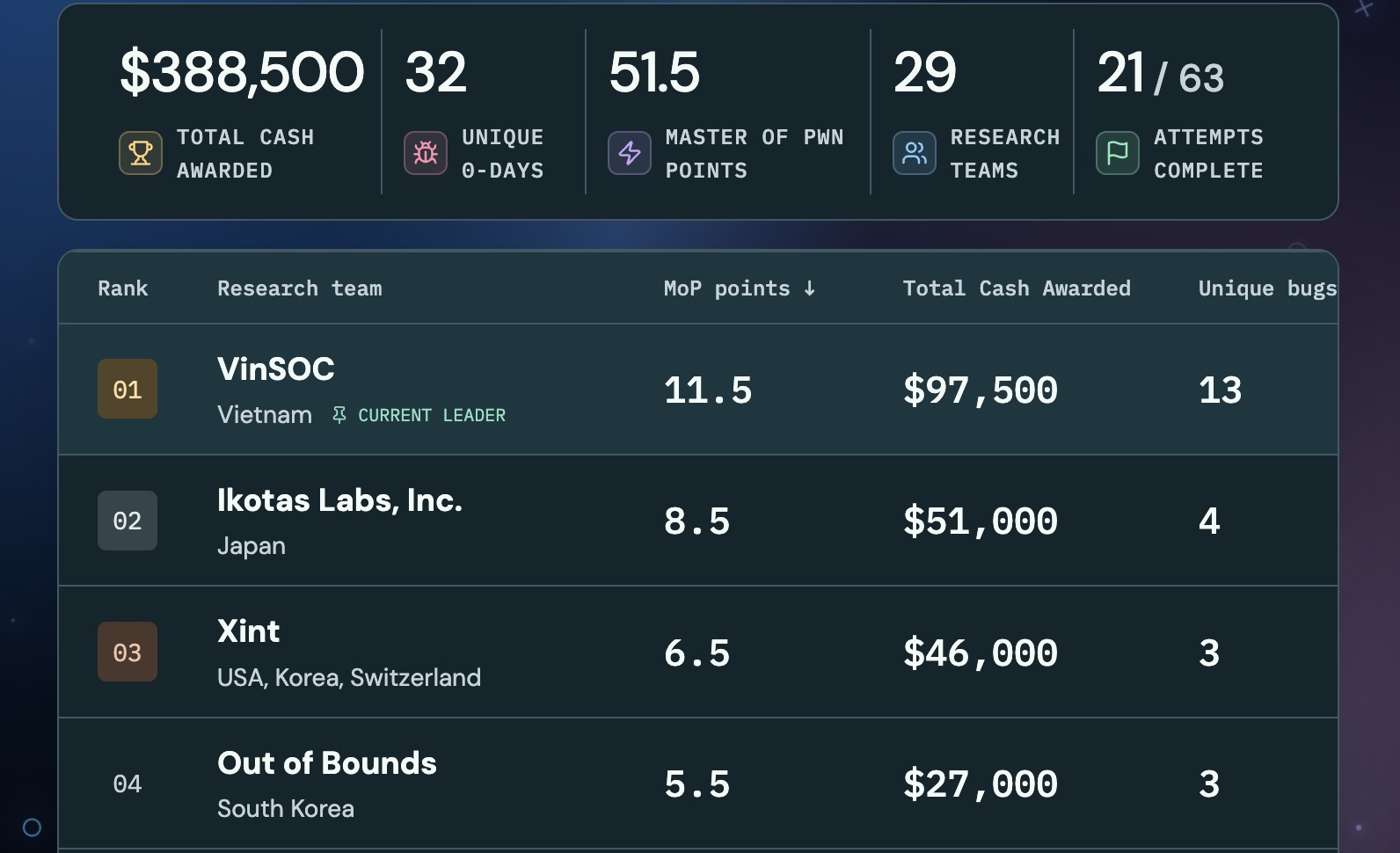
The $388,500 awarded on the first day of Pwn2Own Ireland 2026 is a significant sum, reflecting the high value placed on discovering critical security flaws. This figure is part of a larger trend seen in previous Pwn2Own events. For instance, during last year’s Pwn2Own Ireland event, security researchers collectively earned an impressive $1,024,750 for successfully demonstrating 73 zero-day flaws. The Summoning Team, a prominent participant in past competitions, had a particularly lucrative event, collecting $187,500 for a series of hacks. Their targets included the Samsung Galaxy S25, the Synology DiskStation DS925+ NAS, the Home Assistant Green, the Synology ActiveProtect Appliance DP320 NAS drive, the Synology CC400W camera, and the QNAP TS-453E NAS. These past successes highlight the consistent emergence of vulnerabilities across a wide spectrum of consumer and enterprise-grade hardware and software.
The substantial prize money awarded at Pwn2Own is not merely a reward for individual researchers; it represents a critical investment in global cybersecurity. By funding the discovery of these flaws, ZDI and its partners are essentially paying for the defense of millions of users worldwide. The competition serves as a powerful incentive for ethical hackers to dedicate their skills to improving digital security, rather than exploiting vulnerabilities for illicit gain.
Broader Implications for the Tech Industry and Consumers
The findings from Pwn2Own Ireland 2026 have far-reaching implications for both technology manufacturers and consumers. For vendors, the competition serves as a stark reminder of the continuous need for robust security development lifecycles, rigorous testing, and prompt patching of discovered vulnerabilities. The constant evolution of attack techniques necessitates a proactive and adaptive approach to security. The discovery of zero-days in devices like the Samsung Galaxy S26, Oracle Autonomous AI Database, and even AI coding agents suggests that no corner of the technology landscape is immune to sophisticated threats.
For consumers, the competition underscores the importance of keeping devices updated with the latest security patches. While the average user may not be directly involved in discovering these vulnerabilities, they are the ultimate beneficiaries of the efforts made at events like Pwn2Own. A well-patched device is significantly more resilient to known exploits, and the rapid disclosure and remediation facilitated by ZDI’s program contribute directly to user safety and data protection.
The inclusion of new categories, such as wellness healthcare devices and AI infrastructure, also signals a shift in focus that mirrors broader industry trends. As technology becomes more integrated into our lives and critical infrastructures, the security of these systems becomes paramount. The potential for exploitation in these sensitive areas raises important questions about regulatory oversight, industry best practices, and the ethical development of new technologies.
In conclusion, Pwn2Own Ireland 2026 has already proven to be a significant event, showcasing the ingenuity of security researchers and highlighting critical vulnerabilities across a range of popular devices and technologies. The substantial earnings on day one are a clear indicator of the ongoing battle against cyber threats and the vital role that ethical hacking plays in fortifying our digital world. As the competition progresses, further insights and vulnerabilities are expected to be uncovered, providing valuable intelligence for vendors and a more secure digital environment for everyone.








