
 Galang Taruna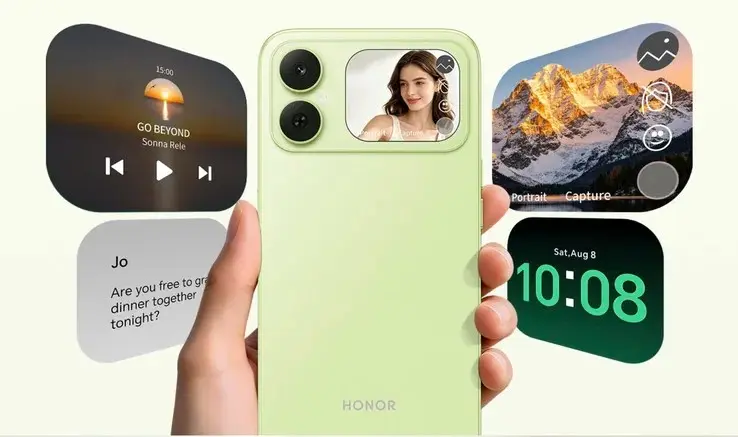
Honor has officially added the Play20C, an entry-level smartphone featuring a distinctive small touchscreen on its rear panel, to its international website. This strategic move marks the second instance in just six weeks where the brand has integrated this innovative design element into its budget-friendly Play series, following the introduction of the Play20A in late August. The device, which has already made its debut in Nigeria with an approximate price tag of 100 euros (149,900 nairas for the 4GB RAM/64GB storage variant), signals a deliberate effort by Honor to democratize features typically reserved for high-end flagship models, challenging prevailing industry trends.
A Bold Step in Entry-Level Innovation
The unveiling of the Honor Play20C on Honor’s global portal is more than just a product launch; it represents a significant shift in how smartphone manufacturers approach feature differentiation in the highly competitive entry-level segment. Historically, auxiliary screens, particularly on the rear of a device, have been a hallmark of premium smartphones, often serving as a niche luxury for early adopters of advanced technology. Companies like Xiaomi, for instance, introduced such screens on their "Pro" models, albeit primarily targeting the Chinese domestic market. Honor, however, is now taking this concept and deploying it at the opposite end of the pricing spectrum, aiming to make a unique selling proposition accessible to a much broader consumer base worldwide.
This strategy is particularly noteworthy given the fierce competition in the sub-200 euro smartphone market, where margins are thin and differentiation often comes down to incremental improvements in core specifications. By incorporating a rear touchscreen, Honor is attempting to disrupt this dynamic, offering a tangible, user-facing innovation that stands out from the crowd of similar-looking and similarly-specced devices. While a "global" listing doesn’t guarantee availability in every single market, it strongly indicates Honor’s intent to position the Play20C as a key player in its international portfolio, especially in emerging markets where budget-friendly yet feature-rich devices are in high demand.
The Functional Allure of the Rear Display
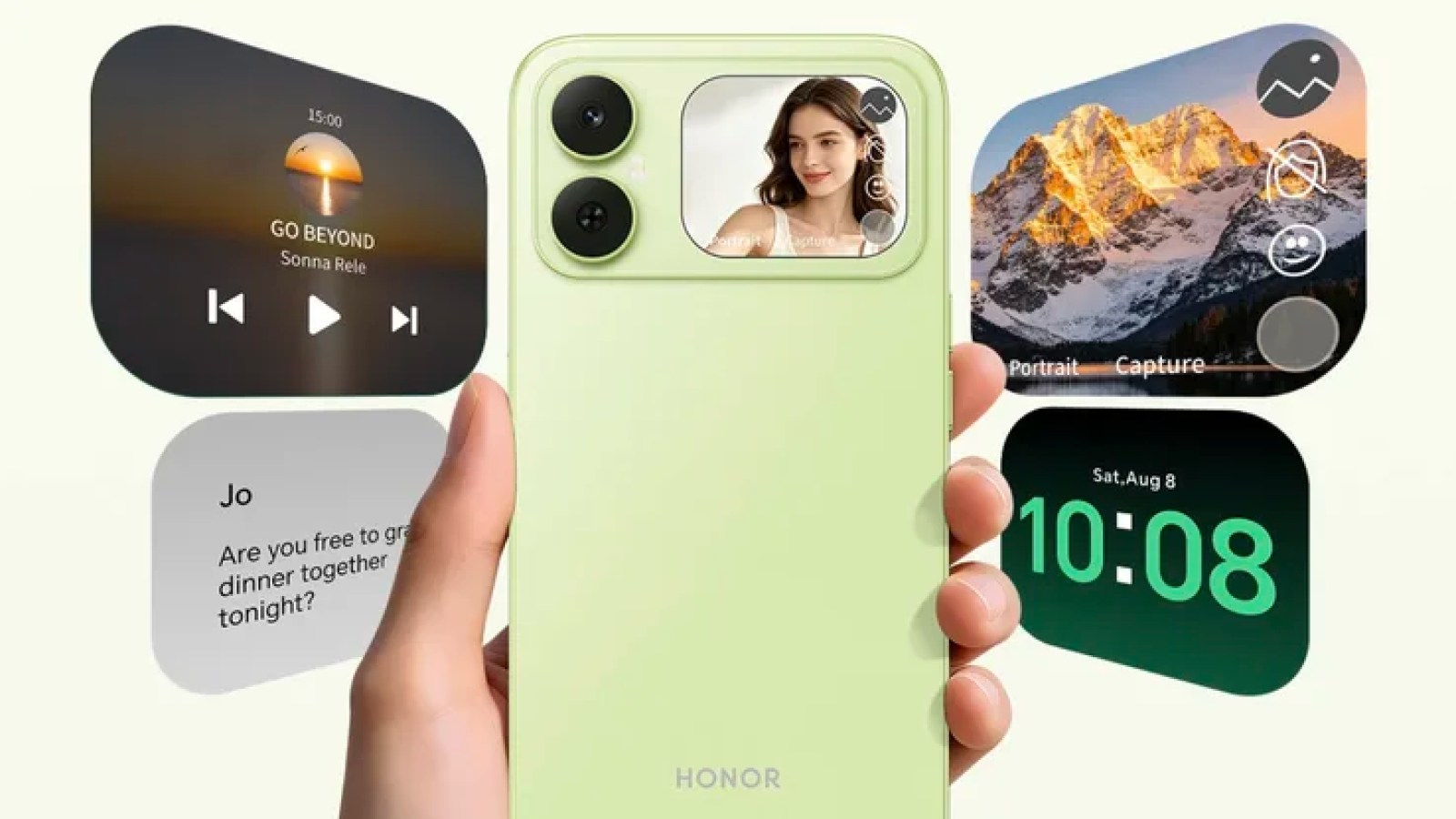
The small secondary screen on the Honor Play20C is not merely an aesthetic embellishment; it boasts practical functionalities designed to enhance the user experience. Measuring 2.01 inches with a resolution of 240 x 296 pixels, its dimensions are comparable to those found on many smartwatches, making it compact yet sufficiently informative. Positioned alongside the primary 13-megapixel camera, its main advertised utility is as a viewfinder. This allows users to flip the phone around and utilize the superior rear camera for high-quality selfies or vlogs, accurately framing their shots on the small display before activating the shutter with a single tap. This eliminates the common trade-off between front-facing camera convenience and rear-camera quality, offering the best of both worlds without relying solely on the typically lower-resolution 5-megapixel front camera.
Beyond its role in photography, the rear screen serves as a convenient portal for essential notifications. It can display incoming call alerts, allowing users to quickly see who is calling without fully unlocking the main screen. Furthermore, it offers quick access to music controls, enabling users to play, pause, or skip tracks with ease, even when the main display is off or facing away. These features, while seemingly minor, contribute significantly to the phone’s overall usability and offer a level of convenience not typically found in this price category, potentially setting a new benchmark for what consumers can expect from an entry-level device.
Technical Specifications: Balancing Cost and Features
While the rear screen is the standout feature, the Honor Play20C’s core specifications reflect its positioning as an entry-level smartphone, carefully balancing performance with affordability. The main display is a generous 6.78-inch LCD panel, offering HD+ resolution (720 x 1576 pixels). A notable upgrade for this segment is the 90Hz refresh rate, providing a smoother visual experience compared to the standard 60Hz screens often found in budget devices. This higher refresh rate contributes to a more fluid scrolling experience and improved responsiveness, enhancing daily interactions.
Under the hood, the Play20C is powered by an Unisoc T610 chipset. Unisoc processors are commonly found in affordable smartphones, offering adequate performance for basic tasks, social media, and light gaming. Honor also offers a variant with the Unisoc T615, which, while featuring slightly slower ‘small’ cores, benefits from a more recent and potentially more efficient graphics processing unit. Memory configurations range from 3GB of RAM paired with 32GB of internal storage to 4GB of RAM with 128GB of storage. Crucially, all configurations support expandable storage up to 1TB via a microSD card, addressing the common concern of limited storage in budget devices.
Powering the device is a substantial 5,850 mAh battery, a capacity that promises extended usage times, easily lasting a full day or even more for many users. However, the charging speed is capped at 15 watts, which is relatively slow for a battery of this size, meaning full recharges will require a significant amount of time. Connectivity-wise, the Play20C supports 4G LTE but foregoes 5G capabilities, a common omission in the entry-level segment to keep costs down. It retains the increasingly rare 3.5mm headphone jack, a welcome feature for users who prefer wired audio. The phone also boasts an IP52 rating, offering protection against light splashes and dust, adding a layer of durability.

Software Experience: Android 16 Go Edition
To ensure smooth performance despite the modest hardware, the Honor Play20C runs on Android 16 Go Edition. This optimized version of Android is specifically designed for devices with lower RAM and storage, offering a streamlined operating system experience. Android Go Edition features lighter versions of Google’s core apps (e.g., Google Go, Gallery Go, YouTube Go), which consume less data, storage, and processing power. This focus on efficiency helps to mitigate potential slowdowns and ensures a more responsive user experience than a full-fledged Android version on similar hardware. The choice of Android Go further reinforces Honor’s commitment to delivering a functional and accessible smartphone experience within the constraints of its price point.
Strategic Parallels and Divergences: Honor vs. Xiaomi
The introduction of the rear screen on the Play20C highlights a fascinating strategic divergence between Honor and its competitors, particularly Xiaomi. Xiaomi was an early proponent of secondary rear screens, notably with its 18 Pro models. However, Xiaomi’s approach positioned this feature as a premium innovation, often limiting its availability to high-end devices and specific markets, primarily China. This created an aura of exclusivity around the feature, showcasing technological prowess without necessarily aiming for mass-market adoption.
Honor, by contrast, is taking an entirely different route. By integrating the rear screen into its entry-level Play series, it is actively working to democratize the technology. This strategy transforms the rear screen from a luxury differentiator into a core selling point for an affordable device. This move could be interpreted as Honor’s attempt to carve out a unique identity in the global market, especially as it rebuilds its brand post-separation from Huawei. By offering distinctive features in accessible price brackets, Honor aims to capture consumer attention and loyalty, demonstrating that innovation isn’t solely reserved for flagship devices. This aggressive push into the entry-level segment with a premium-tier feature could force other manufacturers to re-evaluate their own product roadmaps and feature distribution strategies.
The Play Series Expansion: Play20C and Play20A

The Play20C is not an isolated initiative but part of a broader strategy within Honor’s Play series. Its predecessor, the Honor Play20A, was launched on international markets just six weeks prior, in late August, also featuring a rear display. While both models share the core concept of a secondary screen, they exhibit key differences in their main specifications. The Play20A, for instance, sports a slightly larger 6.9-inch main display and is powered by a MediaTek Helio G81 chipset, which generally offers a modest performance boost over the Unisoc T610/T615. This parallel development suggests that Honor is not just testing the waters with the rear screen concept but is actively integrating it across different variations within its budget line, indicating confidence in its appeal and utility.
Furthermore, the Play20C is essentially the international variant of the Honor X5d s, which was released shortly before in South Africa. The international version distinguishes itself with the option of the T615 chipset and an additional gold color option, alongside the existing green and black choices. This regional adaptation and rapid global rollout underscore Honor’s agile market strategy, allowing it to quickly respond to market demands and deploy new features across different territories.
Broader Market Implications and Future Outlook
Honor’s aggressive strategy with the Play20C and Play20A carries significant implications for the global smartphone market. By bringing a once-premium feature to the budget segment, Honor is effectively raising consumer expectations for what an affordable smartphone should offer. This could pressure rival brands to either match this innovation or find alternative ways to differentiate their entry-level offerings, potentially leading to a new wave of feature trickle-down from high-end to low-end devices.
For Honor itself, this move is a calculated risk. While the rear screen offers a clear differentiator, the success of the Play20C will ultimately depend on consumer perception of its practical value versus the overall basic specifications of the phone. In markets like Nigeria, where price sensitivity is high and users are constantly seeking maximum value, a unique feature like a rear screen could indeed be a compelling draw. However, the relatively slow charging speed and the absence of 5G might be drawbacks for some users, even in the entry-level segment.
Industry analysts suggest that Honor’s decision underscores a broader trend in the smartphone industry where innovation is no longer confined to top-tier devices. As core smartphone technologies mature, manufacturers are increasingly exploring novel form factors and user interfaces to maintain consumer interest. Honor, by positioning itself as an innovator in the budget category, aims to cultivate a reputation for accessible technology and smart design. Whether this bold strategy will translate into significant market share gains remains to be seen, but it certainly ensures that the Honor Play20C will not be just another face in the crowded entry-level smartphone market. It represents a statement from Honor: innovation, in its most tangible forms, is for everyone, regardless of their budget.








