
 Vera Intan Clara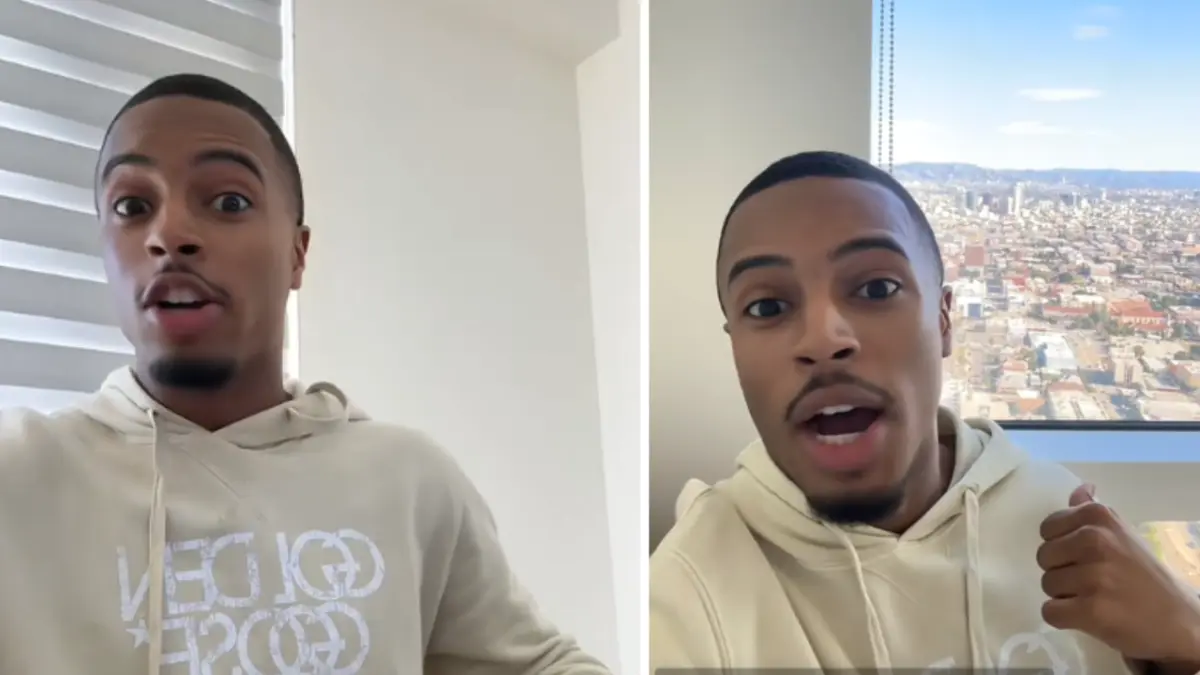
A recent viral TikTok video by DeAndre Brown, known as @imdrebrown on the platform, has propelled the conversation around workplace boundaries and intergenerational expectations into the global spotlight. Brown, a self-identified Gen Z employee, shared his non-negotiable stances regarding his professional life, advocating for strict adherence to working hours, refusal of unpaid labor, and the prioritization of mental health. The video quickly amassed significant traction, garnering 1.2 million likes and nearly 4,000 comments, illustrating a widespread resonance with his perspective and sparking a robust dialogue among employees from various generations regarding their own approaches to work-life integration and employer expectations.
The core of Brown’s video detailed several specific boundaries he maintains. He explicitly stated his refusal to take meetings during his designated lunch break, asserting his entitlement to this personal time and suggesting that such requests should result in rescheduling or cancellation. Furthermore, Brown highlighted his practice of ceasing work precisely at 5 p.m., emphasizing that he will not engage in "off the clock" labor. A crucial element of his boundary setting also included the regular utilization of mental health days, which he plans to take monthly to proactively prevent burnout, underscoring the importance of employer understanding and acceptance of such practices. While these requests might appear reasonable within a modern framework of employee welfare, the video’s immense engagement indicates that these expectations are not universally accepted or practiced across all workplaces, leading to a significant divergence in perspectives between employees and some employers.
The Rise of Gen Z in the Workforce and Shifting Paradigms
DeAndre Brown’s video is not an isolated incident but rather a prominent manifestation of a broader generational shift occurring within the global workforce. Gen Z, generally defined as individuals born between the mid-to-late 1990s and the early 2010s, are rapidly becoming a dominant demographic in professional environments. By 2025, Gen Z is projected to constitute 27% of the workforce in OECD countries, bringing with them a distinct set of values, priorities, and expectations that are reshaping traditional workplace norms. Unlike preceding generations who often prioritized career advancement and financial stability above all else, Gen Z, having grown up in an era of rapid technological change, economic precarity, and heightened awareness of social and environmental issues, places a strong emphasis on work-life balance, mental well-being, authenticity, and purpose-driven work.
This generation entered the workforce during a period of unprecedented global upheaval, notably the COVID-19 pandemic, which dramatically accelerated conversations around remote work, flexible schedules, and the intrinsic value of employee well-being. The pandemic blurred the lines between professional and personal lives for many, leading to increased burnout but also catalyzing a re-evaluation of what employees are willing to tolerate from their jobs. Gen Z, along with many Millennials who also experienced the pandemic’s impact, has been at the forefront of demanding more humane and sustainable working conditions, challenging the long-standing "hustle culture" that often celebrated overwork and self-sacrifice.
A Chronology of a Viral Moment and Its Message
DeAndre Brown’s TikTok video, uploaded recently, quickly captured public attention due to its direct and unequivocal stance on workplace conduct. The video’s narrative unfolded with Brown outlining his personal rules for engagement in his corporate role. He began by addressing the common practice of informal meeting requests during lunch breaks. Brown firmly stated his policy: "I won’t take a meeting during my lunch break because I believe I’m entitled to that break. Instead, I’ll ask if the meeting can be canceled or moved." This particular point resonated deeply with many who feel their personal time is frequently encroached upon by work demands.
He then transitioned to the concept of working beyond contracted hours, a prevalent issue in many professional settings. "As an employee, his computer shuts off right at 5 p.m. He’s not going to keep working off the clock," Brown declared, emphasizing a clear demarcation between paid and unpaid labor. This boundary directly confronts the expectation, often unspoken, that employees should be available and working beyond their scheduled shifts, a practice that can lead to wage theft or uncompensated overtime.
Finally, Brown addressed the increasingly vital topic of mental health in the workplace. He articulated his intention to take a mental health day once a month to prevent burnout, stressing that "his company needs to understand what they are because he plans to take one once a month to keep himself from burning out." This proactive approach to mental well-being highlights a significant shift from previous generations, where mental health issues were often stigmatized and rarely discussed openly in professional contexts. The combination of these three tenets—respect for breaks, refusal of unpaid work, and proactive mental health management—formed the core of Brown’s message, igniting a fervent discussion across the digital landscape.
Supporting Data and Shifting Employee Priorities
The widespread endorsement of Brown’s views is supported by numerous studies and surveys reflecting a profound shift in employee priorities. According to a 2022 Deloitte survey on Gen Z and Millennials, 49% of Gen Z and 45% of Millennials reported feeling stressed all or most of the time, with workload and lack of work-life balance cited as primary contributors. The survey also found that 40% of Gen Z and 43% of Millennials would consider leaving their jobs within two years due to burnout. These statistics underscore the critical importance of mental health provisions and sustainable work practices for retaining younger talent.
Furthermore, data from a 2023 Gallup poll revealed that younger generations are more likely to prioritize work-life balance and personal well-being over higher pay or career advancement. For instance, 61% of Gen Z and 56% of Millennials ranked "opportunity to do what I do best" and "work-life balance and well-being" as more important than a "significant increase in income." This contrasts sharply with older generations, where financial incentives often held a more dominant position. This paradigm shift suggests that companies failing to adapt to these new priorities risk not only losing valuable employees but also struggling to attract new talent in an increasingly competitive labor market.
The concept of "quiet quitting," where employees stick strictly to their job descriptions and refuse to go above and beyond without extra compensation or recognition, has also gained traction, particularly among younger workers. This phenomenon, while distinct from Brown’s proactive boundary setting, shares the underlying principle of refusing uncompensated labor and reclaiming personal time. A 2022 study by the Society for Human Resource Management (SHRM) indicated that 53% of employees across all generations report experiencing burnout, but the rate is notably higher among younger demographics, reinforcing the urgency of implementing effective work-life balance strategies.
Intergenerational Reactions and Employer Adaptation
The comments section of DeAndre Brown’s TikTok video became a vibrant forum for intergenerational dialogue, revealing both solidarity and differing perspectives. Gen Z employees, in particular, echoed Brown’s sentiments with striking assertiveness. "I’m a Gen Z in corporate. If you are not paying me to do it I AM. NOT. DOING. IT," one commenter unequivocally stated, encapsulating the generation’s clear stance on compensation for labor. Another, adopting a more audacious tone, wrote, "I am a Gen Z in corporate. You should be grateful I even appear at work." These comments, while perhaps exaggerated for effect, reflect a general unwillingness among younger workers to tolerate exploitation or take on responsibilities outside their defined roles without appropriate remuneration or recognition. The example of "I’m a Gen Z in corporate. Ofc I’m on the plane before my leave is approved. Byeeeeee," highlights a proactive and assertive approach to personal time, prioritizing it over potential bureaucratic delays.
Beyond the specific boundaries, Gen Z commenters also challenged established corporate norms, such as the necessity of certain meeting formats. "I’m a Gen Z in corporate. Why are we having a Zoom call when you could’ve sent an email?" one person questioned, reflecting a preference for efficient, asynchronous communication over potentially time-consuming and often redundant virtual meetings. Others shared their own flexible work habits, such as taking Zoom meetings from bed or taking mental health days once a week, further illustrating a demand for autonomy and comfort in their work environments.
Significantly, the conversation was not limited to Gen Z. Millennials, often considered a bridge generation, expressed strong support for Gen Z’s outspokenness. "As a millennial in healthcare, I appreciate Gen Z making it more acceptable to stand up for yourself/your rights in the workplace," one commenter wrote, acknowledging the positive influence of younger workers in normalizing assertive boundary-setting. Another Millennial added, "I’m a millennial and AGREED, also not working while I’m off. Lmao these people be on leave sending emails huhhh," highlighting a shared frustration with the erosion of personal time and expressing solidarity with Gen Z’s pushback. These comments suggest that Gen Z’s advocacy is empowering other generations to articulate their own needs and demand better working conditions, fostering a collective movement towards healthier workplace cultures.
From an employer’s perspective, this trend presents a complex challenge and an opportunity. While some traditional organizations may view these demands as signs of entitlement or a lack of commitment, progressive companies are increasingly recognizing the necessity of adapting to these evolving expectations. Human Resources departments and corporate leaders are grappling with how to balance productivity goals with employee well-being, especially as Gen Z becomes a critical source of talent. Companies that demonstrate flexibility, respect boundaries, and genuinely support employee mental health are more likely to attract and retain top talent, gaining a competitive edge in the labor market. Organizations are increasingly investing in well-being programs, flexible work options, and clearer communication protocols to address these generational shifts.
Broader Implications for the Future of Work
The viral moment created by DeAndre Brown’s video carries significant implications for the broader landscape of work. It signals a fundamental re-evaluation of the social contract between employers and employees. The traditional model, which often expected employees to demonstrate unwavering loyalty and sacrifice personal time for career advancement, is being actively challenged. This shift is not merely a generational preference but a potential catalyst for systemic changes in corporate policy, management styles, and even labor laws.
One major implication is the potential for increased focus on quantifiable output rather than hours spent. If employees are firm about their working hours, employers may be incentivized to define roles and tasks more clearly, focusing on deliverables rather than mere presence. This could lead to more efficient work processes and a reduction in unproductive "face time."
Moreover, the emphasis on mental health days highlights a growing recognition of employee well-being as a critical component of productivity and retention. Companies that integrate robust mental health support and flexible leave policies are likely to see reduced burnout, improved employee morale, and lower turnover rates. This could lead to a more holistic approach to employee benefits, extending beyond traditional health insurance to include comprehensive well-being programs.
The dialogue also underscores the increasing power of collective employee voice, amplified by social media platforms. Individual acts of boundary-setting, when shared and supported online, can quickly snowball into broader movements, putting pressure on organizations to adapt or risk reputational damage and difficulties in talent acquisition. This phenomenon indicates a shift towards a more transparent and employee-centric corporate culture, where employee experiences and expectations are openly discussed and validated.
In conclusion, DeAndre Brown’s viral TikTok video is far more than a fleeting social media trend; it is a powerful symbol of a profound generational recalibration of workplace expectations. It encapsulates Gen Z’s unwavering commitment to work-life balance, mental well-being, and fair labor practices, inspiring not only their peers but also older generations to assert their rights in the workplace. As Gen Z continues to grow its presence and influence, companies that embrace these evolving norms—by respecting boundaries, prioritizing mental health, and fostering a culture of trust and flexibility—will be best positioned to thrive in the future of work. The conversation initiated by Brown underscores the urgent need for mutual understanding and adaptation, charting a course towards a more equitable and sustainable professional landscape for all.
The Daily Dot was unable to independently verify the claims made in the video, which are based solely on DeAndre Brown’s account of his workplace experiences shared on TikTok under the handle @imdrebrown.








