Vera Intan Clara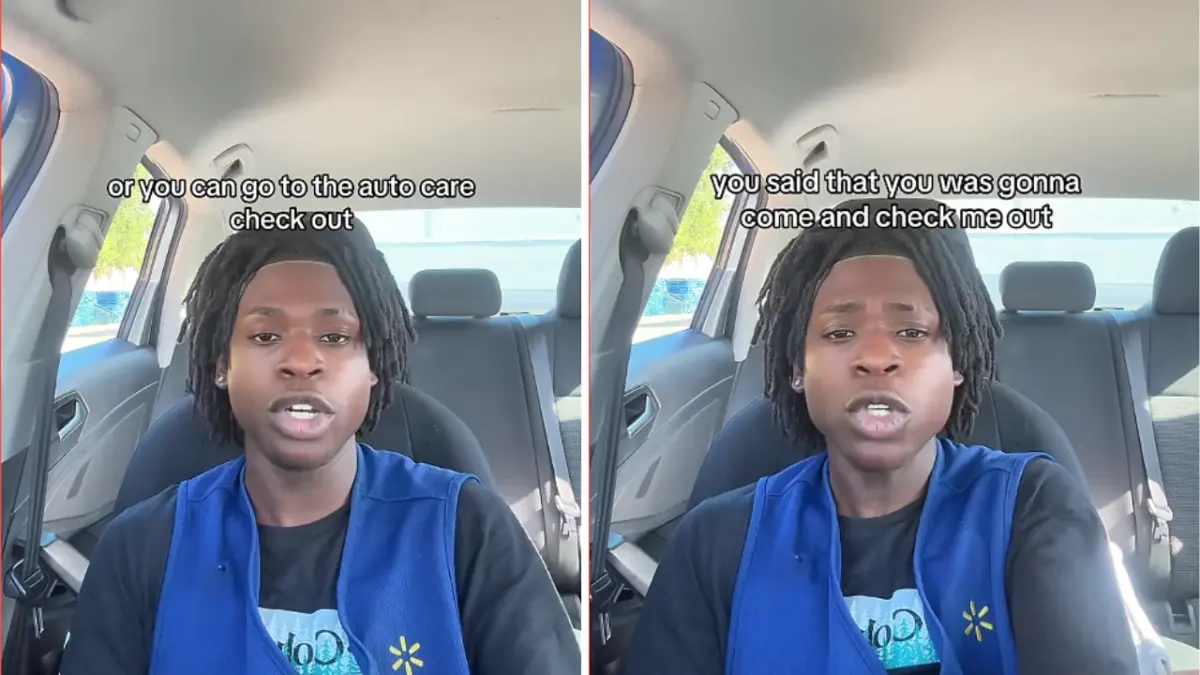
A viral TikTok video posted by content creator @skylouieeeee, which rapidly accumulated over 71,000 views and 96 comments, has cast a spotlight on the pervasive issue of customer hostility faced by frontline retail employees. The video details an encounter between the creator, a Walmart employee, and an elderly customer, whom the creator characterized as exhibiting aggressive behavior when circumstances did not align with his expectations. This incident, while specific, resonates with a broader narrative of increasing verbal abuse and confrontational interactions reported by retail workers across various establishments, prompting a renewed discussion about employee protection and the evolving dynamics of customer service in the modern retail landscape.
The encounter, as narrated by the TikToker, began during his shift when an elderly male customer approached him seeking an alternative checkout option. The customer expressed frustration over the length of the main checkout lines and inquired about quicker ways to complete his purchase. In response, the Walmart employee provided guidance, directing the customer to either the electronics department checkout or the auto care department checkout. Crucially, he stipulated that these specialized registers were typically reserved for customers with fewer than 15 items in their carts, a common policy designed to expedite transactions in specific departments. It is important to note, as the TikToker clarified in his video, that he was not assigned to either the auto care or electronics departments, nor did he imply that he would personally be the cashier assisting the customer at those locations. His role was merely to provide directional assistance and information regarding store policies.
After the customer confirmed he had fewer than 15 items, the Walmart employee suggested the electronics checkout, hypothesizing that it was less likely to have a long queue at that particular time. The customer, seemingly satisfied with this information, proceeded toward the electronics department. The interaction appeared to conclude there, with the employee returning to his duties.
A Detailed Chronology of the Confrontation
The initial exchange unfolded during the TikToker’s regular work shift, with the customer initiating contact due to perceived long wait times at the primary checkout lanes. The employee, acting in a customer service capacity, offered two viable alternatives: the electronics checkout or the auto care checkout, both subject to a 15-item limit. This advice was given in good faith, based on standard store operational knowledge.
Approximately 30 minutes later, as the Walmart employee was preparing to commence his scheduled lunch break, he observed the same elderly gentleman at the electronics checkout stand. To the employee’s surprise, upon seeing him, the customer immediately confronted him in an agitated manner. The customer’s exact words, as recounted in the video, were, "Hey, what the hell is your problem?! You said that you were gonna come and check me out. What took you so long?"
The TikToker, taken aback by the accusation, promptly reminded the customer that he had never made such a promise. He reiterated that his role had been limited to advising the customer on alternative checkout locations, not to personally process his transaction. Despite this clarification, the customer’s demeanor escalated. According to the video, the customer then descended into a fit of rage, reportedly slamming his head on his shopping cart and exclaiming, "Sir, I’ve been waiting on you for over 30 minutes for me to check out. . . You even told me to come over here!"
The employee attempted to de-escalate the situation by explaining that his inability to personally assist was due to his departmental assignment; he worked in the auto care section, not electronics, and therefore could not operate the electronics register. This explanation, however, appeared to further inflame the customer, who remained convinced that the employee had reneged on a commitment he had never made. The incident highlights a significant communication breakdown, coupled with what appears to be a customer’s misinterpretation of the employee’s instructions and an unwillingness to accept the subsequent clarification.
The Broader Context of Retail Worker Abuse
This incident at Walmart is not an isolated occurrence but rather a microcosm of a larger, systemic problem plaguing the retail industry. Data from various sources consistently indicates a worrying trend of increased aggression towards frontline retail workers. The National Retail Federation (NRF) has repeatedly highlighted the rising tide of retail crime and violence, which often includes verbal abuse and physical assault against employees. A 2023 NRF report, for instance, indicated that retail shrink — a term referring to losses from theft, error, and fraud — had reached an all-time high, with a significant portion attributed to external theft, often accompanied by violent encounters. While not directly theft-related, the aggressive customer behavior described in the TikTok video contributes to a hostile work environment that parallels the broader safety concerns.
The COVID-19 pandemic further exacerbated these issues. With heightened stress, supply chain disruptions, and new health protocols, customers’ frustrations often boiled over, disproportionately impacting essential retail workers. Surveys conducted by organizations representing retail workers have shown that a substantial percentage of employees report experiencing verbal abuse, harassment, or threats on a weekly or even daily basis. This creates a challenging and often demoralizing work environment, contributing to high rates of employee turnover in an already demanding sector.
Understanding Retail Checkout Systems and Customer Expectations
Large retail chains like Walmart operate complex systems designed to manage high volumes of transactions efficiently. These typically include:
- Front-end Checkouts: Traditional cashier-operated lanes for general merchandise.
- Self-Checkout Kiosks: Automated systems empowering customers to scan and pay for their items, often with a dedicated attendant for assistance.
- Department-Specific Checkouts: Registers located within specialized departments (e.g., electronics, jewelry, auto care, garden center) that serve customers purchasing items primarily from that department or those with a limited number of items, to alleviate pressure on main lines and provide specialized service.
The policy of limiting items at department-specific checkouts, such as the 15-item rule mentioned by the Walmart employee, is a common operational strategy. It ensures that these registers can quickly process smaller transactions, preventing them from becoming bottlenecks for customers who might require more specialized product assistance or who have very few items. However, these varied systems, while efficient for the store, can sometimes lead to confusion for customers who may not be familiar with the nuances of each option or who expect a uniform service experience regardless of location within the store.
Furthermore, generational differences in familiarity with evolving retail technology and service models can play a role. Older customers, accustomed to a more traditional retail experience with readily available cashiers at every point, might find the proliferation of self-checkout and specialized departmental rules less intuitive or even frustrating. This is not to generalize or stereotype, but to acknowledge that different customer segments may have varying expectations and interpretations of store guidance.
Reactions from the Retail Community and Broader Implications
The comments section of @skylouieeeee’s TikTok video quickly became a forum for other retail workers to share similar experiences, underscoring the universality of the issue. One commenter, identifying as a Target employee, recounted similar scenarios: "I work at Target and when the line builds up, they think they can check out at guest services knowing damn well they ain’t supposed to." This illustrates how customer misunderstandings about departmental functions and service scope are not exclusive to Walmart.
Another commenter detailed an incident involving an elderly lady who became angry when the employee refused to use their personal discount for her purchase, stating, "Had an older lady get mad at me because she didn’t have a membership and I refused to use my employee discount on her as if could get me into trouble." This highlights another common point of contention: customers expecting special favors or exemptions from store policies, often leading to aggression when those expectations are not met.
These shared anecdotes reveal a pattern of customer behavior rooted in impatience, misinterpretation of store policies, and sometimes, a sense of entitlement. For retail employees, these interactions contribute to significant workplace stress, burnout, and a feeling of being undervalued and unprotected. High turnover rates in the retail sector are often directly linked to such negative customer encounters, alongside other factors like low wages and demanding work conditions.
From a corporate perspective, companies like Walmart face the challenge of balancing customer satisfaction with employee well-being and safety. Many retailers have implemented de-escalation training programs for their staff, equipping them with strategies to handle difficult customers. However, these programs can only go so far when faced with extreme aggression. There is an ongoing debate about how much responsibility retailers bear in protecting their employees from abusive customers, and whether stronger policies, including the right to refuse service to abusive individuals, need to be more consistently enforced.
The increasing prevalence of social media platforms like TikTok also plays a significant role. These platforms provide an immediate avenue for employees to document and share their experiences, bringing previously hidden workplace challenges into public view. While companies might prefer to manage such incidents internally, viral videos can quickly shape public perception and exert pressure on corporations to address systemic issues. This public scrutiny can lead to a greater emphasis on employee support, clearer communication of store policies to customers, and potentially even legislative action to protect frontline workers.
The incident documented by @skylouieeeee serves as a potent reminder of the daily realities faced by millions of retail workers. It underscores the critical need for clearer communication from retailers about store policies, increased support and protection for employees, and a broader societal shift towards greater empathy and respect for those working in service industries. While the specific details of the TikToker’s account could not be independently verified by The Daily Dot, the resonance of his experience with countless other retail workers suggests that the underlying issues are indeed widespread and deserving of continued attention and systemic solutions.