Sisilia Frederika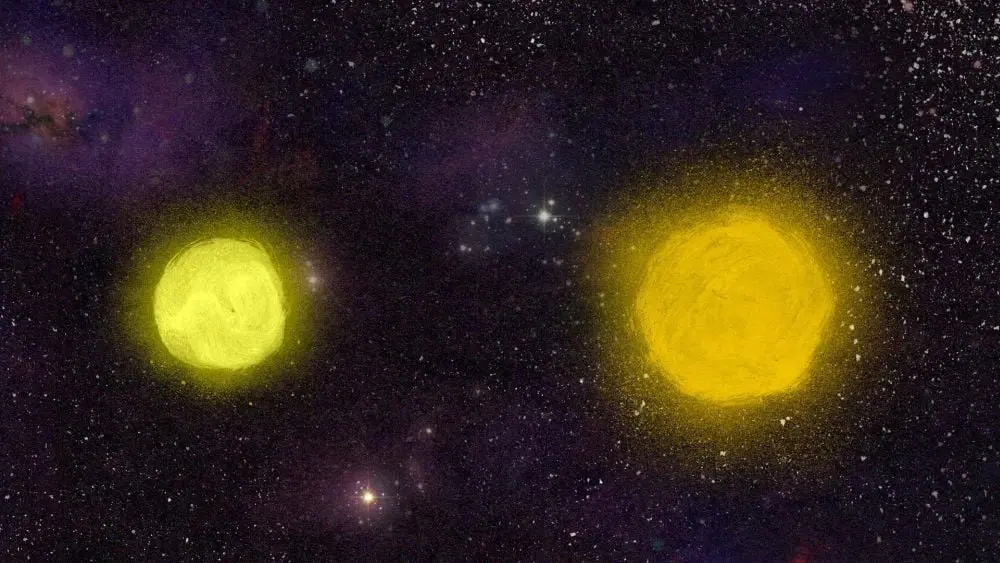
The search for Earth-like worlds beyond our solar system is entering a transitional era, shifting from the mere detection of distant orbs to the sophisticated characterization of their atmospheres and potential habitability. At the forefront of this shift is a comprehensive new study led by astronomers at the University of Michigan, focusing on one of our closest celestial neighbors: the 70 Ophiuchi (70 Oph AB) binary star system. Located just 16.6 light-years (5.1 parsecs) from Earth, this system has long been a subject of intense scrutiny, but the latest research provides the most definitive constraints to date on the existence of large planets within the system while laying the groundwork for future flagship observatories to search for smaller, terrestrial candidates.
Led by Yiting Li, a postdoctoral researcher in the University of Michigan’s Department of Astronomy, the research team utilized a century’s worth of observational data to refine the orbital dynamics of 70 Oph AB. The study, published in The Astrophysical Journal, represents a critical step in "advance preparation" for the next generation of astronomical hardware. As the global scientific community prepares for the deployment of the Extremely Large Telescope (ELT), the Giant Magellan Telescope (GMT), and NASA’s planned Habitable Worlds Observatory (HWO), the ability to pre-screen targets and understand their orbital environments has become a high-priority endeavor.
The Architecture of 70 Ophiuchi: A Solar-Type Neighbor
The 70 Ophiuchi system is a binary pair of main-sequence stars that are older and slightly smaller than our Sun. The primary star, 70 Oph A, possesses approximately 0.89 solar masses, while its companion, 70 Oph B, is smaller at roughly 0.73 solar masses. Both are classified as K-type stars, which are cooler and more orange-hued than our G-type Sun. At 6.2 billion years old, the system is significantly more mature than our own 4.6-billion-year-old solar system, making it an intriguing candidate for the study of long-term planetary stability and the potential evolution of life.
Because 70 Oph AB is a binary system, it presents unique challenges for planet hunters. In such systems, the gravitational interplay between the two stars can disrupt planetary orbits, often ejecting planets into interstellar space or sending them crashing into their hosts. However, 70 Oph AB is a "wide" binary, meaning the stars are far enough apart to allow for stable "S-type" orbits—where a planet orbits just one of the two stars—within their respective habitable zones.
The proximity of the system makes it a "gold mine" for direct imaging. While most known exoplanets have been detected via the transit method—observing the slight dip in light as a planet passes in front of its star—this method is notoriously difficult to employ in binary systems due to complex light curves and orbital alignments. Instead, the University of Michigan team relied on radial velocity (RV) and astrometry, methods that detect the subtle gravitational "wobble" a planet exerts on its host star.
Methodology and the Century-Long Baseline
The researchers combined historical data stretching back over 100 years with cutting-edge modern observations. Central to the new data were measurements taken using the 6.5-meter Magellan II Clay Telescope at the Las Campanas Observatory in Chile. The telescope is equipped with the Planet Finder Spectrograph (PFS), an instrument designed to detect the minute shifts in a star’s spectrum caused by the pull of orbiting planets.
Throughout a period including 2025, the team collected 499 high-precision RV measurements of 70 Oph A and 334 measurements of 70 Oph B. This new dataset was integrated with 27 years of archived radial velocity baselines for 70 Oph A, providing a massive longitudinal window into the system’s behavior. By merging this modern spectroscopy with a century of astrometric monitoring—the measurement of the stars’ positions on the sky—the researchers were able to calculate the dynamical masses and orbital parameters of the stars with unprecedented precision.
"Yiting assembled an absolutely huge amount of data from all over the world and carefully explored all possibilities," noted Michael Meyer, a senior co-author of the study and chair of the University of Michigan astronomy department. This synthesis of data allowed the team to distinguish between "wobbles" caused by planets and those caused by the stars themselves.
Distinguishing Stellar Activity from Planetary Signals
One of the most significant findings of the study is a "null result" regarding large planets. While the researchers detected variability in the radial velocity measurements, their analysis concluded that these signals were not caused by orbiting planets. Instead, the fluctuations were consistent with stellar activity modulated by the stars’ own rotation periods.
Stars are not static light bulbs; they are turbulent spheres of plasma with starspots, flares, and convective cells. These features can create "noise" in radial velocity data that mimics the signature of a planet. In the case of 70 Oph AB, the team’s sensitivity was high enough to prove that the observed shifts were intrinsic to the stars’ magnetic cycles and rotation.
"It’s a cautionary tale about how stellar activity can mimic planet signals using the radial velocity," Meyer explained. By ruling out these false positives, the study provides a "clean" dataset for future researchers, ensuring that future missions do not waste valuable observing time chasing "ghost" planets that are actually just stellar weather.
Constraints on Planetary Mass and Location
The study’s results place strict upper limits on what kinds of planets could still be hiding in the 70 Oph AB system. For the primary star, 70 Oph A, the data effectively excludes any Jupiter-mass planets within a distance of 5 astronomical units (AU)—roughly the distance of Jupiter from our Sun. For the smaller 70 Oph B, the researchers ruled out planets with masses between 0.25 and 0.3 times that of Jupiter within 0.5 AU.
However, these exclusions leave the door wide open for smaller worlds. The data still allows for Saturn-mass planets or smaller to exist in stable orbits around 70 Oph A out to approximately 2.5 AU. Most importantly, the study does not rule out the presence of terrestrial, Earth-sized planets in the habitable zones of either star.
"The study sets an upper limit, not a ban, on planets," Yiting Li emphasized. "Given how prevalent planets are in our universe and in the Milky Way, I would wager that we’ll find there are other planets there."
Implications for Future Flagship Missions
The characterization of 70 Oph AB is more than an academic exercise; it is a strategic necessity. Observing time on the upcoming "mega-telescopes" will be among the most sought-after resources in science. The Habitable Worlds Observatory (HWO), a NASA flagship mission recommended by the 2020 Decadal Survey, aims to image at least 25 Earth-like planets in the habitable zones of nearby stars. 70 Oph AB is now positioned as a primary candidate for this mission.
Because 70 Oph AB is a nearby binary, its habitable zones—the regions where liquid water could exist on a planetary surface—can be spatially resolved by future telescopes. This means that instead of seeing a single point of light, instruments like the HWO or the ELT could potentially separate the light of a planet from the light of its parent star, allowing for atmospheric spectroscopy. This process could reveal "biosignatures" such as oxygen, methane, or water vapor.
Furthermore, the University of Michigan is involved in the SHERA (Small-milliarcsecond High-precision Extrasolar-planet Radial-velocity and Astrometry) mission study. SHERA is specifically designed to target binary star systems, which make up a large percentage of the stars in our galaxy. Since the transit method often fails in these environments, SHERA’s focus on high-precision astrometry and RV will be vital for completing our census of nearby worlds.
The Scientific Value of the Null Result
In the field of exoplanet science, the discovery of a new "Hot Jupiter" often makes headlines, but the rigorous exclusion of planets is equally vital for the progression of the field. By defining what is not there, Li and her team have narrowed the search parameters for everyone who follows.
The 70 Oph AB system is now one of the best-characterized solar-type binaries in the solar neighborhood. For habitability studies, knowing the exact dynamical masses and orbital eccentricities of the host stars is crucial. Even minor changes in a star’s orbit can shift the boundaries of the "long-term stable zones" where a planet could survive for billions of years. With the orbits of 70 Oph A and B now tightly constrained, theorists can more accurately model the climate stability of any terrestrial planets that might be discovered there in the coming decades.
As the astronomical community moves toward the 2030s, the work of Yiting Li and the University of Michigan team serves as a bridge between the era of discovery and the era of exploration. While the "Jupiter-sized" chapter of 70 Ophiuchi may be closing, the "Earth-sized" chapter is only just beginning. The precision of this study ensures that when the next generation of telescopes turns its mirrors toward this ancient binary system, they will know exactly where to look—and exactly what kind of signals to ignore.