Sisilia Frederika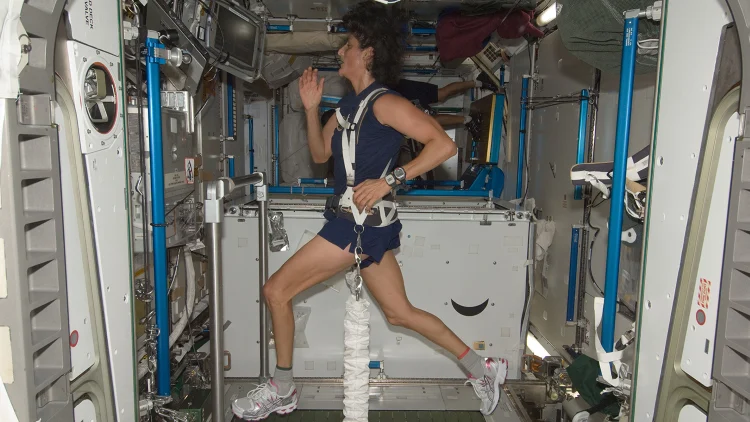
As humanity stands on the precipice of a new era of deep-space exploration, with missions to Mars and the establishment of permanent lunar bases moving from the realm of science fiction to engineering reality, the physiological toll of long-term spaceflight remains a primary concern for space agencies worldwide. For decades, researchers have documented the myriad ways in which the absence of Earth’s gravitational pull—a condition known as microgravity—reshapes the human body. From the "puffy face" phenomenon caused by fluid shifts to the upper body, to the lengthening of the spine and the degradation of skeletal muscle and bone density, the challenges are well-documented. However, a groundbreaking new study led by the University of Chicago (UChicago) offers a significant and surprisingly optimistic insight into the most vital organ of all: the heart.
The study, recently published in the journal npj Microgravity, provides a detailed cellular-level analysis of heart muscle function following exposure to the environment of the International Space Station (ISS). In a surprising turn, researchers found that despite the rigorous demands and environmental stressors of space, the fundamental strength and contractile capabilities of heart muscle cells remained largely intact. This discovery addresses a long-standing "knowledge gap" in aerospace medicine, providing a crucial piece of the puzzle for planning multi-year missions to the Red Planet.
The UChicago Methodology: A High-Tempo Biological Proxy
To understand the effects of microgravity on the heart, the UChicago team, led by Dr. Jonathan Kirk, an Associate Professor of Medicine, utilized a murine model. Mice are frequently chosen for cardiovascular research due to their physiological similarities to humans, but with a critical difference that makes them an ideal "accelerated" model for spaceflight: their heart rate.
While a healthy human heart typically beats between 60 and 100 times per minute, a mouse’s heart rate can soar to 600 beats per minute—six to ten times the frequency of a human heart. This high metabolic and mechanical activity means that the stressors of microgravity are essentially "fast-forwarded" in a mouse model. The logic follows that if a mouse’s heart muscle cells can maintain their structural and functional integrity through the rapid-fire contractions required over several weeks in space, it provides a strong indication that human heart cells, which beat much more slowly, can likely withstand even longer durations.
The experiment involved sending five mice to the International Space Station for a period of approximately 38.5 days. A control group of five mice remained on Earth, housed in an environment that mimicked the ISS conditions, including temperature and enclosure constraints, to ensure that any observed changes were due to microgravity rather than secondary environmental factors.
Breaking Down the Findings: Resilience Amidst Atrophy
For years, the scientific community has operated under the assumption that the heart would suffer similar degradation to skeletal muscles, such as the calves or quadriceps, which atrophy rapidly in space because they are no longer required to support the body’s weight against gravity.
"There are a lot of things in common between cardiac and skeletal muscle, so we thought that we would see some decrease in heart function from space travel," Dr. Kirk noted in a statement following the study’s release. However, the data told a different story. Upon the mice’s return to Earth, the researchers conducted an in-depth analysis of the cardiomyocytes—the specialized cells responsible for the heart’s contraction.
The results showed that the individual heart muscle cells did not lose their "squeeze." The contractile force, the speed of the contraction, and the overall mechanical efficiency of the cells were largely indistinguishable from the control group. This suggests that the heart possesses an inherent resilience to the mechanical unloading caused by microgravity. While the heart does not have to work as hard to pump blood against the "downward" pull of Earth’s gravity, the UChicago study suggests that the cellular machinery of the heart muscle does not simply switch off or degrade as skeletal muscle does.
A Crucial Caveat: The Presence of Inflammation
While the primary finding regarding muscle strength was positive, the study did not suggest that space travel is entirely benign for the cardiovascular system. The research team observed clear evidence of increased inflammation within the heart tissue of the space-faring mice.
Inflammation in cardiac tissue is a complex response that can lead to long-term issues such as fibrosis (scarring) or a decrease in the heart’s ability to relax between beats (diastolic dysfunction). The UChicago team identified molecular markers indicating that the immune system or the cells themselves were responding to the stress of the space environment.
The cause of this inflammation remains a subject of ongoing investigation. It could be a direct result of microgravity, or it could be a secondary effect of cosmic radiation, the psychological stress of the environment, or the significant physiological shifts that occur during the transition from Earth’s gravity to orbit. This finding has prompted the researchers to plan future studies focusing on the long-term implications of this inflammation and whether it could eventually lead to the very heart failure they were relieved not to find in the short term.
The Evolution of Space Medicine: From Mercury to Mars
To appreciate the significance of these findings, one must look at the chronology of space medicine. In the early days of the Mercury and Gemini programs, doctors feared that the human heart might stop beating entirely without the familiar pull of gravity. While those fears were quickly debunked, the Skylab missions of the 1970s and subsequent long-duration stays on the Mir space station and the ISS revealed that the heart does undergo physical changes.
NASA’s Human Research Program has previously documented that the heart tends to become "rounder" in space, losing its elongated shape as the workload of the left ventricle decreases. Furthermore, blood volume typically decreases as the body perceives the fluid shift to the chest and head as an "overload," prompting the kidneys to excrete more water.
The UChicago study adds a new layer to this history by moving beyond organ-level observations (like heart shape) to the cellular level. It suggests that while the organ might change its shape or the body might change its fluid levels, the fundamental building blocks of the heart—the cardiomyocytes—remain robust.
Implications for Future Exploration
The timeline for a mission to Mars is daunting. Current estimates suggest a transit time of six to nine months each way, with a stay on the Martian surface of up to 18 months. This means astronauts could be away from Earth’s gravity for nearly three years.
Currently, astronauts on the ISS combat the effects of microgravity through a rigorous exercise regimen. They are scheduled for 2.5 hours of physical activity daily, six days a week. This includes time on the Advanced Resistive Exercise Device (ARED), which uses vacuum cylinders to simulate weightlifting, and specialized treadmills that use bungee cords to strap the runner down. However, when accounting for the time needed to set up equipment, wipe down sweat (which clings to the skin in microgravity), and change clothes, the actual "work" time is closer to 1.5 hours.
The UChicago study provides a level of reassurance that these protocols, combined with the heart’s natural resilience, may be sufficient to keep the cardiovascular system functional for the duration of a Mars mission. However, it also highlights the need for more sophisticated diagnostic tools.
The Need for On-Orbit Analysis
One of the most significant hurdles in space biology is the "re-entry effect." When biological samples—or astronauts—return to Earth, they are subjected to intense gravitational forces (G-loads) during atmospheric re-entry. These forces can reach 3 to 5 Gs, creating a massive spike in physical stress that can mask or alter the biological state the samples were in while in orbit.
"This is why we aspire to study tissue samples directly collected on the ISS, as opposed to waiting for them to return to Earth," the UChicago team explained. By conducting analysis on the station, researchers can obtain "pristine" data that reflects the true state of the heart in microgravity without the "noise" introduced by the violent return to Earth.
NASA and private partners like SpaceX and Axiom Space are currently working on expanding the laboratory capabilities of the ISS and future commercial space stations. This includes the development of "tissue-on-a-chip" technology and automated microscopes that can transmit high-resolution cellular data back to Earth in real-time.
Conclusion: A Hearty Future in the Stars
The UChicago study represents a vital milestone in our understanding of how life adapts to the vacuum of space. While the discovery of inflammation reminds us that space remains a hostile environment, the resilience of the heart muscle cells offers a beacon of hope. It suggests that the human body, evolved over millions of years under 1G, possesses a surprising degree of adaptability.
As Dr. Kirk summarized, "It’s obviously wonderful news for astronauts in the space program that the heart is going to be okay in space." This research ensures that as we look toward the stars, we can do so with the confidence that the "engine" of the human body is capable of going the distance, provided we continue to unlock the secrets of its cellular response to the final frontier. The journey to Mars will be the greatest challenge humanity has ever faced, but it appears our hearts are up to the task.