Sisilia Frederika
The Lifecycle of Protoplanetary Disks
Protoplanetary disks are the cradles of planetary systems. Formed from the remnants of the molecular cloud that collapses to create a star, these rotating disks of gas and dust contain the essential ingredients for everything from rocky terrestrial worlds like Earth to massive gas giants like Jupiter. However, these disks are transient structures. They do not persist for the life of the star; instead, they are gradually eroded by a variety of internal and external forces.
In the early stages of a star’s life—roughly the first few million years—the disk is dense and rich in gas. Astronomers estimate that in these nascent stages, the disk contains approximately 100 times more gas than solid dust. While a fraction of this gas is incorporated into the atmospheres of burgeoning giant planets, the vast majority is eventually expelled from the system. The mechanism of this expulsion is a critical variable in planetary architecture. If the gas remains for a long period, multiple gas giants may form. If the gas is stripped away prematurely, the resulting system may be populated only by smaller, rocky planets or "mini-Neptunes" with thin atmospheres.
The research led by Bajaj utilizes data from the JWST’s Mid-Infrared Instrument (MIRI) to distinguish between the various "winds" that drive this dispersal. By observing 72 young solar systems with Sun-like stars, the team has been able to construct a chronological narrative of how a disk dies.
The Dual Engines of Disk Dispersal
Astronomers have long identified two primary categories of winds that clear out protoplanetary disks: magnetically driven winds and photoevaporative winds. Until the deployment of the JWST, however, the interplay and timing between these two mechanisms remained largely theoretical.
Magnetically Launched Jets and Winds
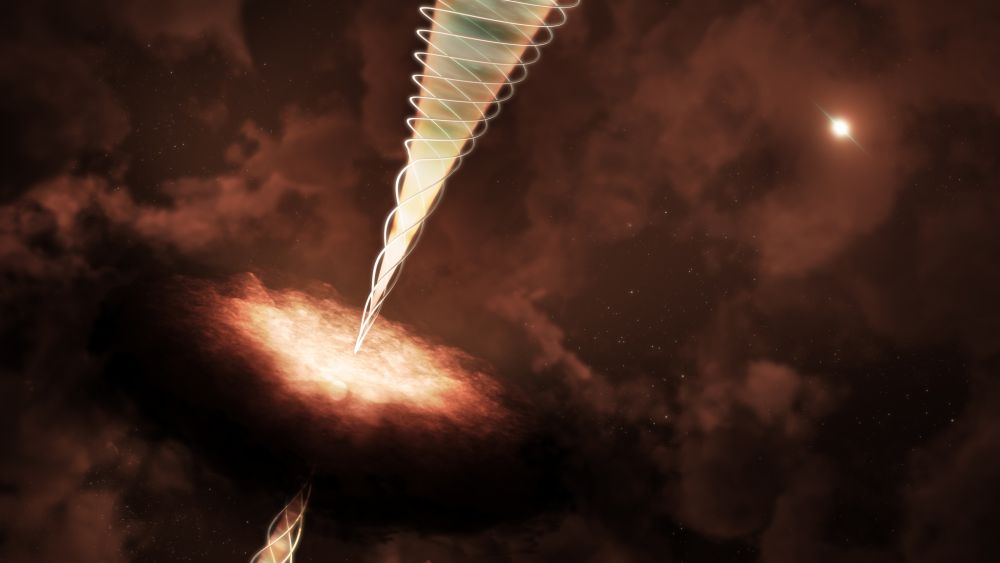
In the earliest phases of a star’s evolution, specifically during the Class I and Class II stages, the system is dominated by intense magnetic activity. As the young star continues to accrete material from the disk, powerful magnetic field lines thread through the rotating gas. These field lines act as celestial conduits, funneling material away from the disk and ejecting it at high velocities.
These flows often manifest as highly collimated jets—narrow beams of matter shooting out from the star’s poles. These jets are responsible for creating Herbig-Haro objects, which are glowing patches of nebulosity formed when the jets collide with nearby clouds of gas and dust. During this phase, the magnetic winds are dense and "hot" in a molecular sense, providing a protective shield for the outer disk. This shielding prevents high-energy radiation from the star from penetrating deep into the disk, effectively delaying the onset of other dispersal methods.
Photoevaporative (Atomic) Winds
As the star matures and its rate of accretion slows, the magnetic engine begins to lose its potency. This transition marks the rise of photoevaporation. Unlike magnetic winds, which are driven by the star’s rotation and magnetic field, photoevaporative winds are thermal in nature.
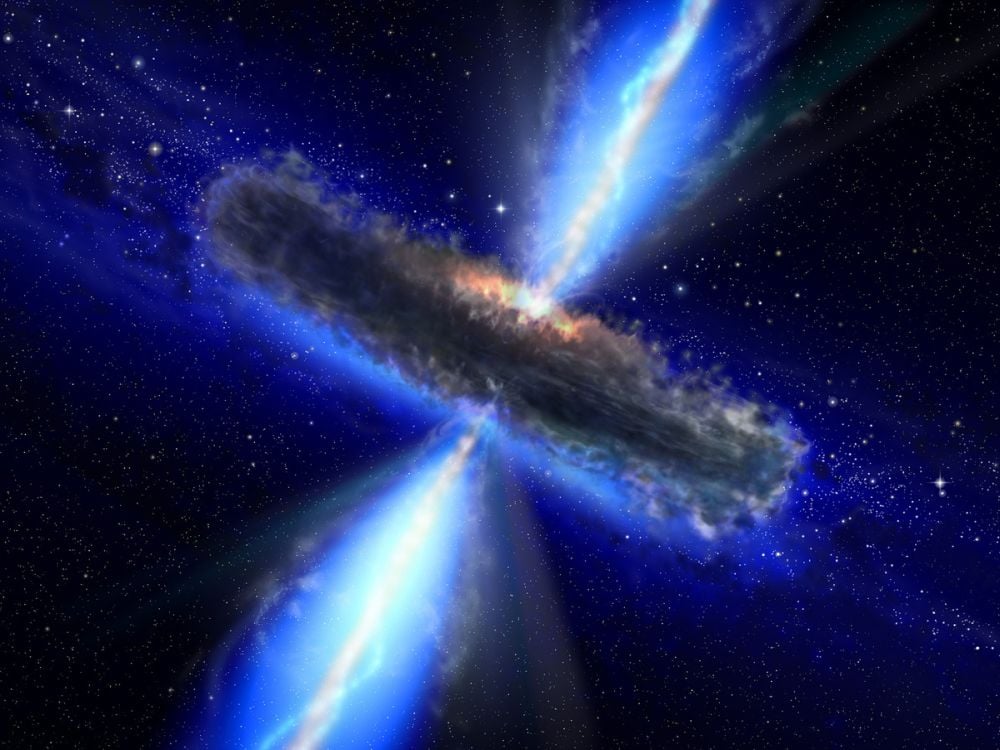
Young stars emit a torrent of high-energy photons, including extreme ultraviolet (EUV) and X-ray radiation. As the magnetic winds weaken and the disk thins, these photons can penetrate the disk’s surface, heating the gas to thousands of degrees. When the thermal velocity of these heated atoms exceeds the local escape velocity of the star’s gravity, the gas boils off into space. Because this radiation also breaks down molecules into their constituent parts, these flows are referred to as atomic winds.
Methodology: Tracing the Invisible with JWST/MIRI
The breakthrough of the study, "JWST/MIRI Reveals the Evolution from Molecular to Atomic Disk Winds," lies in its ability to differentiate these two processes through spectroscopic signatures. The research team focused on two specific tracers: molecular hydrogen ($H_2$) and ionized neon ($[Ne II]$).
Molecular hydrogen is an indicator of cooler, denser gas. It can originate from several sources, including the disk surface or slow-moving magnetic winds. However, because it dissociates (breaks apart) at high temperatures, it cannot survive in the intense radiation environment of a fully developed photoevaporative wind.
In contrast, ionized neon serves as a "smoking gun" for photoevaporation. The ionization of neon requires high-energy photons—specifically those in the UV and X-ray spectrum. By detecting the specific mid-infrared signature of $[Ne II]$, the researchers could confirm the presence of a thermally driven atomic wind.
The MIRI archival data allowed the team to see that in younger systems with high accretion rates, the signatures of molecular hydrogen and high-velocity atomic jets were dominant. As the systems aged and accretion rates dropped, these signatures faded, replaced by the distinct glow of ionized neon, signaling that photoevaporation had taken over as the primary architect of the disk’s demise.
A Race Against Time: The Timeline of Planet Formation
The findings have profound implications for our understanding of the timeline of planet formation. "Planet formation is therefore a race against time," stated Naman Bajaj. "Gas giants like Jupiter must assemble their massive atmospheres while the disk is still substantial enough to supply them, before winds and jets carry that raw material away into space."
The data suggests a window of roughly one to ten million years for the formation of gas-rich planets. During the first few million years, the magnetic winds actually help maintain the disk’s integrity by shielding it from photoevaporation. However, once the "shield" of dense magnetic wind drops—usually as the star’s accretion rate falls below a certain threshold—the photoevaporative process acts like a runaway train.
This "disk-clearing" phase is relatively rapid. Once the high-energy photons begin to carve holes in the disk, the increased surface area leads to even more heating and faster evaporation. This explains why astronomers rarely see "transition disks" that are half-empty; once the process of clearing begins, the remaining gas is stripped away almost instantaneously on a galactic timescale.
Scientific Perspectives and Analysis
The study’s co-author, Uma Gorti of the SETI Institute, emphasized the importance of the JWST’s observational power in confirming these long-standing theories. "What is exciting about this study is that we can now see, across a large sample of young systems, how the mechanisms that remove gas from planet-forming disks change with time," Gorti noted. She added that the dispersal of the disk sets a "fundamental clock" for the building of gas-rich worlds.
From a broader scientific perspective, this research helps explain the diversity of exoplanetary systems discovered to date. Systems that experience early, aggressive photoevaporation are likely to end up with "starved" planets—small, rocky bodies with little to no atmosphere. Conversely, systems where magnetic shielding persists longer might allow for the formation of multiple Jupiters and Saturns.
Furthermore, the study provides a historical mirror for our own Solar System. 4.5 billion years ago, our Sun went through these exact phases. The fact that we have a massive Jupiter and a substantial Saturn suggests that our solar nebula was resilient enough to survive the initial magnetic winds and provided enough time for these giants to core-accrete their gas before the final photoevaporative clearing began.
Future Research and Global Impact
While the study has successfully mapped the transition from molecular to atomic winds, several questions remain. The next phase of research will involve quantifying the exact mass-loss rates associated with each mechanism. By determining precisely how many Earth-masses of gas are lost per year during the magnetic phase versus the photoevaporative phase, scientists can create more accurate simulations of planet formation.
The JWST continues to revolutionize our understanding of the cosmos, and this study is a testament to the telescope’s ability to peer into the complex chemistry of star-forming regions. By understanding the "death" of the disk, we gain a clearer picture of the "birth" of worlds.
As the astronomical community continues to digest these findings, the focus shifts toward larger samples and even more distant star-forming regions. The goal is to determine if the "race against time" observed in these 72 systems is a universal law of the galaxy or if different stellar environments—such as those in crowded star clusters—experience different dispersal timelines. For now, the work of Bajaj and his colleagues stands as a definitive guide to the final days of the protoplanetary disk, highlighting the precarious and time-sensitive nature of the worlds we call home.