Sisilia Frederika
The Neil Gehrels Swift Observatory, a cornerstone of high-energy astrophysics for over two decades, faces an impending atmospheric re-entry following a technical failure in a high-stakes commercial rescue attempt. NASA and its commercial partner, Katalyst Space, confirmed this week that the LINK mission spacecraft—designed specifically to rendezvous with and boost the aging satellite—suffered a critical attitude control malfunction shortly after its July launch. While the primary objective of extending Swift’s operational life has been abandoned, mission controllers are pivoting to a secondary phase of proximity operations to gather vital data for the burgeoning in-space servicing industry.
Since its launch in 2004, the Swift Observatory has served as the primary sentinel for gamma-ray bursts (GRBs), the most violent and energetic explosions in the known universe. Originally designed for a modest two-year mission, the satellite has demonstrated remarkable longevity, surpassing its planned lifespan by nearly twenty years. However, the laws of orbital mechanics and a surge in solar activity have brought the mission to a precipice. The failure of the LINK spacecraft to stabilize itself for a docking maneuver likely signals the end of the Swift era, as the observatory’s orbit continues to decay at an accelerated rate.
The Legacy of the Neil Gehrels Swift Observatory
The Neil Gehrels Swift Observatory was developed as a medium-class explorer mission to solve the mystery of gamma-ray bursts. These flashes of light are so powerful that they can briefly outshine entire galaxies, yet they often last only a few milliseconds to a few minutes. Before Swift, the Compton Gamma Ray Observatory (CGRO) had mapped these events, but it lacked the agility to pinpoint their locations quickly enough for other telescopes to observe the "afterglow."
Swift changed the landscape of transient astronomy by carrying three distinct instruments: the Burst Alert Telescope (BAT), the X-ray Telescope (XRT), and the Ultraviolet/Optical Telescope (UVOT). This suite allowed the satellite to detect a burst, autonomously pivot within seconds, and observe the event across multiple wavelengths. Over its 21-year tenure, Swift has detected over 1,500 GRBs, including the most distant objects ever seen in the universe. It has also played a pivotal role in the study of supernovae, tidal disruption events (stars being torn apart by black holes), and the historic 2017 detection of a kilonova—the collision of two neutron stars that was also observed via gravitational waves.
Atmospheric Drag and the Impact of Solar Cycle 25
The current crisis facing Swift is a direct result of "space weather." Low Earth Orbit (LEO) is not a perfect vacuum; it contains a thin veneer of atmospheric gases. Satellites in this region experience atmospheric drag, which slowly saps their orbital velocity and causes their altitude to drop. Under normal conditions, this decay is predictable and slow. However, the Sun operates on an approximately 11-year cycle of activity.
As Solar Cycle 25 approached its peak, increased solar radiation heated the Earth’s upper atmosphere, causing it to expand outward. This "puffing up" of the atmosphere significantly increased the density of the thermosphere at Swift’s operational altitude. Since last year, the observatory has experienced a rapid acceleration in its orbital decay. Without an external boost, the satellite is projected to sink into the denser layers of the atmosphere later this year, where frictional heat will lead to its eventual incineration.
The LINK Mission: A New Paradigm in Satellite Servicing
Recognizing the imminent loss of a high-value scientific asset, NASA opted for an unconventional rescue strategy. In September, the agency awarded a contract to Katalyst Space to develop the LINK mission. This project was characterized by an "unprecedented timeline," moving from a conceptual contract to a flight-ready spacecraft in just nine months. This rapid development was necessitated by the ticking clock of Swift’s orbital decay.
The mission utilized a Northrop Grumman Pegasus XL rocket, an air-launched vehicle dropped from a modified Lockheed L-1011 TriStar aircraft. This launch method provides flexibility in orbital insertion, which was critical for matching Swift’s specific trajectory. The LINK spacecraft itself was designed as a robotic servicer, equipped with the propulsion and docking mechanisms required to latch onto the observatory and boost its altitude by several kilometers, potentially adding years to its scientific mission.
Technical Failure and the Shift to Proximity Operations
The LINK mission launched successfully on July 3, 2026. However, the complexities of robotic autonomous operations in space soon became apparent. A few weeks into the mission, ground controllers identified an issue with the spacecraft’s attitude control system (ACS). The ACS is responsible for maintaining the spacecraft’s orientation; without it, the vehicle cannot point its solar arrays at the sun, its antennas at Earth, or its docking interface at a target.
The LINK spacecraft began to tumble, preventing the precise alignment necessary for a rendezvous with Swift. Despite exhaustive efforts by engineers at Katalyst Space and NASA to stabilize the vehicle, it was determined that a safe docking or "capture" maneuver was no longer feasible. NASA and Katalyst Space subsequently announced that the "boost" portion of the mission had been cancelled.
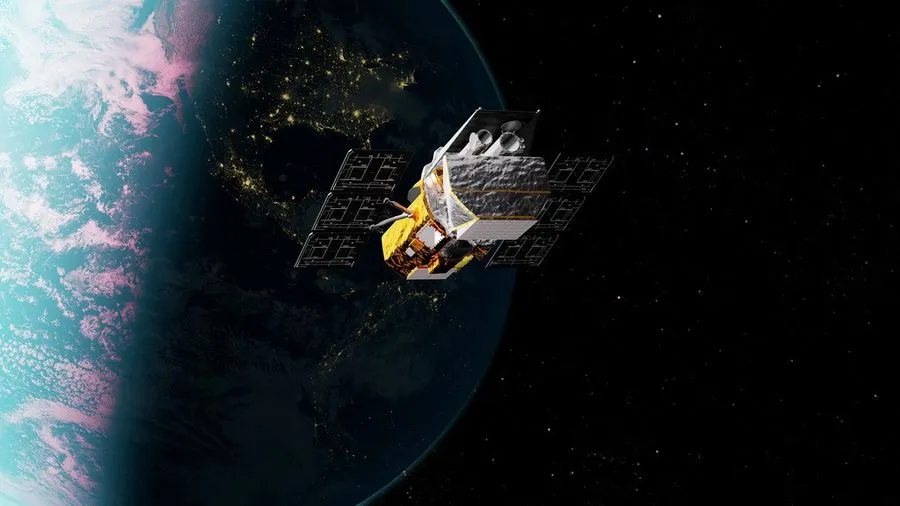
Despite this setback, the mission is not being classified as a total loss. NASA Administrator Jared Isaacman emphasized that the spacecraft still possesses enough functionality to conduct "proximity operations." This involves maneuvering LINK to within a safe distance of Swift to test sensors, relative navigation software, and communication protocols. These tests are essential for validating the technology needed for future In-space Servicing, Assembly, and Manufacturing (ISAM) missions.
Official Responses and Strategic Risk-Taking
The decision to attempt the LINK mission reflects a broader shift in NASA’s operational philosophy toward embracing higher levels of risk in exchange for rapid innovation. In an official statement, NASA Administrator Jared Isaacman defended the mission’s ambitious goals.
"NASA should be willing to move quickly and take smart risks when the potential return is worth it, and that is exactly what we did with this mission," Isaacman stated. "This is not the outcome we were working toward, but it does not change why this mission was worth attempting. The team moved with extraordinary speed to give Swift a chance to carry out more science while advancing capabilities America will need for satellite servicing in the future."
Katalyst Space echoed this sentiment, highlighting the industrial achievements gained during the nine-month development cycle. The company noted that the mission has already generated "operational knowledge" that will allow for faster and more scalable robotic servicing in the future. By designing, building, and launching a spacecraft on such a compressed schedule, Katalyst argues they have already pushed the boundaries of the traditional aerospace pipeline.
The Scientific Void: Life After Swift
The loss of Swift will create a significant gap in the global "multi-messenger" astronomy network. Swift’s ability to provide rapid-response coordinates for transient events is currently unmatched. While other observatories like the Fermi Gamma-ray Space Telescope continue to monitor the sky, they often lack the specialized X-ray and optical instruments needed to provide the precise localization that Swift offered.
Shawn Domagal-Goldman, the director of the Astrophysics Division at NASA Headquarters, acknowledged the scientific community’s disappointment but pointed to the lessons learned. "We were all hoping for more science from Swift," he said. "But we knew the takeaways from this mission would be worthwhile either way… Building, testing, and operating this mission has already strengthened America’s space industry pipeline."
To mitigate the loss, NASA is exploring new options for "rapid response" missions. This may include the deployment of smaller, cheaper "CubeSat" constellations designed to perform specific subsets of Swift’s mission, such as detecting gamma-ray flashes and relaying their positions to ground-based observatories.
Implications for the Future of Space Logistics
The LINK mission’s struggle highlights the immense difficulty of autonomous rendezvous and proximity operations (ARPO). As Earth’s orbits become increasingly crowded, the ability to service, refuel, or de-orbit satellites will become a matter of national and economic security.
The data gathered by LINK as it maneuvers near Swift will be instrumental in refining the algorithms used for autonomous docking. Future missions, such as NASA’s OSAM-1 (On-orbit Servicing, Assembly, and Manufacturing) and various commercial "life extension" pods, will rely on the telemetry and sensor data generated by this attempt.
Furthermore, the mission serves as a case study for the "Commercial-First" approach. By partnering with a smaller, agile firm like Katalyst Space, NASA demonstrated that it could respond to an orbital emergency within a single year—a feat previously thought impossible under traditional procurement cycles. While Swift may be lost to the atmosphere, the precedent set by the LINK mission’s rapid deployment may define the next era of space logistics.
As the Swift Observatory begins its final descent, the global astronomical community prepares to bid farewell to a mission that fundamentally changed our understanding of the high-energy universe. The focus now shifts to the "proximity operations" of the LINK spacecraft, where every byte of data collected will serve as a foundation for the robotic salvagers and builders of the future. Swift’s re-entry, though premature, marks the end of a legendary scientific chapter and the beginning of a new, albeit challenging, frontier in orbital mechanics.