Sisilia Frederika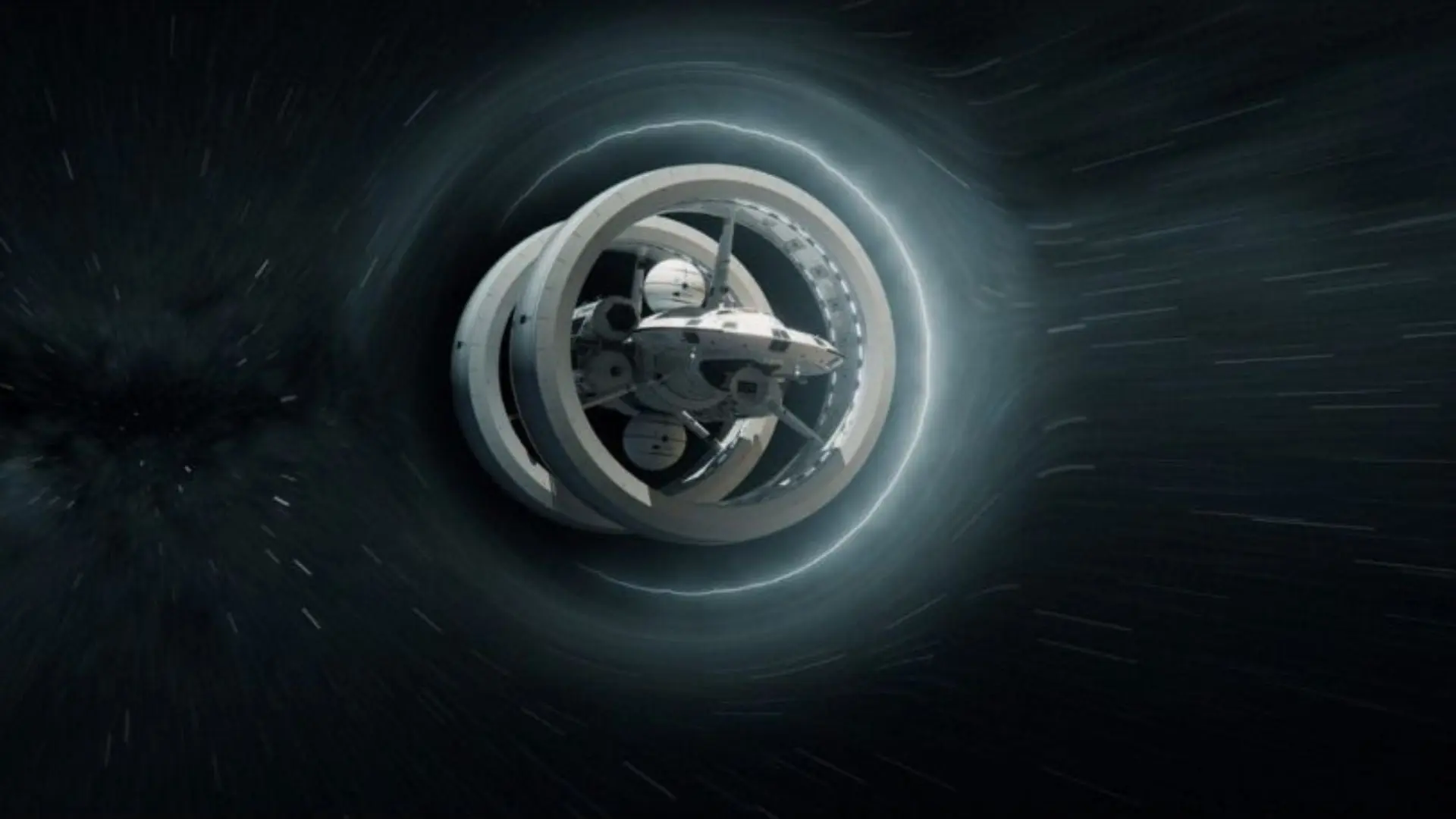
The quest to reach the stars has transitioned from the realm of speculative fiction to a rigorous discipline of theoretical physics and advanced engineering. As the census of confirmed exoplanets reaches 6,354 across 4,756 star systems, the scientific community is increasingly focused on the logistical hurdles of interstellar travel. While chemical and even nuclear thermal propulsion systems offer the potential for Solar System exploration, they remain fundamentally inadequate for traversing the light-years of void separating the Sun from its nearest neighbors. To reach Proxima Centauri, a red dwarf located approximately 4.25 light-years away, conventional rockets would require millennia of transit time. This reality has necessitated the exploration of "exotic" propulsion methods—theoretical frameworks that leverage the most extreme properties of general relativity and quantum mechanics to bypass the limitations of the rocket equation.
The Exoplanet Context and the Proxima Centauri Objective
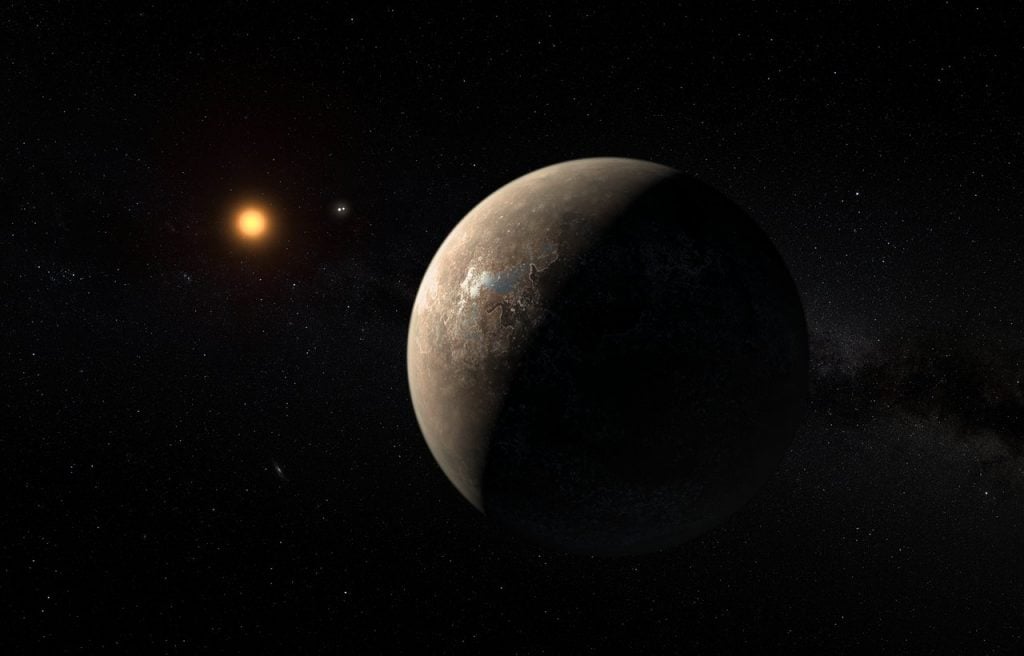
The urgency of advanced propulsion research is underscored by the rapid pace of astronomical discovery. Since July 2021, the number of confirmed exoplanets has grown significantly, with 21 new worlds identified in less than a month during recent observational windows. Of particular interest are the 31 terrestrial, rocky planets located within 50 light-years of Earth. The most prominent target remains Proxima Centauri b, a planet roughly 1.3 times the mass of Earth orbiting within the habitable zone of its parent star. With an estimated surface temperature of -39°C (-38°F), Proxima b presents a complex case for habitability, yet its proximity makes it the inevitable first milestone for any interstellar endeavor. However, at the current maximum speeds achieved by human-made objects, such as the Parker Solar Probe (approximately 0.064% of the speed of light), a mission to Proxima b would still take over 6,000 years.
The Alcubierre Metric: Warping the Fabric of Spacetime
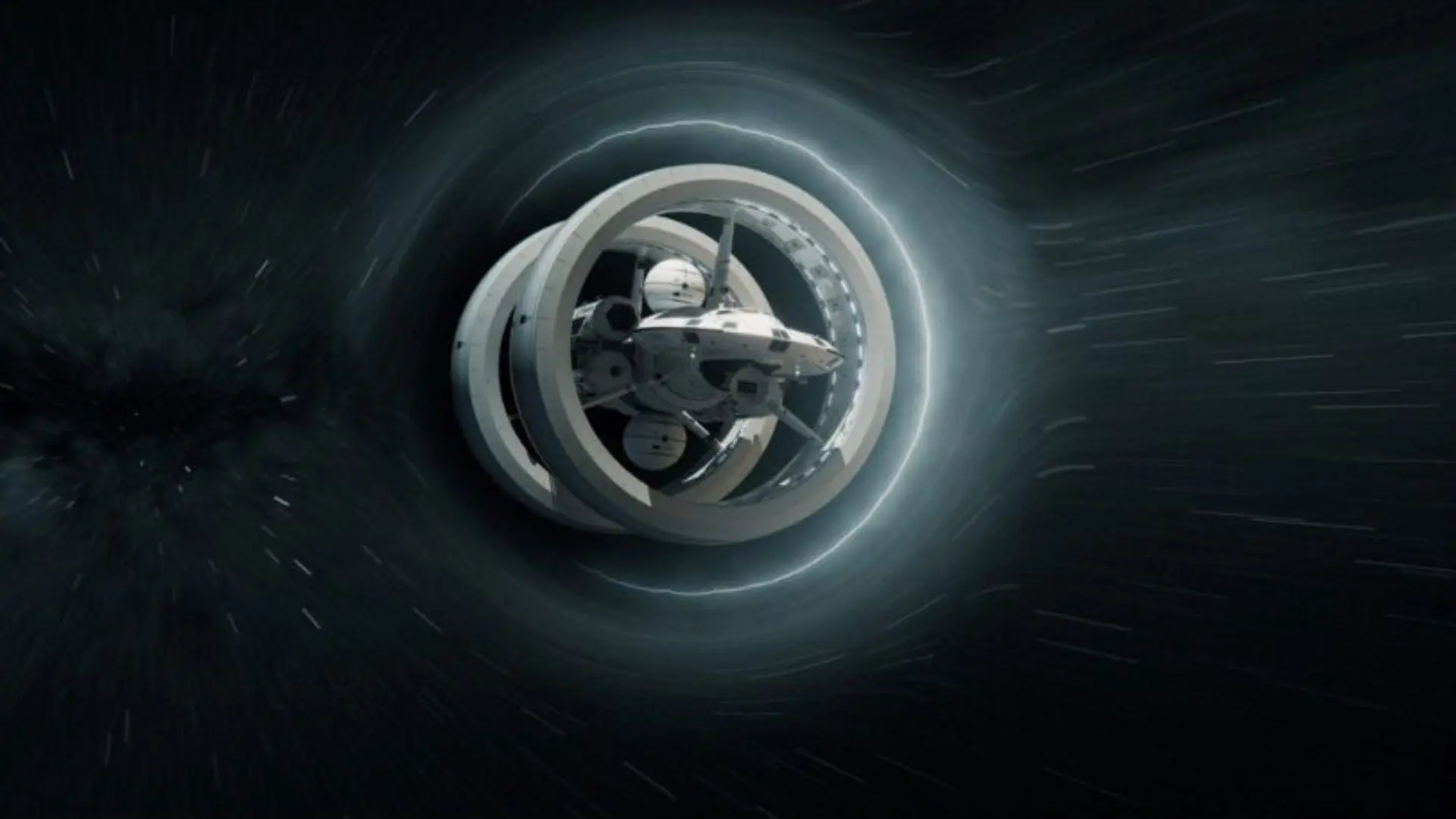
The most prominent theoretical solution to the interstellar distance problem is the Alcubierre Drive. Proposed in 1994 by Mexican theoretical physicist Miguel Alcubierre, this concept suggests that faster-than-light (FTL) travel is possible without violating the laws of Einstein’s Special Relativity. Alcubierre’s breakthrough was the realization that while matter cannot travel through space faster than light, space itself can expand or contract at any speed.
The Alcubierre Metric describes a "warp bubble" that surrounds a spacecraft. In this model, the fabric of spacetime is contracted in front of the vessel and expanded behind it. The ship remains stationary within a flat region of spacetime inside the bubble, effectively "surfing" on a wave of distorted geometry. Because the ship is not moving locally through space, it avoids the relativistic effects of time dilation and the infinite energy requirements associated with accelerating mass to the speed of light.
Despite its mathematical consistency, the Alcubierre Drive faces immense engineering hurdles. The primary requirement is "exotic matter" or negative energy density to maintain the stability of the warp bubble. Initial calculations suggested that the amount of negative energy required would be equivalent to the mass-energy of the entire observable universe. However, research conducted by Dr. Harold "Sonny" White at NASA’s Eagleworks Laboratory in 2011 indicated that by optimizing the geometry of the warp bubble—specifically the "shell-thickness parameter"—the energy requirement could be reduced to a mass equivalent roughly the size of the Voyager 1 spacecraft (approx. 700 kg) to move a 10-meter bubble at ten times the speed of light.
Chronology of Warp Field Research and Institutional Shifts
The evolution of warp drive research has seen significant shifts in institutional support over the last three decades:
- 1994: Miguel Alcubierre publishes "The warp drive: hyper-fast travel within general relativity," establishing the theoretical framework.
- 2009: Richard Obousy and Aram Saharian propose that higher-dimensional manipulation could lower energy requirements, though still requiring a Jupiter-sized mass of negative energy.
- 2011: NASA and DARPA host the 100 Year Starship symposium, where Dr. Harold White presents his revised energy calculations.
- 2012–2019: NASA Eagleworks conducts experiments using the White-Juday Warp Field Interferometer to detect microscopic spatial distortions. Results remain inconclusive.
- 2019: NASA concludes its formal advanced propulsion research program following White’s departure.
- 2020–Present: The Limitless Space Institute (LSI) is established as a non-profit entity to continue the pursuit of FTL and high-energy propulsion, funded by private and philanthropic interests.
The transition of this research from government agencies to private institutes like LSI reflects the high-risk, high-reward nature of the field. While government funding often prioritizes near-term mission viability, private entities are increasingly willing to fund the "long-shot" physics required for true interstellar capability.
Traversable Wormholes and the Einstein-Rosen Bridge
Parallel to warp drive research is the study of wormholes, or Einstein-Rosen Bridges. First postulated by Albert Einstein and Nathan Rosen in 1935, these are theoretical shortcuts connecting two distant points in spacetime. Unlike the Alcubierre Drive, which moves a ship through space, a wormhole functions as a tunnel that reduces the distance between the entrance (mouth) and the exit.
The Schwarzschild metric, which first predicted black holes, also hinted at the existence of "eternal black holes" that could act as gateways. However, standard general relativity suggests that such bridges would be inherently unstable, collapsing instantly upon the entry of any matter or even a single photon. To remain "traversable," a wormhole requires a throat held open by matter with negative mass or negative energy.
Recent research by Daniel Jafferis at Harvard University and Juan Maldacena at the Institute for Advanced Study has explored the quantum mechanical requirements for stability. Their findings suggest that while humanly traversable wormholes are mathematically possible under specific conditions—such as the Randall-Sundrum II model involving five-dimensional warped geometry—the transit might actually take longer than light traveling through normal space from the perspective of an outside observer. Furthermore, the tidal forces within such a structure would necessitate advanced shielding and structural integrity far beyond current materials science.
The Halo Drive: Propellantless Relativistic Acceleration
While warp drives and wormholes rely on manipulating spacetime, the "Halo Drive" concept proposed by Professor David Kipping of Columbia University utilizes existing celestial mechanics. Expanding on Freeman Dyson’s 1963 "gravitational machines," the Halo Drive proposes using the gravity of compact, rapidly rotating objects—specifically black holes—to accelerate spacecraft.
The Halo Drive functions as a modified gravity assist. In a traditional slingshot maneuver, a spacecraft steals a tiny fraction of a planet’s orbital momentum. In Kipping’s model, a spacecraft fires a laser beam around a black hole. The light circles the black hole (following the "photon sphere") and returns to the spacecraft. By "recycling" these photons, the spacecraft can extract kinetic energy from the black hole’s rotation.
This process is a variation of the Penrose Process, where energy is extracted from a black hole’s ergosphere. Because black holes possess immense gravitational potential and rotational energy, a spacecraft could theoretically reach relativistic speeds (a significant fraction of the speed of light) without carrying any onboard propellant. This solves the "propellant mass fraction" problem that plagues chemical rockets, where the fuel required to move the fuel becomes exponentially prohibitive.
Data Analysis: Comparative Energy and Velocity Requirements
To appreciate the scale of these exotic methods, it is necessary to compare their theoretical performance against established metrics:
| Propulsion Method | Potential Velocity | Estimated Travel Time to Proxima b | Primary Limitation |
|---|---|---|---|
| Chemical (Saturn V) | 0.004% c | 100,000+ years | Energy Density of Fuel |
| Nuclear Thermal | 0.01% c | 40,000 years | Radiation/Shielding |
| Directed Energy (Laser Sail) | 10-20% c | 20-40 years | Laser Array Power |
| Halo Drive | 30-50% c | 8-15 years | Proximity to Black Hole |
| Alcubierre Drive | >100% c | <4.25 years | Negative Energy Density |
The data indicates that while the Halo Drive and Directed Energy Propulsion (DEP) offer the most "realistic" path to high-velocity travel within the next century, the Alcubierre Drive remains the only theoretical model that could enable round-trip missions within a single human generation.
Broader Implications and Future Outlook
The pursuit of exotic propulsion is not merely an exercise in academic physics; it represents a fundamental shift in humanity’s relationship with the cosmos. The realization of any of these methods would necessitate a global restructuring of energy production and materials science. For instance, the creation of negative energy via the Casimir Effect currently occurs only at microscopic scales in laboratory settings. Scaling this to a level capable of sustaining a warp bubble would require a "Kardashev Type I" civilization capable of harnessing the entire energy output of its planet.
Furthermore, the legal and ethical implications of FTL travel are significant. The potential for causality violations (time travel) inherent in FTL metrics poses a challenge to our understanding of the universe. However, as noted by the Limitless Space Institute, the history of science is defined by the transition of "impossible" mathematics into "routine" engineering.
The current consensus among researchers is that while we are far from a "Star Trek" reality, the identification of Proxima b and the mathematical refinement of the Alcubierre and Halo models have provided a roadmap. The next phase of interstellar exploration will likely focus on "precursor missions"—automated probes using directed energy to reach 20% of light speed—while theoretical physicists continue to probe the vacuum of space for the keys to manipulating spacetime itself. The sheer scale of the universe remains the greatest challenge to the human spirit, yet the exotic proposals currently under review suggest that the barrier of the speed of light may eventually prove to be a technical hurdle rather than an absolute law.