Sisilia Frederika
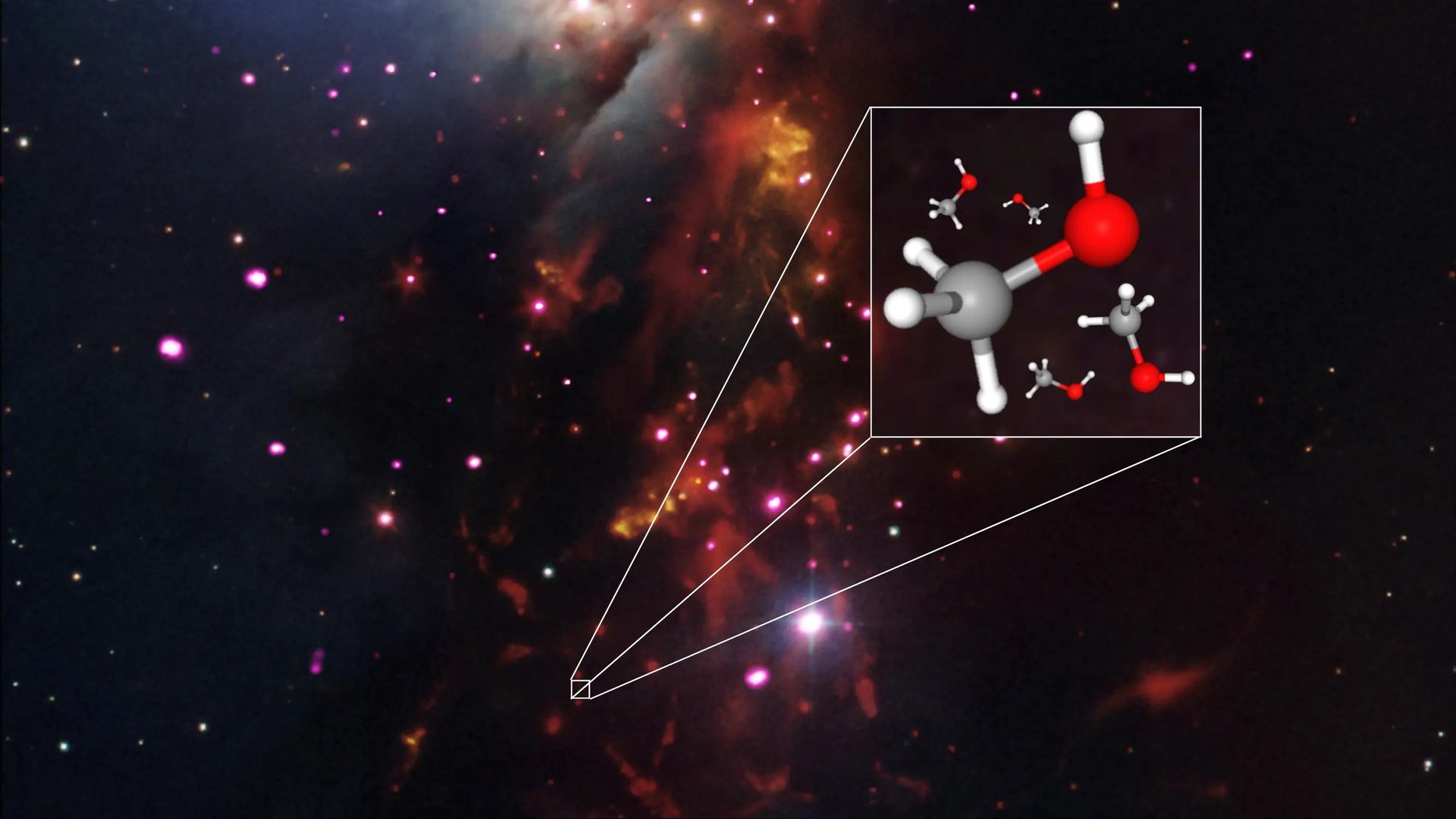
The quest to understand the chemical origins of life has reached a significant milestone as an international team of astronomers, utilizing the Atacama Large Millimeter/submillimeter Array (ALMA), has detected fully deuterated methanol in the vicinity of a young, Sun-like protostar. This discovery, centered on the protostar IRAS4A2 located approximately 1,000 light-years away in the Perseus molecular cloud, marks the first time a quadruply deuterated molecule has been identified in interstellar space. The presence of this "heavy methanol" (CD3OD) at levels nearly 100 times higher than predicted by current theoretical frameworks suggests that the existing models of astrochemistry are incomplete, failing to account for unknown processes that drive molecular complexity in the earliest stages of star formation.
The Organic Tapestry of the Early Universe
For decades, the scientific community has grappled with the question of whether the building blocks of life—organic molecules, amino acids, and proteins—are unique to Earth or are ubiquitous throughout the cosmos. Recent discoveries have increasingly supported the latter. Analysis of meteorites and samples returned from Near-Earth Asteroids (NEAs), such as the carbon-rich asteroid Bennu, has confirmed that amino acids are present on these ancient space rocks. Furthermore, research has demonstrated that complex organic molecules (COMs) can form spontaneously in the harsh vacuum of space, even without the presence of a parent star.
Among these molecules, methanol (CH3OH) holds a position of paramount importance. Known commonly as wood alcohol, methanol serves as a primary feedstock for the synthesis of even more complex species, such as methyl formate, dimethyl ether, and various prebiotic sugars. In the frigid environments of molecular clouds, methanol is believed to form on the surfaces of icy dust grains. Through a process of successive hydrogenation—where carbon monoxide (CO) reacts with hydrogen atoms—methanol is built up layer by layer. When a new star, or protostar, begins to form within these clouds, its increasing radiation warms the surrounding dust, causing these icy mantles to sublime and release their chemical cargo into the gas phase, where they can be detected by radio telescopes.
The Significance of Deuterium and Heavy Methanol
The recent study, led by Arnaud Belloche of the Max Planck Institute for Radio Astronomy (MPIfR), focused on a specific variant of methanol where the hydrogen atoms are replaced by deuterium. Deuterium (D), often called "heavy hydrogen," is an isotope of hydrogen containing one proton and one neutron. While deuterium is significantly rarer than ordinary hydrogen in the universe, certain cold, dense environments in space can facilitate "deuterium fractionation," a process that leads to a higher-than-expected concentration of deuterated molecules.
Detecting CD3OD—methanol where all four hydrogen atoms have been replaced by deuterium—is a feat of extreme technical difficulty. Prior to this study, molecules with one, two, or occasionally three deuterium atoms had been observed, but a quadruply deuterated species remained elusive. The detection of CD3OD provides a unique "chemical tag" that allows researchers to trace the history of the material from which stars and planets form. Because the substitution of hydrogen with deuterium is highly sensitive to local physical conditions, such as temperature and density, the abundance of these molecules acts as a fossil record of the protostar’s chemical evolution.
The ALMA COMPASS Large Program
The discovery was made as part of the Complex Organic Molecules in Protostars with ALMA Spectral Surveys (COMPASS) Large Program. This ambitious initiative leveraged the unprecedented sensitivity and spatial resolution of ALMA, an array of 66 radio telescopes situated on the Chajnantor Plateau in the Chilean Andes. The COMPASS program was designed to conduct a systematic survey of 11 nearby, Sun-like protostars to determine the diversity and abundance of complex organic molecules during the earliest stages of stellar development.
IRAS4A2, the subject of this specific breakthrough, is a Class 0 protostar—a stellar embryo in its most nascent stage, still deeply embedded within its natal cocoon of gas and dust. By observing this system, the COMPASS team sought to understand how the chemical composition of a solar system is established before planets even begin to coalesce. The team included experts from the Max Planck Institute for Extraterrestrial Physics (MPE), the Niels Bohr Institute, the National Radio Astronomy Observatory (NRAO), and several other global research hubs.
A Discrepancy in the Data: 100 Times More Abundant Than Predicted
The most striking finding of the study, published in the journal Astronomy & Astrophysics, was the sheer volume of fully deuterated methanol detected. When the researchers compared the observed abundance of CD3OD around IRAS4A2 to the outputs of standard astrochemcial models, they found a massive discrepancy. The observed levels were approximately two orders of magnitude (100 times) higher than what the models suggested should be possible under known chemical pathways.
"Deuteration enables us to trace the chemical evolution of molecules during the formation of stars and planets," stated Silvia Spezzano, research group leader at the MPE and a co-author of the study. "This helps us understand their chemistry and, ultimately, how molecular complexity is transferred from interstellar clouds to planetary systems."
The failure of current models to replicate these findings implies that the mechanisms governing grain-surface chemistry in the pre-stellar phase are more efficient or fundamentally different than previously assumed. Scientists suspect that there may be unknown catalytic processes occurring on the surfaces of interstellar dust grains or that the window of time during which these molecules form is longer than currently estimated.
Laboratory Synergy and the Search for Unidentified Lines
The discovery of CD3OD has also opened a "Pandora’s box" of unidentified spectral lines. During the ALMA observations, the team recorded several signals that did not correspond to any known molecular transitions in existing databases. Given the high abundance of fully deuterated methanol, the researchers hypothesize that these mystery lines may belong to other "multi-deuterated" variants, such as mono-deuterated methyl deuterated alcohol (CH2DOD) or dideuteriomethyl deuteroxide (CHD2OD).
To confirm these suspicions, a rigorous laboratory effort is underway. At the Center for Astrochemical Studies at MPE, researchers are performing high-precision spectroscopy on these rare isotopes to create a "fingerprint" library. By recreating the extreme conditions of space in a controlled environment, they can identify the exact frequencies at which these molecules vibrate and rotate.
"We are conducting a systematic laboratory program to study the spectroscopy of deuterated complex organic molecules," Spezzano explained. "These molecules allow us to study isotopic substitutions across different functional groups, which serve as chemical ‘tags’ to trace the growth of molecular complexity."
Chronology of Astrochemcial Milestones Leading to the Discovery
The detection of CD3OD is the culmination of decades of incremental progress in the field of astrochemistry:
- 1970s-1980s: Early radio telescopes identify simple organic molecules like formaldehyde and hydrogen cyanide in giant molecular clouds.
- 1990s: The discovery of "hot corinos"—small, warm regions around protostars—reveals a wealth of COMs, including methanol.
- 2011: ALMA begins early science operations, providing a tenfold increase in resolution for observing the cold universe.
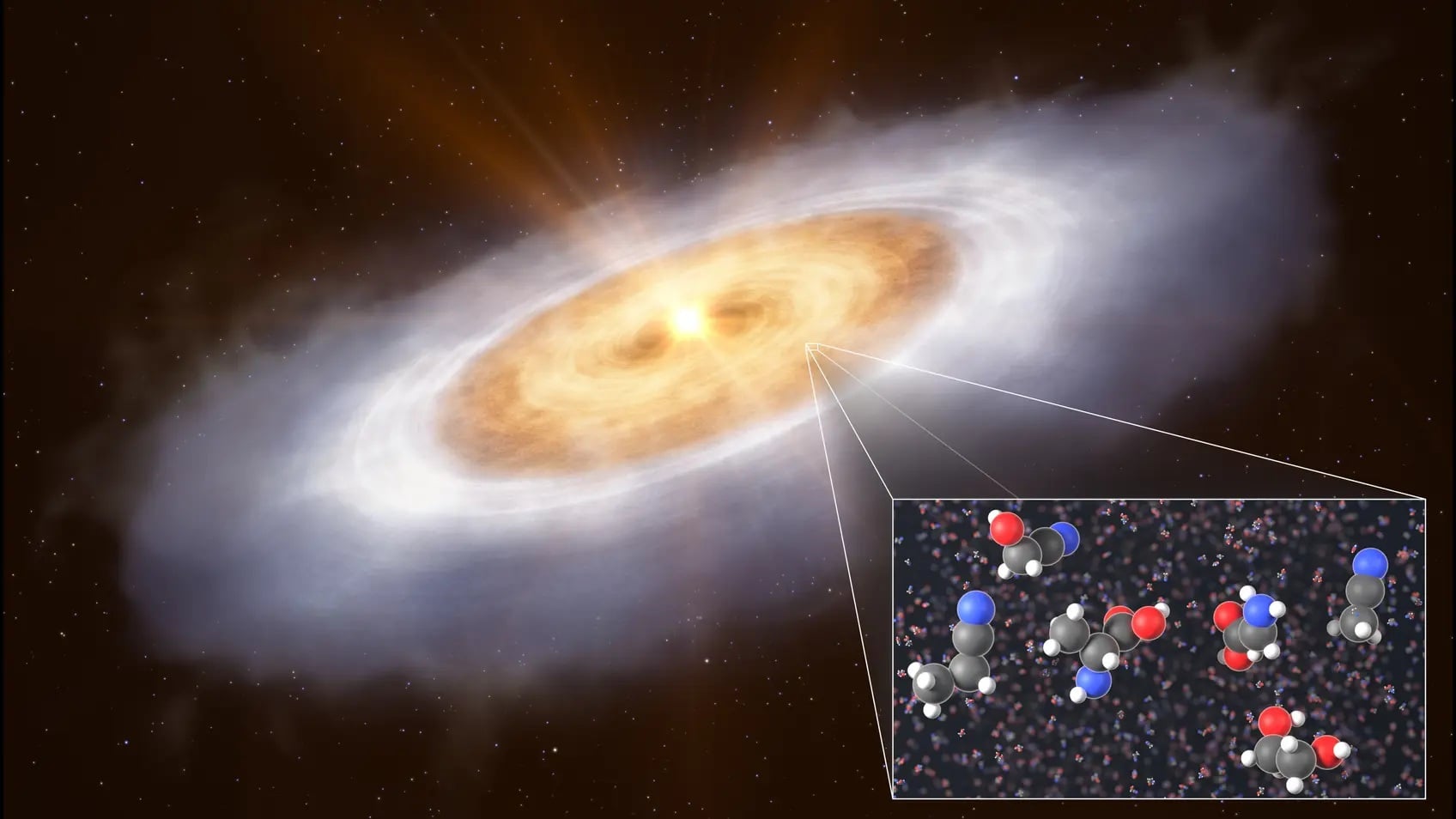
- 2016: ALMA detects the "water snowline" around V883 Orionis, illustrating where ice transitions to gas in a protoplanetary disc.
- 2021-2023: The COMPASS program conducts extensive surveys of 11 protostars, including IRAS4A2.
- 2024: The formal publication of the CD3OD detection and the accompanying six papers from the COMPASS project, redefining the chemical landscape of young star systems.
Broader Impact and the Future of Astrobiology
The implications of this research extend far beyond the identification of a single molecule. By proving that highly complex, multi-deuterated molecules can form in high abundances during the earliest stages of star formation, the study suggests that the chemical "starting material" for planetary systems is far richer than once thought.
If Sun-like stars like IRAS4A2 are naturally surrounded by a dense "soup" of heavy organic molecules, it increases the likelihood that the precursors for life are delivered to young planets via comets and asteroids that form in these environments. This reinforces the "inheritance" model of planetary chemistry, where the organic richness of a planet like Earth is a direct legacy of the molecular cloud from which the Sun was born.
The COMPASS project has released a total of seven papers in this latest wave of publication, each detailing different aspects of molecular diversity in the 11 surveyed protostars. Together, they provide a comprehensive census of the chemical ingredients available at the dawn of solar system formation. As ALMA continues to upgrade its capabilities and as the next generation of laboratory experiments provides more data, the bridge between interstellar chemistry and the origins of life continues to strengthen. The discovery of fully deuterated methanol is not just a triumph of spectroscopy; it is a clear indication that the universe is a far more efficient laboratory for organic chemistry than our current theories can explain.