Sisilia Frederika
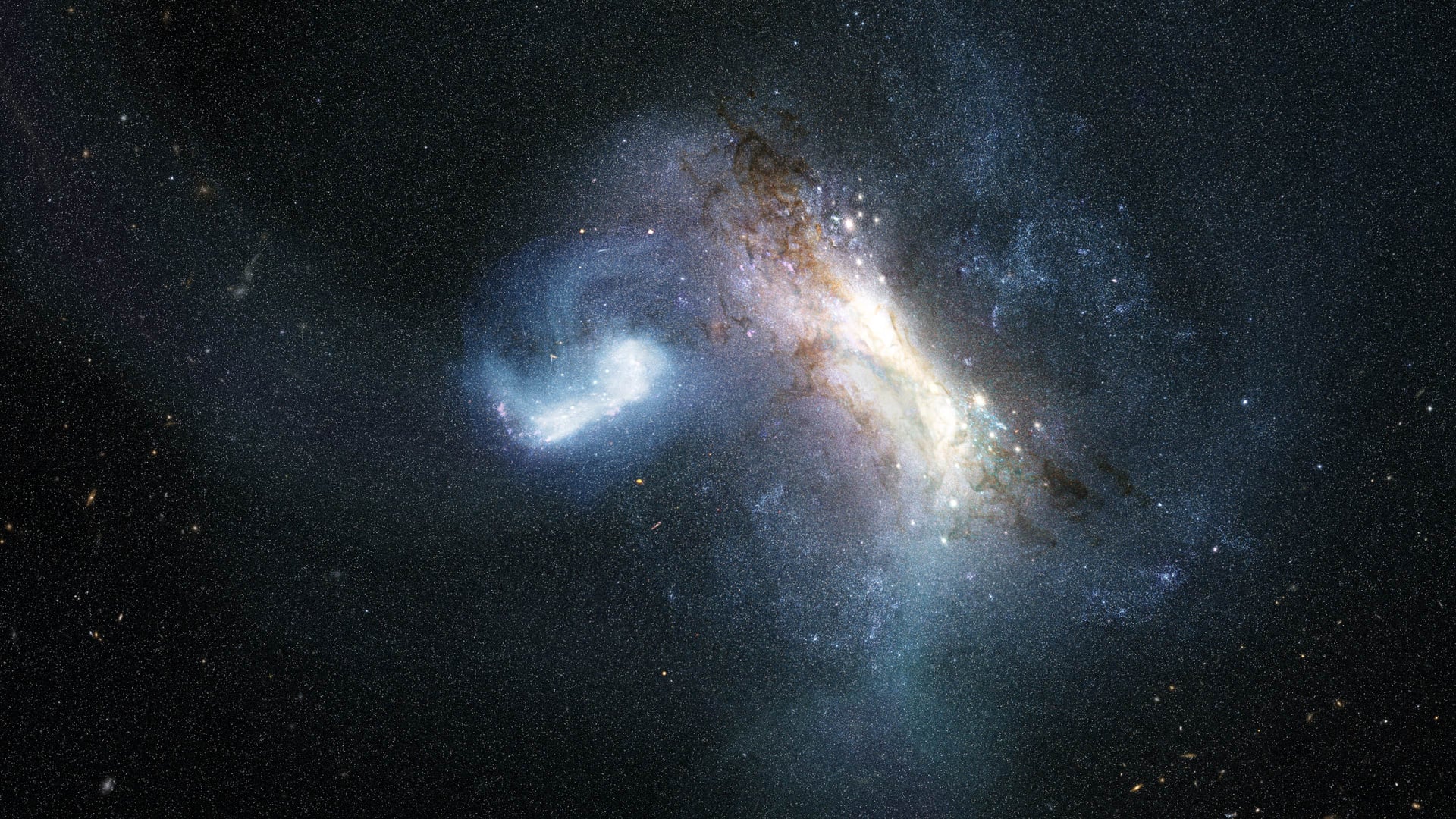
New astronomical data provided by the Hubble Space Telescope has offered a definitive glimpse into the violent and transformative infancy of our home galaxy. An international team of researchers, led by the Osservatorio di Astrofisica e Scienza dello Spazio di Bologna (OAS), has confirmed that the Milky Way underwent a massive merger with a dwarf galaxy approximately 11.8 billion years ago. This discovery, detailed in a recent publication in the journal Nature Astronomy, provides the "missing bricks" in the architectural history of our galaxy, revealing that the Milky Way’s early growth was significantly driven by the consumption of external stellar systems rather than purely internal star formation.
The identified dwarf galaxy, named Low-energy-Kraken-Heracles (LKH), represents one of the earliest and most significant "building blocks" of the Milky Way. By analyzing the chemical composition and age of ancient globular clusters, the research team has extended the known timeline of galactic mergers back to just two billion years after the Big Bang. This finding challenges previous models of galactic evolution that suggested the Milky Way’s earliest phases were dominated by stars born within its own gravitational well. Instead, it appears that "immigrant" stars from captured dwarf galaxies played a foundational role in shaping the galaxy we inhabit today.
The Galactic Construction Project: A History of Cannibalism
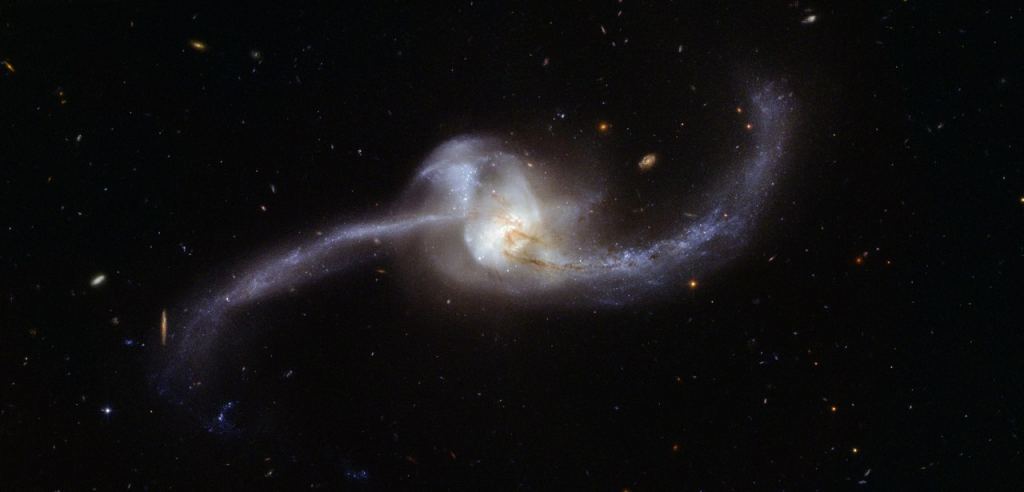
It has long been a scientific consensus that the Milky Way, which currently spans approximately 200,000 light-years and contains an estimated 200 billion stars, did not begin as the majestic barred spiral we observe today. Like most massive galaxies in the universe, it grew through a process of hierarchical assembly—a polite astronomical term for galactic cannibalism. In this process, larger galaxies use their immense gravitational pull to strip stars and gas from smaller neighbors, eventually absorbing them entirely.
These mergers are not merely historical events; they are ongoing. The Canis Major Dwarf Galaxy is currently being pulled apart by the Milky Way’s tidal forces, and the Sagittarius Dwarf Galaxy has been in the process of merging for over six billion years. Each of these events leaves behind "stellar streams" and globular clusters—tightly packed groups of hundreds of thousands of stars—that act as fossilized records of the encounter. However, as one looks further back into the cosmic past, these records become increasingly blurred. The gravitational turbulence of subsequent mergers and the internal rotation of the galaxy tend to erase the distinct signatures of the earliest collisions.
Unlocking the Secrets of Globular Clusters
To peer through the fog of nearly 12 billion years, the research team utilized the high-resolution capabilities of the Hubble Space Telescope. While the European Space Agency’s (ESA) Gaia mission has revolutionized our understanding of the Milky Way’s dynamics by mapping the positions and velocities of over a billion stars, Hubble provides the "depth" necessary to analyze the oldest structures in the galaxy: globular clusters.
Globular clusters are among the oldest objects in the universe. Because the stars within a single cluster are generally born at the same time from the same gas cloud, they serve as a "chronometer" for the galaxy. By measuring the "metallicity" of these stars—the abundance of elements heavier than hydrogen and helium—astronomers can determine where and when a cluster was formed. Stars born in smaller dwarf galaxies typically have lower metallicity than those born in the dense, gas-rich environment of a proto-Milky Way.
The team analyzed a sample of 39 globular clusters located within 20,000 light-years of the galactic center. Using Hubble’s sensitive instruments, they determined the precise age and chemical makeup of each cluster. This data revealed a distinct "third population" of clusters that did not fit the profile of the known Gaia-Sausage-Enceladus merger (which occurred 10 billion years ago) nor the clusters that formed "in-situ" within the Milky Way itself. These clusters were older than those from previous known mergers but younger than the Milky Way’s original stars, pointing directly to a separate, earlier event involving the LKH dwarf galaxy.
The Chronology of the Milky Way’s Assembly
The discovery of the LKH merger allows astronomers to construct a more accurate timeline of the Milky Way’s formative years:
- 13.8 Billion Years Ago: The Big Bang occurs, followed by the formation of the first stars and proto-galaxies.
- ~13 Billion Years Ago: The earliest stars of the Milky Way begin to form "in-situ" from collapsing gas clouds.
- 11.8 Billion Years Ago (The LKH Merger): The Milky Way absorbs the LKH dwarf galaxy, which possessed a mass of approximately 500 million solar masses. This event injects a significant population of stars and globular clusters into the inner regions of the galaxy.
- 10 Billion Years Ago (The Gaia-Sausage-Enceladus Merger): A major collision with the Gaia-Sausage-Enceladus galaxy occurs, significantly puffing up the Milky Way’s stellar disk and altering its shape.
- 6 Billion Years Ago to Present: The Sagittarius Dwarf Galaxy begins its merger process, which continues to trigger ripples of star formation in the Milky Way’s spiral arms.
- Today: The Milky Way continues to consume the Canis Major Dwarf and prepares for a future collision with the Andromeda Galaxy (M31) in about 4.5 billion years.
The Significance of the LKH Dwarf Galaxy
The naming of "Low-energy-Kraken-Heracles" (LKH) is a tribute to previous theoretical work. Astronomers had previously hypothesized the existence of early mergers, sometimes using names like "Kraken" or "Heracles" for proposed ancient events. The current study provides the definitive observational evidence that these theories were correct, unifying them under the LKH designation.
According to lead author Davide Massari, First Researcher at the OAS di Bologna, the discovery is akin to finding the original blueprints of a house. "Our home is the Milky Way galaxy, but we do not know how our house was built," Massari stated. "In this paper, we discover where the first significant batch of bricks came from."
The LKH galaxy was not a minor snack; its mass of 500 million suns was substantial relative to the size of the Milky Way at that time. This merger would have provided the gravitational shock necessary to compress gas clouds, accelerating the birth of new stars and helping to form the "thick disk" that characterizes our galaxy’s structure.
Collaborative Effort and Technical Precision
The research was a massive undertaking involving a global network of institutions. In addition to the OAS di Bologna and the Italian National Institute for Astrophysics (INAF), contributors included the Kapteyn Astronomical Institute in the Netherlands, the Escola de Enxeñaría de Telecomunicación and the University of Vigo in Spain, the Instituto de Astrofísica de Canarias (IAC), Edinburgh University’s Astrophysics Research Institute, and the Space Telescope Science Institute (STScI) in Baltimore.
Chiara Zerbinati, a PhD candidate at the University of Bologna and co-author of the study, emphasized the necessity of Hubble’s precision. "Thanks to the high resolution and depth of Hubble imaging, we could measure the age and the metal content of these clusters with unprecedented precision," Zerbinati explained. "Coupled with measurements from Gaia, this made it possible to distinguish a population of globular clusters that are different from the others. These are the clusters that were born in LKH, and they tell us when that galaxy was devoured by ours, and how massive it was."
Broader Implications for Galactic Evolution
The discovery of the LKH merger has profound implications for how we understand the "Cosmic Dawn"—the era when the first galaxies were forming. It suggests that even in the very early universe, galaxies were already engaging in complex gravitational dances.
The finding also shifts the focus of galactic archaeology. For years, the "in-situ" model of formation—where a galaxy grows primarily from its own internal gas—was the dominant theory for the earliest stages of the Milky Way. The Hubble data proves that external contributions were vital almost from the beginning. This "accretion-heavy" model suggests that the Milky Way’s survival and eventual size were dependent on its ability to successfully incorporate neighboring systems.
Furthermore, the study highlights the continued relevance of the Hubble Space Telescope in an era dominated by newer observatories like the James Webb Space Telescope (JWST). While JWST excels at looking at the very first galaxies at the edge of the observable universe, Hubble’s ability to perform high-precision ultraviolet and optical observations remains the gold standard for studying the individual stars within our own galaxy’s ancient clusters.
Future Research and the Search for More "Fossils"
The team plans to expand their survey to include more globular clusters that have remained unstudied or poorly characterized. Fernando Aguado-Agelet, a researcher from the University of Vigo and the University of La Laguna, noted that this is just the beginning. "Hubble is observing globular clusters that have never been studied before, and this will help us characterize the merger events that are far back in time in the Milky Way galaxy’s history," he said.
By identifying every major merger in the Milky Way’s 13-billion-year history, astronomers hope to create a complete "family tree" of our galaxy. This will not only tell us where we came from but also help us predict the future of our local group of galaxies. As we look toward the eventual merger with Andromeda, understanding these ancient "bricks" helps us appreciate the dynamic, ever-changing nature of the universe we call home.