George Chandra Eka
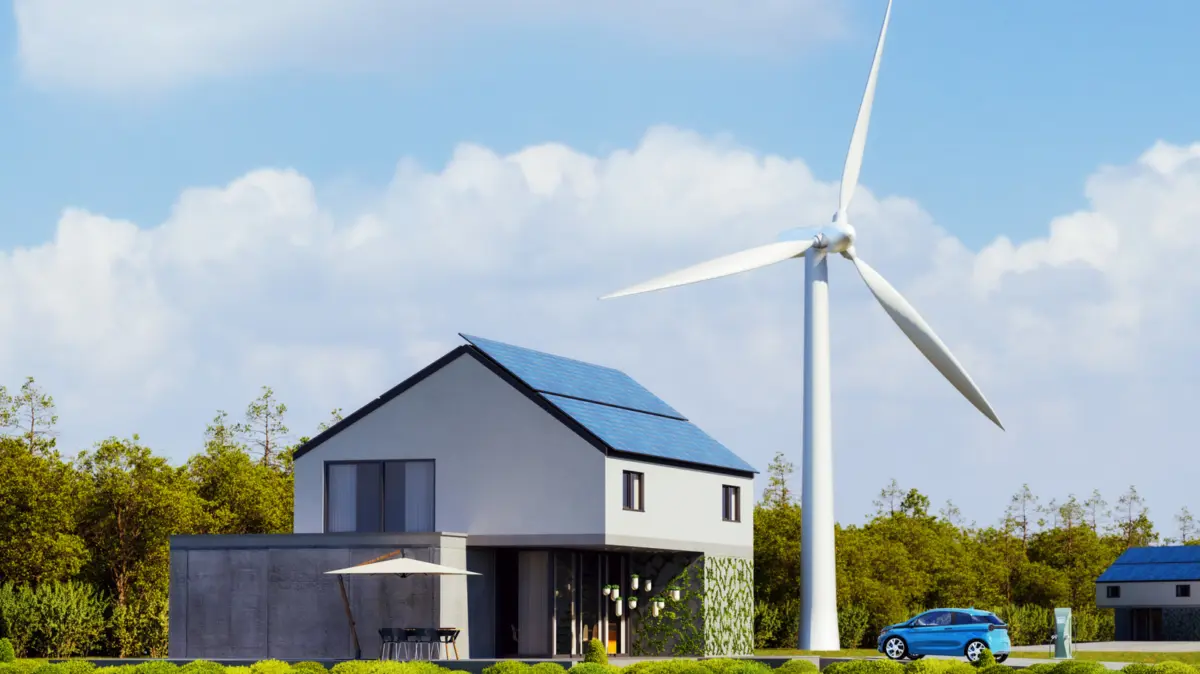
The promise of harnessing nature’s invisible force to power homes has long captivated proponents of renewable energy. While solar panels have rapidly become a ubiquitous symbol of residential sustainability, small-scale wind turbines for domestic use present a more complex and nuanced proposition. The direct answer to whether home wind turbines genuinely work is a qualified "yes," heavily contingent on specific environmental factors and homeowner expectations. Unlike the relatively predictable output of solar photovoltaic (PV) systems, the efficacy of a residential wind turbine, particularly a 1kW model, is inextricably linked to the fickle nature of the wind itself.
The residential renewable energy landscape has seen solar power surge to unprecedented adoption rates, driven by declining costs, improving efficiency, and robust incentive programs. This rapid ascent has, perhaps inevitably, cast a long shadow over other forms of distributed generation, including small wind. However, dismissing wind power entirely for home use would be premature. Its viability is less about a universal solution and more about meeting specific needs on an appropriate scale. Indeed, compact turbines are even engineered for mobile applications, such as powering recreational vehicles, illustrating the diverse definitions of "home" in this context.
Beyond the Nameplate: Deconstructing 1kW Turbine Performance
A common misconception revolves around the "1 kW" rating of a wind turbine. This figure represents its peak power output under optimal wind conditions, not a guaranteed continuous delivery. A more pragmatic metric for assessing a turbine’s utility is its annual or monthly energy production, quantified in kilowatt-hours (kWh). In an exceptionally well-chosen and unobstructed location, a 1kW turbine might realistically produce around 200 kWh per month, translating to approximately 2,400 kWh annually. To put this into perspective, the average U.S. household consumes roughly 10,500 kWh of electricity per year, or about 850 kWh per month. This means a 1kW turbine, even under favorable conditions, would supply less than a quarter of a typical home’s annual energy demand.
This disparity highlights the concept of a turbine’s "capacity factor," which is the ratio of its actual energy output over a period to its maximum possible output over the same period. For small wind turbines, capacity factors can vary widely but are often in the range of 15-30%, significantly lower than their peak rating suggests. Factors influencing this include the variability of wind speeds, the turbine’s cut-in speed (the minimum wind speed required to start generating power), and its cut-out speed (the wind speed at which it shuts down to prevent damage).
Small wind turbines are typically categorized into two main types: Horizontal Axis Wind Turbines (HAWTs) and Vertical Axis Wind Turbines (VAWTs). HAWTs, resembling their larger utility-scale counterparts, are generally more efficient at capturing wind energy but require yawing mechanisms to orient themselves into the wind. VAWTs, often appearing as eggbeater or Darrieus designs, are omnidirectional, meaning they don’t need to turn to face the wind, and can sometimes operate more effectively in turbulent conditions, though often with lower overall efficiency than HAWTs. Both types come with their own set of considerations for residential application, including noise output, visual impact, and mounting requirements.
The Unseen Architect: Wind Resource Assessment and Site Selection
The single most critical determinant of a small wind turbine’s success is the wind resource itself. For a 1kW system to be genuinely worthwhile, it necessitates an area with consistently high average annual wind speeds, ideally 14 miles per hour (mph) or higher. Such conditions are not universally present, making thorough site assessment paramount.
Obstacles are the nemesis of efficient wind energy production. Homes surrounded by dense tree lines, other buildings, hills, or even large sheds are inherently poor candidates for wind turbine installation. These obstructions do more than merely block the wind; they create significant turbulence. Turbulent wind is chaotic and unpredictable, drastically reducing a turbine’s output and accelerating wear and tear on its components. The U.S. Department of Energy (DOE) offers clear guidance on placement, recommending that the bottom of the rotor blades be positioned at least 30 feet above any obstacle within a 300-foot horizontal radius of the tower. This seemingly straightforward recommendation carries profound implications for suburban and even many rural settings.
Professional wind resource assessment involves more than just glancing at a regional wind map. It often includes installing an anemometer (a wind speed measuring device) on site for several months to gather precise data on average wind speeds, prevailing wind directions, and turbulence levels. This granular data is crucial for an accurate projection of annual energy production. Without such a detailed analysis, investing in a home wind turbine becomes an exercise in costly speculation.
Navigating the Labyrinth: Zoning Regulations and Permitting Challenges
Even with an optimal wind resource, the path to installing a residential wind turbine is frequently fraught with regulatory hurdles. The DOE’s recommendation for tower height immediately highlights a significant challenge in developed areas. Most local zoning ordinances impose strict height limitations on structures, often capping them at around 35 feet. This is often insufficient to elevate a turbine rotor 30 feet above surrounding obstacles, particularly in neighborhoods with mature trees or multi-story homes.
The ramifications of inadequate tower height extend beyond mere efficiency. A turbine operating in turbulent, low-altitude wind will not only produce less power but will also be subjected to greater mechanical stress, leading to more frequent maintenance and a shorter operational lifespan. Furthermore, while rooftop installations might appear appealing on paper for maximizing height, they present their own set of problems. The structural integrity of the roof must be sufficient to bear the turbine’s weight and withstand wind loads. More significantly, rooftop-mounted turbines can transmit vibrations and noise directly into the home, creating an undesirable living environment. Imagine the rhythmic hum or subtle tremor permeating your bedroom while attempting to sleep.
The permitting process for small wind turbines can be arduous, involving multiple municipal departments, engineering reviews, and public hearings, especially if variances for height are required. Homeowners’ associations (HOAs) often add another layer of complexity, with covenants that may restrict or outright prohibit the installation of visible external structures like wind turbines, regardless of local zoning. Successfully navigating this regulatory landscape requires diligence, patience, and often, professional assistance from installers well-versed in local codes.
The Economic Equation: Costs, Incentives, and Return on Investment
The financial aspect is often the most significant barrier to widespread residential wind adoption. Installing a small wind turbine system can range from $20,000 to $50,000, a substantial investment for most homeowners. This cost encompasses the turbine itself, the tower, foundation work, electrical wiring, inverter, grid-connection equipment, and installation labor. For off-grid systems, additional costs for batteries and a charge controller must be factored in, further escalating the initial outlay.
When juxtaposed with solar PV systems, the economic disparities become stark. A solar array capable of producing an equivalent amount of energy might cost between $2,500 and $3,500 per kW (before incentives), making it significantly more affordable on a per-kilowatt-hour basis. Moreover, solar panels benefit from more mature supply chains, easier installation, and generally broader public acceptance.
While federal tax credits, such as the Investment Tax Credit (ITC), are available for small wind turbines, mirroring those for solar, the higher upfront costs mean a longer payback period. State and local incentives, including rebates or property tax exemptions, can further reduce the net cost, but these vary widely by region. Calculating the true return on investment (ROI) requires a careful assessment of projected energy savings, the lifespan of the equipment (typically 20-25 years with proper maintenance), and any potential increases in property value. For many, the levelized cost of energy (LCOE) from a small wind turbine remains higher than that of grid electricity or residential solar, making it a less financially compelling option unless specific circumstances (e.g., extremely high electricity rates, remote location, or strong desire for energy independence) are present.
Powering More Than a Cabin: Scaling Up for Whole-Home Energy Needs
As established, a 1kW wind turbine is generally insufficient to power a typical U.S. home comprehensively. While it might be a viable option for a small, energy-efficient cabin, a perpetually parked RV, or a specific remote application, providing substantial power for an average household necessitates a much larger capacity. Residential turbines in the 5 kW to 15 kW range are often required to make a meaningful dent in annual energy consumption. These larger systems, however, come with commensurately higher costs, more stringent siting requirements, and increased regulatory scrutiny.
Small wind systems can be either grid-connected or off-grid. Grid-connected systems feed excess electricity back into the utility grid, often under net metering agreements, effectively using the grid as a large battery. These systems typically require an inverter to convert the turbine’s direct current (DC) output to alternating current (AC) compatible with the home and grid. Off-grid systems, designed for energy independence, require battery banks to store power for use when the wind isn’t blowing, along with a charge controller to manage battery charging and prevent overcharging. The complexity and cost of battery storage solutions further add to the overall system price for off-grid applications.
Environmental Footprint and Community Considerations
The primary environmental benefit of home wind turbines, like all renewable energy sources, is the reduction of carbon emissions associated with fossil fuel-based electricity generation. By generating clean power on-site, homeowners can significantly lower their carbon footprint and contribute to broader climate change mitigation efforts.
However, environmental and community considerations extend beyond carbon. Noise pollution is a common concern. While small turbines are generally quieter than their utility-scale counterparts, they still produce a distinct sound, particularly at higher wind speeds. This noise, combined with potential visual impact, can lead to objections from neighbors, particularly in densely populated areas. Reputable manufacturers provide noise specifications, and proper siting can help mitigate sound propagation. Wildlife impact, primarily concerning bird and bat mortality, is also a consideration, though it is typically far less pronounced for small residential turbines compared to large wind farms.
Beyond these tangible aspects, the pursuit of energy independence and resilience is a significant motivator for some homeowners. An appropriately sized and sited wind turbine, especially when coupled with battery storage, can provide a reliable power source during grid outages, enhancing household security and self-sufficiency.
The Road Ahead: Innovations and the Future of Distributed Wind
The future of residential wind power is likely to be shaped by technological advancements and evolving policy frameworks. Research and development continue to focus on creating quieter, more efficient, and aesthetically pleasing turbine designs. Innovations such as bladeless turbines (which harness aeroelastic flutter), airborne wind energy systems, and improved vertical axis designs aim to address some of the current limitations.
The integration of small wind turbines into hybrid energy systems, combining wind, solar, and battery storage, holds immense promise. Such systems can leverage the complementary nature of wind (often stronger at night or in winter) and solar (strongest during the day and in summer) to provide a more consistent and reliable power supply. Advanced energy management systems and smart grid technologies will further optimize the performance and economic benefits of these hybrid setups.
Government policies, including clearer zoning guidelines, streamlined permitting processes, and tailored incentive programs, could also play a crucial role in fostering wider adoption where wind resources are genuinely viable. As the global imperative for decarbonization intensifies, distributed wind power may yet find its niche, evolving from a marginal solution to a more recognized component of a diversified residential energy portfolio.
In conclusion, while the allure of a home wind turbine is strong, its practical application for the average suburban dwelling is often limited by a confluence of factors: the variability of wind, stringent siting requirements, regulatory hurdles, and significant upfront costs compared to solar. For those in open, rural areas with consistently verified high average wind speeds, and a clear understanding of the investment and operational demands, a small wind turbine can serve as a valuable supplement to an already efficient home or a critical component of an off-grid system. However, for the majority of homeowners, enhancing insulation, improving energy efficiency, and installing ground- or roof-mounted solar panels will likely offer a more dependable, cost-effective, and hassle-free path to renewable energy independence. The decision to go with wind demands meticulous planning, realistic expectations, and a thorough, site-specific assessment.