Sisilia Frederika
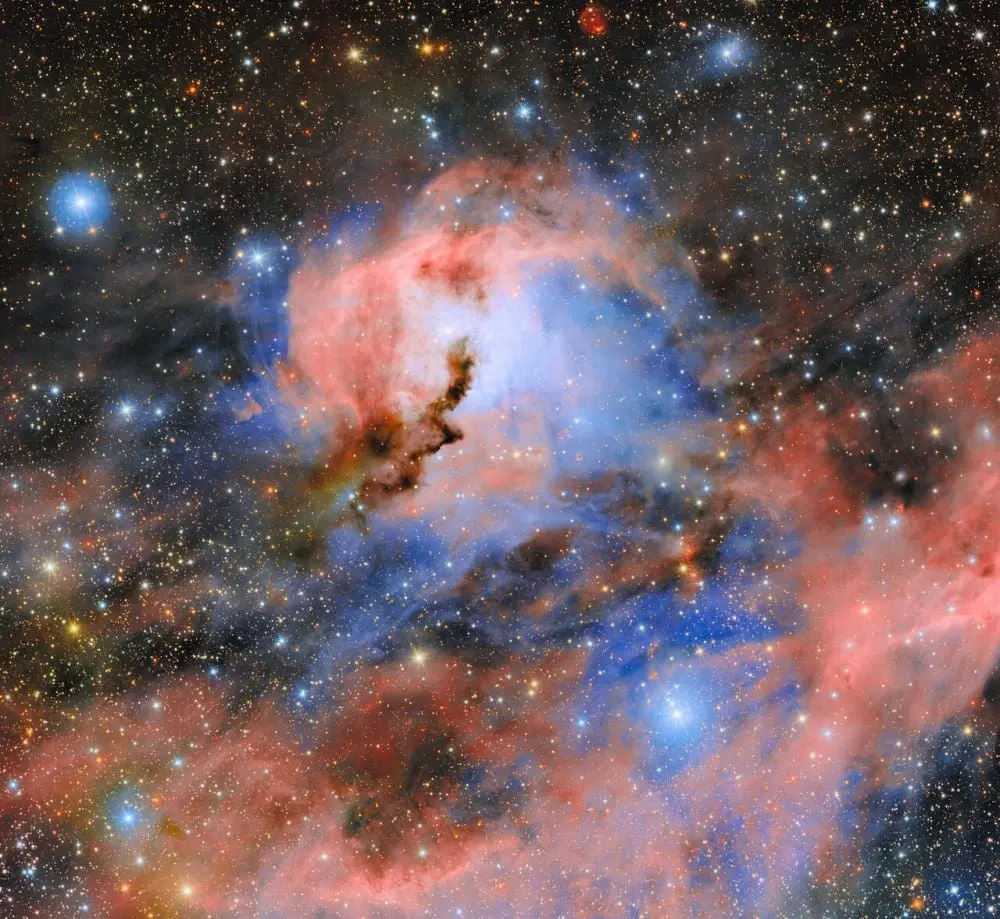
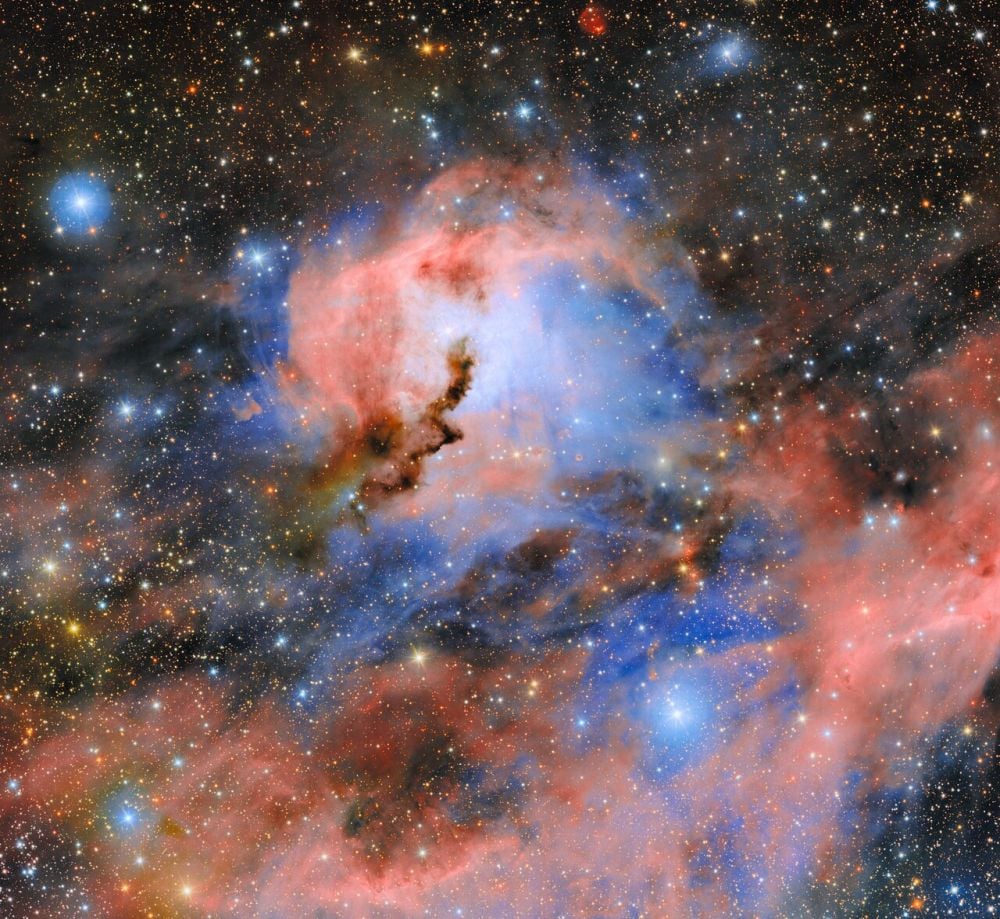
The NSF–DOE Vera C. Rubin Observatory has officially released a high-resolution image of the Seagull Nebula, a massive star-forming region located approximately 3,700 light-years from Earth, marking a significant milestone in the facility’s transition from commissioning to full-scale operations. This release, timed to commemorate the two-year anniversary of the commencement of testing with the observatory’s Commissioning Camera (ComCam), provides a detailed look at the interstellar structures that the observatory is designed to catalog. While the "First Look" event in July 2025 introduced the public to the "Cosmic Treasure Chest" and other seminal images, this newly unveiled view of the Seagull Nebula, formally designated as IC 2177, highlights the critical work performed by the engineering testbed that paved the way for the world’s largest digital camera.
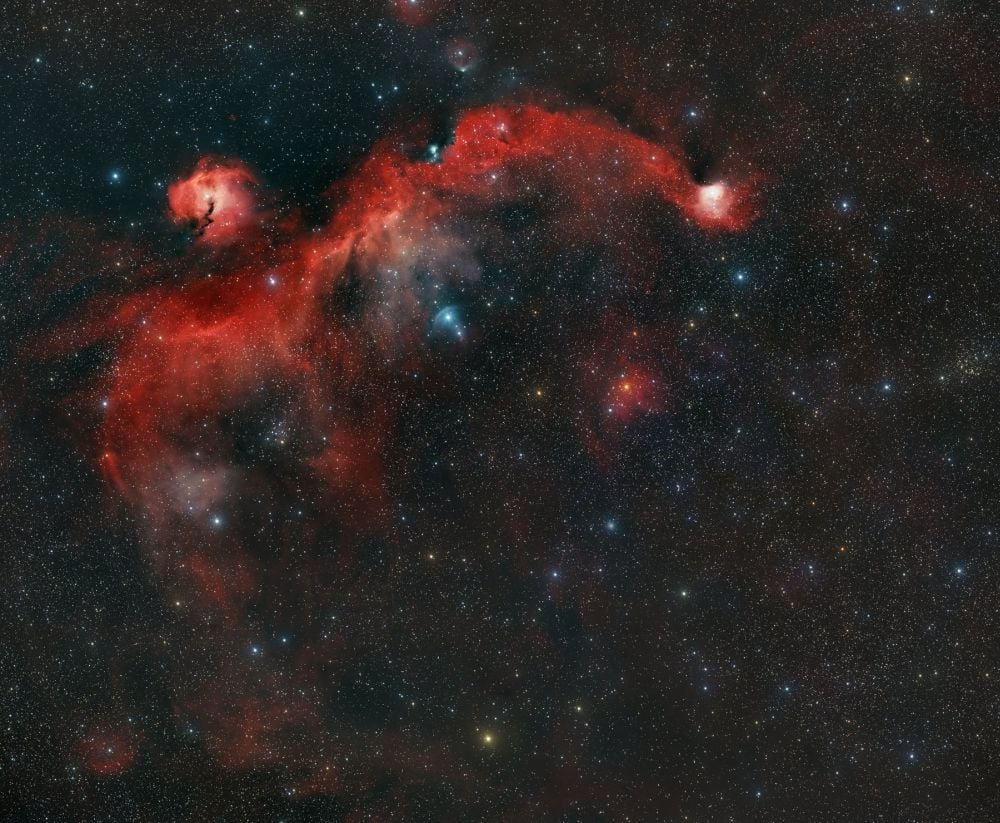
The Seagull Nebula is a sprawling complex of gas and dust that spans across the border between the constellations Monoceros and Canis Major. The ComCam image specifically focuses on Sharpless 2-292, a region of intense activity that constitutes the "head" of the celestial bird. Within this cosmic nursery, hot young stars emit potent ionizing radiation, which strips electrons from surrounding hydrogen gas, causing it to glow with a characteristic pinkish hue. Interspersed with this glowing gas are veils of blue, created by starlight reflecting off microscopic dust particles. This interplay of light and matter is a primary focus for astrophysicists studying the life cycles of stars and the chemical evolution of galaxies.
The Role and Capabilities of ComCam
The Commissioning Camera, affectionately known as ComCam, served as a foundational engineering tool for the Vera C. Rubin Observatory. Though it has since been replaced by the primary Legacy Survey of Space and Time (LSST) camera, its contribution to the project’s success remains a focal point of the observatory’s developmental history. ComCam was designed as a smaller, fully functional surrogate for the main 3.2-gigapixel LSST camera, allowing engineers to conduct comprehensive, end-to-end testing of the telescope’s hardware and software systems.
Constructed to ensure that the Simonyi Survey Telescope’s complex optics and tracking systems functioned in unison, ComCam features a 144-megapixel sensor array. While this resolution is modest compared to the final LSST camera, it is formidable by contemporary astronomical standards. Each exposure captured by ComCam covers an area of the sky equivalent to the width of two full moons. During its primary seven-week observation window in late 2024, the camera gathered approximately 16,000 exposures, providing a massive dataset that allowed researchers to refine the observatory’s automated image-processing pipelines.
The data gathered by ComCam was subjected to the same rigorous processing algorithms that will be utilized throughout the LSST’s ten-year mission. This includes sophisticated artifact removal, atmospheric correction, and precise photometric calibration. The clarity of the Seagull Nebula image serves as a testament to the efficacy of these systems, demonstrating that even a test camera can produce science-quality data when integrated with the Rubin Observatory’s advanced infrastructure.
Chronology of the Commissioning Phase
The journey to the full operational capacity of the Vera C. Rubin Observatory has been marked by several key technical phases. The integration of ComCam was a multi-year endeavor that began in earnest in 2022 when the unit was first mounted on the Simonyi Survey Telescope at the observatory’s site on Cerro Pachón in the Chilean Andes.
Following its installation, the engineering team spent nearly two years calibrating the instrument and integrating it with the telescope’s control software. The most intensive phase of ComCam’s operation occurred during a seven-week period in the latter half of 2024. During this window, the observatory operated in a simulated survey mode, capturing thousands of images to test the stability of the telescope mount and the efficiency of the data transfer protocols between the mountain site and the data processing centers in the United States.
In December 2024, following the successful completion of its primary mission, ComCam was removed from the telescope. This allowed for the installation of the primary LSST camera—the largest digital camera ever constructed for the field of astronomy. The transition from ComCam to the LSST camera represented a significant leap in data-gathering potential, as the final instrument is roughly 20 times more powerful in terms of its pixel count and field of view. However, the legacy of ComCam continues; it remains an active asset for the observatory, currently utilized for testing software updates and assisting in maintenance operations that do not require the full power of the primary camera.
Technical Specifications and Scientific Context
The Vera C. Rubin Observatory is a joint project of the National Science Foundation (NSF) and the U.S. Department of Energy (DOE). It is managed by the Association of Universities for Research in Astronomy (AURA) and the SLAC National Accelerator Laboratory. The facility’s primary mission is the Legacy Survey of Space and Time (LSST), a decade-long project that will photograph the entire visible southern sky every few nights.
The sheer volume of data produced by the observatory is unprecedented. Once the 3.2-gigapixel LSST camera is fully operational, it will generate approximately 20 terabytes of data every night. Over ten years, this will result in a 500-petabyte database of images and catalogs. The ComCam phase was essential for ensuring that the Rubin Science Platform—the software suite used by astronomers to access and analyze this data—could handle the throughput.
The image of the Seagull Nebula demonstrates the observatory’s ability to resolve fine details within complex nebular structures. The Sharpless 2-292 region, as seen through ComCam, reveals the "shocks" and "fronts" where stellar winds from newborn stars collide with the surrounding molecular clouds. These interactions trigger further star formation, creating a self-sustaining cycle of cosmic birth. By capturing these phenomena with high precision, the Rubin Observatory will provide a more comprehensive census of star-forming regions within the Milky Way than has ever been possible.
Institutional Perspectives and Project Goals
While official statements regarding the Seagull Nebula image emphasize its aesthetic beauty, the underlying message from the project’s leadership is one of technical readiness. Representatives from NOIRLab and the SLAC National Accelerator Laboratory have noted that the success of the ComCam phase was a critical "green light" for the final stages of the observatory’s construction.
The goal of the LSST is to address four main areas of scientific inquiry:
- Understanding Dark Matter and Dark Energy: By observing the shapes and distributions of billions of galaxies, the survey will help map the "dark" components of the universe that influence its expansion.
- Cataloging the Solar System: The observatory is expected to discover millions of new objects in our solar system, from near-Earth asteroids to distant Kuiper Belt objects.
- Exploring the Transient Sky: Because the telescope scans the sky repeatedly, it is uniquely suited to find "transient" events—phenomena that change or move, such as supernovae, variable stars, and optical counterparts to gravitational waves.
- Mapping the Milky Way: The survey will provide a 3D map of our galaxy, detailing the positions and motions of billions of stars to help astronomers understand the Milky Way’s formation history.
The ComCam data has already contributed to these goals by verifying that the telescope’s 8.4-meter primary mirror and its unique three-mirror optical design can deliver the required image quality across a wide field of view.
Broader Implications for Modern Astronomy
The release of the Seagull Nebula image serves as a reminder of the shifting paradigm in astronomical research. Traditionally, astronomy involved "pointed" observations, where a telescope was directed at a specific object for a set period. The Vera Rubin Observatory represents the "survey" era, where the objective is to capture everything, everywhere, all the time.
The success of ComCam indicates that the era of "Big Data" astronomy is fully realized. The engineering feats required to move the telescope—a structure weighing over 300 tons—with the precision necessary to capture 144-megapixel (and eventually 3,200-megapixel) images without blur is a triumph of mechanical and optical engineering. Furthermore, the automated processing of these images ensures that the global scientific community can be alerted to changes in the sky within 60 seconds of an image being taken.
As the astronomical community looks forward to the continued rollout of data from the primary LSST camera, the ComCam image of IC 2177 stands as a historical marker. It represents the bridge between the conceptual phase of the Rubin Observatory and its future as the most productive survey instrument in history. While the 144-megapixel ComCam may eventually be overshadowed by the sheer scale of the 3.2-gigapixel main array, its role in validating the systems that will define the next decade of discovery remains an essential chapter in the story of human exploration of the cosmos.