admin
admin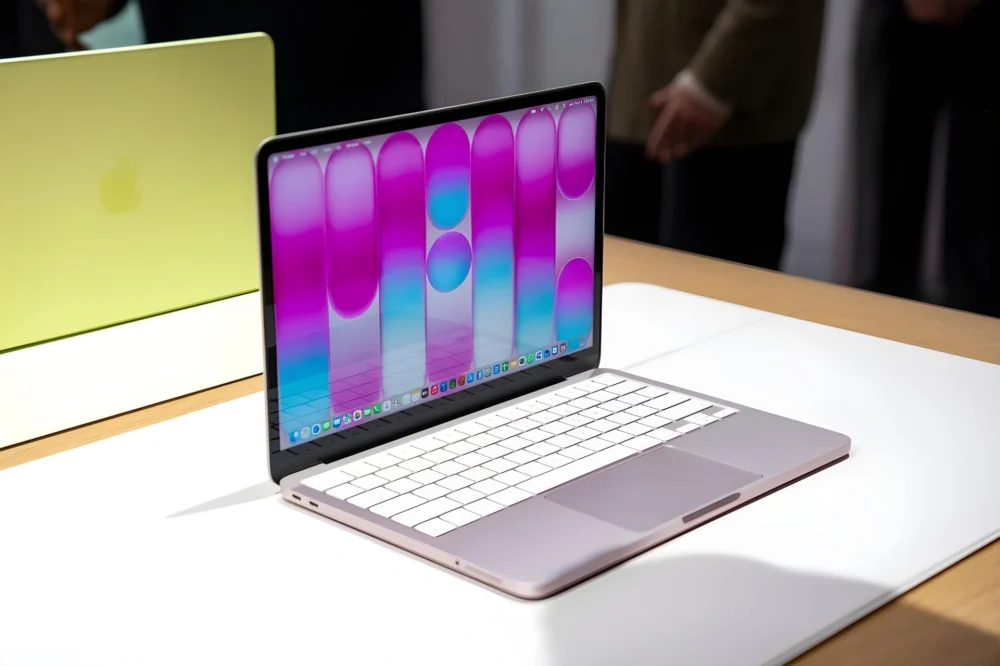
The launch of the MacBook Neo marks a pivotal shift in Apple’s hardware strategy, as the tech giant seeks to penetrate a massive market segment previously dominated by mid-range Windows laptops and high-end Chromebooks. By positioning the MacBook Neo at a disruptive $599 price point, Apple has effectively positioned itself to capture a significant portion of a Total Addressable Market (TAM) estimated at 50 million units annually. While the device has been met with internal and external debate regarding its technical trade-offs, the move signals Apple’s intent to use the Mac as its primary short-term growth lever, potentially expanding its annual computer shipments from the traditional 25–30 million range to well over 40 million units in the coming years.
The $30 Billion Market Opportunity
Industry analysts and market researchers have identified the $600 to $800 price bracket as one of the most resilient and high-volume segments in the global personal computing industry. This specific "value-premium" zone accounts for approximately 50 million units sold per year, representing a minimum $30 billion annual revenue opportunity. Historically, Apple’s presence in this space was limited to older, discounted models or refurbished units, such as the aging M1 MacBook Air.
The MacBook Neo is the first device specifically engineered by Apple to compete directly within this price band from the moment of its release. According to data from TrendForce, the initial take-up rate for the Neo is projected to be between 4 million and 5 million units in its first year. This would represent a 10 percent capture of the available TAM almost immediately. Financial analysts, including Ben Bajarin, suggest that if Apple successfully migrates even a fraction of current Windows users in this price range to the macOS ecosystem, the company’s total Mac shipments could see a permanent upward shift, moving north of 40 million units annually as the product line matures.
Technical Specifications and Performance Benchmarks
At the heart of the MacBook Neo is the A18 Pro processor, a choice that has sparked significant discussion among hardware enthusiasts. While the MacBook Pro and MacBook Air lines typically utilize M-series silicon, the adoption of the A18 Pro—a chip architecture shared with Apple’s flagship mobile devices—is a calculated move to balance performance with manufacturing costs.
Despite its mobile-centric origins, the A18 Pro delivers a substantial performance uplift for entry-level users. Benchmarking data indicates that the MacBook Neo provides a 43 percent jump in processing power over the M1 MacBook Air, which for years served as the benchmark for value-oriented Mac performance. This performance gain is attributed to the improved efficiency of the 3-nanometer fabrication process and advanced thermal management within the Neo’s larger chassis compared to a smartphone.
However, the device is not without its technical limitations. The MacBook Neo is equipped with 8GB of RAM, a configuration that has drawn criticism from power users. Reports suggest this limitation is a result of the A18 Pro’s specific packaging, which was optimized for high-density mobile logic boards rather than the modular scalability often seen in desktop-class chips. Furthermore, while the device features two USB-C ports, they operate at different data transfer speeds—a compromise intended to differentiate the Neo from the more expensive MacBook Air and Pro models.
Strategic Compromises and the "Oversized iPad" Narrative
To achieve the $599 price point, Apple has implemented what some critics describe as "copious compromises." These design choices have led to a polarized reception among industry observers. On one hand, the device offers a premium aluminum build, a high-quality display that outperforms most Windows competitors at the $600 level, and an upgraded 1080p webcam. On the other hand, the hardware limitations have led some to characterize the Neo as more of an "oversized iPad with a permanent keyboard" than a traditional laptop.
The peripheral connectivity, in particular, has become a point of contention. By restricting the bandwidth of one of the two USB-C ports, Apple has limited the device’s utility for professionals who require high-speed external storage or dual-monitor setups. Critics argue that these "penny-pinching" measures are designed to prevent the Neo from cannibalizing sales of the $999 MacBook Air. However, supporters of the strategy point out that for the target demographic—students, casual users, and basic office workers—these limitations are rarely deal-breakers, whereas the $599 entry price is a significant facilitator for adoption.
Chronology of the MacBook’s Value Strategy
The path to the MacBook Neo has been a multi-year journey for Apple. The company’s approach to the entry-level market has evolved through several distinct phases:
- The Intel Legacy (2015–2019): During this era, Apple’s cheapest laptop was often the 13-inch MacBook Air, which frequently retailed for $999. Entry-level performance was hampered by thermal constraints and aging Intel dual-core processors.
- The M1 Revolution (2020–2023): The introduction of Apple Silicon changed the value proposition. The M1 MacBook Air became a "budget" favorite, often discounted to $799 or $899, offering performance that surpassed much more expensive Windows machines.
- The Price Gap (2024–2025): As Apple moved to M2 and M3 chips, the price of the latest hardware remained high, leaving a void in the $500–$700 range that was only filled by three-year-old hardware.
- The Neo Era (2026): With the launch of the MacBook Neo, Apple has finally introduced a purpose-built, current-generation machine designed specifically for the sub-$700 market, utilizing A-series chips to maintain margins while offering modern features like improved AI processing and superior battery life.
Industry Reactions and Competitive Landscape
The response from the broader tech industry has been a mix of caution and admiration for Apple’s aggressive pricing. Competitive manufacturers such as Dell, HP, and Lenovo, who have long held a dominant share of the $600 laptop market, now face a significant challenge. The "Apple halo effect"—where consumers prefer Apple products for their perceived status and ecosystem integration—is expected to be a major factor in the Neo’s success.
Retailers have expressed optimism, noting that the $599 price point is ideal for "Back to School" promotions and corporate bulk-buying programs. Educational institutions, which often operate on strict per-unit budgets, may see the MacBook Neo as a viable alternative to high-end Chromebooks, providing students with a full desktop operating system (macOS) at a price previously reserved for more limited platforms.
In contrast, some consumer advocacy groups have urged buyers to consider the long-term implications of the 8GB RAM limitation. As software and web applications become increasingly memory-intensive, there are concerns regarding the "future-proofing" of the Neo. Critics argue that Apple is prioritizing short-term sales volume over the long-term usability of the device, though Apple maintains that the efficiency of unified memory in Apple Silicon allows 8GB to perform tasks that would require 12GB or 16GB on competing systems.
Broader Impact and Future Implications
The success of the MacBook Neo could fundamentally alter Apple’s financial profile. While the margins on a $599 laptop are undoubtedly thinner than those on a $2,499 MacBook Pro, the volume potential provides a different kind of value: ecosystem lock-in. Every MacBook Neo sold represents a new user for iCloud, Apple Music, Apple TV+, and the Mac App Store.
Furthermore, the Neo serves as a strategic gatekeeper. By bringing users into the macOS environment at a younger age or a lower income bracket, Apple creates a pipeline for future upgrades to more expensive hardware. The "Mac as a growth lever" theory posits that hardware is the entry point, but the long-term revenue is driven by the lifetime value of the customer within the Apple ecosystem.
As the device reaches consumers, the ultimate test will be whether the "copious compromises" hinder the user experience enough to damage the brand’s premium reputation. If the MacBook Neo can deliver a smooth, reliable experience despite its handicapped ports and limited RAM, Apple may have successfully unlocked the largest growth opportunity in the history of the Mac division. If the skepticism of critics proves well-founded, the Neo may serve as a cautionary tale about the limits of brand dilution in the pursuit of market share. Regardless of the outcome, the MacBook Neo has already succeeded in one regard: it has forced the entire industry to re-evaluate what a budget laptop can—and should—be in 2026.