admin
admin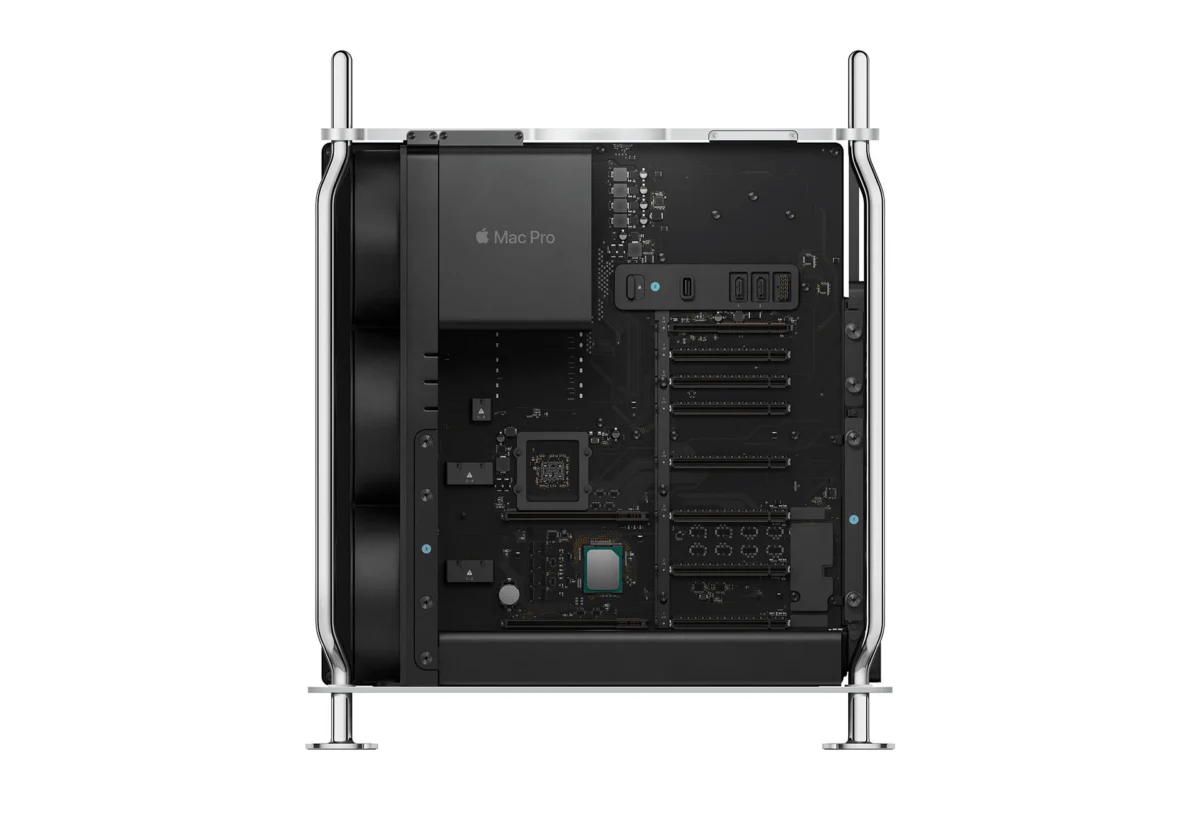
The professional computing landscape underwent a seismic shift this week as Apple officially discontinued the Mac Pro, marking the end of the traditional tower form factor for the company’s hardware lineup. The move, confirmed through updates to Apple’s official web storefront and verified by industry sources, signals the conclusion of a transition that began with the announcement of Apple Silicon in 2020. By removing the Mac Pro from its active catalog, Apple has effectively designated the Mac Studio as its sole workstation-class desktop, prioritizing compact efficiency and integrated architecture over the modularity that defined the "Pro" moniker for decades. This strategic pivot coincides with the impending launch of the M5 Ultra chipset, scheduled for the first half of 2026, which is expected to cement the Mac Studio’s position as the most powerful computer in the company’s history.
The decision to retire the Mac Pro follows a period of mounting redundancy within Apple’s high-end product tiers. Since the introduction of the Mac Studio in 2022, the utility of the larger Mac Pro tower had been increasingly scrutinized by professional users and industry analysts alike. While the Mac Pro historically offered user-upgradeable components, the transition to Apple Silicon’s System-on-Chip (SoC) architecture fundamentally altered the value proposition of a modular chassis. With the M-series chips utilizing unified memory and integrated storage controllers, the primary advantages of a tower—namely expandable RAM and internal storage flexibility—were largely neutralized.
A Chronology of the Workstation Transition
The trajectory leading to the Mac Pro’s discontinuation can be traced back to the launch of the M1 Ultra in the first-generation Mac Studio. At that time, Apple signaled that its most powerful silicon could thrive in a chassis a fraction of the size of the traditional silver tower. However, the company initially attempted to maintain the Mac Pro as a legacy bridge for users requiring PCIe expansion.
In 2023, Apple released the Mac Pro with the M2 Ultra chip. This release was met with mixed reviews, as the machine shared identical performance benchmarks with the significantly more affordable Mac Studio equipped with the same processor. The primary difference was the inclusion of six open PCIe Gen 4 expansion slots, yet these slots could not support external graphics cards (eGPUs) due to the architecture of Apple Silicon. This limitation meant that the $3,000 price premium for the Mac Pro was essentially a fee for internal PCIe connectivity for storage, networking, or audio interface cards—a niche requirement that failed to justify the product’s existence for the broader professional market.
The divergence became even more apparent with the release of the M3 Ultra. Apple chose to debut this powerhouse chipset exclusively within the Mac Studio, leaving the Mac Pro stagnant on the M2 Ultra architecture. This "writing on the wall" moment suggested that Apple’s engineering resources were being funneled into the compact workstation form factor, which offered better thermal efficiency and a smaller footprint without sacrificing the throughput of the Ultra-class chips. With the recent launch of the M5 Pro and M5 Max chipsets, Apple faced a critical decision regarding the M5 Ultra: whether to maintain a low-volume, high-complexity tower or to lean entirely into the successful Mac Studio platform. The removal of the Mac Pro from the Apple website this week provides the final answer.
Analyzing the Economic and Technical Disparity
The discontinuation of the Mac Pro is rooted in a stark economic reality. When comparing the Mac Studio and the Mac Pro configured with identical M2 Ultra specifications, consumers faced a $3,000 price gap. The Mac Studio offered the M2 Ultra starting at approximately $3,999, while the Mac Pro commanded a $6,999 starting price. For the vast majority of creative professionals, including video editors, 3D animators, and software developers, the Mac Studio provided the same 24-core CPU and up to 76-core GPU performance as the tower, but in a portable design that fit easily on a standard desk.
Technically, the shift to the M5 architecture further marginalized the need for a tower. The M5 series, built on an advanced 2-nanometer process, emphasizes power-per-watt efficiency. The M5 Ultra, which essentially functions as two M5 Max chips connected via the UltraFusion interconnect, is designed to handle massive computational loads while generating minimal heat. The Mac Studio’s thermal management system—a high-density aluminum heatsink paired with dual centrifugal fans—has proven more than capable of sustaining peak performance under heavy workloads without the need for the massive air volume of a 4U rack-mountable or tower chassis.
Furthermore, the Apple Silicon revolution introduced Unified Memory Architecture (UMA). In the Intel-based Mac Pro era, users could install up to 1.5TB of third-party RAM. With Apple Silicon, the memory is soldered directly to the SoC to ensure high-bandwidth, low-latency access for both the CPU and GPU. This design choice, while beneficial for performance, effectively killed the "user-upgradeable" selling point of the Mac Pro. Once the ability to add RAM was removed, the Mac Pro’s 20-inch height became largely "dead space" for the average professional user.
Professional Sentiment and Industry Impact
The reaction from the professional community has been a blend of pragmatism and nostalgia. For long-time Mac users who relied on the "cheese grater" designs of the early 2000s and the 2019 refresh, the end of the tower marks the end of an era of hardware tinkering. However, many enterprise-level creative suites have already migrated to the Mac Studio.
"The Mac Pro was a symbol of ultimate power, but in the Apple Silicon era, that power is no longer tied to physical size," noted a lead technical director at a major visual effects studio. "We transitioned our render farms and editor workstations to Mac Studios two years ago. The footprint reduction alone allowed us to densify our workspace without losing any rendering speed. While we lose the internal PCIe slots, the transition to high-speed Thunderbolt 5 and external enclosures has mitigated most of those concerns."
From a logistics perspective, the discontinuation allows Apple to streamline its supply chain. By focusing on a single workstation-class product, the company can optimize the production of the M5 Ultra and the Mac Studio chassis, potentially leading to better availability and more frequent update cycles. It also eliminates the confusion in the "Pro" lineup, where the most expensive machine was not always the most technologically advanced.
The Road Ahead: The M5 Ultra and the Mac Studio Flagship
As Apple prepares for the H1 2026 launch of the M5 Ultra, the Mac Studio is poised to receive its most significant upgrade to date. Speculation within the industry suggests that the M5 Ultra will feature a redesigned neural engine optimized for generative AI tasks, alongside a GPU architecture that may finally introduce hardware-accelerated features that rival high-end discrete workstations.
The M5 Ultra is expected to support even higher configurations of unified memory, potentially reaching 256GB or more, catering to the specific needs of large-language model (LLM) training and complex 3D simulation. With the Mac Pro out of the picture, Apple is likely to introduce "Pro" branded accessories for the Mac Studio to address the needs of those who still require expansion. This could include Apple-certified Thunderbolt 5 expansion chassis for high-speed storage arrays and networking cards, effectively modularizing the system externally rather than internally.
Broader Implications for the Computing Market
Apple’s abandonment of the tower form factor reflects a broader trend in the computing industry toward "compute density." As processors become more integrated and efficient, the need for sprawling motherboards and cavernous cases diminishes. This move places Apple in a unique position compared to its competitors in the Windows and Linux workstation markets, where companies like Dell, HP, and Lenovo continue to produce massive towers powered by Intel Xeon or AMD Threadripper processors and NVIDIA RTX graphics cards.
By exiting the traditional tower market, Apple is doubling down on its "walled garden" approach to hardware, where the synergy between the silicon and the enclosure is absolute. This strategy carries risks, particularly for users who require the specific thermal overhead or the massive multi-GPU configurations found in PC towers. However, for Apple, the data suggests that the "Mac Studio era" is what the market demands. The smaller workstation has consistently outsold the Mac Pro since its inception, proving that for today’s creative professional, power is measured in flops and bandwidth, not in cubic inches.
As the first half of 2026 approaches, the industry will be watching closely to see how the M5 Ultra performs in its new role as the undisputed king of the Mac lineup. The Mac Pro may be gone, but the technological ambition it represented appears to have been successfully distilled into the compact, silver box that now sits on the desks of the world’s leading creators. The era of the tower has ended; the era of the ultra-compact workstation has officially begun.