Chandra Wibowo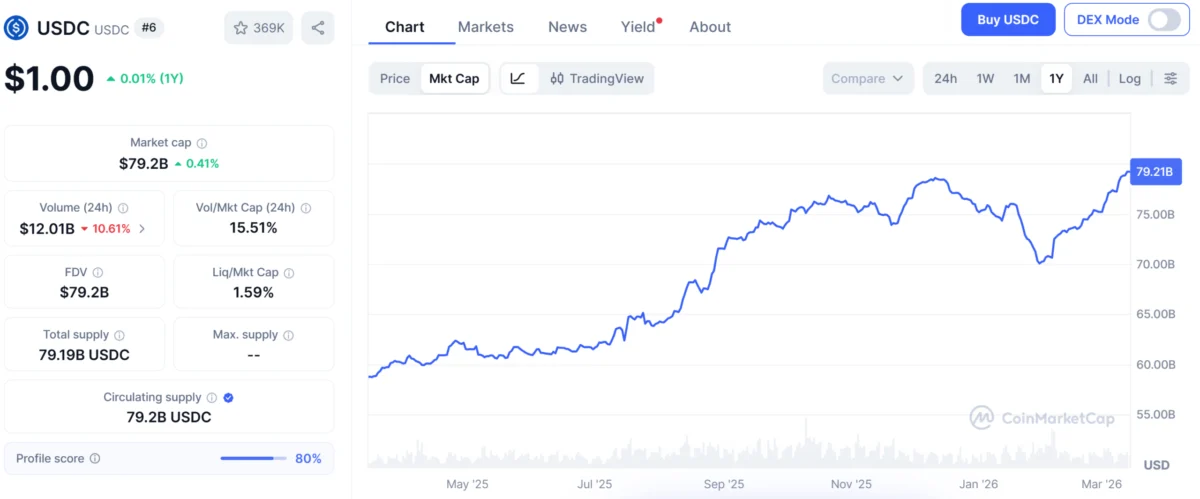
The cryptocurrency landscape was abuzz with significant developments today, encompassing a high-profile condemnation of Bitcoin by former UK Prime Minister Boris Johnson, a notable surge in the market capitalization of the USDC stablecoin potentially linked to capital flight from the United Arab Emirates, and a pivotal legal decision impacting crypto banks’ access to central banking infrastructure. These events collectively underscore the evolving narrative surrounding digital assets, regulatory oversight, and investor behavior in the global financial ecosystem.
Boris Johnson’s "Ponzi Scheme" Accusation Ignites Backlash
Former Prime Minister of the United Kingdom, Boris Johnson, ignited a firestorm within the cryptocurrency community on Friday by labeling Bitcoin (BTC) a "Ponzi scheme" in an opinion piece published in the Daily Mail. Johnson’s strong assertion, which drew immediate and widespread criticism from prominent figures in the crypto industry and the broader Bitcoin community, stemmed from a personal anecdote shared in his article.
He recounted the story of an unnamed "friend" who, after entrusting 600 British pounds (approximately $661 USD) to an acquaintance met at a bar with the promise of doubling their investment, found themselves in a protracted financial quagmire. According to Johnson, this friend subsequently spent over three and a half years paying additional fees to the scheme’s promoter, yet was unable to withdraw any funds. The total amount sunk into the purported investment eventually exceeded 20,000 British pounds (approximately $22,000 USD). Johnson used this narrative to draw a parallel with his perception of Bitcoin, framing it as a system where early investors are paid with the funds of later entrants, a hallmark of a Ponzi scheme.
The reaction from the Bitcoin community was swift and largely dismissive of Johnson’s characterization. Michael Saylor, co-founder of Strategy, a prominent Bitcoin proponent and advocate for corporate Bitcoin adoption, directly countered Johnson’s claim. Saylor articulated the fundamental difference between Bitcoin and a Ponzi scheme, stating, "Bitcoin is not a Ponzi scheme. A Ponzi requires a central operator promising returns and paying early investors with funds from later ones." His statement highlighted Bitcoin’s decentralized nature, its open-source protocol, and the absence of a central authority dictating returns, which are key distinctions from fraudulent schemes.

The sentiment echoed across social media platforms. Many Bitcoiners and industry executives not only refuted Johnson’s claim but also turned the criticism back towards the former Prime Minister and the UK’s economic policies. Pierre Rochard, CEO of The Bitcoin Bond Company, a firm specializing in Bitcoin-backed financial products, sarcastically suggested that the UK economy itself could be considered a Ponzi scheme, implying that traditional financial systems also exhibit characteristics of wealth redistribution that can be perceived negatively. Other commentators pointed to Bitcoin’s robust, decades-long track record and its growing adoption as evidence against its classification as a fraudulent enterprise. The debate underscores a persistent ideological divide between traditional financial perspectives and the emergent understanding of decentralized digital assets.
USDC Market Cap Soars Amidst Alleged Capital Flight in the UAE
In a separate development, the market capitalization of the USD Coin (USDC), a prominent stablecoin pegged to the U.S. dollar, is approaching a record high, with its market cap nearing $80 billion. This surge in demand for USDC has been observed amidst reports of significant capital outflow from the United Arab Emirates (UAE), leading analysts to suggest a correlation between the two events.
According to data aggregated by CoinMarketCap, the circulating supply of USDC has risen to approximately $79.2 billion, marking a new all-time high for the stablecoin. This figure surpasses its previous peak of just under $79 billion, which was recorded in December of the previous year. The recent increase in USDC’s market cap has been substantial, with its supply expanding by billions of dollars in recent weeks. As recently as early February, the stablecoin’s market cap stood at just over $70 billion, and by the beginning of the current month, it had reached $75 billion, indicating a rapid acceleration in demand.
Rami Al-Hashimi, a self-proclaimed analyst based in Dubai, has posited that this surge in USDC demand is indicative of investors seeking to move their capital out of traditional financial markets and potentially out of the UAE. In a post on the social media platform X, Al-Hashimi claimed that over-the-counter (OTC) trading desks in Dubai have been struggling to meet the escalating demand for USDC. This observation suggests a significant and perhaps urgent desire among some investors in the region to access liquid, dollar-denominated digital assets.
While Al-Hashimi’s analysis points towards capital flight, the underlying reasons for such a movement are subject to speculation. The UAE, and Dubai in particular, has been a significant hub for cryptocurrency and blockchain innovation, attracting substantial investment and talent. However, like many global financial centers, it is not immune to macroeconomic shifts or regional geopolitical considerations that might prompt investors to seek alternative havens for their assets. The increased demand for stablecoins like USDC can often be a signal of broader market sentiment, whether it indicates a move into perceived safer assets or a preparation for further investment opportunities in the digital asset space. The performance of USDC, issued by Circle, is closely watched as a barometer of institutional and retail confidence in the stablecoin market and the broader cryptocurrency ecosystem.

Federal Court Upholds Federal Reserve’s Discretion in Master Account Decisions, Ending Custodia Bank’s Legal Battle
In a significant regulatory development, a U.S. federal court has definitively rejected Custodia Bank’s final attempt to challenge the Federal Reserve’s authority in granting master accounts. This ruling effectively terminates the crypto-focused bank’s protracted, five-year legal struggle to secure direct access to the U.S. central bank’s payment systems.
The U.S. Court of Appeals for the Tenth Circuit, in a filing on Friday, announced its decision not to hear Custodia’s final appeal on the matter. The court’s decision, which was made by a 7-3 vote, reinforces the Federal Reserve’s discretion in determining which institutions are granted master accounts. These accounts are crucial for financial institutions as they allow them to hold reserves directly with the Federal Reserve and gain direct access to its payment rails, facilitating the settlement of transactions without the need for intermediary banks.
Custodia Bank, a Wyoming-chartered special-purpose depository institution, first submitted its application for a master account in October 2020. The bank’s objective was to operate with direct access to the Federal Reserve’s core banking services, thereby enhancing its operational efficiency and reducing reliance on traditional correspondent banking relationships. Following the Federal Reserve’s rejection of its application, Custodia pursued legal action, arguing that the Monetary Control Act of 1980 should entitle state-chartered banks, including itself, to access Federal Reserve services and, consequently, a master account.
However, this legal argument has been consistently rejected by multiple courts. The prevailing judicial interpretation has been that the Federal Reserve retains significant discretion over the decision to grant master accounts, and that this discretion is not mandated by existing legislation for all state-chartered banks. The Tenth Circuit’s ruling marks the culmination of this legal challenge, signifying a setback for institutions seeking direct integration with the Federal Reserve’s infrastructure.
This decision arrives at a time when the regulatory landscape for cryptocurrency firms is undergoing intense scrutiny and evolution. Notably, in a contrasting development, Kraken, a major cryptocurrency exchange, became the first crypto platform to successfully receive a master account from the Federal Reserve Bank of Kansas City on March 4th. This acquisition of a master account by Kraken suggests that while the path may be challenging, direct access to Federal Reserve services is not entirely unattainable for certain crypto-related entities. However, Custodia Bank’s legal defeat highlights the significant hurdles and the discretionary power held by the Federal Reserve in such decisions, potentially setting a precedent for future applications from similar institutions. The implications of this ruling are far-reaching, influencing the operational strategies and regulatory approaches of digital asset banks in the United States.