Sisilia Frederika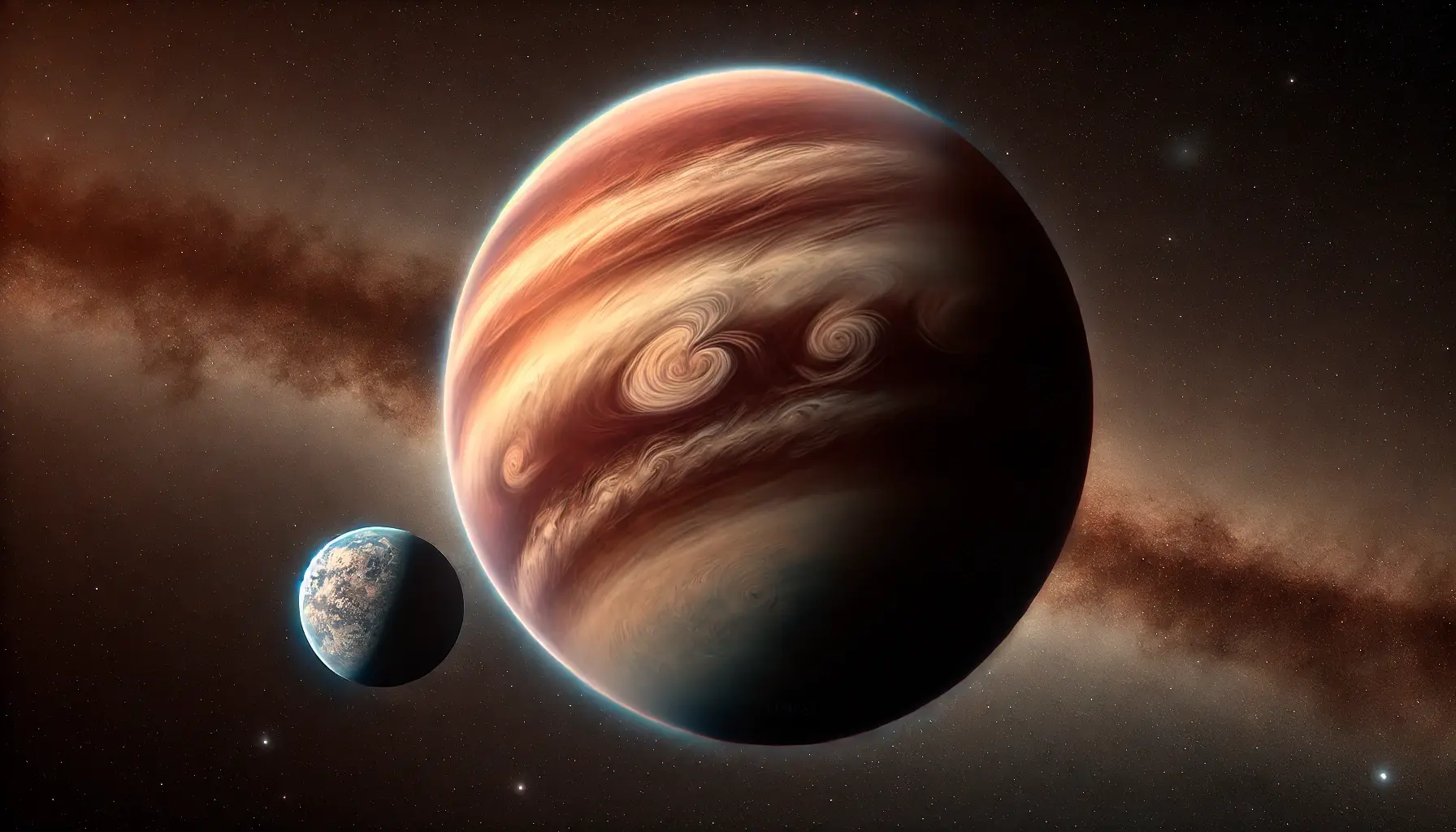
The Milky Way galaxy may serve as a vast, dark reservoir for billions of free-floating planets (FFPs), often referred to as "rogue planets," which traverse the interstellar medium without the gravitational tether of a parent star. While these celestial orphans were once thought to be desolate, frozen husks incapable of supporting life, new astrophysical modeling suggests a paradigm-shifting alternative. Recent research indicates that if these rogue planets possess Earth-sized moons, those satellites could maintain liquid water on their surfaces for billions of years, potentially providing a stable environment for the emergence and evolution of complex life.
The Prevalence of Rogue Planets and Their Satellites
Astronomical surveys and gravitational microlensing data suggest that rogue planets may be as common as stars themselves, with some estimates placing their numbers in the hundreds of billions within our galaxy alone. These worlds typically originate in one of two ways: they are either violently ejected from nascent solar systems due to gravitational instabilities and planet-planet scattering, or they form in isolation through the direct collapse of small gas clouds, a process similar to stellar formation but on a sub-stellar mass scale.
Regardless of their origin, the likelihood that these planets carry a retinue of moons is high. In our own solar system, gas giants like Jupiter and Saturn possess dozens of moons, many of which formed from the circumplanetary disks that surrounded the planets during their birth. When a planet is ejected from its home system, numerical simulations show that it can often retain its more tightly bound satellites. These "exomoons" then accompany their host planet into the void, far from the life-giving radiation of any sun.
Tidal Flexing: A Subterranean Engine of Heat
The primary obstacle to habitability in the interstellar void is the absence of stellar insolation. Without a star to provide warmth, a planet or moon would typically reach temperatures near absolute zero. However, the study led by David Dahlbüdding, a doctoral researcher at Ludwig-Maximilians-University in Munich, highlights a different mechanism: tidal heating.
In a system where a moon orbits a massive planet in an eccentric (non-circular) path, the gravitational pull on the moon varies throughout its orbit. This "tidal flexing" causes the moon’s internal structure to stretch and compress repeatedly. The resulting internal friction generates immense amounts of heat. This phenomenon is well-documented in our own solar system; Jupiter’s moon Europa remains geologically active and maintains a subsurface liquid ocean primarily due to tidal heating caused by its resonance with other Jovian moons.
For an Earth-sized exomoon orbiting a Jupiter-mass rogue planet, this tidal engine can be even more potent. The research team modeled 26,293 Earth-mass exomoons and found that the gravitational interactions during and after the host planet’s ejection from a solar system often result in highly eccentric orbits. This eccentricity is the "key" that unlocks the tidal heating necessary to sustain liquid water in the absence of sunlight.
The Role of Hydrogen-Rich Atmospheres
While tidal heating provides the energy, the moon requires an atmosphere to retain that heat. On Earth, carbon dioxide and water vapor act as greenhouse gases, trapping solar energy. On a rogue exomoon, CO2 is an ineffective insulator because, in the extreme cold of interstellar space, it would freeze and precipitate as "dry ice" onto the surface, leaving the moon without a gaseous blanket.
The study published in the Monthly Notices of the Royal Astronomical Society identifies hydrogen (H2) as the critical alternative. While hydrogen is not a greenhouse gas in the traditional sense on Earth, it behaves differently under high-pressure conditions. Through a process known as collision-induced absorption (CIA), hydrogen molecules are forced together so closely that they form transient complexes capable of absorbing infrared radiation.
The researchers found that if an exomoon possesses a thick, hydrogen-dominated atmosphere—perhaps captured from the original protoplanetary disk or outgassed from its interior—it could trap enough tidally generated heat to maintain surface temperatures above the freezing point of water. Specifically, the model suggests that such conditions could persist for up to 4.3 billion years.
Chronology of Biological Potential
The timeframe of 4.3 billion years is significant because it mirrors the evolutionary history of Earth. On our planet, life is thought to have emerged approximately 3.5 to 4 billion years ago, with the "Cambrian Explosion" of complex, multicellular life occurring roughly 541 million years ago.

If an exomoon can remain geologically active and thermally stable for over four billion years, it bypasses the "time constraint" that previously limited theories of rogue planet habitability. Earlier studies focused on CO2-rich atmospheres suggested a limit of only 1.6 billion years before the atmosphere would collapse—a duration potentially too short for the transition from simple chemistry to complex biology. By utilizing hydrogen and tidal heating, these moons could theoretically host biological evolution on a scale comparable to Earth’s.
Prebiotic Chemistry and the Emergence of Life
The research goes beyond mere temperature stability, addressing the chemical requirements for life. The emergence of life requires the formation of complex organic molecules, such as RNA. This process is often facilitated by "wet-dry cycles," where water evaporates and condenses, concentrating chemical precursors.
Dahlbüdding’s team posits that the strong tides on these exomoons would create significant ebb and flow in any surface oceans, simulating the wet-dry cycles found in Earth’s tidal zones. Furthermore, the presence of dissolved ammonia (NH3) could provide the necessary alkalinity to support RNA polymerization.
"We discovered a clear connection between these distant moons and the early Earth," Dahlbüdding noted in a statement. He referenced the Hadean eon, where asteroid impacts on Earth may have produced high concentrations of hydrogen. On an exomoon, while the source of hydrogen is different, the result—an environment conducive to the building blocks of life—remains a distinct scientific possibility.
Observational Hurdles and Future Missions
Despite the compelling theoretical framework, detecting these "habitable" exomoons remains one of the greatest challenges in modern astronomy. To date, only a few exomoon candidates, such as Kepler-1625b-i and Kepler-1708b-i, have been identified, and none have been definitively confirmed. Detecting a moon around a rogue planet, which emits no light of its own, is exponentially more difficult.
However, the upcoming Nancy Grace Roman Space Telescope, scheduled for launch in the mid-2020s, offers a glimmer of hope. The Roman telescope will utilize gravitational microlensing—a technique that observes how the gravity of a foreground object warps the light of a distant star. This method is uniquely sensitive to low-mass objects like rogue planets and their moons.
Estimates suggest the Roman Space Telescope could identify hundreds of rogue planets and potentially dozens of exomoons as small as Ganymede or Titan. While Roman may detect these bodies, analyzing their atmospheres to confirm the presence of hydrogen or liquid water will likely require next-generation facilities, such as the proposed Habitable Worlds Observatory or advanced transit spectroscopy beyond current capabilities.
Analysis: Redefining the "Habitable Zone"
The implications of this research are profound for the field of astrobiology. For decades, the search for life has been governed by the "Circumstellar Habitable Zone" (the Goldilocks Zone)—the specific distance from a star where liquid water can exist. This new study suggests that habitability may be "decoupled" from stellar radiation.
If billions of rogue planets exist, and a significant fraction host Earth-sized moons with tidal heating, then the number of habitable "real estate" locations in the galaxy may be orders of magnitude higher than previously calculated. These worlds would be "dark" biospheres, existing in perpetual night, powered by gravitational friction rather than nuclear fusion.
This shift in perspective forces scientists to reconsider the requirements for life. It suggests that the "Habitable Zone" is not merely a spatial location in a solar system, but a set of physical conditions—gravity, atmospheric pressure, and internal energy—that can be met even in the lonely reaches of interstellar space.
Conclusion
The research by Dahlbüdding and his colleagues provides a robust theoretical foundation for the existence of life in the most unlikely of places. By combining the mechanics of tidal flexing with the physics of high-pressure hydrogen atmospheres, the study demonstrates that the cold vacuum of space is not necessarily a barrier to biological complexity. As observational technology catches up with theoretical models, the next decade of space exploration may reveal that the Milky Way’s "rogue" drifters are not just cold rocks in the dark, but potential cradles for life, thriving in the warmth of their own internal engines.