Galang Taruna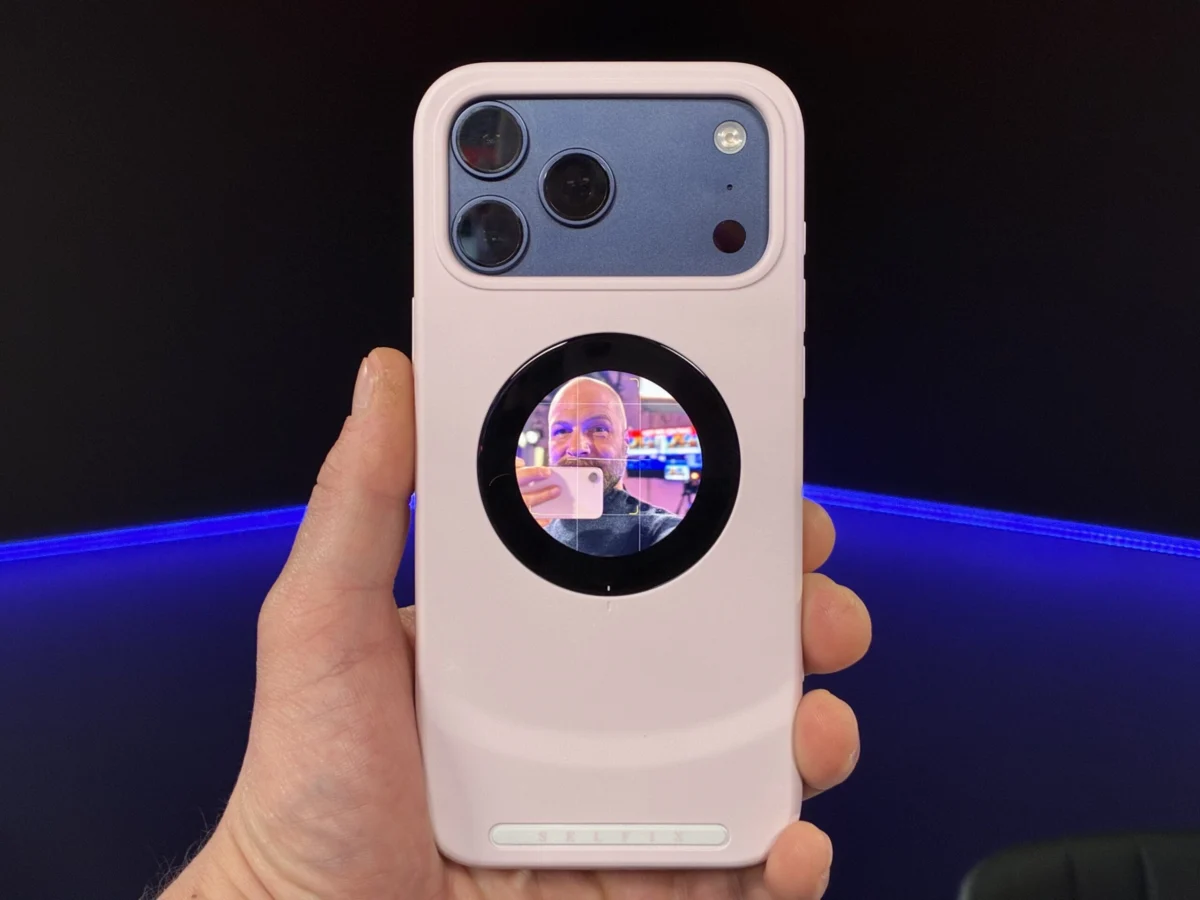
The pursuit of photographic perfection with smartphones has long been a driving force in the accessory market, and a new entrant, Selfix, aims to revolutionize self-portraiture and content creation for Apple’s latest flagship devices. Selfix has introduced a unique protective case for the iPhone 17 Pro and 17 Pro Max that integrates a dedicated rear-facing screen, allowing users to leverage the superior main camera sensors for their selfies and vlogging needs. This innovative concept, which recently saw a prototype undergo review, addresses a persistent desire among iPhone users to maximize the photographic capabilities of their devices, particularly for front-facing interactions where the primary cameras inherently offer higher fidelity.
The core premise of Selfix is elegantly simple: provide a real-time visual feed from the iPhone’s advanced rear camera system directly on the back of the device. This eliminates the guesswork often associated with using the main cameras for self-portraits or video blogging, where users typically rely on mirrors or external monitors. The iPhone 17 Pro and Pro Max are equipped with cutting-edge camera arrays, featuring larger sensors, wider apertures, advanced optical image stabilization, and sophisticated computational photography algorithms that far surpass the capabilities of their front-facing counterparts. For discerning users, particularly content creators, vloggers, and photography enthusiasts, accessing this superior hardware for all forms of capture represents a significant advantage.
The Genesis of Selfix: A Crowdfunded Vision for Enhanced Photography
The journey of Selfix began as a Kickstarter project, a common pathway for innovative tech startups seeking to gauge market interest and secure initial funding for product development and manufacturing. Crowdfunding platforms have become fertile ground for niche accessories that address specific pain points for tech-savvy consumers. The Selfix campaign quickly garnered attention, resonating with a demographic eager for practical solutions to enhance their smartphone photography. The allure of using the iPhone’s best cameras for every shot, from spontaneous selfies to professional-grade vlogs, proved to be a powerful motivator for early backers.
Following a successful crowdfunding phase, a prototype of the Selfix case was dispatched for hands-on review. This early model, characteristic of pre-production units, offered an initial glimpse into the product’s potential while also revealing areas ripe for refinement. The timeline from Kickstarter launch to prototype review signifies a crucial phase in product development, where theoretical concepts meet practical application and user feedback becomes paramount. The planned commercial release in May 2026 indicates that the development team has allocated ample time to polish the device, incorporating feedback from early testers and addressing any technical hurdles identified during the prototype phase.
Design and Core Functionality: A Dual-Screen Approach with Added Utility
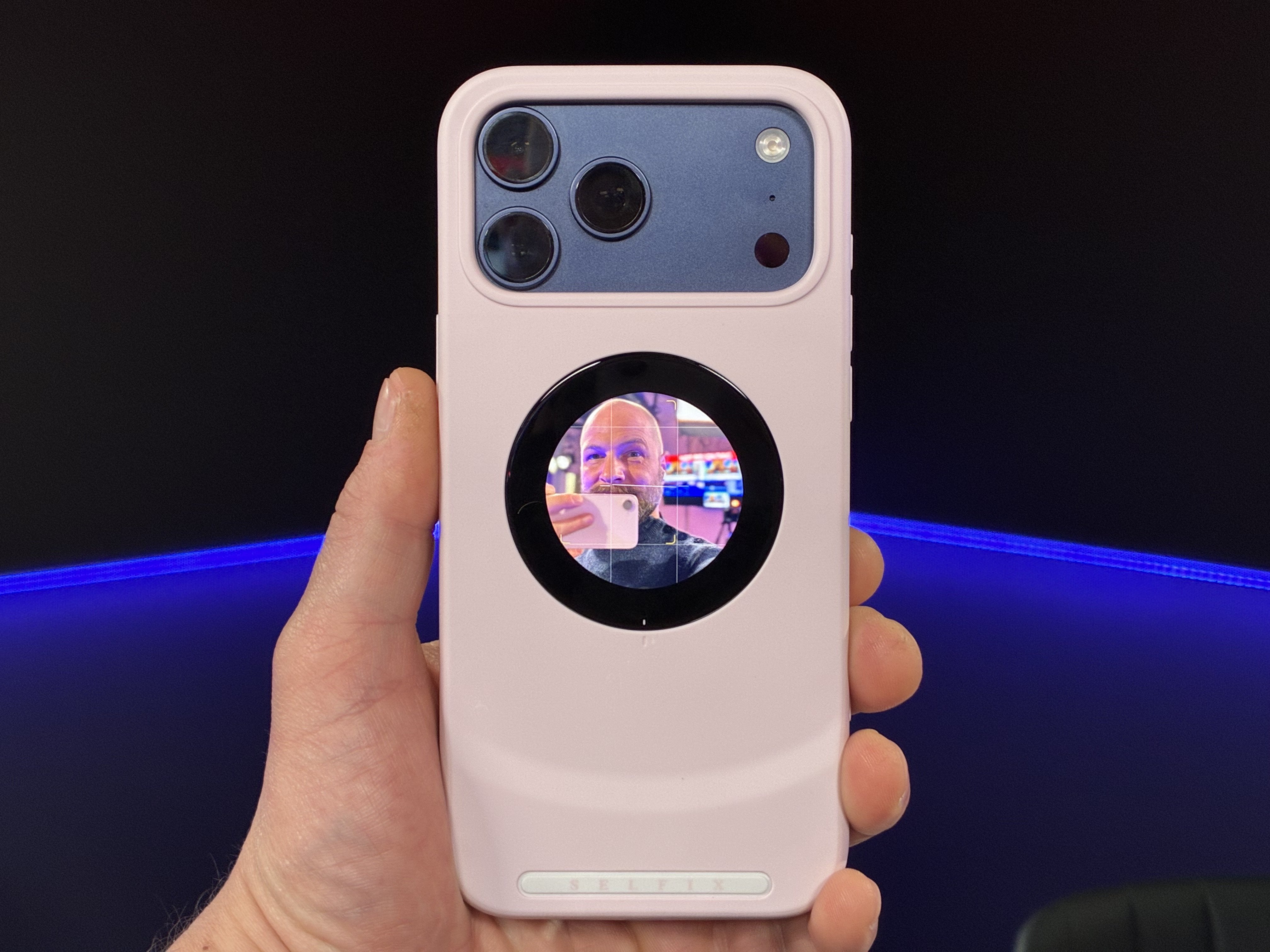
Upon unboxing, the Selfix case immediately presents itself as a substantial accessory, designed to encase the iPhone 17 Pro Max securely. Available in various finishes, including a vibrant pink, classic white, and stealthy black, the case adds a noticeable heft to the device, a trade-off for its integrated functionalities. The most prominent feature on the rear of the case is a circular black panel, which, despite its initial large appearance, houses a smaller, active display. This design choice, while aesthetically distinct, also introduces specific user experience considerations, as will be discussed.
Beyond the secondary screen, the Selfix case integrates several other noteworthy features. It boasts compatibility with Apple’s MagSafe ecosystem, ensuring that users can continue to utilize their preferred magnetic accessories for charging or mounting. Perhaps even more compelling for many iPhone users is the inclusion of a microSD card slot directly within the case. This feature represents a significant "jab" at Apple’s long-standing policy of omitting expandable storage from its iPhones. For content creators who often generate large video files or high-resolution images, the ability to offload data quickly or expand storage capacity without relying on cloud services or physical connectors is an invaluable addition. A dedicated button on the left flank of the case activates the rear screen, providing a tactile and straightforward method for users to engage the mirroring functionality.
The primary function of the Selfix rear screen is straightforward mirroring: it displays, in real-time, the content of the iPhone’s main screen. This means that whatever is visible on the iPhone’s primary display – be it the camera app interface, a video being recorded, or any other application – is replicated on the circular screen on the back. This approach prioritizes simplicity in implementation, avoiding the need for a complex, dedicated operating system or custom user interface for the secondary display. While this direct mirroring offers immediate familiarity, it also means that the user experience is dictated by the iPhone’s native UI, which is not optimized for a secondary, circular form factor.
User Experience: Navigating the Challenges of a Circular Display and Touch Input
The practical application of the Selfix case, particularly its rear screen, reveals several inherent design and functional challenges, especially in its prototype form. The most significant of these is the screen’s circular shape. While visually appealing, a circular display presents a fundamental incompatibility with the rectangular aspect ratio of a smartphone’s operating system. Consequently, the Selfix screen cannot display the entirety of the iPhone’s interface; critical corner elements, such as controls for changing camera modes, adjusting focal lengths, or accessing settings within the camera app, are inevitably cropped out. This limitation severely hampers intuitive navigation and control directly from the rear screen, relegating its utility primarily to basic framing and focus confirmation.

Furthermore, the tactile responsiveness of the rear screen is not native. To enable touch input, users must delve into the iPhone’s accessibility settings and activate "Assistive Touch." This feature, designed for users with specific accessibility needs, introduces a floating virtual button on the iPhone’s main display. While it does enable touch control on the Selfix screen, the presence of this persistent, on-screen dot is visually intrusive and requires users to manually activate and deactivate it as needed, adding an extra layer of friction to the user experience. This compromise detracts from the seamless interaction one would expect from a premium accessory.
The combined effect of the circular, cropped display and the reliance on Assistive Touch means that while the Selfix screen provides a live preview, it does not offer a fully integrated or intuitive control mechanism. Users are still largely dependent on the iPhone’s main screen for making significant adjustments to camera settings, limiting the "shoot from the hip" spontaneity that such an accessory ideally aims to facilitate. The tactile functionality, therefore, becomes primarily useful for minor interactions like tapping to set focus, rather than comprehensive menu navigation.
Early Prototype Challenges: Bugs and the Path to Refinement
The prototype review also highlighted several performance inconsistencies and bugs, indicative of a product still in its development phase. One notable issue was the screen’s orientation. While the Selfix case is designed to be used in both vertical and horizontal orientations, allowing for versatile shooting, the rear display’s output remained rigidly fixed in a vertical aspect. Although the image itself correctly reoriented within the display, the overall screen interface did not adapt, creating an awkward viewing experience. This suggests a disconnect in the software’s ability to correctly interpret and render orientation changes on the secondary display.
More concerning were instances of system freezes, where rapid rotation or certain interactions caused the Selfix display to lock up, requiring a restart or manual intervention. Such performance glitches, while common in early prototypes, underscore the importance of robust software optimization and hardware-software integration. For a product designed to enhance a seamless photographic experience, stability is paramount.
However, these challenges are not insurmountable. The planned commercial launch in May 2026 provides the Selfix development team with approximately a year to address these concerns. This period is crucial for debugging, refining the software, and potentially optimizing the display’s firmware to ensure a stable, responsive, and user-friendly experience. A Selfix spokesperson, in an inferred statement, would likely emphasize the company’s commitment to leveraging prototype feedback to deliver a polished final product, ensuring that the final commercial version offers significant improvements in stability, display rendering, and tactile responsiveness. The crowdfunding model often thrives on this iterative development process, where early adopters help shape the product’s evolution.

Market Context and Competitive Landscape: A Niche in a Dynamic Ecosystem
The iPhone accessory market is a vibrant and highly competitive arena, characterized by constant innovation. Selfix enters this landscape by addressing a specific niche: maximizing the utility of the iPhone’s superior rear cameras for self-capture. While other solutions exist, such as clip-on lenses, external gimbals with remote controls, or even professional camera rigs with external monitors, Selfix aims for a more integrated and portable solution.
Historically, the concept of a rear-facing screen on a smartphone is not entirely new. Devices like the Meizu Pro 7 and some earlier Samsung flip phones experimented with secondary displays for notifications, widgets, or simplified camera previews. More recently, foldable smartphones like the Samsung Galaxy Z Flip series have effectively utilized their external screens for quick selfies with the main cameras. However, Selfix is unique in offering this functionality as an accessory for a conventional, non-folding smartphone, extending the life and utility of a device that users already own.
The inclusion of a microSD card slot is a particularly strategic move. Apple’s decision to forgo expandable storage has always been a point of contention for a segment of its user base. For power users, especially those involved in mobile content creation, the ability to store vast amounts of high-resolution video and photo data without constantly managing internal storage or relying on potentially slow cloud uploads is a significant advantage. This feature not only enhances the Selfix’s appeal but also positions it as a practical tool for professionals, distinguishing it from purely aesthetic or protective cases. Industry analysts suggest that such innovative accessory features can often highlight gaps in core smartphone offerings, potentially influencing future design choices by major manufacturers.
Implications for Smartphone Photography and Content Creation
The Selfix case, despite its current prototype limitations, holds significant implications for the future of smartphone photography and content creation. For the burgeoning community of vloggers, live streamers, and social media influencers, the ability to record high-quality video with perfect framing using the iPhone’s main cameras is a game-changer. It means sharper video, better low-light performance, and access to advanced features like Cinematic Mode or ProRes video recording, all while maintaining eye contact with the lens. This could elevate the production quality of mobile-first content, blurring the lines between amateur and professional output.

For casual users, the promise of perfectly framed selfies and group photos, free from cut-off heads or awkward angles, is highly appealing. It transforms the act of taking a selfie from a hit-or-miss endeavor into a precise photographic exercise, utilizing the best available hardware. The shift from a "front camera selfie" mentality to a "main camera self-portrait" mentality could subtly redefine user expectations for mobile photography.
Furthermore, the Selfix concept could inspire broader trends within the accessory market. As smartphone cameras continue to advance, the demand for accessories that unlock their full potential will only grow. This could lead to more integrated solutions, smarter cases, and perhaps even influence future smartphone designs, prompting manufacturers to reconsider the utility of secondary displays or expandable storage. The accessory market often serves as a proving ground for ideas that eventually find their way into mainstream device features.
Pricing and Availability: A Value Proposition for Early Adopters
Selfix is currently available through its Kickstarter campaign, offering various pricing tiers. The "Super Early Bird" option, priced at $79, provides an attractive entry point for early adopters willing to support the project and potentially tolerate early-stage imperfections. The projected commercial retail price of $129 positions Selfix as a premium accessory, reflecting its integrated technology and added functionalities.
In addition to the core case, Selfix offers several complementary accessories, including a MagSafe-compatible stand that incorporates a small mirror – an interesting nod to traditional selfie techniques – and a wrist strap for added security during active shooting. These optional extras further enhance the utility and user experience, catering to different usage scenarios.
With a planned release date of May 2026, potential buyers have time to consider the value proposition. While the $129 retail price places it on the higher end for smartphone cases, the combined features of a rear screen, MagSafe compatibility, and a microSD card slot could justify the cost for users who prioritize photography and media management. The success of the final product will ultimately depend on how effectively Selfix addresses the prototype’s identified bugs and refines the user experience to be as seamless and intuitive as the core concept promises.

Conclusion: A Promising Concept with Room for Growth
The Selfix case for the iPhone 17 Pro and 17 Pro Max represents an ambitious and innovative step in the smartphone accessory market. By integrating a rear-facing screen and expandable storage, it directly addresses key desires of modern smartphone users: leveraging superior camera hardware for all photographic needs and overcoming Apple’s limitation on internal storage. The concept is undeniably compelling, offering a practical solution for vloggers, content creators, and anyone seeking to elevate their self-portraits and video recordings.
However, the prototype review underscores the critical importance of refinement. The challenges posed by the circular display, the reliance on Assistive Touch for interactivity, and the identified software bugs highlight areas where significant development work is still required. The Selfix team has a crucial period ahead to iron out these kinks, ensuring that the final commercial product delivers on its promises of stability, intuitive control, and a truly seamless user experience.
If Selfix can successfully address these prototype-level issues and deliver a polished product by its May 2026 launch, it has the potential to carve out a significant niche in the high-end iPhone accessory market. It stands as a testament to the ongoing innovation within the mobile ecosystem, where third-party developers continue to push the boundaries of what our smartphones can achieve, ultimately enriching the user experience for a global audience of passionate photographers and content creators.