Galang Taruna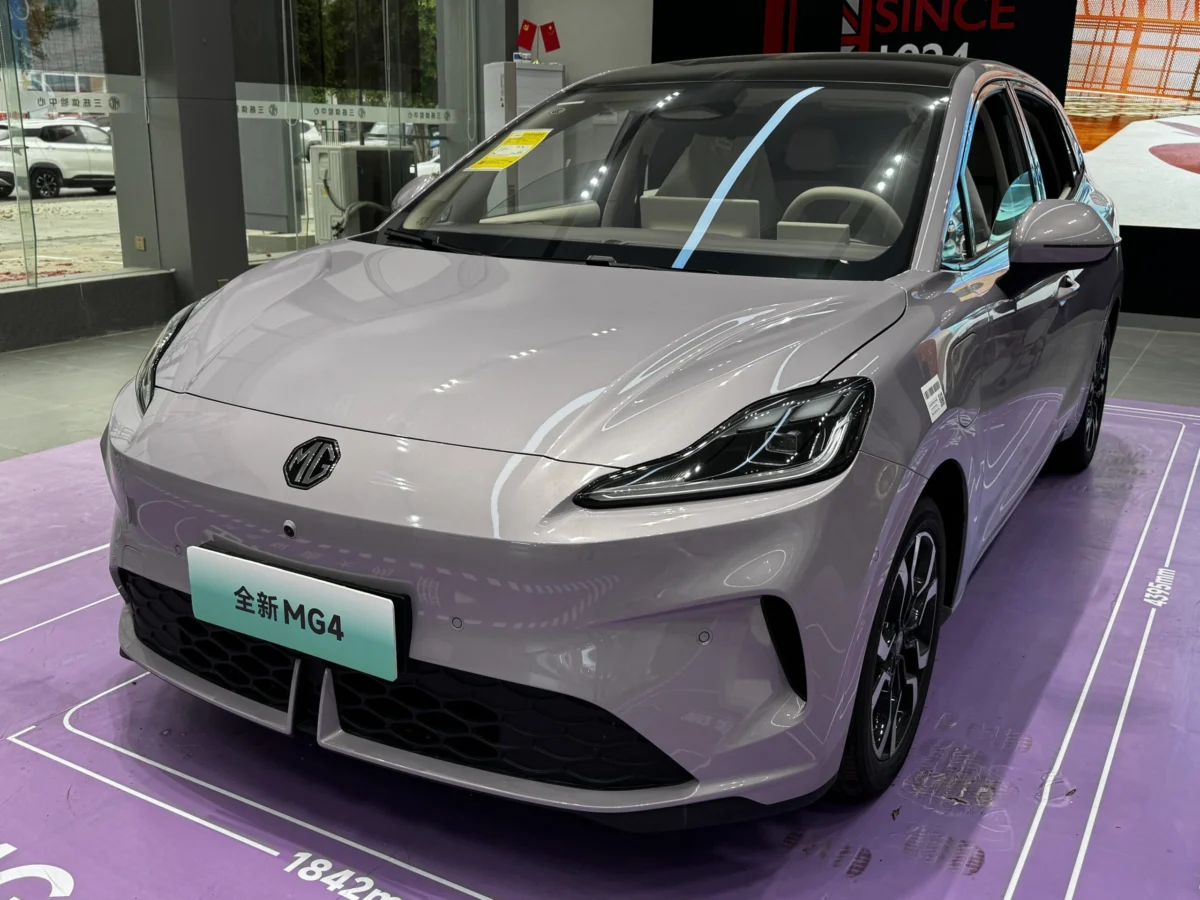
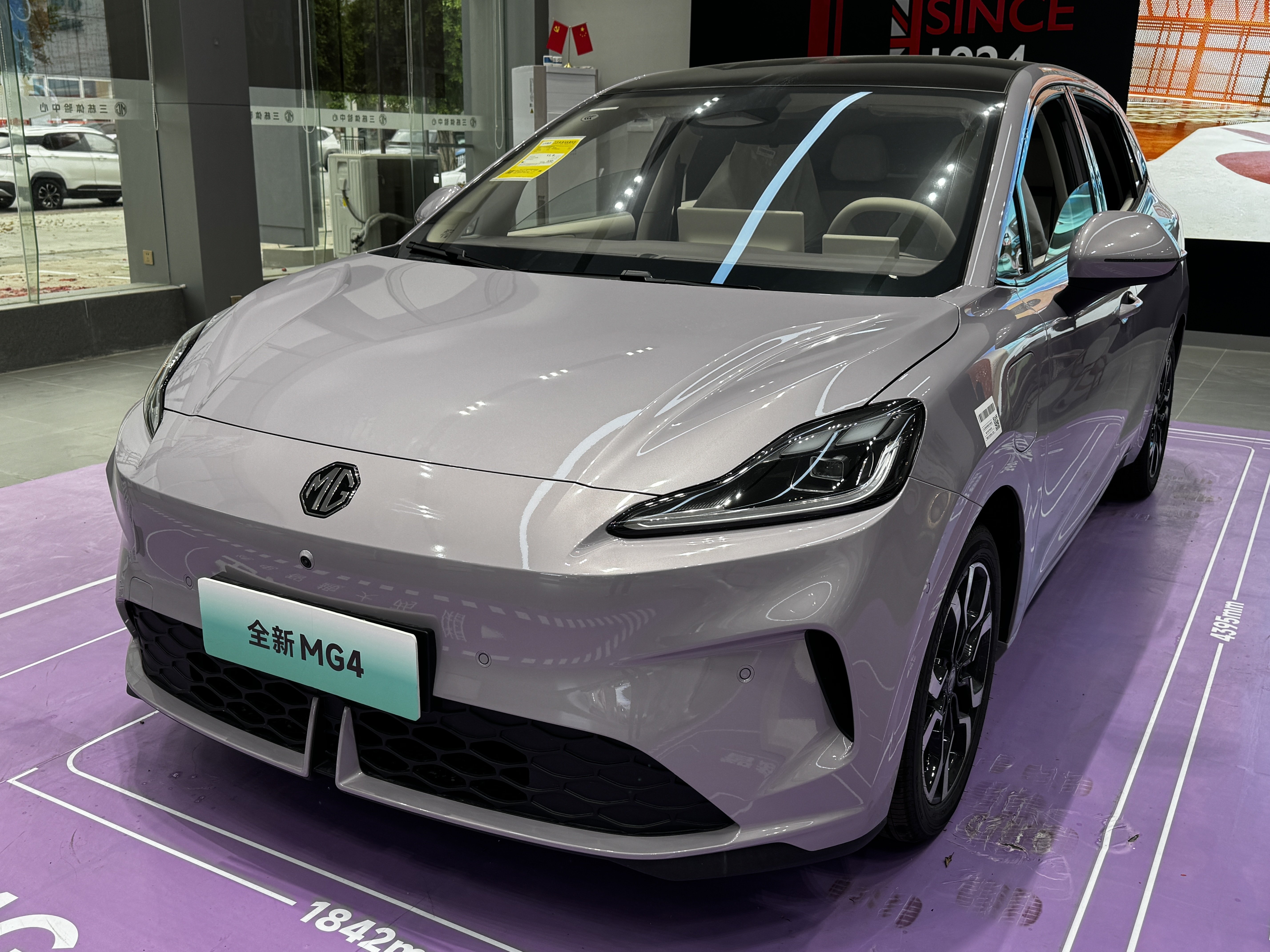
The automotive industry’s pursuit of the "holy grail" of electric vehicle (EV) batteries, solid-state technology, has long been a focal point of innovation and investment. While fully solid-state batteries promise unparalleled energy density, safety, and rapid charging capabilities, their industrial-scale production at a reasonable cost remains a significant challenge, pushing mass market deployment further into the future. In response to this technological frontier, Chinese automaker MG (a subsidiary of SAIC Motor) has introduced a strategic compromise: the semi-solid battery. This innovative solution is set to debut in Europe later this year, integrated into the MG4 Urban, following its initial launch in China. Discussions with the Chinese engineers spearheading this program reveal MG’s calculated approach to bridge the gap between current lithium-ion chemistries and the ultimate solid-state vision.
The Evolution of Electric Vehicle Battery Technology
The landscape of electric vehicle technology has undergone a rapid and transformative evolution over the past decade and a half. What was once considered an ambitious dream—achieving over 500 kilometers of range and ultra-fast charging—is now a standard expectation for many consumers. This rapid progress has been driven by continuous advancements in lithium-ion battery chemistries, including Lithium Iron Phosphate (LFP) and Nickel Manganese Cobalt (NMC), which have significantly improved energy density, lifespan, and cost-effectiveness. However, as the market matures and consumer demands for even longer range, faster charging, and enhanced safety intensify, manufacturers are pushing the boundaries of existing technologies and exploring fundamentally new architectures. The quest for the next generation of batteries, primarily solid-state, represents the industry’s commitment to overcoming the remaining hurdles to widespread EV adoption.
The Promise and Perils of Solid-State Batteries
Solid-state batteries are heralded as the revolutionary successor to conventional liquid electrolyte lithium-ion batteries. Their fundamental design replaces the flammable liquid or gel electrolyte with a solid material, offering several theoretical advantages. Firstly, solid electrolytes are inherently non-flammable, significantly reducing the risk of thermal runaway and associated fires, a primary safety concern for current EV batteries. Secondly, their compact nature allows for higher energy density, meaning more energy can be stored in a smaller, lighter package. This translates directly into extended driving ranges or the possibility of lighter vehicles with equivalent range. Thirdly, solid electrolytes are generally more stable across a wider temperature range, potentially improving performance in extreme cold or heat and extending battery life. Finally, the absence of liquid components could simplify battery pack design and manufacturing processes in the long run.
Despite these compelling benefits, the path to commercializing solid-state batteries is fraught with technical and economic challenges. Key issues include achieving sufficient ionic conductivity in solid materials at ambient temperatures, managing the interface between the solid electrolyte and electrodes to prevent dendrite formation (which can lead to short circuits), and developing scalable, cost-effective manufacturing processes. The high pressures often required to maintain good electrode-electrolyte contact, along with the brittle nature of some solid electrolytes, further complicate design and production. These complexities have meant that while numerous companies are heavily investing in solid-state research, a truly viable, mass-produced solid-state battery for automotive applications remains several years, if not a decade, away.
MG’s "SolidCore Battery": A Strategic Semi-Solid Compromise
Recognizing the immediate need for improved battery performance while acknowledging the protracted development timeline for full solid-state technology, MG has pursued a pragmatic middle ground: the semi-solid battery. Branded as the "MG SolidCore Battery," this technology features an electrolyte that is 95% solid. This approach aims to capture a substantial portion of the advantages offered by solid-state batteries—including higher energy density, improved thermal stability, and enhanced safety—without encountering the full spectrum of manufacturing complexities associated with a 100% solid design. By retaining a small percentage of liquid or gel, MG seeks to mitigate some of the interface and manufacturing challenges, allowing for earlier market deployment.
According to MG’s engineers, this semi-solid composition is designed to offer superior performance compared to traditional LFP (Lithium Iron Phosphate) and NMC (Nickel Manganese Cobalt) liquid-electrolyte batteries. The core benefit lies in the semi-solid electrolyte’s ability to facilitate ion movement in a more efficient, three-dimensional manner, as opposed to the two-dimensional movement in NMC batteries and single-dimensional movement in LFP cells. This enhanced ionic mobility is critical for both charging and discharging efficiency, particularly under varying temperature conditions.
Enhanced Performance: Autonomy and Energy Density
A primary objective for any new battery technology is to boost autonomy, either by increasing the energy stored in the same volume/weight or by reducing the weight for the same capacity. MG’s engineers have publicly cited an ambitious target energy density for their SolidCore technology, ranging between 230 and 300 Wh/kg. If achieved, this would represent a significant leap forward, potentially allowing for dramatically extended ranges or substantially lighter battery packs. For context, typical LFP batteries currently offer around 160 Wh/kg, while high-performance NMC batteries can reach up to 200-220 Wh/kg.

However, the reality of initial commercial deployment often differs from long-term development targets. The MG4 Urban, already available in China with a semi-solid battery, features an energy density of approximately 180 Wh/kg. While this figure is indeed an improvement over standard LFP batteries and competitive with some entry-level NMC variants, it falls short of the higher end of MG’s stated future potential. This suggests that the 230-300 Wh/kg range represents a mid-term objective for the technology rather than its immediate launch capabilities.
In terms of real-world range, the Chinese MG4 Urban with the semi-solid battery boasts a CLTC (China Light-duty Vehicle Test Cycle) autonomy of 537 kilometers. Converting CLTC figures to the more stringent European WLTP (Worldwide Harmonized Light Vehicles Test Procedure) cycle typically involves a reduction of 15% to 25%. Applying this conversion, the MG4 Urban’s WLTP range would likely be around 430-450 km. This is only marginally superior to the 416 km WLTP range offered by the European MG4 Urban equipped with a 54 kWh LFP battery. Therefore, while the semi-solid technology offers a modest improvement in energy density and range at launch, it does not yet represent a transformative leap for the MG4 Urban in its current iteration.
Despite the initial range figures being less revolutionary than anticipated, the semi-solid battery demonstrates other performance advantages. MG highlights a discharge power rating of 3.9C, equating to approximately 210 kW for a 54 kWh pack, with 90% of this performance maintained even at -20°C. This robust performance in cold conditions is a significant benefit, as traditional liquid-electrolyte batteries often see substantial performance degradation in low temperatures. The improved ionic movement in three dimensions contributes to a 20% overall performance enhancement, particularly in terms of responsiveness and efficiency, which drivers should experience as more consistent power delivery.
Charging Dynamics and Thermal Stability
Beyond extending range, a critical challenge for electric vehicles is ensuring stable and rapid charging performance across diverse environmental conditions. Liquid-electrolyte batteries are notoriously sensitive to temperature fluctuations; both excessively hot and cold conditions can severely impede charging speeds and efficiency. The need for pre-conditioning (heating or cooling the battery before charging) to achieve optimal rates adds complexity and can be inconvenient for users.
MG’s semi-solid battery addresses these issues by promising a 15% acceleration in fast-charging performance at low temperatures. Crucially, MG engineers have indicated that pre-conditioning the battery may become largely unnecessary with this technology. This means the vehicle could potentially achieve its peak charging rates without needing to spend time actively managing battery temperature prior to plugging in, a significant convenience factor for drivers, especially in colder climates.

While MG has announced a theoretical peak charging power of 300 kW for the most advanced versions of this technology, it is highly improbable that the MG4 Urban launching in Europe in late 2026 will support such extreme power levels initially. The Chinese version of the MG4 Urban semi-solid battery supports a maximum continuous charging rate of 2C. For a 54 kWh battery, a 2C rate implies a theoretical full charge in 30 minutes, translating to approximately 108 kW. This is an improvement over the 87 kW peak charging power of the European MG4 Urban LFP 54 kWh, which takes about 30 minutes to charge from 10% to 80%.
Further benefits highlighted by MG include reduced battery degradation from frequent fast charging and a more linear voltage drop during discharge. This latter point suggests that vehicle performance, such as acceleration and power output, should remain more consistent throughout the battery’s charge cycle, avoiding the noticeable power reduction often experienced with conventional batteries as their state of charge decreases.
Safety Enhancements and Durability
Safety is paramount in battery technology, and the inherent flammability of liquid electrolytes has always been a concern. MG asserts that its semi-solid SolidCore Battery offers enhanced safety by creating a "protective shield" around the electrodes due to its 95% solid electrolyte composition. This solid barrier significantly reduces the risk of thermal runaway, the uncontrolled self-heating process that can lead to battery fires. The semi-solid nature acts as a more stable medium, less prone to the rapid chain reactions that characterize thermal runaway in liquid electrolytes.
Furthermore, the increased discharge power capability of the semi-solid battery means that for any given power output requirement from the vehicle, the battery is subjected to less stress. This reduced strain on the battery cells further contributes to their overall longevity and safety profile, as less stress typically means less heat generation and slower degradation over time. While these safety improvements are fundamental to the battery’s design, they are largely imperceptible to the end-user in daily operation, manifesting primarily as peace of mind and, hopefully, a flawless safety record.
The MG4 Urban: Early Adopter in China and European Outlook

The MG4 Urban’s launch in China with the semi-solid battery serves as a crucial real-world test and a statement of intent from MG. This initial deployment provides valuable data on performance, reliability, and consumer acceptance before its European introduction. The version expected in France by late 2026 is anticipated to utilize the same 53.95 kWh semi-solid battery supplied by QingTao Energy, offering the previously discussed WLTP range of approximately 450 km.
This European launch is strategically significant for MG. It positions the brand as an early adopter of advanced battery technology in a highly competitive market, potentially drawing consumers looking for cutting-edge features. However, the success of this strategy will depend heavily on the final pricing and the perceived value proposition against existing LFP and NMC options, especially given the initial performance gains that, while notable, may not be dramatically superior to the best current liquid-electrolyte batteries.
Industry Context and Competitive Landscape
MG’s move into semi-solid batteries places it within a larger global race among automakers and battery manufacturers to develop and commercialize next-generation power sources. Companies like QuantumScape, Solid Power, and CATL are all heavily invested in various forms of solid-state or advanced lithium-ion chemistries. Toyota, often cited as a leader in solid-state research, has also made significant strides, though their mass production timeline remains cautious. China, in particular, is a hotbed of battery innovation, with companies like CATL and BYD constantly pushing boundaries.
MG, backed by the vast resources of SAIC, is leveraging this innovative ecosystem. Their decision to pursue a semi-solid approach rather than waiting for full solid-state perfection demonstrates a strategy focused on incremental yet meaningful improvements that can be brought to market sooner. This contrasts with some manufacturers who are holding out for the "perfect" solid-state solution, potentially ceding intermediate market advantages. The semi-solid approach allows MG to gain experience in manufacturing and integrating these more complex battery structures, paving the way for a smoother transition to full solid-state in the future.
Strategic Implications and Market Positioning

The introduction of the MG SolidCore Battery carries significant strategic implications for MG. Firstly, it allows the brand to project an image of technological leadership and innovation, crucial for competing with established players and other rapidly ascending Chinese EV manufacturers. By being among the first to offer a semi-solid battery in a mass-market vehicle in Europe, MG aims to differentiate itself and attract tech-savvy consumers.
Secondly, it represents a tangible step in improving key EV metrics: range, charging speed, and safety. Even if the initial gains are incremental, they contribute to a better overall user experience and help alleviate range anxiety and charging concerns, which remain significant barriers to EV adoption for many. The improved cold-weather performance is particularly relevant for European markets.
However, the "revolution" promised by solid-state batteries has not yet fully materialized with this semi-solid iteration. The actual energy density and range improvements, when benchmarked against the best current NMC batteries, are not dramatically superior. This raises questions about the cost-benefit ratio, especially since MG has not disclosed the pricing implications of the SolidCore Battery. If the semi-solid variant comes at a significant premium, its market appeal might be limited despite its technical merits. The "marketing" aspect mentioned in the original article is indeed pertinent here; MG is not just launching a battery, but also making a statement about its capabilities and future direction in battery technology.
Conclusion: A Promising Evolution, Not Yet a Revolution
The MG SolidCore Battery, a semi-solid solution, represents an interesting and important evolutionary step in electric vehicle battery technology. While it may not deliver the paradigm-shifting revolution that fully solid-state batteries promise, it offers tangible, albeit moderate, improvements over conventional liquid-electrolyte chemistries. The benefits include enhanced energy density, leading to slightly better range, more stable and potentially faster charging, especially in colder conditions, and a demonstrably higher level of safety due to its mostly solid electrolyte.
Integrating this technology into the MG4 Urban for its European launch by late 2026 is a bold move by MG. It underscores the brand’s commitment to innovation and its ambition to compete at the forefront of the EV market. While the initial performance figures, particularly for range, may not completely redefine the segment, the semi-solid battery demonstrates that advanced battery technologies are ready for commercial deployment, even if they require further refinement to unlock their full potential. This strategic introduction positions MG as a proactive player in the battery race, gathering real-world data and user feedback that will be invaluable for the ongoing development of truly revolutionary battery solutions in the years to come. Ultimately, the MG SolidCore Battery is a testament to continuous progress in EV technology, bridging the present with a solid-state future that is steadily, if slowly, drawing closer.