Garick Elordi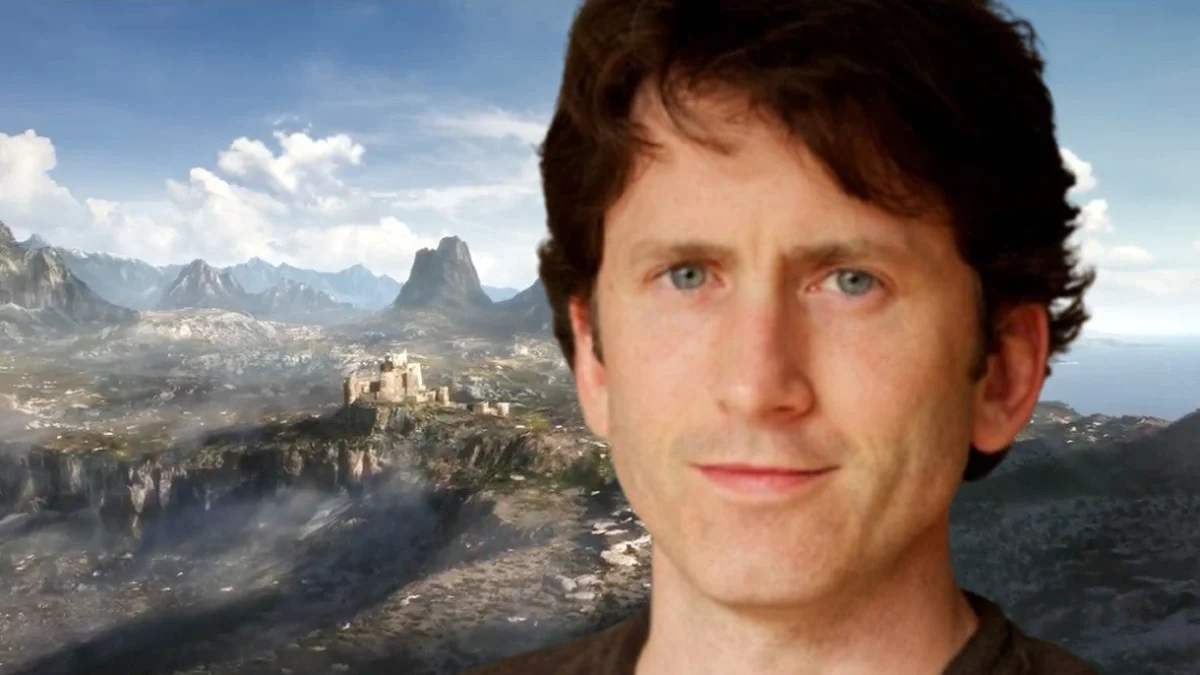
In a comprehensive dialogue regarding the future of Bethesda Game Studios, Executive Producer Todd Howard has provided significant insights into the ongoing development of The Elder Scrolls VI. The project, which stands as one of the most anticipated titles in the interactive entertainment industry, is currently traversing a sophisticated development cycle characterized by a transition to the newly minted Creation Engine 3. While Howard maintained a degree of strategic ambiguity regarding specific gameplay features or a definitive release window, his commentary shed light on the technical philosophy guiding the studio as it prepares for the next generation of hardware and the evolving landscape of gaming platforms.
The discussion, conducted with IGN, touched upon the precarious nature of developing a flagship title during a generational hardware shift. Bethesda, now a cornerstone of the Microsoft Gaming ecosystem, finds itself in a unique position where it must balance the demands of high-end console performance with the increasing popularity of portable, lower-powered devices. Howard emphasized that the studio’s historical roots in PC development have equipped the team with a "wide net" approach to technical scalability, ensuring that The Elder Scrolls VI can leverage the capabilities of future hardware while remaining accessible to a diverse array of users.
Technical Evolution and the Implementation of Creation Engine 3
Central to the development of The Elder Scrolls VI is the introduction of Creation Engine 3. This follows the utilization of Creation Engine 2 for Starfield, a transition that Howard admitted was fraught with challenges. The shift between engine iterations often creates a "rug-pulling" effect, where content creators within the studio find their tools temporarily non-functional as the underlying architecture is overhauled. However, Howard noted that the team has successfully mitigated these disruptions during the current project.
According to Howard, the development builds for The Elder Scrolls VI are currently exhibiting a level of stability and consistency that surpasses previous projects at similar stages. "We’ve had more days than we’ve ever had where the build is good, there’s new stuff in it, and we can play it," Howard remarked. This suggests that the integration of Creation Engine 3 into the daily workflow has been more seamless than the transition seen during the development of Starfield. The focus of this new engine is not merely visual fidelity but the optimization of the development cycle itself, allowing for faster iteration and a more robust foundation for the massive scale typical of an Elder Scrolls title.
The technical strategy also accounts for the rise of handheld gaming PCs, such as the Steam Deck and ASUS ROG Ally. Howard indicated that the game is being designed to scale down effectively, allowing for "underclocked" play on mobile devices without sacrificing the core experience. This adaptability is a response to shifting consumer habits, where players increasingly expect their library to be portable regardless of the game’s graphical complexity.
A Chronology of Anticipation: From 2011 to the Present
The timeline of The Elder Scrolls franchise has become a point of significant discussion among fans and industry analysts. To understand the current state of The Elder Scrolls VI, one must look back at the decade-long trajectory of Bethesda Game Studios:
- November 2011: The Elder Scrolls V: Skyrim is released to critical acclaim, eventually selling over 60 million copies across multiple platforms and generations.
- 2015-2018: Bethesda focuses on Fallout 4 and the experimental multiplayer title Fallout 76. During this period, the studio begins early conceptual work on its first new IP in 25 years, Starfield.
- June 2018: At the E3 Bethesda Showcase, a brief teaser for The Elder Scrolls VI is revealed. Howard admits this was done primarily to reassure fans that the studio remained committed to single-player RPGs following the announcement of Fallout 76 and Starfield.
- September 2020: Microsoft announces the acquisition of ZeniMax Media, the parent company of Bethesda, for $7.5 billion. This move places The Elder Scrolls VI under the Xbox Game Studios umbrella.
- September 2023: Starfield is released, marking the completion of Bethesda’s primary focus and allowing the bulk of the studio’s resources to shift toward The Elder Scrolls VI.
- 2024: Howard confirms the game is in active development and playable in internal builds, though a release remains several years away.
Howard’s recent reflection on the 2018 reveal highlights the tension between studio transparency and the pressures of long-term development. He joked that fans should "pretend we didn’t announce it," acknowledging that the early teaser set a benchmark for expectations that has been difficult to manage over the subsequent six years.
Strategic Communication and Studio Scale
The challenge of managing a global audience’s expectations is a recurring theme in Bethesda’s current operations. Howard noted that the studio often struggles to find the "right times" to communicate progress, particularly when multiple large-scale projects are in various stages of production. The "carnivorous" appetite of the fanbase for news often conflicts with the studio’s desire to reveal information only when it is substantial.
"If you look at the scale of our studio, we could have 10 times the amount of people to do all this," Howard stated, highlighting the finite nature of human resources even within a major developer. The studio currently balances the ongoing support and DLC for Starfield, the maintenance of Fallout 76, and the pre-production or active development of future titles like Fallout 5 and The Elder Scrolls VI.
This balancing act was visible in the recent rollout of the Fallout television series on Amazon Prime. Bethesda deliberately reserved updates on other projects to allow the television show and its associated Fallout 4 "next-gen" update to hold the spotlight. This orchestrated "spotlight" strategy is expected to continue, with The Elder Scrolls VI likely remaining in a period of relative silence until the studio is ready for a deep-dive presentation.
Market Context and Platform Exclusivity
The development of The Elder Scrolls VI is occurring within a vastly different corporate landscape than its predecessors. Following the Microsoft acquisition, the question of platform exclusivity has been a central point of contention. Internal Microsoft documents surfaced during the FTC v. Microsoft legal proceedings in 2023 suggested that The Elder Scrolls VI is expected to be an Xbox and PC exclusive, with a projected release date no earlier than 2026, and more likely 2028 or beyond.
This long-range planning aligns with Howard’s comments regarding the "long view" required by console manufacturers. As Microsoft develops its next generation of hardware—rumored to include a high-performance console and a handheld hybrid—Bethesda is positioning The Elder Scrolls VI to be a flagship title for that future ecosystem. The emphasis on "Project Helix," a Microsoft initiative aimed at bridging the gap between Xbox and PC gaming, suggests that Bethesda’s technical goals are closely aligned with Microsoft’s broader hardware strategy.
Industry Implications and Technical Standards
The transition to Creation Engine 3 represents more than just an internal upgrade for Bethesda; it sets a potential benchmark for the Western RPG genre. The industry has seen a shift toward Unreal Engine 5 for many AAA projects, but Bethesda’s insistence on maintaining its proprietary engine highlights a commitment to the specific systems—such as persistent object tracking and complex NPC AI schedules—that define the "Bethesda style" of open-world gaming.
Analysts suggest that the lessons learned from Starfield’s launch—specifically regarding procedural generation versus hand-crafted content—will likely influence the world-building of The Elder Scrolls VI. Howard’s mention of the game being "playable" in its current state indicates that the core systems of the province (widely rumored to be Hammerfell or High Rock) are being tested for environmental cohesion and stability.
The broader impact of Howard’s comments reinforces the reality of modern AAA game development: the era of three-year turnaround times for massive RPGs has concluded. Titles of this magnitude now require nearly a decade of labor, hundreds of millions of dollars in investment, and a technical foundation capable of surviving multiple hardware iterations.
Conclusion and Future Outlook
While Todd Howard’s recent remarks provide a sense of optimism regarding the technical health of The Elder Scrolls VI, they also serve as a reminder of the patience required by the gaming public. The studio is prioritizing a stable, scalable foundation over a rushed release, seeking to avoid the technical pitfalls that have plagued other high-profile launches in recent years.
As Bethesda continues to refine Creation Engine 3 and expand the internal builds of the game, the industry remains watchful. The Elder Scrolls VI is not merely a sequel; it is a test of Bethesda’s ability to evolve its classic formula for a new era of gaming. For now, the "carnivorous hordes" of fans must rely on these sporadic updates, knowing that while the game exists and is functional behind closed doors, its journey to the public remains a marathon rather than a sprint.