Galang Taruna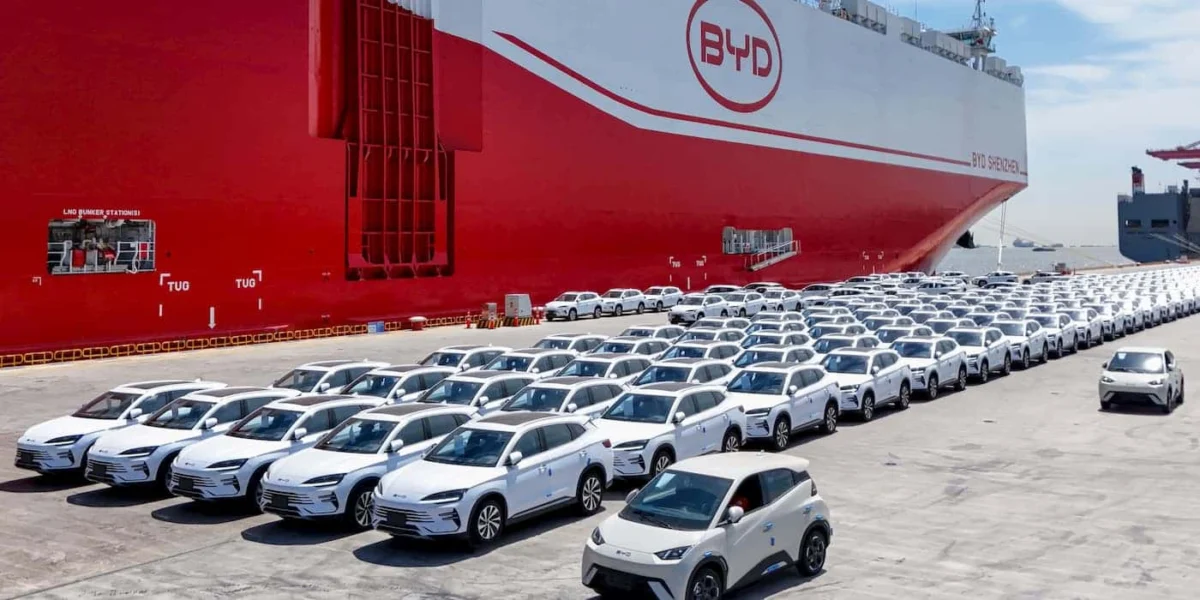
The European automotive landscape is witnessing a dramatic power shift, as Chinese electric vehicle (EV) giant BYD continues its impressive ascent, once again outselling Tesla in February. While Elon Musk’s firm attempts to maintain the illusion of slight growth, underlying figures reveal a particularly sharp downturn for the American automaker, necessitating a closer look at the data, particularly regarding the inclusion of hybrid models in BYD’s statistics. This reversal of fortunes signifies a pivotal moment in the global EV market, with profound implications for competition, consumer choice, and strategic positioning.
A Shifting European Dominance
Tesla’s once-unquestioned dominance in the European EV market is demonstrably eroding. For the second consecutive month, BYD has surpassed its Texan rival in vehicle registrations. In February, BYD recorded 17,954 registrations across the broader European market, encompassing the European Union, European Free Trade Association (EFTA) countries, and the United Kingdom. This figure places it ahead of Tesla’s 17,664 units for the same period. While the monthly difference appears marginal, it is the overarching trajectory that truly underscores BYD’s aggressive market penetration and Tesla’s stalled momentum.
The year-to-date figures for January and February further amplify this widening gap. BYD has already placed over 36,000 vehicles on European roads, representing an astonishing 162.7% growth compared to the previous year. In stark contrast, Tesla has registered only 25,753 units, showing a negligible growth of just 0.9%. This stagnation confirms an alarming trend that began to manifest in the previous year, notably when BYD surpassed Tesla in overall global sales of battery electric vehicles (BEVs) in the fourth quarter of 2023. The current disparity in Europe now exceeds 10,000 vehicles within the first two months of the year, a gap that appears increasingly difficult for Tesla to bridge without significant strategic adjustments.
Tesla’s Growth Illusion and BYD’s Pragmatic Advance
Superficially, Tesla might claim an 11.8% increase in its European sales for February. However, this figure is a significant statistical illusion. A year prior, in February 2023, Tesla had halted production at its Berlin Gigafactory and partially at its Shanghai plant to retool assembly lines for the refreshed Model Y, codenamed "Juniper." Comparing current sales to such an anomalously low production period artificially inflates the perceived growth. Managing to secure barely 2,000 additional sales compared to this historically disastrous period, which contributed to a sharp annual decline in various markets, including a significant drop of up to 67% in Sweden during parts of 2023, suggests market entrenchment rather than a genuine resurgence. The introduction of the refreshed Model Y has evidently not been sufficient to rekindle demand and drive substantial growth.
Conversely, BYD is executing a relentless market strategy. The company is reaping the rewards of an aggressive expansion of its European dealership network, establishing a stronger physical presence and improving accessibility for potential buyers. It is crucial to acknowledge, however, a critical nuance in this rivalry: BYD’s European sales statistics include its highly popular plug-in hybrid electric vehicle (PHEV) models, whereas Tesla exclusively sells pure battery electric vehicles (BEVs). This distinction means BYD’s reported numbers reflect a broader product portfolio catering to diverse consumer preferences, especially in markets where charging infrastructure is still developing or where consumers seek a transitional option.
Despite this difference, even when focusing solely on the 100% electric segment, BYD’s growth trajectory remains significantly more dynamic than Tesla’s. Industry analysts predict that BYD could potentially outsell Tesla in pure BEV registrations in Europe within the coming months, indicating the strength of its dedicated EV offerings and competitive pricing strategies. BYD’s models, such as the Atto 3, Dolphin, and Seal, are increasingly recognized for their quality, technology, and value proposition, challenging the established order.
Structural Challenges for Tesla in Europe
Tesla’s predicament in Europe appears to be increasingly structural. Beyond the absence of a truly affordable model to contend with the growing armada of competitively priced Asian vehicles, the brand is grappling with a severe deficit in its public image. The repeated political statements and often chaotic management of social media platforms by Elon Musk have demonstrably damaged the desirability of Tesla vehicles among European clientele. European consumers, often valuing discretion and a more subdued corporate persona, have shown increasing aversion to the controversies surrounding Tesla’s CEO. This erosion of brand appeal is particularly detrimental in a market where brand perception plays a crucial role in purchasing decisions.
This situation is made even more challenging for Tesla by the robust health of the overall European electric vehicle market. The EV segment is thriving, nearing 19% of the total market share at the beginning of the year, partly driven by the ongoing energy crisis and fluctuating fuel prices which make electric alternatives more appealing. This buoyant market environment, ripe for EV adoption, paradoxically highlights Tesla’s inability to capitalize on the momentum, suggesting that internal factors rather than market conditions are primarily responsible for its struggles.
Background and Chronology of BYD’s Ascent
BYD, an acronym for "Build Your Dreams," was founded in 1995 as a battery manufacturer. Leveraging its expertise in battery technology, it expanded into the automotive sector in 2003. Over the past decade, BYD has transformed into a global automotive powerhouse, vertically integrating its supply chain from battery production to semiconductor manufacturing. This integrated approach grants BYD significant cost advantages and control over production, enabling it to offer competitive pricing.
The company’s strategic push into international markets, particularly Europe, began in earnest in the early 2020s. BYD’s European expansion has been characterized by:
- Rapid Model Introduction: Launching several key models (Atto 3, Dolphin, Seal) in quick succession to cover different segments.
- Dealership Network Expansion: Establishing partnerships with local distributors and rapidly building out a physical sales and service network across major European countries.
- Competitive Pricing: Offering vehicles that frequently undercut competitors on price while delivering strong features and performance.
- Diversified Portfolio: The inclusion of PHEVs has allowed BYD to appeal to a broader customer base, particularly those wary of pure EV range anxiety or higher upfront costs.
This systematic approach culminated in BYD surpassing Tesla in global BEV sales in Q4 2023, marking a historic moment as a non-Tesla automaker claimed the top spot in quarterly BEV sales. The current European performance is a direct continuation of this global trend, indicating that BYD’s strategy is gaining traction in one of the world’s most competitive and environmentally conscious automotive markets.
Implications and Future Outlook
The shifting dynamics between BYD and Tesla in Europe carry significant implications:
- Increased Competition: The rise of BYD intensifies competition in the European EV market, pushing all manufacturers, including traditional European stalwarts, to innovate faster and offer more compelling products at competitive prices.
- Consumer Benefits: Greater competition typically leads to more choices, better features, and potentially lower prices for consumers. BYD’s focus on value and diverse offerings could accelerate EV adoption.
- Geopolitical Considerations: The success of Chinese brands like BYD in Europe raises questions about industrial policy, trade relations, and the future of Europe’s automotive industry. European policymakers are already considering measures to protect domestic manufacturers from what they perceive as unfair competition.
- Tesla’s Strategic Rethink: Tesla will likely need to re-evaluate its European strategy. This could involve introducing more affordable models, potentially re-establishing its brand image through more conventional marketing and less controversial public statements from its CEO, and adapting its product lineup to European tastes and regulatory environments.
- Hybrid vs. Pure EV Debate: BYD’s success with its PHEV offerings highlights the ongoing debate about the role of hybrid vehicles in the transition to full electrification. For many consumers, PHEVs offer a practical bridge, and their inclusion in sales figures complicates direct comparisons with pure BEV manufacturers like Tesla.
In conclusion, the European automotive market is undergoing a profound transformation. BYD’s consistent outperformance of Tesla in recent months is not merely a statistical anomaly but a clear indicator of a new competitive era. As BYD continues to expand its presence and diversify its offerings, and as Tesla grapples with structural challenges and brand perception issues, the battle for EV supremacy in Europe promises to be one of the most compelling narratives in the automotive industry for years to come. The coming months will be critical in determining whether this trend solidifies into a long-term shift in leadership or if Tesla can mount a significant comeback.