Evan Lee Salim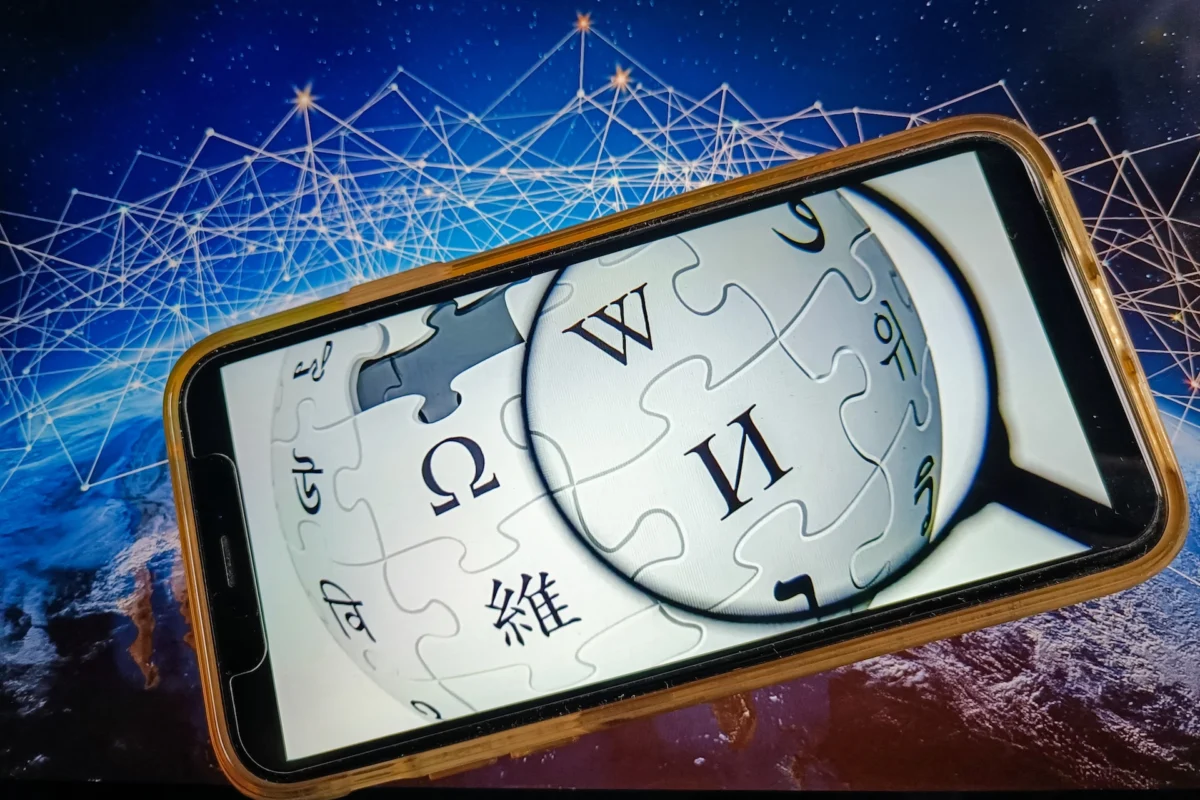
In a significant move that underscores the ongoing struggle to define the role of artificial intelligence in content creation, Wikipedia, the world’s largest online encyclopedia, has formally prohibited its editors from using large language models (LLMs) to generate or rewrite article content. The policy, enacted this week, represents a hardening of the platform’s stance on AI, drawing a clear line against automated authorship while still allowing for a highly restricted application of AI tools for minor copyedits, provided robust human review is maintained. This decision, announced on Thursday, March 26, 2026, at 2:50 PM PDT, comes as media and editorial organizations globally grapple with the implications of AI’s rapid advancement, particularly concerning accuracy, intellectual property, and the very nature of factual dissemination.
The updated guidelines explicitly state, "the use of LLMs to generate or rewrite article content is prohibited." This declaration supersedes previous, more ambiguous language that merely cautioned against using LLMs "to generate new Wikipedia articles from scratch." The revised policy reflects a growing consensus within Wikipedia’s vast, volunteer-driven community that the core principles of verifiability, neutrality, and reliable sourcing—foundational to the encyclopedia’s integrity—are fundamentally challenged by the inherent characteristics of current AI models.
The Policy Shift: A Stricter Stance
The evolution of Wikipedia’s AI policy has been a topic of intense debate within its editorial circles for several months, mirroring broader industry discussions about the ethical and practical implications of generative AI. Initially, the platform’s guidelines offered a softer caution, acknowledging the nascent stage of AI tools and the potential for their misuse without outright prohibition. However, as LLMs became more sophisticated and their use more widespread across various digital content spheres, the potential for inaccuracies, "hallucinations," and the introduction of non-attributable information into Wikipedia articles became a pressing concern.
The final policy change, which was reportedly put to a community vote, garnered overwhelming support, with a reported 40 editors voting in favor of the ban and only two against. This decisive outcome highlights the deep-seated commitment of Wikipedia’s volunteer base to preserving the human-centric, evidence-based nature of their collaborative project. The editors, who collectively maintain and expand the encyclopedia across thousands of languages, recognized the imperative to protect the platform’s reputation as a trustworthy source of information in an increasingly complex digital landscape.
Nuances of the Ban: What’s Allowed and What’s Not
While the prohibition on AI-generated article content is strict, the new policy does carve out a narrow allowance for AI-assisted processes. Editors are permitted to use LLMs to "suggest basic copyedits to their own writing" and to incorporate some of these suggestions "after human review, provided the LLM does not introduce content of its own." This distinction is critical, separating the creation of factual content from mere stylistic or grammatical refinement.
The policy further emphasizes the need for extreme caution even in these limited applications: "Caution is required, because LLMs can go beyond what you ask of them and change the meaning of the text such that it is not supported by the sources cited." This warning reflects a fundamental understanding of LLM behavior, where models can inadvertently alter the nuance, introduce subtle biases, or even generate new, unsubstantiated claims under the guise of minor edits. The onus remains entirely on the human editor to meticulously verify every proposed change against cited sources, ensuring that the AI acts solely as a superficial editing assistant rather than a co-author. This stringent requirement effectively places a high burden of proof and verification on any editor choosing to employ AI for even minor linguistic refinements.
The Genesis of a Policy: Community Debate and Vote
The journey to this definitive ban was neither swift nor without extensive deliberation. Discussions around the use of generative AI on Wikipedia began to intensify in late 2023 and early 2024, as the capabilities of models like OpenAI’s GPT series and Google’s Gemini became widely accessible. The Wikimedia Foundation, the non-profit organization that hosts Wikipedia, along with its extensive global community of editors, recognized early on the dual potential and peril of these technologies.
Early discussions centered on practical challenges: How would AI-generated content be identified? What would be the implications for maintaining neutrality and verifiability if the source of information was an opaque algorithm rather than a cited human work? Could AI models introduce systemic biases present in their training data, thereby compromising Wikipedia’s commitment to presenting a balanced worldview? These questions fueled a series of community consultations, forum discussions, and ultimately, the formal voting process that led to the current policy. The high margin of approval for the ban suggests a widespread concern among editors about safeguarding the core tenets of Wikipedia’s mission.
Why the Ban? Addressing Core Concerns
The decision to ban AI-generated content is rooted in several fundamental concerns that strike at the heart of Wikipedia’s operational philosophy and its public trust.

The Specter of AI Hallucinations and Misinformation: One of the primary drivers for the ban is the well-documented phenomenon of "AI hallucinations." LLMs, while adept at generating coherent and grammatically correct text, are known to fabricate facts, cite non-existent sources, or present plausible-sounding but entirely false information. For an encyclopedia that prides itself on accuracy and verifiability, allowing such content would be anathema. The risk of AI models inadvertently or deliberately injecting misinformation into articles, which could then propagate across the internet, was deemed too great.
Preserving Human Authority and Editorial Integrity: Wikipedia’s strength lies in its human editors – a diverse, global community of volunteers who meticulously research, write, and peer-review articles. This human element ensures accountability, critical thinking, and a nuanced understanding of context that current AI models simply cannot replicate. The ban reaffirms the irreplaceable role of human intellect, judgment, and ethical responsibility in the creation of reliable knowledge. It protects the integrity of the editorial process, ensuring that the content reflects human understanding and is subject to human scrutiny and correction.
Maintaining Verifiability and Reliable Sourcing: A cornerstone of Wikipedia’s content policies is "verifiability," meaning all information presented in an article must be attributable to a reliable, published source. AI-generated text often lacks clear provenance or synthesizes information in ways that make direct source attribution difficult or impossible. Even when AI models claim to cite sources, these citations can be fabricated or misinterpreted. The ban ensures that editors remain responsible for sourcing every piece of information, thereby upholding the rigorous standards of academic and journalistic integrity that Wikipedia strives for.
Addressing Bias and Lack of Nuance: AI models are trained on vast datasets of existing text, which inevitably contain biases present in human society and historical records. Without careful human oversight and critical analysis, AI-generated content could perpetuate or even amplify these biases, leading to articles that are not neutral or representative. Human editors, through their diverse perspectives and commitment to neutrality, are better equipped to identify and mitigate such biases, ensuring a more balanced and comprehensive portrayal of topics.
Reactions and Stakeholder Perspectives
The Wikipedia ban is not an isolated incident but part of a broader reckoning within the media and technology sectors. Reactions to the policy are varied, reflecting the diverse stakeholders involved.
Wikimedia Foundation’s Stance: While not directly involved in content editing, the Wikimedia Foundation has consistently championed the principles of free knowledge, verifiability, and human collaboration. A hypothetical statement from a Foundation spokesperson might emphasize: "This policy reinforces Wikipedia’s unwavering commitment to the integrity and accuracy of its content. Our strength lies in the collective intelligence and rigorous review of our global volunteer community. While we explore technologies that can assist human efforts, the creation of knowledge on Wikipedia will always remain a fundamentally human endeavor, guided by principles of verifiable facts and reliable sourcing." This stance aligns with their mission to provide open, reliable, and bias-free information to the world.
Voices from the Volunteer Community: The overwhelming vote in favor of the ban suggests a strong consensus among active editors. Supporters of the ban likely articulate concerns about maintaining the quality and trustworthiness of the encyclopedia. "Our readers trust us because they know real people, with real knowledge, are behind every word," one long-time editor might state in a forum. "Allowing AI to write articles would dilute that trust and open the floodgates to errors and unverified claims." Others, perhaps those who voted against, might argue that a complete ban is too restrictive, hindering potential efficiency gains. However, even these voices would likely concede the necessity of strict human oversight.
Industry Implications and the AI Development Landscape: The decision by Wikipedia, a platform of immense global influence and a benchmark for factual information, sends a strong signal to the broader media industry and AI developers. For media outlets struggling with similar issues, Wikipedia’s move provides a precedent for prioritizing accuracy and human oversight over the perceived efficiency of AI. For AI developers, it highlights the critical need to build models that are not only capable of generating text but also demonstrably reliable, verifiable, and transparent in their sourcing. This could spur innovation in areas like fact-checking AI, attribution AI, and AI tools specifically designed to augment human work without replacing it.
Broader Impact and Future Challenges
Wikipedia’s ban on AI-generated content is more than just a platform-specific policy; it carries significant implications for the future of digital content, information integrity, and the evolving relationship between humans and artificial intelligence.
Setting a Precedent in the Digital Sphere: As one of the most visited websites globally and a primary source of initial information for billions, Wikipedia’s policies often set a de facto standard for digital content. Its decisive action against AI-generated article content could influence other educational platforms, news organizations, and online communities to adopt similar strict guidelines. This could lead to a bifurcation in the digital landscape: platforms that prioritize speed and volume might embrace AI, while those valuing accuracy and trust will likely lean towards human-centric content creation.
Enforcement and the Ever-Evolving AI Frontier: While the policy is clear, its enforcement presents ongoing challenges. AI models are constantly evolving, becoming more sophisticated at mimicking human writing styles. Detecting AI-generated text, especially if it undergoes human review and refinement, will require advanced tools and vigilant human oversight. Wikipedia’s community, known for its robust self-policing mechanisms, will need to adapt and develop new strategies to identify and remove prohibited content. This could involve leveraging AI tools for detection, creating new review processes, or relying on the collective vigilance of its millions of users.
The Enduring Value of Human Curation: Ultimately, Wikipedia’s ban is a powerful affirmation of the enduring value of human intellect, critical thinking, and collaborative effort in the pursuit of knowledge. In an age where information overload and algorithmic biases threaten to erode trust, platforms that champion human curation and verifiable facts will likely become even more indispensable. The decision reinforces the idea that while AI can be a powerful tool, it cannot, at least for now, replace the nuanced judgment, ethical considerations, and intrinsic accountability that human editors bring to the creation of reliable information. The future of knowledge platforms, as envisioned by Wikipedia, remains firmly rooted in the human element, ensuring that the pursuit of truth remains a deeply collaborative and responsible endeavor.