Sisilia Frederika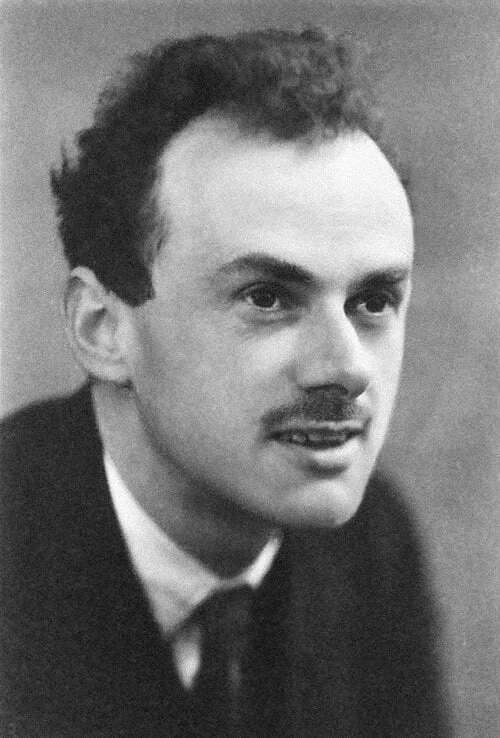
The fundamental architecture of particle physics is currently facing a profound challenge as researchers attempt to reconcile the observed behavior of neutrinos with the established rules of the Standard Model. For decades, the scientific community has operated under the understanding that all particles possessing mass must exhibit a phenomenon known as chirality switching, or "flickering," between left-handed and right-handed states. This process is facilitated by the Higgs field, acting as a persistent interaction that defines a particle’s mass. However, neutrinos—the most abundant particles with mass in the universe—appear to defy this standard mechanism. While experimental evidence confirms that neutrinos possess mass, observations consistently show that neutrinos are exclusively left-handed, while antineutrinos are exclusively right-handed. This discrepancy suggests that either the current understanding of mass is incomplete or that neutrinos possess properties unlike any other known matter.
The Handedness Dilemma and the Higgs Handshake
To understand the complexity of the neutrino problem, one must first examine the nature of mass in quantum field theory. In the Standard Model, mass is not an inherent property but rather a consequence of a particle’s interaction with the Higgs field. This interaction requires a particle to exist in both left-handed and right-handed states. As a particle moves through the Higgs field, it undergoes a constant "handshake," oscillating between these two states. This rapid flickering is effectively what we perceive as mass.
For a common particle like the electron, this process is well-documented. An electron can be left-handed or right-handed, and it switches between them as it travels. However, neutrinos present a unique anomaly. In every experiment conducted since the mid-20th century, including those focusing on weak nuclear interactions, neutrinos have only been observed in a left-handed orientation. Conversely, their antimatter counterparts, antineutrinos, appear only as right-handed. The apparent absence of right-handed neutrinos and left-handed antineutrinos creates a theoretical vacuum: if neutrinos cannot flicker between states, they should, according to the original formulation of the Standard Model, be massless.
The discovery of neutrino oscillations in the late 1990s—work that earned the 2015 Nobel Prize in Physics—proved definitively that neutrinos do have mass. This revelation forced physicists to reconsider the "Dirac picture" of particles, named after Paul Dirac, which posits that neutrinos must have hidden partners to satisfy the requirements of the Higgs mechanism.
The Dirac Picture and the Concept of Sterile Neutrinos
The most conservative solution to the neutrino mass problem is the introduction of the Dirac neutrino. In this theoretical framework, neutrinos behave exactly like electrons or quarks, meaning right-handed neutrinos and left-handed antineutrinos do exist. The reason they have never been detected is that they are "sterile."
In the subatomic world, particles interact through four fundamental forces: gravity, electromagnetism, the strong nuclear force, and the weak nuclear force. Neutrinos are famously elusive because they lack electric charge (ignoring electromagnetism) and color charge (ignoring the strong force). They interact only via gravity and the weak force. However, the weak force is "chiral"—it only couples with left-handed particles and right-handed antiparticles.
If a right-handed neutrino exists, it would be immune to the weak force. Lacking electric charge, color charge, and weak interaction, this "sterile" neutrino would be influenced only by gravity. Because gravity is incredibly weak at the subatomic scale, such a particle would be essentially invisible to all current and foreseeable experimental apparatuses. This theoretical "ghost" particle would allow the neutrino to perform the necessary Higgs handshake in secret, thereby acquiring its mass without violating the observed laws of the weak interaction.
The Seesaw Mechanism: Explaining the Tiny Mass of Neutrinos
While the Dirac picture provides a logical solution, it leaves one major question unanswered: why are neutrino masses so incredibly small? A neutrino is at least a million times lighter than an electron, which is itself one of the lightest particles in the atom.
To address this, theorists proposed the "seesaw mechanism." This mathematical framework suggests that the mass of the observable left-handed neutrino is inversely proportional to the mass of its hidden right-handed partner. According to this model, the right-handed neutrino is not just a mirror image of the left-handed one, but a gargantuan entity existing at an energy scale far beyond the reach of the Large Hadron Collider—perhaps as heavy as $10^15$ gigaelectronvolts (GeV), near the Grand Unification scale.
In the seesaw math, as the mass of the hidden right-handed neutrino is pushed to these extreme heights, the mass of the observable left-handed neutrino is pushed down toward zero. This provides an elegant explanation for why neutrinos are so much lighter than their counterparts in the Standard Model. The lightness of the neutrino we see would be a direct consequence of the immense mass of a particle we can never touch.
The Majorana Alternative: Particles as Their Own Mirrors
While the Dirac and seesaw models are mathematically sound, they rely on the existence of a hidden class of matter. In 1937, the Italian physicist Ettore Majorana proposed a more radical alternative. He suggested that for neutral particles like the neutrino, the distinction between matter and antimatter might be an illusion.
In the case of the electron, the distinction between particle and antiparticle is absolute, maintained by the conservation of electric charge. An electron has a negative charge, and a positron has a positive charge. They are fundamentally different because the universe "remembers" charge. However, the neutrino has no electric charge. Majorana argued that there is no deep physical principle forcing a neutrino to be different from an antineutrino.
If Majorana was correct, the neutrino is a "Majorana fermion"—a particle that is its own antiparticle. In this scenario, the "right-handed antineutrino" we observe in beta decay is actually just the right-handed version of the same particle we call the neutrino. This would eliminate the need for entirely new, invisible particles and would instead redefine the nature of the neutrino itself.
Historical Timeline and Experimental Milestones
The quest to define the neutrino’s nature has spanned nearly a century of physical inquiry:
- 1930: Wolfgang Pauli postulates the neutrino to explain the missing energy in beta decay.
- 1937: Ettore Majorana publishes his final paper, "Teoria simmetrica dell’elettrone e del positrone," suggesting neutrinos could be their own antiparticles.
- 1956: Clyde Cowan and Frederick Reines provide the first experimental evidence of neutrino existence.
- 1957: The Wu experiment demonstrates parity violation, confirming that the weak force only interacts with left-handed particles.
- 1962: Researchers at Brookhaven National Laboratory discover that there is more than one type (flavor) of neutrino.
- 1998: The Super-Kamiokande observatory in Japan provides the first evidence that neutrinos have mass through the observation of neutrino oscillations.
- 2015: Takaaki Kajita and Arthur B. McDonald receive the Nobel Prize for the discovery of neutrino oscillations.
- 2020s: Experiments like KATRIN (Karlsruhe Tritium Neutrino Experiment) set new upper limits on neutrino mass, currently estimated to be below 0.8 electronvolts (eV).
Current Research and the Search for Neutrinoless Double Beta Decay
The scientific community is currently engaged in a global race to determine if the neutrino is a Majorana fermion. The primary method for testing this hypothesis is the search for a theoretical event known as neutrinoless double beta decay ($0nubetabeta$).
In standard double beta decay, two neutrons in an atomic nucleus turn into two protons, emitting two electrons and two antineutrinos. If the neutrino is its own antiparticle, however, the two antineutrinos produced in this rare decay could theoretically "annihilate" each other before leaving the nucleus. The resulting observation would be a nucleus emitting two electrons and nothing else.
Detecting this would be a "smoking gun" for Majorana physics. Several international collaborations are currently searching for this signal:
- The GERDA (GERmanium Detector Array) Experiment: Located in Italy, using high-purity germanium detectors.
- CUORE (Cryogenic Underground Observatory for Rare Events): Searching for the decay in tellurium dioxide crystals.
- KamLAND-Zen: A large-scale experiment in Japan using liquid scintillator.
- NEXT (Neutrino Experiment with a Xenon TPC): A high-pressure xenon gas experiment based in Spain.
Implications for Cosmology and the Fate of the Universe
The resolution of the Dirac versus Majorana debate carries implications that extend far beyond particle physics. It could potentially explain one of the greatest mysteries of the Big Bang: why the universe is made of matter rather than antimatter.
In the early universe, matter and antimatter should have been created in equal amounts and annihilated each other, leaving nothing but light. The fact that we exist suggests a slight imbalance occurred. If neutrinos are Majorana particles, they could have facilitated a process called leptogenesis. High-energy Majorana neutrinos in the early universe could have decayed in a way that slightly favored the production of matter over antimatter, setting the stage for the formation of galaxies, stars, and life.
Furthermore, if the seesaw mechanism is correct, neutrinos provide a unique window into the physics of the "Grand Unification," where all forces of nature (except gravity) merge into one. The neutrino’s tiny mass would be our first measurable link to the most energetic and fundamental scales of the cosmos.
As experimental sensitivity increases, the scientific world remains on the cusp of a discovery that could redefine the Standard Model. Whether the neutrino is a Dirac particle with a hidden twin or a Majorana particle that serves as its own mirror, the answer will fundamentally alter our understanding of the subatomic world and the history of the universe itself.