Sisilia Frederika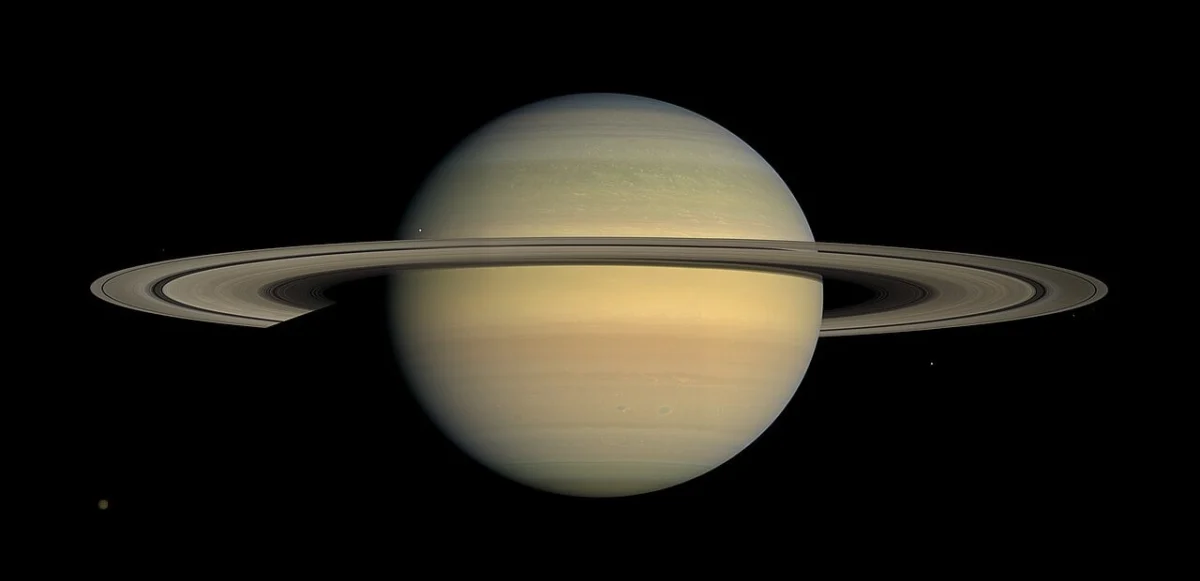
The iconic rings of Saturn have served as a source of astronomical wonder since Galileo first turned his telescope toward the gas giant in 1610. However, beneath the aesthetic brilliance of its icy bands lies a complex and invisible environment that challenges fundamental assumptions about planetary physics. New research conducted by a team at Lancaster University has identified a significant structural anomaly within Saturn’s magnetosphere—the protective magnetic "bubble" that shields the planet from solar radiation. By re-examining archival data from NASA’s Cassini spacecraft, researchers have discovered that Saturn’s magnetic "cusp," a critical weak point in its shield, does not behave according to the established models derived from Earth’s magnetic environment. Instead of aligning with the sunward-facing side of the planet, the cusp is dramatically displaced by the planet’s rapid rotation and the influence of its volcanic moon, Enceladus.
The Nature of Planetary Magnetospheres and the Polar Cusp
A magnetosphere is a vast region of space surrounding a planet, dominated by that planet’s internal magnetic field. This field acts as a barrier against the solar wind, a supersonic stream of charged particles—mostly protons and electrons—emitted by the Sun. Without this magnetic shield, a planet’s atmosphere would be gradually eroded by the solar wind, a process believed to have stripped Mars of its once-thick atmosphere and liquid water.
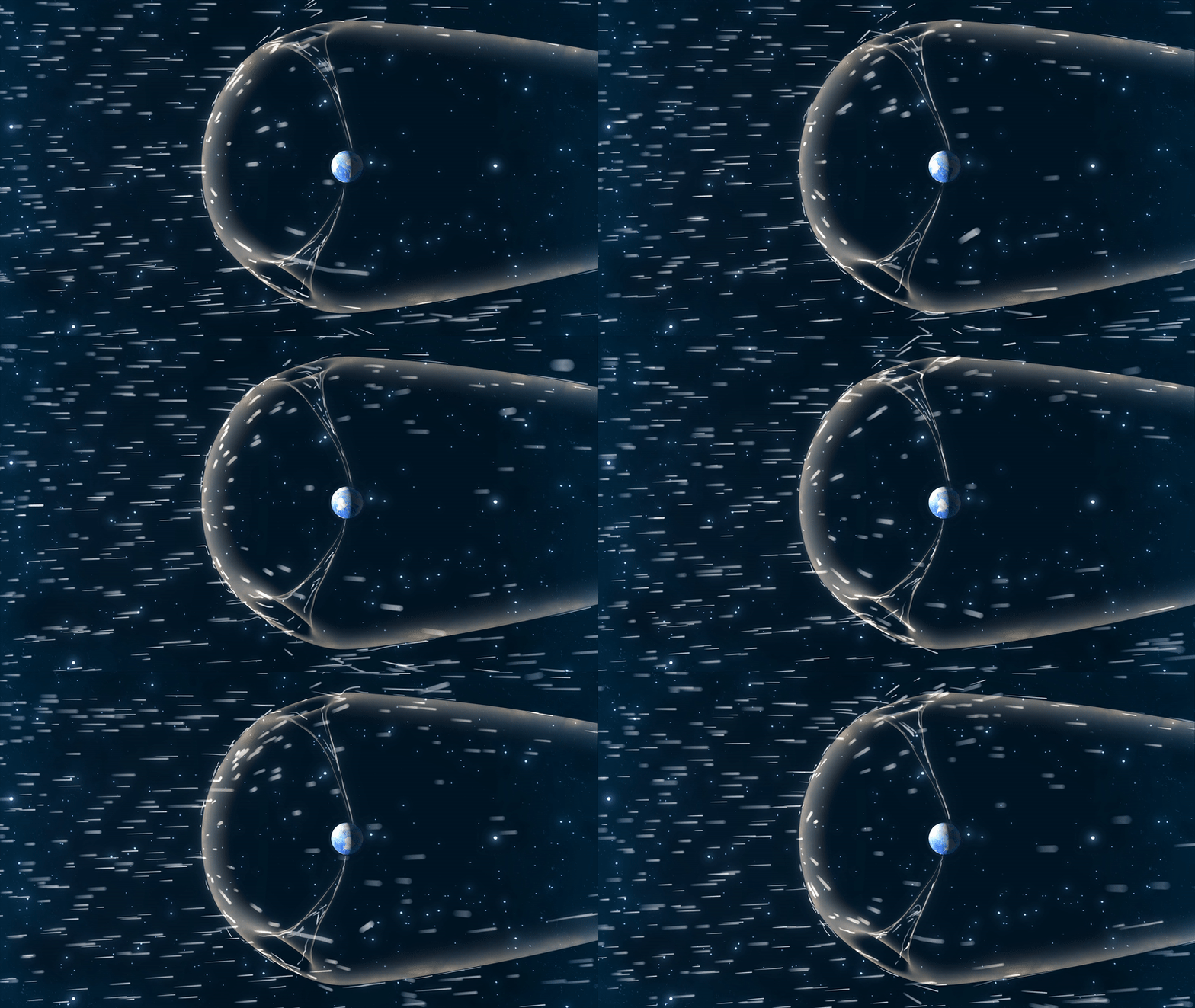
In a standard planetary model, such as Earth’s, the magnetosphere is compressed on the side facing the Sun and stretched into a long "magnetotail" on the night side. However, this shield is not impenetrable. Near the magnetic poles, the field lines create funnel-shaped openings known as the magnetospheric cusps. These cusps are the primary gateways through which solar wind particles can leak directly into a planet’s upper atmosphere. On Earth, the location of these cusps is highly predictable; they sit near "local noon," the point on the polar region directly facing the Sun. This positioning is the result of a direct competition between the pressure of the incoming solar wind and the outward pressure of Earth’s magnetic field.
Discovery of the Saturnian Displacement
The new study, published in the journal Nature Communications, reveals that Saturn operates under a fundamentally different set of physical rules. Led by researchers at Lancaster University, the team analyzed a massive dataset collected by the Cassini-Huygens mission between 2004 and 2010. During this period, the spacecraft performed numerous orbits that took it through Saturn’s high-latitude regions, providing rare "in-situ" measurements of the magnetic field and plasma environment.
The data revealed that Saturn’s cusp is not located at local noon. Instead, it is consistently shifted toward the afternoon side of the planet, typically found between 13:00 and 15:00 local time. In some instances, the cusp was observed to be dragged as far as 20:00 local time—essentially pushing the "opening" in the magnetic shield toward the dusk side of the planet. This displacement represents a massive departure from the Earth-centric models that have dominated planetary science for decades.
The Role of Rapid Rotation and Enceladus
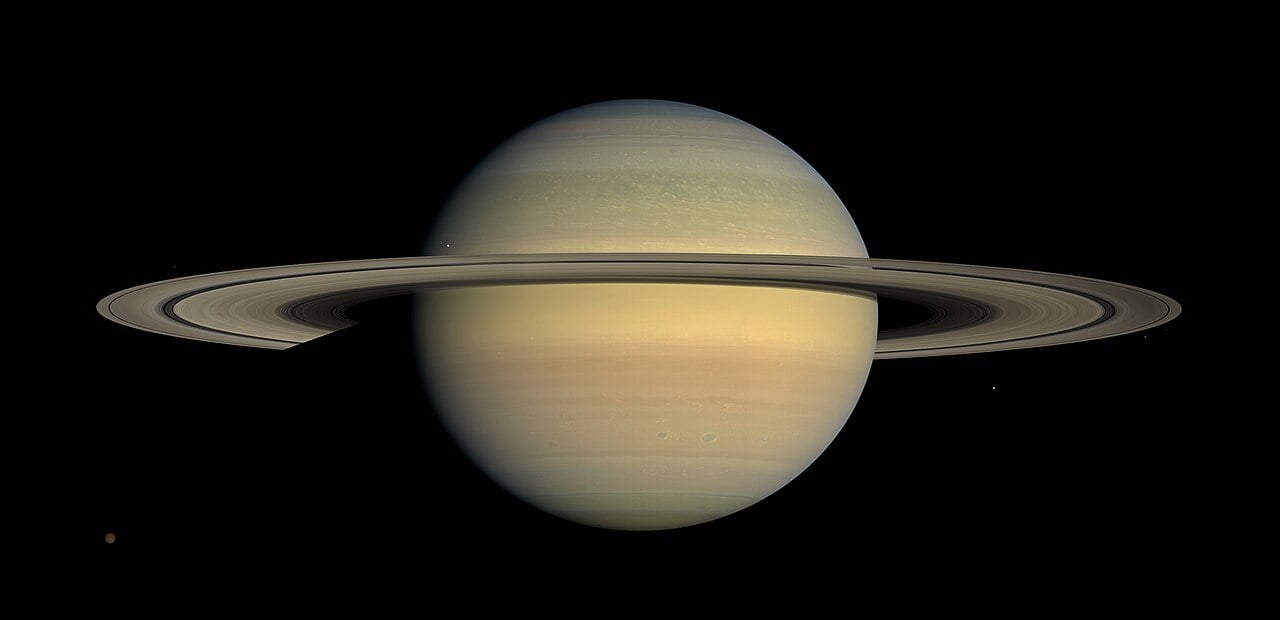
The primary driver behind this phenomenon is Saturn’s extraordinary rotational speed. Despite being roughly 760 times the volume of Earth, Saturn completes a full rotation in just 10.7 hours. This rapid spin creates immense centrifugal forces within the magnetosphere. While Earth’s magnetospheric dynamics are dictated primarily by the external pressure of the solar wind, Saturn’s environment is "rotationally dominated."
The effect of this rotation is amplified by a unique internal source of matter: the moon Enceladus. In 2005, Cassini discovered that Enceladus erupts massive plumes of water vapor and ice grains from its "tiger stripe" fractures near its south pole. This material becomes ionized, creating a vast torus of plasma—electrically charged gas—that orbits Saturn. As the planet spins, it drags this heavy plasma along with it. The combination of the planet’s rapid rotation and the weight of the Enceladus-sourced plasma creates a powerful internal pressure. This internal force "skews" the magnetic field lines, dragging the polar cusp away from the sunward side and toward the direction of rotation.
Chronology of the Research and Data Collection
The findings are the culmination of nearly two decades of data analysis. The timeline of the discovery highlights the enduring value of long-term space missions:
- October 1997: The Cassini-Huygens mission launches from Cape Canaveral, embarking on a seven-year journey to the outer solar system.
- July 2004: Cassini enters orbit around Saturn, beginning its primary mission to study the planet, its rings, and its moons.
- 2004–2010: The specific window of data used for the Lancaster study. During these years, Cassini’s orbital inclination allowed it to pass through the high-latitude regions where the magnetospheric cusps are located.
- September 2017: Cassini concludes its mission with a "Grand Finale," diving into Saturn’s atmosphere to prevent contamination of potentially habitable moons.
- 2018–2023: Researchers utilize advanced computational models to filter and interpret years of plasma and magnetometer data, looking for the specific signatures of the cusp.
- 2024: The study is published, confirming that Saturn’s magnetospheric structure is unique among the planets studied to date.
Supporting Data and Technical Analysis
The researchers utilized data from two primary instruments aboard Cassini: the Dual Technique Magnetometer (MAG) and the Cassini Plasma Spectrometer (CAPS). The MAG instrument measured the direction and strength of the magnetic field, while CAPS detected the density and energy of the charged particles.
In Earth’s magnetosphere, the cusp is identified by a specific "dip" in magnetic field strength and an influx of lower-energy solar wind particles. When the Lancaster team looked for these signatures in the Cassini data, they found them shifted by several hours of local time. Statistical analysis of over 100 cusp crossings showed a clear bias toward the post-noon sector. The study also noted that the degree of displacement varied based on the "solar wind dynamic pressure." When the solar wind was particularly strong, it could push the cusp back toward the noon position, but the internal rotational forces almost always won the "tug-of-war," keeping the cusp in the afternoon sector.
Scientific Reactions and Academic Impact
While the study was led by Lancaster University, it has drawn praise from the wider planetary science community. Dr. Arane Pyer, a researcher involved in the study, noted that the findings confirm long-held theoretical suspicions. "For years, we assumed the cusp was a static feature on the sunward side," Pyer stated. "But Cassini has shown us that in a system as dynamic as Saturn’s, the internal engine of the planet—its rotation and its moons—is far more influential than the external environment of the Sun."
Other experts in magnetospheric physics suggest that this discovery will necessitate a rewrite of textbooks regarding giant planet environments. The "Earth-model" has long been the default for interpreting planetary data, but the Lancaster study proves that such a model is insufficient for gas giants.
Broader Implications for Auroras and Exoplanetary Science
The displacement of the cusp has direct consequences for Saturn’s auroras. On Earth, the Aurora Borealis and Aurora Australis are caused by particles entering the atmosphere through the cusps and the magnetotail. On Saturn, the skewed position of the cusp means that the "footprint" of solar particles on the atmosphere is shifted. This explains why Saturn’s auroras often appear asymmetrical or exhibit "flaring" in the afternoon sector that does not match Earth’s auroral patterns.
Furthermore, this research provides a critical template for the study of exoplanets. The majority of exoplanets discovered to date are "Hot Jupiters" or gas giants that rotate rapidly. By understanding how Saturn’s rotation and internal plasma sources shape its magnetic shield, astronomers can better predict the habitability and atmospheric stability of planets in other star systems. If a rapidly rotating exoplanet has a skewed cusp, its atmosphere might be more vulnerable to "leaking" in specific sectors, affecting its long-term evolution.
Conclusion and Future Missions
The revelation that Saturn’s magnetic shield is fundamentally different from Earth’s underscores the importance of "in-situ" exploration. While remote observations from Earth-based telescopes can reveal the beauty of Saturn’s rings, it took the Cassini spacecraft’s presence within the magnetosphere to uncover the invisible forces at play.
The legacy of Cassini continues to provide a roadmap for future missions, such as the European Space Agency’s JUICE (JupitEr ICy moons Explorer), which is currently en route to study Jupiter’s magnetosphere. Jupiter rotates even faster than Saturn and has an even more massive plasma source in its moon Io. Scientists now expect to find similar, or even more extreme, cusp displacements at Jupiter, further cementing the idea that gas giants represent a distinct class of "rotational" planetary systems. As the data from Cassini continues to be mined, it is clear that the "Lord of the Rings" still has many secrets to share about the complex interplay between light, motion, and magnetism in the deep reaches of our solar system.