Sisilia Frederika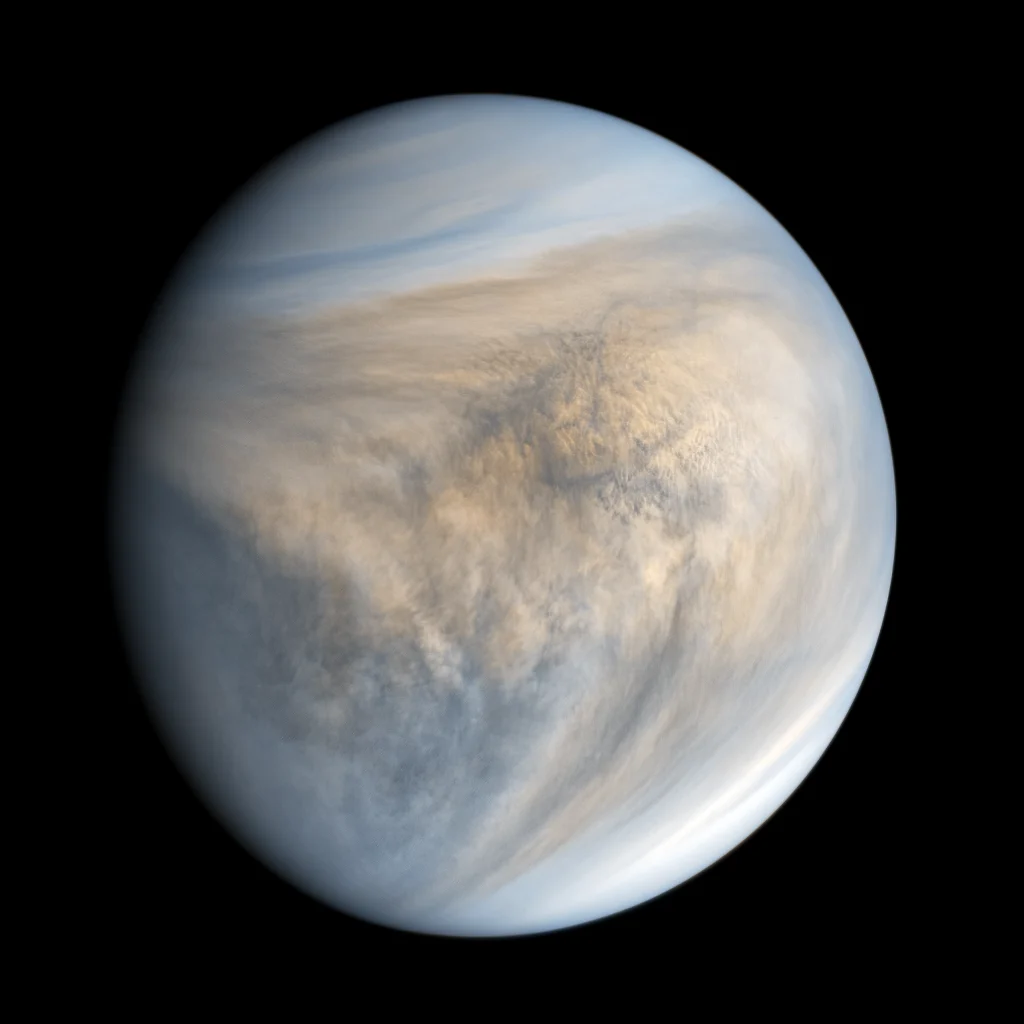
For decades, the dense, opaque atmosphere of Venus has served as one of the most significant barriers to our understanding of the solar system’s most inhospitable terrestrial planet. While often characterized as Earth’s "evil twin" due to its similar size and composition, Venus remains a world of extremes, defined by a surface temperature of 465 degrees Celsius and a crushing atmospheric pressure 92 times that of Earth. Among the many mysteries hidden within its thick shroud of carbon dioxide and sulfuric acid, a persistent lower haze layer has baffled planetary scientists since the first robotic probes descended into the Venusian clouds in the 1970s.
A breakthrough study led by researchers at Tohoku University in Japan, in collaboration with the Royal Belgian Institute for Space Aeronomy, has finally identified the origin of this enigmatic feature. According to the research published in the journal Nature Astronomy, the source of Venus’s lower haze is not indigenous to the planet’s surface or its chemical cycles, but is instead an external contribution: cosmic dust. This discovery resolves a half-century-old puzzle and provides critical new insights into the climate dynamics and atmospheric chemistry of the second planet from the Sun.
The Half-Century Mystery of the Venusian Haze
The atmospheric structure of Venus is divided into distinct layers. The main cloud deck, composed primarily of concentrated sulfuric acid droplets, sits between 47 and 70 kilometers above the surface. Below this main deck, and extending down toward the hellish surface, lies a persistent, thin haze. This layer was first detected by the Soviet Union’s Venera probes and NASA’s Pioneer Venus multiprobe mission during the late 1970s.
For over 50 years, the composition of this lower haze remained speculative. Standard atmospheric models, which account for the photochemical reactions of sulfur dioxide and water vapor, could explain the upper clouds but failed to account for the specific particulate matter found in the lower regions. Scientists observed that the particles in this lower haze exhibited properties that did not align with pure sulfuric acid. They were more reflective in certain wavelengths and seemed to persist in regions where sulfuric acid should, theoretically, evaporate.
The team led by Hiroki Karyu, Takeshi Kuroda, and Naoki Terada utilized advanced computational modeling to simulate the movement and transformation of materials within the Venusian atmosphere. By integrating data from historical missions with modern understanding of meteoric influx, they discovered that the "missing ingredient" was the constant rain of micrometeoroids that enter the atmosphere from interplanetary space.
The Mechanism: From Meteoric Smoke to Atmospheric Haze
The process identified by the Tohoku University team is an elegant, multi-stage atmospheric cycle. It begins in the upper reaches of the Venusian atmosphere, where billions of tiny meteors—remnants of comets and asteroids—burn up upon entry. This process, known as ablation, creates "meteoric smoke," consisting of nanometer-sized mineral particles composed of silicates, iron, and magnesium.
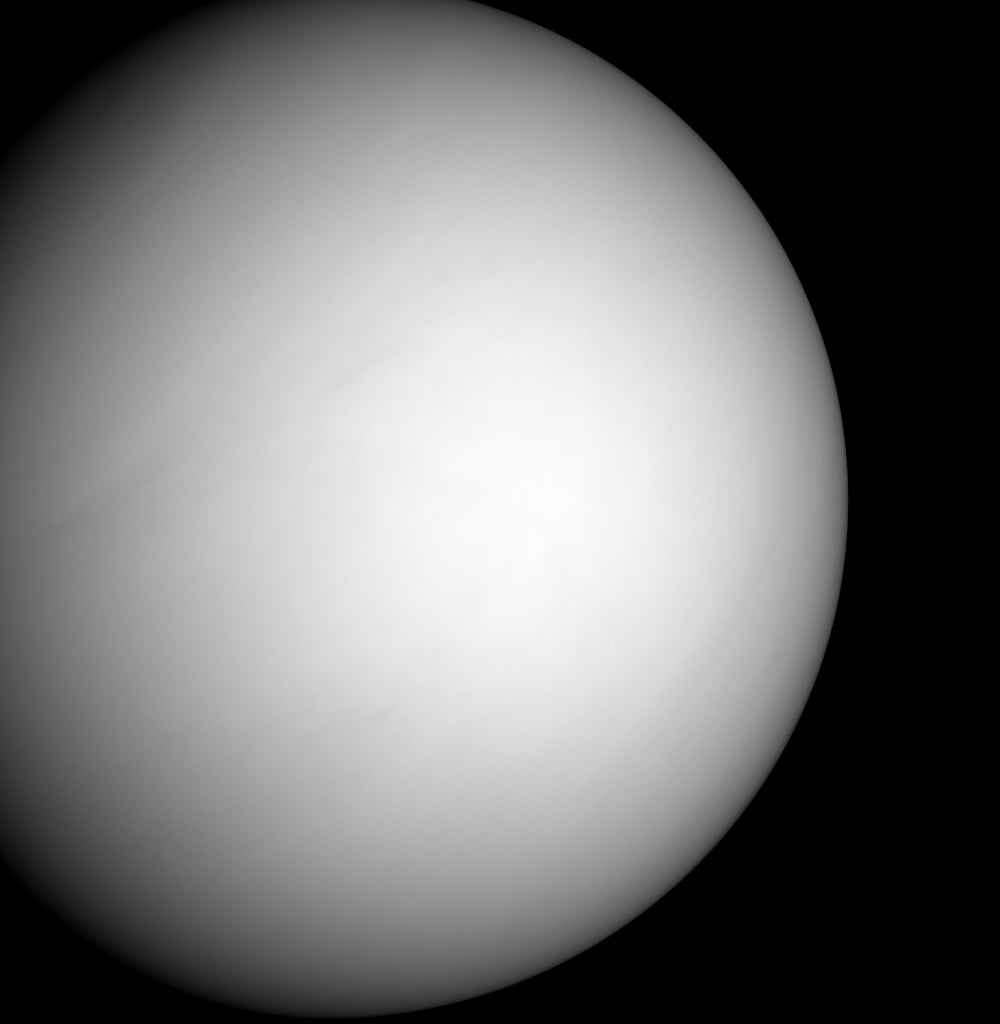
These particles are incredibly small; thousands could be placed side-by-side across the diameter of a human hair. Despite their size, they play a disproportionately large role in atmospheric physics. As these particles drift downward due to gravity, they eventually reach the main sulfuric acid cloud deck. At these altitudes (approximately 50 to 70 kilometers), the temperature is relatively cool, allowing the sulfuric acid to condense around the mineral cores.
The researchers found that as these acid-coated particles continue their descent into the deeper, warmer layers of the atmosphere, the environment changes. At around 47 kilometers above the surface, the temperature rises to a point where the sulfuric acid begins to evaporate. However, the solid mineral cores—the cosmic dust—do not evaporate. Instead, they are left behind as solid "seeds."
As these seeds accumulate in the lower atmosphere, they collide and clump together through a process called coagulation. This clumping builds the specific concentration of particles that forms the lower haze layer. The team’s simulations showed that this mechanism perfectly matches the vertical distribution and particle sizes recorded by the Pioneer Venus and Venera probes decades ago.
Data Analysis and the "Unknown UV Absorber"
One of the most significant findings of the study involves the impact of this cosmic dust on Venus’s energy balance. The research suggests that these mineral particles act as "cloud condensation nuclei," similar to how dust and sea salt help form clouds on Earth. The presence of cosmic dust is estimated to boost Venus’s cloud production by 20 to 30 percent.
This is a monumental revelation for planetary meteorologists. Previously, climate models of Venus did not account for this external "seeding" effect. By increasing the density and coverage of the clouds, cosmic dust plays a direct role in regulating the amount of solar radiation that reaches the surface and how much heat is trapped within the atmosphere.
Furthermore, the study addresses a secondary mystery: the "unknown UV absorber." For decades, astronomers have observed that something in the Venusian atmosphere strongly absorbs ultraviolet light, creating dark streaks in UV images of the planet. While various theories have proposed sulfur allotropes or ferric chloride as the culprit, the Tohoku University team suggests that the metallic content of the cosmic dust, particularly iron, is a primary candidate. Iron-rich minerals are highly efficient at absorbing UV radiation, and their presence within the haze and cloud layers provides a plausible explanation for the planet’s unique spectral signatures.
A Timeline of Discovery: Mapping the Venusian Atmosphere
The identification of cosmic dust as a primary atmospheric driver is the culmination of decades of international effort. To understand the significance of this discovery, one must look at the timeline of Venusian exploration:
- 1967: Venera 4 becomes the first probe to return data from the interior of the Venusian atmosphere, revealing the high concentrations of carbon dioxide.
- 1975: Venera 9 and 10 send the first images from the surface, showing a landscape obscured by a thick, hazy sky.
- 1978: The Pioneer Venus project (NASA) and the Venera 11/12 missions (USSR) provide the first detailed vertical profiles of the haze layers, identifying the "lower haze" as a distinct entity.
- 1980s-2000s: Various flybys and the Magellan orbiter focus on radar mapping of the surface, while the atmospheric mysteries remain largely unsolved.
- 2006-2014: ESA’s Venus Express provides long-term monitoring of the upper atmosphere, noting the variability of the unknown UV absorber.
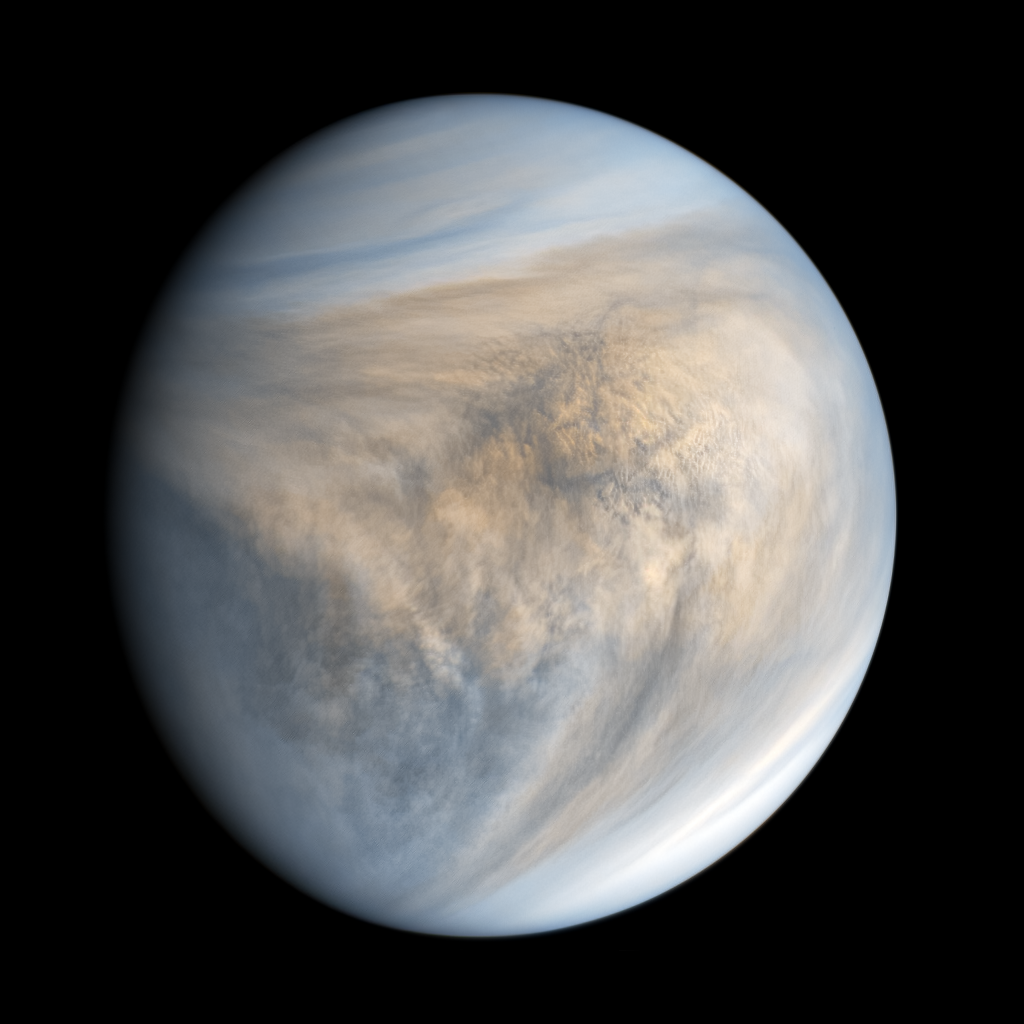
- 2015-Present: JAXA’s Akatsuki orbiter studies Venusian weather patterns, providing the high-resolution data needed for modern simulations.
- 2024: The Tohoku University study links meteoric smoke to the lower haze, providing the first comprehensive physical model for the layer’s existence.
Broader Implications for Comparative Planetology
The findings have implications that extend far beyond our neighboring planet. The discovery that cosmic dust is an "active ingredient" in planetary weather suggests that similar processes are likely occurring throughout the solar system.
In the gas giants, Jupiter and Saturn, where the atmospheres are thousands of kilometers deep, meteoric smoke may play an even larger role in cloud formation and chemical layering. On Mars, where the atmosphere is thin, cosmic dust is already known to contribute to the formation of high-altitude ice clouds. The Venus study provides a template for understanding how external material can fundamentally alter the climate of a terrestrial planet.
Furthermore, this research will influence the study of exoplanets—planets orbiting other stars. As the James Webb Space Telescope (JWST) continues to analyze the atmospheric spectra of distant worlds, scientists must now consider the role of interstellar and interplanetary dust in those models. If a planet’s cloud cover is being artificially "boosted" by cosmic debris, its habitability and temperature profiles may be vastly different than what a simple gas-based model would suggest.
Future Validation: NASA’s DAVINCI Mission
While the Tohoku University simulations are robust and align with historical data, the scientific community awaits direct physical confirmation. This confirmation is expected to come from NASA’s upcoming DAVINCI (Deep Atmosphere Venus Investigation of Noble gases, Chemistry, and Imaging) mission, currently scheduled for launch in the late 2020s.
The DAVINCI mission will feature a descent sphere that will drop through the Venusian atmosphere, taking high-precision measurements of the gases and dust particles it encounters. Unlike previous probes, DAVINCI is equipped with a suite of instruments, including the Venus Mass Spectrometer (VMS) and the Venus Tunable Laser Spectrometer (VTLS), which can identify the chemical composition of aerosols in real-time.
"The Tohoku study gives us a specific target to look for," says one planetary scientist familiar with the DAVINCI mission planning. "If we find high concentrations of iron and silicates within the lower haze particles as we descend, it will confirm that space dust is a major player in the Venusian environment. It changes the way we look at the ‘Earth’s twin’ comparison—it reminds us that a planet’s identity is shaped not just by its own geology, but by its relationship with the space around it."
As humanity prepares to return to Venus with a new generation of spacecraft—including NASA’s VERITAS and ESA’s EnVision—the resolution of the lower haze mystery marks the beginning of a new era in planetary science. It is a reminder that in the vast complexity of the cosmos, sometimes the smallest particles, no larger than a speck of smoke, can hold the key to understanding the largest mysteries of the heavens.