Vera Intan Clara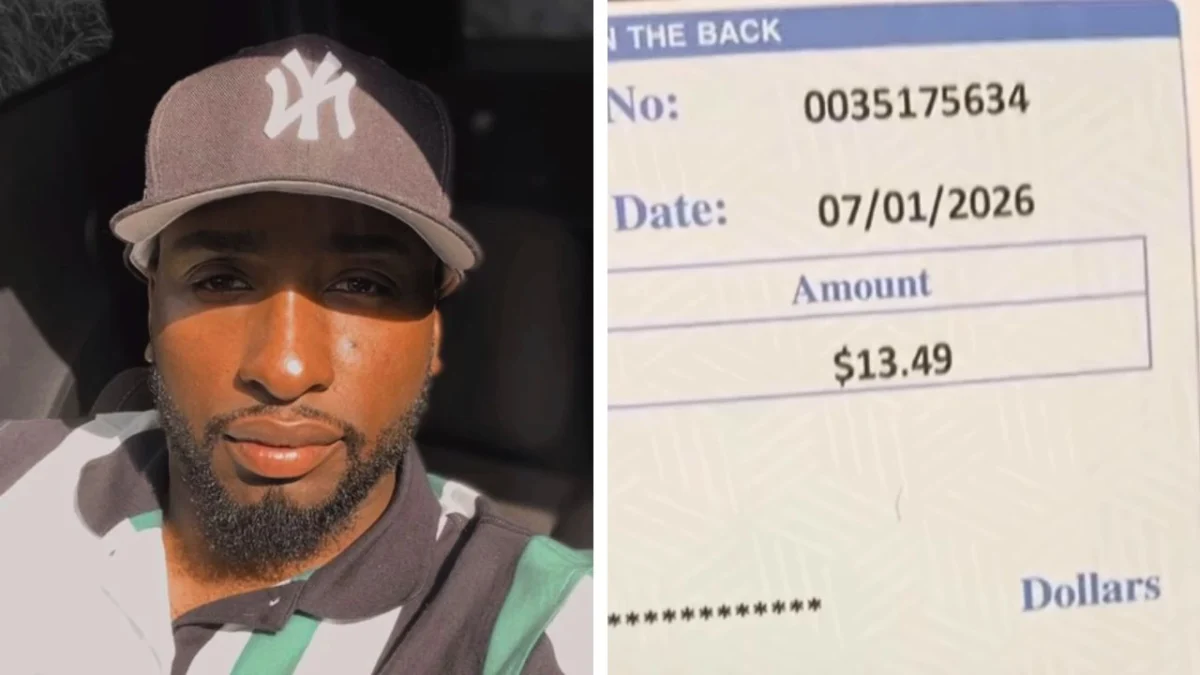
The digital landscape recently became a battleground for public opinion following a viral social media post by an Illinois father, identified on Instagram as @a_train86n, who claimed a court dramatically reduced his monthly child support obligation to $13.49. The assertion, initially shared on Instagram and subsequently reposted on X (formerly Twitter) by the popular account @DailyLoud, swiftly garnered immense attention, sparking a fervent debate on the intricacies of child support laws, co-parenting dynamics, and the perceived fairness of the judicial system. The controversy centers around a visibly displayed check, dated July 1, 2026, from the Illinois State Disbursement Unit, made payable to Shaniquia Nichols for the aforementioned sum, which many social media users interpreted as evidence of a significant judicial intervention.
Chronology of Events Leading to the Viral Claim
The father’s narrative, as detailed in his Instagram post, outlines a series of events preceding the court’s decision. He stated that prior to experiencing financial difficulties, he had voluntarily been providing the child’s mother with $300 per week, totaling approximately $1,200 per month. This voluntary arrangement, he suggested, was a testament to his commitment as an active parent. However, facing unforeseen financial hardship, he communicated to the child’s mother that he would require a temporary period of two to three months to regain his financial stability, during which he could only contribute $150 per week.
According to the father, the child’s mother subsequently opted to pursue a formal child support order through the court system. It was following this legal intervention that the court reportedly adjusted his payment obligation to the now-controversial sum of $13.49 per month. The father also emphasized his significant involvement in the child’s life, claiming he has physical custody three days a week, handles daily school transportation (both drop-off and pick-up), and covers daycare expenses. These details, he argued, were crucial context that should influence the public’s understanding of the court’s decision and his overall contribution to his child’s well-being.
The dissemination of this story on X, particularly through @DailyLoud, propelled it into the mainstream, where it quickly transcended a personal account to become a broader societal discussion point. The dated check, despite its future date (July 1, 2026), served as tangible ‘proof’ for many viewers, lending credibility to the father’s claims and fueling the intense reactions that followed.
The Social Media Echo Chamber: Public Reactions and Interpretations
The viral nature of the post on both Instagram and X led to an explosion of comments, divided largely between those supporting the father and those expressing skepticism or concern for the child. Many commenters interpreted the court’s decision as a form of "karma" for the mother, believing her decision to seek a formal order backfired by significantly reducing the father’s financial contribution. One X user explicitly stated, "[She] tried to be petty and Karma came right back," encapsulating a prevalent sentiment that the mother’s actions, perceived as punitive, resulted in an unintended, adverse outcome for her.
Another social media user highlighted the stark reduction, calculating, "$161.88 A YEAR ik she sick y’all that’s 3k for the full 18 years," underscoring the perceived inadequacy of the payment over the long term. This perspective resonated with many who viewed the amount as insultingly low, questioning its capacity to meaningfully contribute to a child’s upbringing.
Conversely, a segment of commenters urged caution and expressed concern, with one user remarking, "Not something to be proud of." These individuals raised valid questions about the practical implications of such a minimal payment, with one user stating, "$13 could barely feed that child for 2 days." The financial viability of raising a child on such a meager contribution became a central point of contention, leading to cynical remarks like, "That’s a subscription fee," further highlighting the perceived absurdity of the amount.
Beyond the immediate financial debate, the conversation also touched upon the broader philosophy of co-parenting. One poignant comment suggested, "Never underestimate the value of working together for the child’s sake," advocating for cooperative solutions over adversarial legal battles, especially when temporary financial challenges arise. This perspective implicitly criticized the decision to formalize child support, suggesting it disrupted a previously functional, albeit informal, arrangement.
Understanding Child Support in Illinois: Legal Framework and Calculation
To fully comprehend how a child support order could result in such a seemingly low figure, it is essential to examine the legal framework governing child support in Illinois, where the check originated. Illinois, like most states, employs specific guidelines for calculating child support, primarily outlined in the Illinois Marriage and Dissolution of Marriage Act (750 ILCS 5/505). These guidelines aim to ensure that children receive financial support from both parents commensurate with their needs and the parents’ ability to pay.
Prior to July 1, 2017, Illinois utilized a "percentage of obligor’s net income" model, where the non-custodial parent paid a fixed percentage of their net income based on the number of children. However, Illinois transitioned to an "income shares" model, which is designed to ensure that the child receives the same proportion of parental income as if the parents were still living together. This model considers the combined net income of both parents and then allocates the support obligation proportionally based on each parent’s share of that combined income.
Key factors influencing child support calculations under the income shares model include:
- Net Income of Both Parents: This is a crucial determinant. Net income is calculated by taking gross income and subtracting various deductions such as taxes, mandatory retirement contributions, and health insurance premiums for the child.
- Number of Children: The more children, the higher the overall support obligation.
- Parenting Time/Overnights: This is a significant factor. If a parent has the child for 146 overnights or more (approximately 40% of the time), they are considered to have "extended parenting time." In such cases, the court may reduce their child support obligation to reflect their direct contributions to the child’s expenses during their time with the child. The father’s claim of having custody three days a week and covering daily school transport and daycare expenses would fall under this category, potentially significantly impacting the calculation.
- Childcare Expenses: Costs for daycare, after-school care, and other necessary childcare are typically factored into the overall support obligation and allocated between parents.
- Health Insurance Premiums: The cost of health insurance for the child is also considered.
- Other Financial Obligations: Courts may consider other pre-existing support obligations or extraordinary expenses.
Potential Scenarios for a Minimal Child Support Order
While $13.49 per month is exceptionally low, several hypothetical scenarios, within the Illinois legal framework, could potentially lead to such an outcome, especially if the father’s claims are accurate:
- Low Income/Unemployment: If the father’s current income is extremely low, at or near the poverty line, or if he is temporarily unemployed with limited assets, the court’s calculation would reflect this. Illinois law does include a minimum support order, but in cases of severe financial hardship or incarceration, it can be very low.
- Significant Parenting Time: The father’s claim of having the child three days a week (which could equate to roughly 156 overnights per year) and covering daily school runs and daycare expenses is a critical factor. If he is spending a substantial amount of time and directly incurring significant costs for the child during that time, his financial obligation to the other parent could be substantially reduced under the income shares model, as he is already contributing directly.
- Income Disparity: If the mother’s income is significantly higher than the father’s, and the father has substantial parenting time, his proportional share of the combined support obligation, after accounting for his direct contributions, could be minimal.
- Extraordinary Expenses: While not explicitly mentioned by the father beyond daycare, if he were responsible for other significant, agreed-upon, or court-ordered expenses (e.g., specific medical treatments not covered by insurance, specialized education), these could further offset his cash payment to the mother.
- Deviation from Guidelines: While courts typically follow the guidelines, they have the discretion to deviate if they find that applying the guidelines would be unjust or inappropriate. Such deviations require specific findings by the court explaining the reasons.
It is crucial to note that the Daily Dot could not independently verify the father’s claims, and no court documents were publicly available to confirm the details. Without access to the specific financial affidavits, parenting schedules, and judicial orders, any analysis remains speculative, relying solely on the father’s account.
Broader Implications: Co-Parenting, Child Welfare, and Public Perception
This viral incident highlights several broader implications for family law, co-parenting relationships, and public trust in the judicial system.
Impact on Co-Parenting Relationships: The transition from a voluntary financial arrangement to a formal court order, especially with such a dramatic change in payment, often signals a breakdown in parental cooperation. While formal orders provide stability and enforceability, they can also exacerbate animosity if one party feels unfairly treated or if the process itself becomes adversarial. The "karma" narrative circulating online underscores the perception of a punitive outcome following a perceived act of uncooperativeness.
Child Welfare Concerns: Regardless of the legal technicalities, a child support payment of $13.49 per month raises legitimate concerns about the child’s financial well-being. Raising a child in the 21st century involves significant costs for food, clothing, housing, education, healthcare, and extracurricular activities. Even if one parent covers the majority of expenses, such a minimal contribution from the other parent might not be perceived as equitable or sufficient to meet the child’s needs fully, potentially placing an undue burden on the primary custodial parent. This issue often becomes a flashpoint in public discourse, as the child’s best interests are paramount.
Public Perception of Justice: The widespread public reaction, ranging from outrage to cynical amusement, reflects a broader skepticism about the fairness and efficacy of the family court system. When a figure as low as $13.49 is widely publicized, it can erode public confidence, leading many to question whether the system adequately protects children or holds parents accountable. This case underscores the challenge courts face in balancing the financial realities of parents with the needs of children, often operating within complex legal frameworks that are not easily understood by the general public.
The Role of Social Media: This incident is a prime example of how social media amplifies personal stories into public spectacles. While it allows individuals to share their experiences and seek validation, it also risks misrepresentation, selective information, and the spread of unverified claims. The immediate, often emotional, reactions on platforms like X can shape public opinion before all facts are known, creating a narrative that may not fully align with the legal realities of a case.
Conclusion: A Complex Narrative Beyond the Dollar Amount
The case of the father whose child support was reportedly reduced to $13.49 per month is far more complex than the headline figure suggests. It encapsulates the challenging realities of co-parenting, the intricate calculations of family law, and the often-misunderstood dynamics of judicial decisions. While the specific details remain unverified by independent sources, the father’s account, combined with the visible check, has ignited a vital public conversation about parental responsibility, financial hardship, the role of formal legal intervention, and the ultimate welfare of children caught in the balance. The ongoing debate underscores the need for transparent legal processes, clear communication between co-parents, and a public understanding that court orders are often the result of multifaceted calculations rather than simple, arbitrary decisions.