Lina Irawan
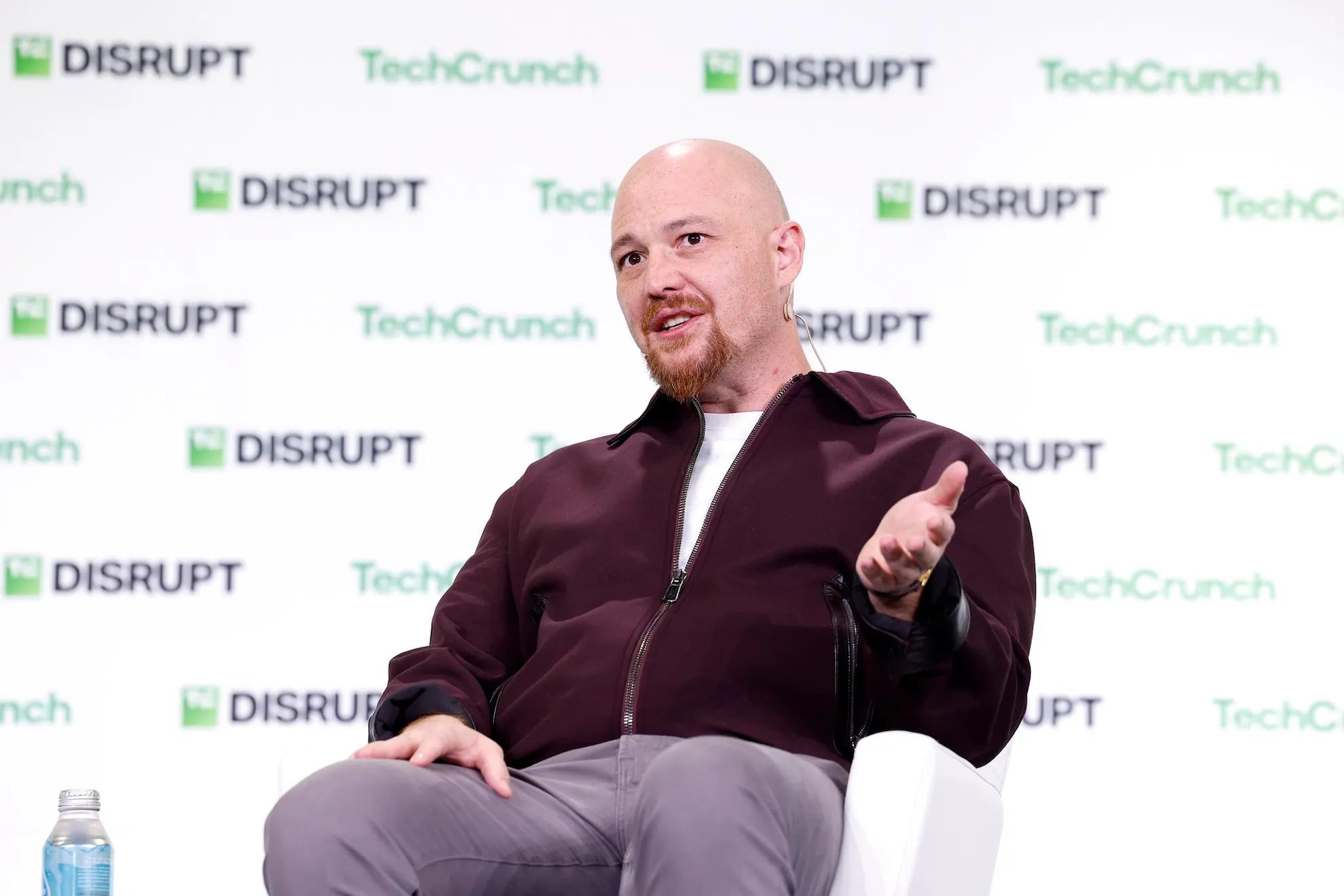
The landscape of corporate technology underwent a significant transformation at the Microsoft Build 2026 conference, where the focus shifted from generative chat interfaces to the deployment of sophisticated, autonomous AI agents. During a featured session at the event, Jay Parikh, Microsoft’s Vice President of AI Core, detailed the company’s comprehensive strategy for enabling enterprises to build, deploy, and manage AI agents at scale. The discussion, hosted by Ryan, provided a deep dive into the technical and economic requirements for the next generation of artificial intelligence, emphasizing that the era of experimental "sandboxes" has concluded in favor of systems capable of delivering demonstrable return on investment (ROI).
The Evolution of the AI Ecosystem: From Assistance to Autonomy
The 2026 Microsoft Build event serves as a historical marker in the timeline of artificial intelligence development. While the years 2023 through 2025 were characterized by the rapid adoption of Large Language Models (LLMs) for text generation and basic summarization, 2026 has emerged as the year of the "Agentic Workflow." Jay Parikh noted that the industry is moving past simple "copilots"—which require constant human prompting—toward autonomous agents that can plan, reason, and execute complex multi-step tasks across disparate software environments.
Parikh’s insights come at a time when enterprise spending on AI has reached record highs. According to industry data released in early 2026, global investment in AI infrastructure and software is projected to exceed $500 billion annually by the end of the decade. However, this capital influx has brought increased scrutiny from Chief Financial Officers (CFOs) and boards of directors who demand clear evidence of productivity gains. Microsoft’s response, as articulated by Parikh, is a shift in focus toward the "plumbing" of AI—the underlying systems that ensure these models do not just generate content, but perform work that directly impacts the bottom line.
Building the End-to-End Agent Development System
A central theme of the Build 2026 announcements was the transition from fragmented AI tools to a unified development system. Parikh explained that Microsoft has moved beyond providing a mere "harness"—a basic interface for connecting models to data—to offering an end-to-end environment for agent lifecycle management. This system is designed to handle the entire journey of an AI agent, from its initial prompt engineering to its deployment in a production environment where it interacts with real-world APIs and databases.
This new system addresses a critical pain point for developers: the "brittleness" of early AI applications. In previous iterations, a minor update to an underlying model or a slight change in an external database schema could cause an AI tool to fail. The infrastructure unveiled at Build 2026 incorporates robust orchestration layers that allow agents to self-correct and adapt to changing environments. By treating AI agents as modular components within a broader enterprise architecture, Microsoft aims to provide the stability required for mission-critical operations.
Azure AI Foundry: The New Standard for Model Orchestration
One of the most significant technical reveals at the event was the Azure AI Foundry platform. Positioned as the successor to earlier AI studio environments, Foundry serves as a centralized hub for model selection, fine-tuning, and safety monitoring. Parikh highlighted that Foundry is not model-agnostic in a passive sense; rather, it is designed to help developers choose the "right-sized" model for specific tasks, balancing latency, cost, and intelligence.
The introduction of Foundry reflects a growing trend in the industry toward "SLMs" (Small Language Models) for specialized tasks, used in conjunction with "frontier models" for complex reasoning. By providing a platform that can orchestrate these different tiers of intelligence, Microsoft is enabling enterprises to optimize their compute costs—a vital factor in achieving the ROI that Parikh emphasized throughout his session.
Reliability and the Challenge of Autonomous Evaluation
As AI models become more intelligent and autonomous, the methods used to evaluate them must also evolve. Parikh addressed the inherent difficulty in testing systems that do not produce deterministic outputs. Traditional software testing relies on "if-then" logic, but an AI agent might solve a problem in ten different ways, all of which could be technically correct but vary in efficiency or tone.
To solve this, Microsoft has integrated advanced evaluation frameworks into its development system. These frameworks use "AI-assisted evaluation," where a secondary, highly capable model monitors the primary agent’s performance against a set of "ground truth" benchmarks. This process allows for the continuous assessment of reliability and correctness. Parikh noted that for an enterprise to trust an agent with a customer-facing role or a financial transaction, the system must demonstrate a success rate that matches or exceeds human performance. The goal is to move from "probabilistic" outcomes to "predictable" enterprise results.
Integrating AI into the Developer Workflow: The New GitHub App
The integration of AI into the developer’s daily toolkit was further solidified with the announcement of a new GitHub app. This tool is designed to bridge the gap between code generation and system deployment. Unlike previous iterations of GitHub Copilot, which focused primarily on writing snippets of code, the new app acts as a project-level agent. It can understand the context of an entire repository, suggest architectural changes, and automatically generate unit tests for new features.
This advancement is part of a broader strategy to increase "developer velocity." By automating the more repetitive aspects of the software development lifecycle, Microsoft intends to free up human engineers to focus on high-level design and innovation. Industry analysts suggest that such tools could lead to a 30% to 40% increase in software production efficiency within the next two years, provided the agents are managed correctly within a secure framework.
Chronology of Microsoft’s AI Strategic Pivot (2023–2026)
To understand the significance of the Build 2026 announcements, it is necessary to look at the timeline of Microsoft’s AI evolution:
- 2023: The "Year of Discovery." Microsoft integrates GPT-4 into Bing and launches the first version of Microsoft 365 Copilot. The focus is on search and personal productivity.
- 2024: The "Year of Integration." AI is embedded across the entire Windows ecosystem and Azure cloud services. The focus shifts to making AI ubiquitous.
- 2025: The "Year of Optimization." Enterprises begin to move from pilot programs to full-scale deployments. The industry begins to grapple with the costs of high-scale AI inference.
- 2026: The "Year of the Agent." Microsoft Build 2026 marks the official transition to autonomous systems. The launch of Azure AI Foundry and advanced agentic frameworks signals a focus on reliability, ROI, and autonomous execution.
Market Implications and the Competitive Landscape
The announcements made by Parikh and the Microsoft team have significant implications for the broader technology market. Microsoft’s primary competitors—including Google, Amazon Web Services (AWS), and Meta—are also racing to dominate the "agentic" space. However, Microsoft’s deep integration with enterprise software (Office 365, Dynamics, and LinkedIn) provides a unique data advantage.
Market analysts from firms such as Gartner and Forrester have noted that the "moat" in the AI industry is shifting from the models themselves to the data pipelines and orchestration layers. As Parikh suggested, the model is only one part of the equation; the system that surrounds it is what determines success. By focusing on the "end-to-end" system, Microsoft is attempting to lock in enterprise customers who require more than just an API key to run their businesses.
Security, Ethics, and the Human Element
The move toward autonomous agents brings inevitable questions regarding security and ethics. Parikh addressed these concerns by emphasizing the "Human-in-the-loop" (HITL) architecture that remains central to Microsoft’s design philosophy. Even as agents become more autonomous, the system is built with "guardrails" that require human intervention for high-stakes decisions.
Furthermore, the Azure AI Foundry includes enhanced features for "Red Teaming"—the practice of rigorously testing a system for vulnerabilities and biases. In a world where AI agents can interact with each other and with external web services, the potential for "prompt injection" or "data poisoning" increases. Microsoft’s commitment to a secure-by-design approach is intended to mitigate these risks, providing a "safe harbor" for enterprises that are otherwise hesitant to adopt autonomous technologies.
Conclusion: The Road Ahead for the Autonomous Enterprise
The conversation between Ryan and Jay Parikh at Microsoft Build 2026 underscores a fundamental truth about the current state of technology: AI is no longer a novelty; it is an industrial necessity. The tools and platforms announced—from the GitHub app to Azure AI Foundry—are designed to transform the enterprise into an autonomous entity where AI agents handle the routine, the complex, and the data-intensive, allowing human talent to flourish in creative and strategic roles.
As the conference concluded, the message to the global developer community was clear: the infrastructure for the next industrial revolution is now in place. The focus for the remainder of 2026 and into 2027 will be on the execution—taking these sophisticated agents and proving their value in the real-world marketplace. With a focus on reliability, scalability, and demonstrable ROI, Microsoft has positioned itself as the foundational architect of this new autonomous era.