George Chandra Eka
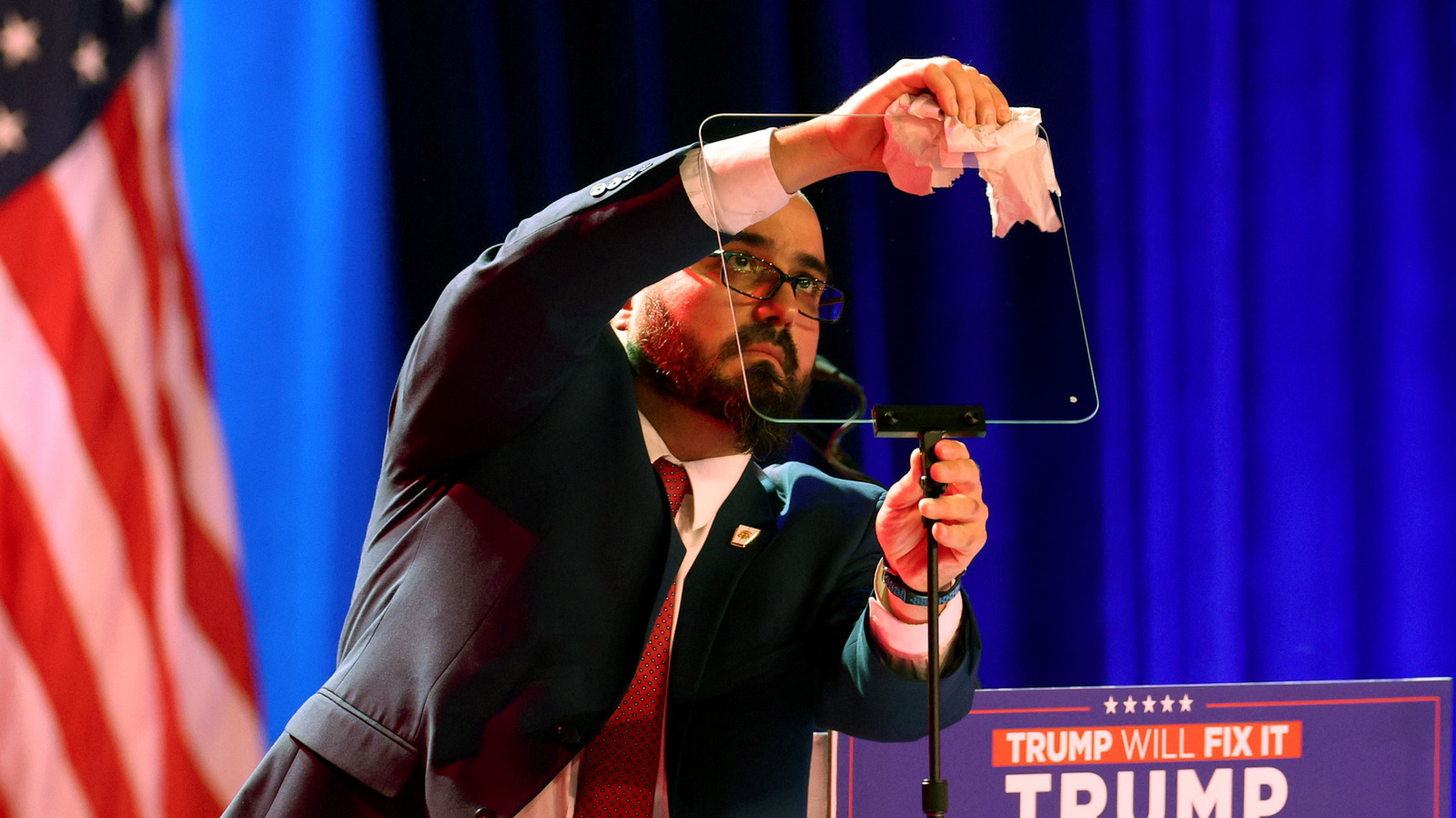
Gabriel Perez, a teleprompter operator for President Donald Trump, has been placed on administrative leave following revelations that he allegedly profited over $100,000 by betting on the length of presidential speeches on the prediction market platform Kalshi. This unprecedented incident has triggered an investigation by the Commodity Futures Trading Commission (CFTC) and raised significant questions about insider trading in nascent financial markets, ethical conduct within government, and the regulatory framework governing these platforms. The allegations suggest that Perez leveraged his privileged access to information regarding presidential remarks, positioning him with an unfair advantage over other market participants.
The Allegations Unveiled: Leveraging Inside Information
The core of the controversy centers on Gabriel Perez’s role as a White House teleprompter operator, a position that granted him intimate knowledge of President Trump’s prepared remarks. According to reports from ABC News, Perez allegedly engaged in extensive betting on Kalshi, a regulated prediction market, specifically on the duration of numerous presidential speeches. His reported winnings exceed $100,000. Key events cited include the State of the Union address, a speech at the World Economic Forum in January, and remarks delivered at a Medal of Honor ceremony in March. As the individual who typically has "the final eyes on nearly all of the president’s prepared remarks," Perez would have possessed precise information regarding the expected length and content of these addresses. This direct access to unreleased information, inaccessible to the general public, forms the basis of the insider trading allegations. Further compounding the suspicion, Perez reportedly backed out of certain bets when President Trump deviated from his prepared script, a clear indicator that his betting strategy was directly informed by his knowledge of the teleprompter content.
Understanding Kalshi and the Prediction Market Landscape
Kalshi is a U.S.-regulated prediction market that allows users to bet on the outcome of future events, ranging from economic indicators to political happenings and, in this case, the length of speeches. Unlike traditional sports betting or casino gambling, prediction markets are designed to aggregate public opinion and sometimes serve as a gauge for future probabilities. The platform operates under the oversight of the Commodity Futures Trading Commission (CFTC), which has jurisdiction over certain derivatives markets. Kalshi differentiates itself by framing its offerings as "event contracts" rather than mere wagers, asserting that they provide valuable economic insights. The company was founded with the aim of creating new financial markets for trading on virtually anything. However, the unique nature of these markets, particularly when they intersect with political events or outcomes influenced by privileged information, presents complex regulatory challenges. The total volume in prediction markets, while growing, is still a fraction of traditional financial markets, but their potential for rapid expansion and influence on public discourse makes their regulation a subject of increasing scrutiny.
A Chronology of Events and Regulatory Responses
The timeline surrounding the Perez scandal highlights both the alleged misuse of information and the evolving regulatory response from both Kalshi and governmental bodies.
- Early 2026: Gabriel Perez allegedly begins actively betting on presidential speech lengths on Kalshi, reportedly achieving significant returns by leveraging his insider knowledge. Specific events include the State of the Union, the World Economic Forum, and a Medal of Honor ceremony.
- March 2026 (Implied): Perez’s activities reach a level that triggers internal monitoring by Kalshi, particularly his patterns of betting and withdrawing from contracts.
- Late March/Early April 2026: Kalshi, in accordance with its internal protocols and regulatory obligations, flags Perez’s trading activities and promptly refers the suspicious trades to the Commodity Futures Trading Commission (CFTC) for investigation. This proactive referral underscores the platform’s commitment to upholding market integrity, even as it navigates complex ethical territories.
- April 2026: In a move preceding the public revelation of Perez’s case but indicative of growing concerns, Kalshi introduces new policies designed to prevent insider trading. These guardrails specifically aim to prohibit politicians and athletes from betting on their own elections or games, acknowledging the inherent conflict of interest.
- Later in April 2026: Kalshi takes concrete action, suspending three political candidates from its platform for violating these newly implemented insider trading policies, demonstrating its resolve to enforce its rules.
- June 2026: Further strengthening its preventative measures, Kalshi implements additional restrictions, requiring users to disclose their employment information before placing certain types of bets. This measure is intended to enhance transparency and help identify potential conflicts of interest or insider trading risks.
- July 2026: News breaks regarding Gabriel Perez’s alleged activities, leading to his placement on administrative leave. The White House publicly addresses the issue, condemning his actions.
- Ongoing: The CFTC continues its investigation into Perez’s trading activities, with reports indicating a willingness to settle if Perez agrees to return his winnings. Perez has reportedly already confessed to some of the trades during interviews with investigators.
This chronology illustrates a dynamic environment where a new financial market is grappling with the ethical implications of its offerings, while regulatory bodies attempt to establish clear boundaries in uncharted waters.
The Regulatory Landscape and Challenges
The Commodity Futures Trading Commission (CFTC) is the primary federal agency tasked with overseeing the derivatives markets in the United States, which include futures, options, and swaps. Kalshi’s event contracts fall under the CFTC’s jurisdiction, making it the central authority for investigating and potentially prosecuting cases of market manipulation or insider trading on the platform. However, the application of traditional insider trading laws, primarily designed for securities markets, to prediction markets presents unique challenges. The definition of "material non-public information" and how it applies to an event like a presidential speech’s duration can be ambiguous.
The CFTC’s stance on this matter is crucial. Its willingness to settle with Perez if he returns his winnings suggests a desire to resolve the issue swiftly while sending a clear message about unacceptable conduct. This approach avoids a potentially lengthy and complex legal battle over the precise definition of insider trading in this novel context, yet it still aims to deter similar actions in the future.
Adding another layer of complexity to the regulatory environment, a significant legal battle unfolded in the courts regarding state-level attempts to regulate prediction markets. After New Jersey moved to ban Kalshi from operating within its borders, a US Circuit Court of Appeals ruled that the state had no right to ban the platform. This ruling effectively affirmed the CFTC’s sole authority over these markets, preempting state-level interventions and consolidating power firmly in federal hands. This legal precedent underscores the need for a comprehensive and consistent federal regulatory approach to prediction markets, ensuring a uniform standard across the nation rather than a patchwork of state-specific rules. The ruling also highlighted the growing tension between state consumer protection concerns and the federal government’s broader mandate to regulate financial markets.
White House Response and Ethical Scrutiny
The White House swiftly condemned Gabriel Perez’s alleged actions, emphasizing the seriousness with which such ethical breaches are viewed within the highest levels of government. During a press conference, White House Press Secretary Karoline Leavitt addressed the matter directly, stating that President Trump was aware of Perez’s conduct. Leavitt described Perez’s actions as "deeply unfortunate" and a "disgrace," words that convey the administration’s strong disapproval. She further confirmed that Perez had been placed on unpaid administrative leave and would "no longer be here," indicating a permanent separation from his White House role.
This incident casts a shadow on the ethical standards expected of all government employees, regardless of their specific role. White House staff, in particular, are held to a high standard of conduct due to their proximity to sensitive information and the public trust placed in their positions. The alleged use of privileged information for personal financial gain constitutes a severe breach of that trust and a violation of fundamental ethical principles. This scandal serves as a stark reminder of the constant vigilance required to prevent conflicts of interest and maintain integrity within government operations. Ethics training for federal employees often covers prohibitions against using official position for private gain, and Perez’s case will likely be cited in future discussions on the topic.
Broader Implications for Governance and Market Integrity
The Gabriel Perez scandal has far-reaching implications that extend beyond the immediate disciplinary action and regulatory investigation. It forces a critical examination of several key areas:
1. Defining Insider Trading in New Markets: The case highlights the evolving nature of financial markets and the challenges regulators face in applying existing laws to novel platforms like prediction markets. While the spirit of insider trading laws aims to prevent unfair advantages derived from non-public information, the specific definitions and enforcement mechanisms often lag behind technological innovation. This incident could serve as a catalyst for the CFTC to issue clearer guidelines or even advocate for legislative changes to explicitly address insider trading in prediction markets. The debate could center on whether knowledge of a speech’s length, derived from a professional role, qualifies as "material non-public information" in the same vein as corporate earnings reports.
2. Ethics in Public Service: The incident underscores the perpetual challenge of maintaining ethical conduct among public servants. Any perception that government employees can leverage their positions for personal financial benefit erodes public trust in institutions. This scandal could prompt a review of ethics policies for White House staff and other government employees, potentially leading to stricter rules regarding participation in prediction markets or other forms of speculative trading. The emphasis will be on preventing even the appearance of impropriety.
3. The Future of Prediction Markets: The Perez case, combined with Kalshi’s proactive policy changes and the New Jersey court ruling, illustrates the growing pains of prediction markets. While these platforms offer unique insights and investment opportunities, they must demonstrate robust mechanisms to prevent abuse. If prediction markets are to gain broader acceptance and attract more participants, they must cultivate an environment of fairness and transparency. This incident may push Kalshi and similar platforms to invest more heavily in surveillance, compliance, and user education regarding ethical trading practices.
4. Regulatory Harmonization and Oversight: The CFTC’s assertion of sole jurisdiction over prediction markets, reinforced by the New Jersey ruling, signals a need for robust federal oversight. As these markets grow, effective regulation will be crucial to ensure their integrity, protect participants, and prevent systemic risks. This might involve increased funding for the CFTC, enhanced data-sharing agreements with platforms, and international cooperation as prediction markets inevitably expand globally. The case also opens a discussion about potential collaboration between the CFTC and other bodies, like the Securities and Exchange Commission (SEC), especially if certain event contracts begin to resemble traditional securities.
5. Public Trust and Government Transparency: At its core, the scandal is a matter of public trust. When individuals entrusted with public service are found to be using their position for personal gain, it undermines the very foundation of democratic governance. This incident serves as a potent reminder of the importance of transparency in government operations and the need for accountability when ethical lines are crossed. The public’s confidence in the fairness of governmental processes and the integrity of its officials is paramount, and incidents like this necessitate strong, visible corrective actions to restore and maintain that trust.
The alleged actions of Gabriel Perez represent a significant test case for the burgeoning prediction market industry and the established ethical standards of government service. As the CFTC’s investigation continues and the broader implications are debated, this incident is likely to shape future regulations and ethical guidelines for both financial innovation and public conduct for years to come.