admin
admin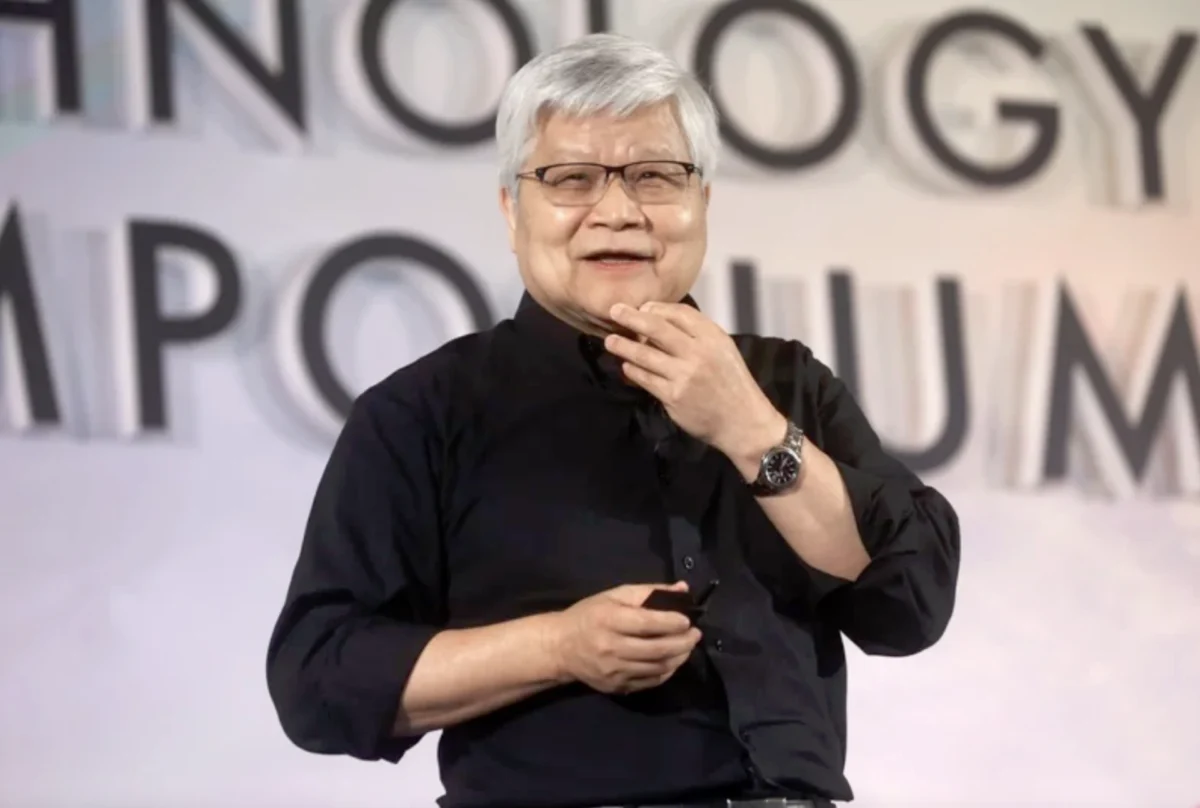
The Taiwan Semiconductor Manufacturing Company (TSMC) held its second-quarter earnings conference call in Taiwan today, providing a rare and candid glimpse into the strategic philosophy of the world’s largest contract chipmaker. During the session, TSMC Chief Executive Officer Dr. C.C. Wei addressed a wide range of topics, from the technical complexities of scaling advanced semiconductor nodes to the intensifying competition with South Korean giant Samsung Electronics and American rival Intel. One of the most striking moments of the call occurred when Wei responded to inquiries regarding the ease with which competitors might expand their market share. Wei asserted that selecting a semiconductor manufacturing partner is a profound strategic commitment, famously remarking that choosing a foundry is not at all like "buying milk from a convenience store."
This analogy served to underscore the deep, multi-year integration required between a chip designer and a foundry. Wei’s comments were prompted by a question from Morgan Stanley analyst Charlie Chan, who sought clarity on how TSMC views the expansion of production capacity by competitors and the supply of critical lithography equipment from Dutch firm ASML. The dialogue highlighted the unique "trust-based" business model that TSMC has cultivated over decades, a model that the company believes provides a significant moat against rivals, regardless of their financial resources or government backing.
The Long-Term Nature of Foundry Partnerships
In the high-stakes world of semiconductor fabrication, the transition from a design concept to a high-volume manufactured product is a grueling process that spans several years. Dr. Wei’s "milk" analogy was intended to debunk the notion that chip designers—such as NVIDIA, Apple, and AMD—can simply pivot to a different manufacturer if capacity becomes available elsewhere. According to Wei, the process of choosing a technology node and ramping it up for mass production is a collaborative journey that typically takes approximately five years.
The CEO noted that customers do not merely buy a service; they choose a technology partner. This partnership involves extensive research and development, the creation and testing of "test chips" to verify yields and performance, and the co-development of manufacturing processes tailored to the specific architecture of the client’s silicon. Wei emphasized that there are "no shortcuts" in this industry. Once a customer commits to a specific node, such as TSMC’s 3nm (N3) or the upcoming 2nm (N2) process, they are effectively locked into a roadmap that requires constant communication and technical alignment. This long-term interdependence makes the foundry business inherently different from commodity markets where buyers can switch suppliers based on daily price or availability fluctuations.
ASML and the Scaling of Advanced Lithography
The discussion regarding competition was framed by recent financial disclosures from ASML, the sole provider of Extreme Ultraviolet (EUV) lithography machines essential for making the world’s most advanced chips. ASML’s Chief Financial Officer, Roger Dassen, recently indicated that the company plans to increase its production capacity for "low numerical aperture" (low-NA) EUV machines by 30%. Dassen noted that the company is "close to being fully covered with orders" for this equipment, signaling a massive surge in demand driven by the global race for Artificial Intelligence (AI) dominance.
Low-NA EUV machines are the workhorses of current 5nm and 3nm production lines. The fact that ASML is ramping up production suggests that TSMC’s competitors are aggressively purchasing the tools necessary to challenge TSMC’s market share. However, Wei’s response suggested that having the machinery is only one part of the equation. While Intel and Samsung may be acquiring the same ASML tools, the ability to achieve high yields, maintain consistent quality, and provide the design ecosystem necessary for customers to utilize those tools is where TSMC believes it holds the advantage.

The industry is also closely watching the rollout of "High-NA" EUV machines. While Intel has been the first to receive and begin calibrating these next-generation tools at its Fab D1X in Oregon, TSMC has remained more conservative. TSMC leadership has previously indicated that they will adopt High-NA EUV only when it becomes economically viable and technically necessary for their specific process roadmap, likely around the "A16" node era. This pragmatic approach to capital expenditure (CapEx) contrasts with Intel’s aggressive "IDM 2.0" strategy, which seeks to leapfrog TSMC in transistor density through early adoption of new lithography techniques.
Competition with Samsung and the "Jealousy" of Profits
One of the more lighthearted yet telling moments of the call involved Wei’s comments on Samsung Foundry. When asked about Samsung’s position in the market, Wei admitted to being "jealous" of the Korean firm’s ability to generate "huge amounts of money." This comment was interpreted by industry analysts as a nod to Samsung’s diversified business model. Unlike TSMC, which is a "pure-play" foundry (meaning it does not design its own chips to compete with its customers), Samsung is an integrated device manufacturer (IDM). Samsung earns massive revenues from its memory business (DRAM and NAND flash) and its consumer electronics divisions, including smartphones and displays.
However, this dual nature of Samsung is also its greatest challenge in the foundry sector. Many of TSMC’s largest customers are direct competitors of Samsung in the smartphone or chip design markets. This creates a perceived conflict of interest that TSMC has successfully exploited by branding itself as "everyone’s foundry." Wei reiterated that while Samsung may have vast financial resources, the "customer trust" that TSMC has built by never competing with its clients is a strategic asset that cannot be easily replicated.
Financially, the two companies are on different trajectories in the foundry space. While Samsung has struggled with yields on its 3nm Gate-All-Around (GAA) process, TSMC has seen overwhelming demand for its 3nm FinFET-based nodes. Market data suggests that TSMC continues to hold over 60% of the global foundry market share, with Samsung trailing in the mid-teens. The "huge amounts of money" Wei referred to likely pertains to Samsung’s overall conglomerate wealth rather than its specific foundry margins, which have been under pressure due to high R&D costs and lower utilization rates compared to TSMC.
The Geopolitical Landscape and Government Subsidies
The conversation also touched upon the role of government intervention in the semiconductor industry. Intel has been a primary beneficiary of the U.S. CHIPS and Science Act, receiving billions in grants and loans to revitalize domestic manufacturing. When asked how TSMC plans to compete with an Intel that is heavily subsidized by the U.S. government, Wei pointed out that TSMC is also a recipient of government support.
"We also got the government support, by the way, although we don’t announce it [as loudly]," Wei remarked. TSMC is currently expanding its global footprint with major fab projects in Arizona (USA), Kumamoto (Japan), and Dresden (Germany). Each of these projects involves significant local government subsidies. In Japan, for instance, the government has provided billions of dollars in support for TSMC’s JASM (Japan Advanced Semiconductor Manufacturing) venture, which has moved at a significantly faster pace than the U.S. expansion.
The geopolitical dimension of the semiconductor industry has forced TSMC to shift from its traditionally centralized manufacturing model in Taiwan to a more "geographically diverse" strategy. While this increases operational costs, the company is passing some of these "flexibility" costs onto customers, who are willing to pay a premium for supply chain resilience.

Chronology of Recent Semiconductor Milestones
The current competitive environment is the result of a series of strategic moves over the past 24 months:
- April 2024: Intel announces the completion of the installation of the world’s first commercial High-NA EUV lithography tool from ASML.
- June 2024: TSMC provides updates on its N2 (2nm) process, confirming that it is on track for volume production in 2025, utilizing Nanosheet transistor architecture.
- July 2024: ASML reports strong Q2 earnings, driven by AI-related demand, and announces a 30% capacity increase for low-NA EUV machines.
- July 2024: TSMC Q2 earnings call reveals a bullish outlook on AI, with the company raising its full-year revenue growth guidance.
Implications for the AI Era
The broader implication of Wei’s remarks is that the "AI gold rush" is solidifying TSMC’s dominance rather than eroding it. As AI accelerators from companies like NVIDIA and Blackwell architectures require increasingly complex packaging (such as CoWoS – Chip on Wafer on Substrate) and the most advanced logic nodes, the barrier to entry for competitors grows higher.
The complexity that Wei described—the five-year lead time and the deep technological partnership—means that the winners of the 2nm and 1.4nm (A14) eras are likely being decided today. If a customer is not already working with a foundry on their 2nm test chips, they are unlikely to have a product ready for market when that node matures.
Furthermore, the "milk" analogy suggests that TSMC views the current market not as a battle for raw capacity, but as a battle for "yield-adjusted" capacity. A competitor can buy 100 EUV machines, but if they cannot achieve the 80% or 90% yields that TSMC offers, the effective cost per chip remains too high for major designers to switch.
Conclusion: The Foundation of Technological Trust
As the earnings call concluded, the sentiment from TSMC leadership was one of cautious confidence. While acknowledging the financial might of Samsung and the political support behind Intel, TSMC remains focused on its core execution. The company’s ability to maintain high margins while investing heavily in the next generation of silicon is a testament to its operational efficiency.
Dr. C.C. Wei’s comments serve as a reminder to investors and analysts that the semiconductor industry is built on long-term engineering relationships rather than short-term transactions. In the race to power the next generation of artificial intelligence, the "convenience store" model of manufacturing simply does not exist. For the world’s leading technology companies, TSMC remains the partner of choice, not because they have the most machines, but because they have the most proven path to successful mass production.