Clarissa Hana
Abbott Laboratories is currently navigating the fallout from two distinct cybersecurity incidents that have raised alarms about the security of its internal systems and customer-facing platforms. The global healthcare giant confirmed that unauthorized access was gained to internal legacy Exact Sciences systems within its Cancer Diagnostics business. Simultaneously, the company is investigating a separate claim that attackers breached its LabCentral portal, potentially compromising company data. These incidents underscore the persistent and evolving threat landscape faced by major corporations, particularly those handling sensitive health and customer information.
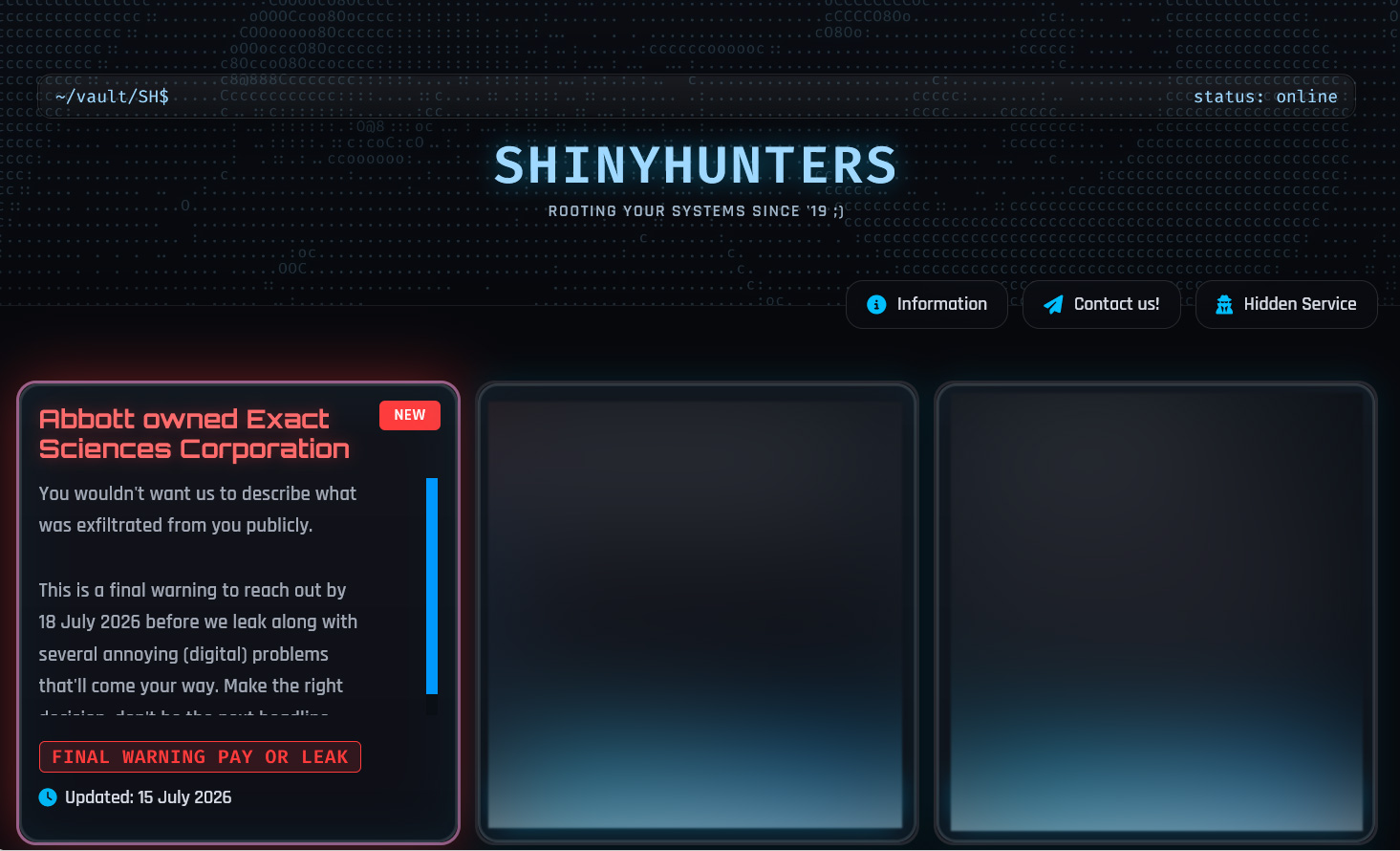
The first incident gained public attention after the notorious extortion gang, ShinyHunters, added Abbott to its data leak site. Initially, the group issued a stern warning, threatening to publish allegedly stolen data after July 18th unless Abbott engaged in negotiations. This deadline was later extended to July 21st, intensifying scrutiny on the healthcare conglomerate.
Timeline of the ShinyHunters Incident
The events leading up to the public disclosure appear to have a preliminary timeline:
- Mid-June 2026: According to claims made by ShinyHunters to BleepingComputer, the group initiated its attack by targeting several Abbott employees through a vishing (voice phishing) campaign. This social engineering tactic is designed to trick individuals into divulging sensitive information or granting unauthorized access.
- Following Mid-June: The vishing attack allegedly succeeded in compromising a Microsoft Entra single sign-on (SSO) account belonging to an Abbott employee. This initial breach provided the threat actors with a gateway into the company’s internal network.
- Subsequent to SSO Compromise: Once inside, ShinyHunters reportedly exploited the compromised SSO account to gain access to various internal systems connected to the Cancer Diagnostics business.
- Late June/Early July 2026: It is during this period that ShinyHunters is believed to have exfiltrated data from the compromised legacy Exact Sciences systems.
- July 18, 2026 (Initial Deadline): ShinyHunters publicly listed Abbott on its data leak site and issued an ultimatum, threatening data publication unless negotiations commenced.
- July 18, 2026 onwards: Abbott Laboratories confirmed its investigation into the cybersecurity incident.
- July 21, 2026 (Extended Deadline): ShinyHunters extended their deadline for negotiations, indicating the ongoing nature of the standoff.
Abbott’s official statement regarding the ShinyHunters incident was directed to BleepingComputer and subsequently published on its own website. The company acknowledged the "cyber incident in which there was unauthorized access to a limited number of internal systems in our Cancer Diagnostics business only." Crucially, Abbott emphasized that this breach "does not impact any business operations, product or product availability, manufacturing or lab operations, or our ability to serve patients."

Further clarification from Abbott indicated that the affected legacy Exact Sciences systems are indeed separate from Abbott’s core infrastructure and that the incident has not had a bearing on any other Abbott businesses or systems. Upon learning of the breach, Abbott stated it immediately activated its incident response protocols, engaged external cybersecurity experts, and alerted law enforcement agencies. The company also expressed its expectation that the incident would not have a material impact on its overall business or financial performance.
Modus Operandi of ShinyHunters
ShinyHunters has established a reputation for targeting corporate SSO accounts as a primary vector for its attacks. Their strategy typically involves:
- Social Engineering: Employing tactics like vishing, phishing, or smishing to trick employees into revealing credentials or clicking malicious links.
- SSO Account Compromise: Gaining access to SSO platforms such as Microsoft Entra, Okta, or Google Workspace, which act as central authentication hubs for numerous applications.
- Lateral Movement and Data Exfiltration: Utilizing the compromised SSO credentials to access connected Software-as-a-Service (SaaS) applications. These can include CRM systems like Salesforce, collaboration tools like Slack, cloud storage like Dropbox, and enterprise resource planning (ERP) systems like SAP.
- Data Extortion: Threatening to leak or sell the stolen data unless a ransom is paid.
The group has demonstrated a particular interest in the healthcare and medical technology (medtech) sectors. Prior to the Abbott incident, ShinyHunters has been linked to data breaches affecting prominent companies such as Medtronic, OneMedical, and AdaptHealth. They were also identified as the perpetrators behind the iRhythm data breach and targeted Stryker shortly after the company recovered from a destructive data-wiping attack.
Regarding the specific data allegedly exfiltrated from Abbott, ShinyHunters made extensive claims. They asserted the compromise of Microsoft Entra, ServiceNow, SharePoint, Databricks, and Coupa, leading to the theft of internal documents, contracts, and customer information. The threat actor further alleged the exfiltration of over 30 million rows of personally identifiable information (PII) from multiple datasets, including names, email addresses, phone numbers, physical addresses, dates of birth, and more than one million Social Security numbers. Additionally, ShinyHunters claimed to have obtained over 22 million client notes containing doctor-patient conversations, more than 20 million medical orders, and customer agreements and non-disclosure agreements (NDAs). It is important to note that BleepingComputer has not independently verified the accuracy of these specific data theft claims made by the threat actor.
The Second Incident: LabCentral Customer Portal Breach
Adding to Abbott’s cybersecurity challenges is a second, separate alleged breach targeting its Core Laboratory diagnostics business through its LabCentral customer portal. This incident was brought to light by a threat actor known as ShadowByt3$.
ShadowByt3$ claims to have exploited a "weak point" in the LabCentral environment by using compromised customer credentials. The threat actor stated that they gained access on July 4, 2026, and systematically exfiltrated files by targeting API endpoints.
ShadowByt3$’s Claims and Abbott’s Response
The data purportedly stolen by ShadowByt3$ includes a range of technical and regulatory documentation related to Abbott’s laboratory diagnostic systems. This reportedly encompasses:
- CE manufacturing certificates
- Operation manuals
- Technical specifications
- Regulatory documentation
- Product requirement archives
- Calibrator value assignments
- Assay files
- Other product documentation
ShadowByt3$ asserts that no customer data was compromised in this incident. Instead, their focus was on acquiring "sensitive business documents and intellectual property." To substantiate their claims, the group provided BleepingComputer with screenshots and a file listing as purported evidence of the intrusion.
Abbott confirmed its awareness of this "potential" cyber incident. However, the company contested the threat actor’s characterization of the stolen data, asserting that all information within the affected environment is publicly available and not considered sensitive.

An Abbott spokesperson elaborated to BleepingComputer, explaining that "LabCentral is an externally facing third-party hosted portal used by Abbott’s core laboratory diagnostics business. It houses publicly available technical product reference documents, including operating manuals, troubleshooting checklists and product specifications, and does not contain proprietary/sensitive customer or business information."
Broader Implications and Industry Context
These two incidents highlight critical vulnerabilities that affect large organizations across various sectors. The reliance on digital infrastructure, coupled with the increasing sophistication of cyber threat actors, necessitates robust and multi-layered security strategies.
- The Threat of Social Engineering: The ShinyHunters incident serves as a stark reminder of the persistent threat posed by social engineering tactics. Human error or susceptibility remains a primary entry point for many cyberattacks. Organizations must invest in continuous and comprehensive employee training programs that go beyond basic awareness to cover advanced phishing and vishing techniques.
- SSO as a Critical Attack Surface: The compromise of SSO accounts by ShinyHunters underscores their significance as a high-value target. Multi-factor authentication (MFA) is no longer a best practice but a fundamental requirement to protect these critical access points. Organizations should also implement strict access controls and regularly review user permissions.
- Legacy Systems Vulnerability: Abbott’s mention of "legacy Exact Sciences systems" points to a common challenge in the cybersecurity landscape. Older systems, often lacking modern security features or regular patching, can become easy targets for attackers. A proactive approach to identifying, assessing, and securing or decommissioning legacy systems is crucial.
- Customer Portal Security: The alleged breach of the LabCentral portal by ShadowByt3$ emphasizes the need for stringent security measures on all customer-facing platforms. Even if the data itself is deemed public, the compromise of a portal can erode customer trust and potentially expose vulnerabilities that could be exploited for more significant attacks. Regular security audits, penetration testing, and robust access controls are vital for these platforms.
- The MedTech Sector Under Fire: The consistent targeting of medtech companies by groups like ShinyHunters suggests a strategic focus on this industry. The sensitive nature of the data and the critical infrastructure involved make these companies attractive targets for financial gain, espionage, or disruption.
- Regulatory Scrutiny: For healthcare organizations, data breaches carry significant regulatory implications, including potential fines and reputational damage under regulations like HIPAA in the United States and GDPR in Europe. The nature of the data allegedly compromised by ShinyHunters, particularly the mention of PII and potentially health-related information, would trigger intense scrutiny if confirmed.
- The Importance of Incident Response: Abbott’s swift activation of incident response procedures and engagement of external experts are commendable. A well-defined and practiced incident response plan is essential for minimizing damage, facilitating recovery, and ensuring compliance with reporting obligations.
As of the latest reporting, neither ShinyHunters nor ShadowByt3$ has publicly released the data they claim to have stolen from Abbott. However, the mere confirmation of unauthorized access and the potential for widespread data exfiltration have placed Abbott Laboratories under significant pressure to demonstrate the robustness of its security posture and its commitment to protecting sensitive information. The ongoing investigations will likely reveal more details about the extent of the breaches and the specific vulnerabilities exploited, providing valuable lessons for the broader cybersecurity community.