Vera Intan Clara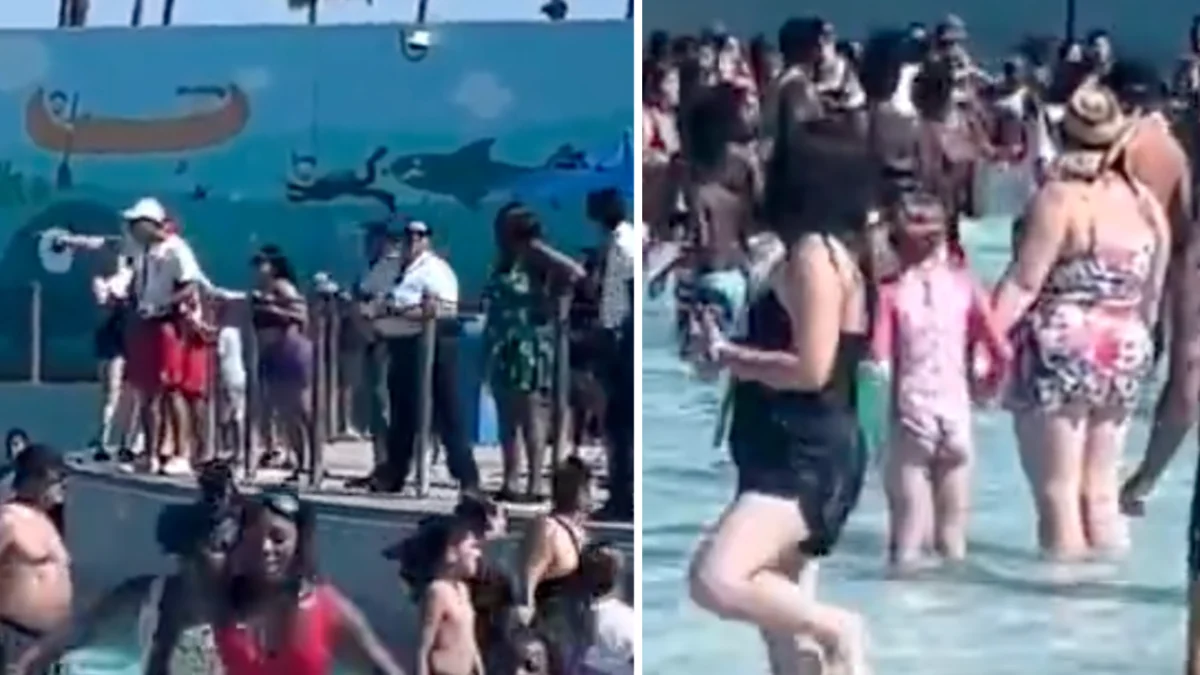
A video widely circulated on the social media platform X has ignited significant public discourse following a physical altercation at a crowded waterpark, compelling numerous families and children to hastily evacuate the pool area. The unsettling footage captures a group of individuals engaged in a physical confrontation, while surrounding guests, including young children, can be seen rapidly retreating from the immediate vicinity, seeking safety and distance from the unfolding chaos. This incident occurred on what was anticipated to be a typical bustling summer day, with countless individuals flocking to waterparks and public pools in search of respite from soaring temperatures. While these venues are traditionally cherished as havens for families to cool off and enjoy recreational activities, the atmosphere abruptly shifted from leisurely enjoyment to palpable alarm as the fight erupted within the central pool area.
Chronology of the Incident and Immediate Aftermath
The widely shared video, which has garnered millions of views and reactions, commences with a seemingly idyllic scene of a vibrant waterpark teeming with guests. Large groups of people are visible, actively participating in various aquatic attractions and congregating around the expansive pools. Lifeguards, positioned strategically, are observed diligently monitoring the diverse crowd. The initial segments portray a lively, festive environment synonymous with summer family entertainment.
However, the mood undergoes a stark and rapid transformation. Within moments, the visual narrative shifts dramatically as guests, initially relaxed, begin to move with increasing urgency away from a specific section of the pool. Adults and children alike are depicted fleeing the area, their expressions changing from enjoyment to concern or fear. It is at this point that the underlying cause of the sudden exodus becomes apparent: a discernible group of men is embroiled in a violent physical altercation. The precise catalyst for the dispute remains unverified, as the video footage captures only the escalation and continuation of the fight, not its genesis.
The audio accompanying the video captures the piercing sounds of lifeguards’ whistles, blown repeatedly and with increasing intensity, indicating their immediate attempt to intervene and de-escalate the burgeoning conflict. Despite these authoritative signals, the confrontation persists, prompting an even greater rush of individuals out of the pool, driven by a primal instinct for self-preservation. While the combatants appeared to confine their physical aggression primarily within their own group, the proximity and sheer force of the altercation understandably generated widespread fear among other patrons. Children, in particular, were observed and heard screaming in the background, a harrowing detail that underscored the profound distress caused by the incident. For many families, an anticipated day of fun and relaxation was abruptly curtailed, replaced by an unsettling experience of public disorder. The strategy of exiting the pool was clearly the most immediate and effective measure for avoiding direct involvement or injury.
The video abruptly concludes, leaving the ultimate resolution of the fight unclear. It is not publicly known how the altercation was eventually quelled, whether security personnel or law enforcement became directly involved, or if any arrests were made. Similarly, details regarding potential injuries to the combatants or uninvolved guests remain undisclosed, although the footage did not immediately reveal any swimmers being physically harmed in the chaotic process of evacuation. The paramount concern expressed by many online commentators revolved around the hope that all individuals, particularly the fleeing families, were able to depart the venue safely and without further incident.
The Broader Context of Waterpark Operations and Safety Challenges
Waterparks, as major hubs for recreational activity, particularly during peak summer seasons, face inherent operational challenges in managing large crowds and ensuring guest safety. The confluence of high temperatures, crowded conditions, and the diverse demographics of attendees can sometimes create environments ripe for minor disagreements to escalate. Industry data suggests that millions of visitors flock to waterparks annually, making them popular but also complex environments to secure.
Security protocols at such venues typically involve a multi-layered approach. This includes a visible presence of uniformed security personnel, a well-trained team of lifeguards equipped for both aquatic emergencies and crowd control, surveillance systems, and clear rules of conduct prominently displayed. Many waterparks also implement policies regarding alcohol consumption, which, if not strictly enforced, can contribute to impaired judgment and increased aggression among guests. The original article’s mention of a dress code suggestion on X (specifically, "no jeans or undershirts") while anecdotal and potentially racially charged in its original context, does highlight a recurring, albeit often misguided, aspect of public discourse around perceived behavioral indicators in certain public spaces. However, it is crucial to emphasize that such dress codes are not scientifically or universally linked to preventing altercations.
The role of lifeguards extends beyond preventing drownings; they are often the first responders to various incidents, including medical emergencies, lost children, and behavioral issues. Their rapid response with whistles in this incident underscores their training in attempting to regain control and alert other staff members. However, confronting a violent physical altercation requires specialized security training that typically falls outside the primary scope of a lifeguard’s duties, necessitating the involvement of dedicated security teams.
Public Reaction and Online Discourse
The video’s dissemination on X quickly catalyzed a torrent of reactions, reflecting a broad spectrum of public opinion and concern. Many viewers expressed profound sadness and frustration at seeing a family-oriented outing ruined by the irresponsible actions of a few individuals. The audible screams of children were particularly distressing for many, highlighting the traumatic impact such events can have on young witnesses. Commenters lamented the loss of innocence and the disruption of a cherished summer activity for innocent bystanders.
A significant portion of the online debate, as noted in the original report, veered into controversial territory, with some comments touching upon racial aspects of the individuals involved. It is imperative to reiterate, as the original article rightly noted, that the race of the individuals involved in any altercation does not alter the inherent nature of the incident itself, nor does it justify or condemn the behavior. Such racially charged commentary often reflects broader societal biases and contributes to the polarization of online discussions, distracting from the core issue of public safety and appropriate conduct in shared spaces.
Beyond the immediate incident, the video also reignited pre-existing concerns among some segments of the public regarding the safety and hygiene of waterparks. Some X users articulated long-held apprehensions, stating they had never taken their children to such venues due to perceived risks. Comments like "Never took my kids to these places, the water is toxic" or "You could not pay me to get in that water" illustrate a pre-existing skepticism about the cleanliness and overall safety standards of large public aquatic facilities, regardless of specific incidents of violence. While these concerns are often based on anecdotal evidence or general anxieties rather than verified health risks, they contribute to a broader narrative of public apprehension.
Conversely, some commenters praised the quick actions of the lifeguards. One X user wrote, "Thank god that lifeguard jumped in and grabbed the little one," although the video itself did not explicitly show a lifeguard physically intervening in the fight or grabbing a child from harm’s way, but rather blowing whistles and prompting evacuation. This comment, however, reflects the public’s desire to see responsible authorities taking swift action to protect vulnerable individuals during such chaotic events.
Implications for Family Entertainment and Venue Management
Incidents like the waterpark altercation carry significant implications for the family entertainment industry. Such events can erode public trust, deter future attendance, and damage the reputation of individual venues and the industry as a whole. Parents, whose primary concern is the safety and well-being of their children, may become increasingly hesitant to visit places where public order is perceived to be compromised.
For waterpark management, such incidents necessitate a rigorous review of existing security protocols, staff training, and crowd management strategies. This might include:
- Enhanced Security Presence: Increasing the number of visible security personnel, particularly during peak hours or in areas prone to congestion.
- Improved Surveillance: Upgrading CCTV systems and monitoring capabilities to detect potential conflicts before they escalate.
- Staff Training: Providing additional training to lifeguards and other frontline staff on de-escalation techniques and how to effectively coordinate with dedicated security teams and law enforcement during serious incidents.
- Clearer Communication: Implementing more effective communication systems to alert staff across the park in real-time during an emergency.
- Guest Code of Conduct: Re-emphasizing and strictly enforcing codes of conduct, clearly outlining unacceptable behaviors and the consequences for violating them.
- Community Engagement: Engaging with local law enforcement to develop joint response protocols for severe disturbances.
The psychological impact on children who witness such violence can be profound and lasting. Exposure to public altercations can cause distress, anxiety, and a sense of insecurity in environments that are supposed to be safe and fun. Child development experts often highlight the importance of secure and predictable environments for healthy emotional growth, and events like this directly contradict that need.
Conclusion
The waterpark altercation, captured and disseminated on X, serves as a stark reminder of the challenges inherent in maintaining public order and safety in large recreational venues. While the specific details surrounding the fight’s origin and resolution remain officially unverified, the undeniable sentiment shared across the vast majority of online discourse is a universal agreement: violent altercations have no place in family-friendly environments designed for relaxation and enjoyment.
The incident underscores the critical importance of robust security measures, vigilant staff, and a collective commitment from both venue operators and patrons to foster respectful and safe public spaces. As summer seasons continue to draw millions to waterparks, the imperative to ensure these destinations remain havens of fun, free from fear and disorder, becomes ever more pronounced. The event prompts a broader reflection on societal norms of conduct in shared spaces and the collective responsibility to uphold environments where families can create positive memories without the specter of public conflict.
The Daily Dot was unable to independently verify the specific circumstances surrounding the fight or the events preceding the video’s commencement. This expanded account is based on the widely shared footage on X and the extensive range of reactions and discussions from viewers online, supplemented with generalized information about waterpark operations and public safety challenges.