Sisilia Frederika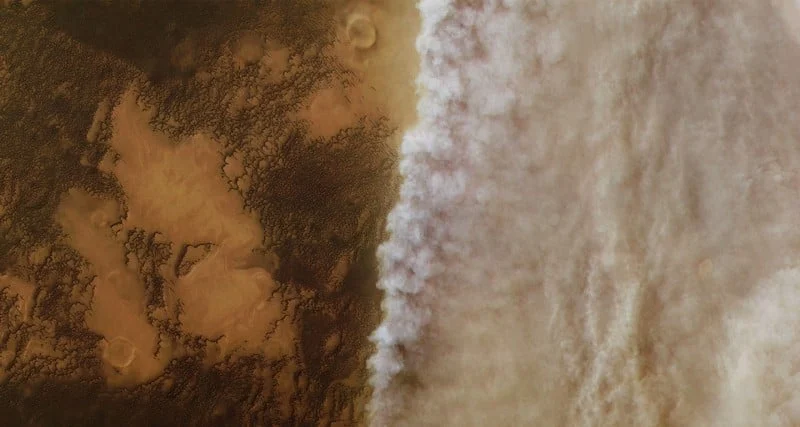
A collaborative research effort between the University of Alabama in Huntsville (UAH) and the NASA Marshall Space Flight Center has identified a significant environmental hazard that could redefine the planning of future missions to the Red Planet. According to a study published in The Planetary Science Journal, the massive dust storms that periodically engulf Mars are capable of generating substantial electrical charges within the lower atmosphere. These findings suggest that the risks posed by Martian dust extend far beyond the mechanical issues of visibility and solar power depletion, potentially introducing a complex electrostatic environment that could interfere with sensitive electronics and communication systems.
The study, led by Chali Idosa Uga, a doctoral student in the Department of Space Science at UAH, utilized advanced meteorological modeling to analyze the behavior of the Martian atmosphere during global dust events. While the scientific community has long understood that dust storms can blanket the entire planet, the discovery of localized and altitude-dependent regions of charge separation marks a pivotal shift in how these storms are categorized as mission risks.
The Unique Nature of Martian Dust Storms
Mars is one of only three known planetary bodies in the solar system—the others being Earth and Saturn’s moon Titan—that exhibit active, wind-driven dust processes. However, the scale and intensity of these events on Mars are unparalleled. On Earth, dust storms are typically localized and short-lived. On Mars, they can evolve into Planet-encircling Dust Events (PEDEs), which obscure the surface for months and fundamentally alter the planet’s thermal structure.
These global storms occur roughly every three Martian years (approximately every five to six Earth years). During such events, dust particles are lofted high into the atmosphere, where they absorb solar radiation, warming the air and creating a feedback loop that drives even more dust upward. The resulting shroud can reduce sunlight reaching the surface by over 90 percent, a phenomenon that has historically proven fatal for solar-powered robotic missions.
Analyzing Martian Year 34 and the 2018 Global Event
To understand the electrical potential of these storms, the research team focused on Martian Year 34 (MY34), which spanned from May 5, 2017, to March 23, 2019. The Martian calendar, established by the scientific community in the year 2000, begins with April 11, 1955, as the start of Martian Year 1. This system allows researchers to track long-term climate patterns and seasonal shifts across decades of observation.
The centerpiece of MY34 was a massive global dust storm that began in mid-2018. The researchers utilized data from the Mars Climate Database (MCD) v.6.1, a high-resolution weather dataset derived from the Mars General Circulation Models (GCM). By simulating the conditions of the 2018 storm, the team was able to model how the movement and friction of dust particles—a process known as triboelectric charging—contributed to the buildup of electric fields.
The 2018 storm was particularly significant because it was observed simultaneously from the ground and from orbit. NASA’s Curiosity rover, located in Gale Crater, provided surface-level data on atmospheric opacity, while orbiting assets, including the Mars Reconnaissance Orbiter (MRO), the Mars Atmosphere and Volatile Evolution (MAVEN) spacecraft, and the European Space Agency’s (ESA) Trace Gas Orbiter, monitored the storm’s impact on global wind patterns and water vapor distribution.
Findings: Breakdown-Favorable Conditions
The study’s most critical finding is that during the height of the MY34 storm, the lower atmosphere developed regions where the electric field strength approached what is known as "breakdown-favorable" conditions. In the thin Martian atmosphere, which is only about 1 percent as dense as Earth’s, the threshold for electrical breakdown is much lower. When this threshold is reached, the air can no longer act as an insulator, leading to electrostatic discharges—essentially small-scale lightning or "blue jets" that occur within the dust clouds.
"For future Mars exploration, our study suggests that major dust storms should be evaluated not only as atmospheric, thermal and visibility hazards, but also as structured electrostatic environments," stated Chali Idosa Uga. The research indicates that these electric fields are not uniform but are instead localized and dependent on altitude, creating a complex three-dimensional grid of potential hazards.
While the study did not quantify the specific risk to any individual piece of hardware, the presence of these fields suggests that charge separation can persist for extended periods. This persistence could lead to the accumulation of static electricity on habitats, space suits, and robotic components, similar to the static issues experienced by Apollo astronauts on the Moon, but potentially more severe due to the atmospheric interactions on Mars.
Historical Impact: The End of the Opportunity Rover
The 2018 global dust storm is perhaps most infamous for the termination of NASA’s Opportunity rover mission. After nearly 15 years of exploring the Meridiani Planum, the rover, affectionately known as "Oppy," was caught in the rapidly darkening skies of the 2018 event. Unlike the Curiosity rover, which is powered by a Multi-Mission Radioisotope Thermoelectric Generator (MMRTG), Opportunity relied entirely on solar panels.
Throughout its mission, Opportunity had survived smaller dust storms thanks to "cleaning events," where Martian dust devils would blow accumulated debris off its solar arrays. However, the 2018 storm was so thick that the rover could not generate enough power to keep its heaters running. On June 10, 2018, Opportunity sent its final transmission, stating that its "battery is low and it’s getting dark."
The UAH study adds a new layer to this historical event. While the lack of sunlight was the primary cause of the mission’s end, the discovery of potential electrical charging in the atmosphere suggests that global storms create a hostile environment that could also affect electronic integrity or interfere with emergency communication protocols during low-power states.
Technical Implications for Future Exploration
The identification of Mars as a "structured electrostatic environment" has broad implications for the design of future spacecraft and human habitats. Engineers must now consider the potential for Electrostatic Discharge (ESD), which can damage sensitive microchips and sensors.
- Hardware Resilience: Future rovers and drones, such as the Ingenuity helicopter’s successors, will need to be shielded against atmospheric electrical discharges. This involves grounding strategies that are difficult to implement on a planet with extremely dry soil.
- Communication Systems: Electrically charged dust can create electromagnetic interference (EMI). During a global storm, when communication with Earth is already hampered by atmospheric conditions, additional electrical noise could lead to data loss or the complete interruption of signals.
- Human Safety: For astronauts, the threat is twofold. Dust that is electrostatically charged is "stickier," making it harder to remove from space suits and equipment. If this dust is brought into a habitat, it can pose respiratory risks or damage life-support systems. Furthermore, the potential for discharges during Extravehicular Activities (EVAs) must be factored into suit design.
- Energy Infrastructure: As NASA looks toward the next decade for human missions, reliance on solar power remains a point of contention. The combination of reduced sunlight and electrical hazards may push mission planners to favor nuclear power sources or develop specialized "hardened" solar arrays.
Broader Scientific Context and Future Research
The UAH and NASA Marshall study is part of a broader effort to characterize the Martian environment ahead of the "Moon to Mars" strategy. Understanding the nuances of the Martian climate is essential for ensuring the longevity of missions that will last years rather than months.
The researchers emphasize that their model is a starting point. "What we show is that during the Martian Year 34 global dust storm, the lower atmosphere developed localized and altitude-dependent regions where charge separation could persist," Uga noted. The next phase of research will likely involve more granular simulations to determine if these electrical conditions could trigger chemical changes in the Martian soil, such as the production of perchlorates, which are toxic to humans.
Furthermore, the scientific community is looking toward future missions, such as the Mars Sample Return (MSR), to provide more direct measurements of atmospheric electricity. While current rovers are not equipped with dedicated electrometers to measure these fields directly, future instrumentation could be designed specifically to monitor the "electric weather" of Mars.
Conclusion
The revelation that Martian dust storms are electrically active adds a new dimension to our understanding of the Red Planet. It highlights the volatility of the Martian atmosphere and the necessity of multi-disciplinary research in planetary science. As NASA and its international partners prepare for the monumental task of landing humans on Mars, studies like the one conducted by the UAH team serve as vital warnings.
The transition from viewing dust storms as a simple visibility hindrance to recognizing them as complex electrostatic phenomena will require a shift in engineering and mission architecture. While the challenges of living and working on Mars are significant—ranging from the lack of breathable oxygen to the extreme air pressure—the "electric" nature of the planet’s weather is now a confirmed factor that scientists must account for in the quest to explore the final frontier. Only through continued empirical observation and advanced modeling will researchers be able to develop the technologies necessary to withstand the unique environmental hurdles of the Martian landscape.