Sisilia Frederika
Recent astrophysical research presented at the Royal Astronomical Society’s National Astronomy Meeting in Birmingham has unveiled a transformative chapter in the history of the Milky Way. A team of researchers, led by astronomer Kirill Batrakov of Durham University, has proposed that our galaxy underwent a massive "disk flip" early in its evolutionary timeline. This event, triggered by a catastrophic collision with another galaxy, effectively reoriented the Milky Way’s angular momentum and left a permanent mark on the distribution and motion of its stars. By utilizing high-resolution cosmological simulations and data from the European Space Agency’s (ESA) Gaia mission, the study provides a new framework for understanding why different components of our galaxy rotate at vastly different speeds and how the Milky Way transitioned from a chaotic early state to the structured spiral we inhabit today.
The Dual-Disk Architecture of the Milky Way
To understand the significance of a "disk flip," one must first examine the current structural composition of the Milky Way. Our galaxy is not a uniform collection of stars; rather, it is divided into distinct structural components. The most prominent is the "thin disk," a dense, spiral-shaped region containing the majority of the galaxy’s stars, including our Sun. This disk is characterized by relatively young stars and high metallicity, rotating at a rapid velocity of approximately 220 kilometers per second.
Surrounding this thin disk is a much larger, more diffuse structure known as the "thick disk" or the stellar halo. Unlike the thin disk, the thick disk consists of older, metal-poor stars that follow eccentric and often chaotic orbits. For decades, astronomers have been puzzled by the rotational dynamics of this halo. Data from the Gaia mission—a space observatory tasked with charting a three-dimensional map of over a billion stars—revealed that the stellar halo possesses a very weak net rotation, moving at a mere 10 to 20 kilometers per second. This discrepancy in rotational speed between the two disks has been one of the most enduring mysteries in galactic archaeology.
Galactic Archaeology and the Gaia-Enceladus-Sausage Merger
The history of the Milky Way is a saga of "galactic cannibalism." Since its formation shortly after the Big Bang, roughly 13.6 billion years ago, the Milky Way has grown by absorbing smaller satellite galaxies. The most significant of these events was the Gaia-Enceladus-Sausage (GES) merger, which occurred between 8 and 11 billion years ago.
The GES merger involved a massive "head-on" collision with a dwarf galaxy roughly 25% the mass of the Milky Way at the time. This collision was so energetic that it deposited a vast number of foreign stars into the Milky Way’s environment, forming the bulk of what we now identify as the stellar halo. However, the sheer force of this impact did more than just add mass; it fundamentally disrupted the existing dynamics of the Milky Way. The research by Batrakov and his colleagues suggests that this specific merger was the catalyst for the "disk flip," a reorientation of the galaxy’s rotational axis that changed the trajectory of nearly every star within the system.
Insights from the Auriga Simulations
To reconstruct events that occurred billions of years ago, the Durham University team turned to the Auriga simulations. These are a suite of high-resolution, magnetohydrodynamical cosmological "zoom-in" simulations designed to model the formation of Milky Way-like galaxies within a standard dark matter framework. The simulations are comprehensive, accounting for complex physical processes including gravity, dark matter dynamics, gas cooling, star formation, supernova feedback, and the growth of supermassive black holes.
The researchers analyzed 25 simulated galaxies that shared characteristics with the Milky Way. They tracked these galaxies over a redshift range of 0 to 2.5, covering approximately 11 billion years of cosmic history. This period includes the "Cosmic Noon"—the era of peak star formation in the universe—and the timeframe during which major galactic mergers were most frequent.
The simulations revealed a consistent pattern: galaxies that exhibited a slowly rotating outer halo, similar to the Milky Way, shared three critical historical milestones. First, they formed their primary structures early in the universe’s history. Second, they underwent a major head-on merger comparable to the Gaia-Enceladus-Sausage event. Third, and most importantly, they experienced a "disk flip."
The Mechanics of a Galactic Flip
A "disk flip" occurs when the gravitational torque exerted by a merging satellite galaxy is strong enough to overcome the angular momentum of the host galaxy’s original disk. In the case of the Milky Way, the GES merger provided a massive infusion of energy and momentum from a perpendicular or highly inclined angle. This forced the original galactic plane to tilt or flip entirely to align with the new center of mass and momentum created by the merger.
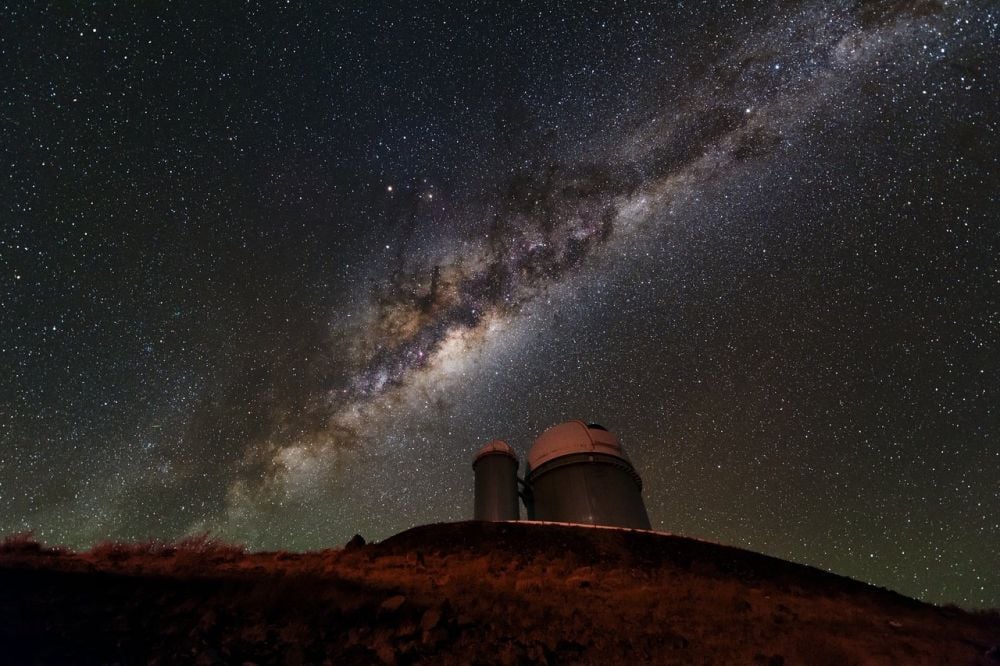
"We already know that the Milky Way had a massive head-on collision in the past with a galaxy known as Gaia-Sausage-Enceladus," explained Kirill Batrakov. "So, we think that the Milky Way disc likely flipped in the past. A disc flip also means most of the Milky Way’s stars once moved on very different trajectories than they do today—possibly even our own Sun, meaning our ‘stable’ spot in the galaxy might not have been so stable for the Solar System’s whole lifetime."
This finding suggests that the 10-20 km/s rotation observed in the thick disk today is a "fossil" remnant of the galaxy’s original rotation, which was diluted and redirected during the flip. The modern thin disk, where the Sun resides, formed later from the gas that settled into the new, post-flip rotational plane.
Dark Matter and the Twisted Halo
The implications of the disk flip extend beyond the visible stars to the invisible scaffolding of the galaxy: the dark matter halo. The Milky Way is embedded within a massive sphere of dark matter that provides the gravitational glue holding the galaxy together. The Auriga simulations suggest a profound connection between the stellar disk flip and the rotation of the dark matter halo.
According to the study, the Milky Way’s dark matter halo likely rotates very slowly, mirroring the behavior of the stellar halo. Furthermore, supporting research published in Astronomy and Astrophysics in 2025 provides empirical evidence for this theory. Using Gaia data, researchers found that the Milky Way’s dark matter halo appears "twisted." While the inner regions of the halo (within 20 kiloparsecs of the center) are aligned with the modern stellar disk, the outer regions become vertically oriented. This "twist" is a signature predicted by the disk flip scenario, indicating that while the inner galaxy reoriented itself, the outer reaches of the dark matter halo still retain the orientation of the pre-merger era.
Chronology of the Milky Way’s Evolution
The reconstruction of these events allows astronomers to piece together a definitive timeline of our galaxy’s life:
- 13.6 Billion Years Ago: The Milky Way begins to form from the collapse of massive gas clouds shortly after the Big Bang.
- 11 to 13 Billion Years Ago: An early, "proto-Milky Way" disk forms. This disk rotates in an orientation entirely different from the one we see today.
- 8 to 11 Billion Years Ago: The Gaia-Enceladus-Sausage galaxy collides with the Milky Way. This massive merger causes the "disk flip," scattering the proto-disk stars into what we now call the thick disk and reorienting the galaxy’s rotation.
- 8 Billion Years Ago to Present: Fresh gas accretes onto the new galactic plane, forming the "thin disk." New generations of stars, including the Sun (approx. 4.6 billion years ago), are born in this stable, rapidly rotating environment.
- Present Day: The Milky Way continues to accrete smaller systems, such as the Sagittarius Dwarf Spheroidal Galaxy and the Magellanic Clouds, though none are currently large enough to trigger another disk flip.
Broader Scientific Implications
The realization that the Milky Way is a product of such violent reorientation changes how astronomers view galactic evolution across the universe. Because we reside within the Milky Way, it serves as a primary "testbed" for all galactic models. If our own galaxy has undergone such a radical transformation, it is highly probable that many other spiral galaxies observed in the deep universe have experienced similar flips.
"Because we live inside the Milky Way, we can study it in more detail than any other galaxy," Batrakov noted. "Finding that its disc flipped adds a new chapter to that story, one we must account for when placing the Milky Way in a broader context of other galaxies. What excites me the most is that this complex history can be reconstructed just from present-day observations."
The study also highlights the indispensable role of the ESA’s Gaia mission. By providing high-precision data on the positions, distances, and motions of billions of stars, Gaia has allowed researchers to perform "galactic archaeology"—using the current states of stars to infer their origins and historical movements. Without this data, the subtle 10-20 km/s rotation of the stellar halo would have remained a hidden detail, and the evidence for the disk flip would have stayed buried in the noise of cosmic history.
Conclusion
The discovery of the Milky Way’s ancient disk flip serves as a reminder of the dynamic and often violent nature of the cosmos. While our current position in the galaxy appears stable and serene, it is the result of billions of years of gravitational upheaval and massive collisions. The research presented by the Durham University team not only solves a long-standing puzzle regarding the slow rotation of the stellar halo but also provides a more nuanced understanding of the relationship between visible matter and dark matter. As the Gaia mission continues to release new data and simulations become even more sophisticated, the story of our home galaxy will undoubtedly continue to evolve, revealing a past far more turbulent than once imagined.