Sisilia Frederika
The professional trajectory of Subrahmanyan Chandrasekhar, one of the 20th century’s most influential astrophysicists, remains a definitive study in intellectual resilience and the pursuit of mathematical aesthetics. Following a public and scientifically dismissive confrontation with Sir Arthur Eddington at the Royal Astronomical Society in 1935, Chandrasekhar—often referred to as "Chandra"—underwent a period of profound professional isolation that eventually led to his departure from the United Kingdom. This transition marked the beginning of a legendary career in the United States, characterized by a unique "nomadic" approach to scientific inquiry and an unwavering belief that the fundamental laws of the universe are intrinsically beautiful.
The Aftermath of the Eddington Conflict and the Move to America
The conflict between Chandrasekhar and Eddington centered on the "Chandrasekhar Limit," the calculation that stars above 1.44 solar masses would eventually collapse into infinitely dense states. Eddington, the premier astronomer of the era, ridiculed the concept as "stellar buffoonery," asserting that a law of nature must exist to prevent such a collapse. This rejection, while scientifically unfounded, carried immense weight due to Eddington’s stature.
By 1937, realizing that his career in Europe would remain stifled by Eddington’s influence, Chandrasekhar accepted a faculty position at the University of Chicago. He settled at the Yerkes Observatory in Williams Bay, Wisconsin. Biographers, including Arthur Miller in "Empire of the Stars," note that the emotional scars of the 1935 incident persisted for decades. Despite the personal toll, Chandrasekhar’s move to the United States facilitated a shift from the defensive posture of his early years to a proactive, systematic exploration of the cosmos.
A Chronology of Intellectual Mastery
Chandrasekhar’s career was defined by a distinctive methodology: he would immerse himself in a specific field of physics for approximately a decade, achieve total mastery, publish a definitive monograph that would serve as the standard text for the next generation, and then abandon the field entirely to begin anew as a "beginner" in another discipline.
The timeline of his major contributions follows a rigorous decadal pattern:
- 1930–1939: Stellar Structure. During this period, he solidified the theory of white dwarfs and the limit that now bears his name. This culminated in his 1939 book, An Introduction to the Study of Stellar Structure.
- 1939–1943: Stellar Dynamics. He shifted focus to the dynamics of star clusters and the theory of Brownian motion.
- 1943–1950: Radiative Transfer. He revolutionized the understanding of how energy moves through stellar atmospheres, leading to the publication of Radiative Transfer in 1950.
- 1950–1961: Hydrodynamic and Hydromagnetic Stability. He explored the stability of fluids in the presence of magnetic fields, producing the seminal work Hydrodynamic and Hydromagnetic Stability.
- 1962–1971: Equilibrium and Stability of Ellipsoidal Figures of Equilibrium. This period focused on the mathematical shapes of rotating celestial bodies.
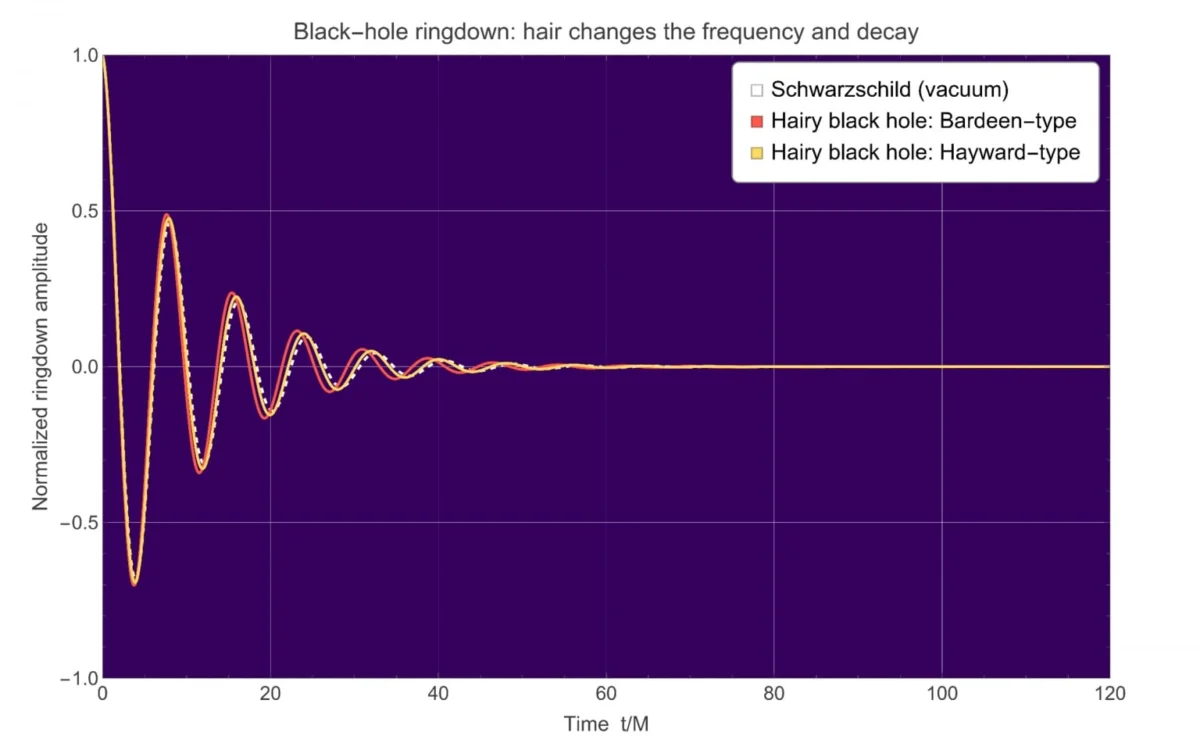
- 1971–1983: The Mathematical Theory of Black Holes. In his final major phase, he applied general relativity to the study of black holes, culminating in his 1983 masterpiece published just as he received the Nobel Prize.
The Philosophy of Truth and Beauty
Central to Chandrasekhar’s work was the conviction that "correct physics is beautiful physics." He argued that the human mind’s response to mathematical elegance was a reliable guide to physical reality. This philosophy was not merely aesthetic but served as a heuristic for his research.
One of the most significant moments in his later career was his encounter with the Kerr metric—an exact solution to Einstein’s field equations for a rotating black hole discovered by Roy Kerr in 1963. Chandrasekhar described the realization that Nature would choose such an exact and elegant mathematical representation for massive black holes as a "shattering experience." He posited that the beauty of these equations was a testament to their truth, a theme he explored in his 1987 book, Truth and Beauty: Aesthetics and Motivations in Science.
In his own analysis, Chandrasekhar noted that Eddington’s failure was not a lack of intelligence but a lack of aesthetic courage. Had Eddington followed the mathematical logic to its conclusion, Chandrasekhar believed he would have been recognized as the greatest theoretical astronomer of the century. Instead, Eddington’s refusal to accept the "unattractive" implications of gravitational collapse delayed the progress of black hole physics by decades.
Pedagogical Legacy and Institutional Impact
Chandrasekhar’s commitment to scientific rigor extended to his teaching and editorial work. His pedagogical style was described as both graceful and uncompromising. A frequently cited example of his dedication occurred in the winter of 1948. While based at the Yerkes Observatory, he drove 100 miles each way to the University of Chicago campus to teach a class consisting of only two students: Tsung-Dao Lee and Chen-Ning Yang.
The value of his investment was validated in 1957 when both Lee and Yang were awarded the Nobel Prize in Physics for their work on parity laws. When questioned about the effort required for such a small class, Chandrasekhar simply remarked, "They were good students." This incident highlights a broader commitment to the cultivation of excellence regardless of scale.
Furthermore, Chandrasekhar’s tenure as the managing editor of The Astrophysical Journal (ApJ) from 1952 to 1971 transformed the publication. When he took the helm, the journal was a niche publication with limited international reach. Under his strict stewardship, he implemented rigorous peer-review standards and expanded its scope. By the time he stepped down, The Astrophysical Journal had become the preeminent global venue for astrophysical research, a status it maintains today.
Supporting Data and Technical Significance
The mathematical foundation of Chandrasekhar’s early work, specifically the "Chandrasekhar Limit," is now a cornerstone of modern cosmology. The limit is approximately 1.44 times the mass of the Sun ($M_odot$).
- If a stellar core is below this limit: It will end its life as a white dwarf, supported by electron degeneracy pressure.
- If a stellar core exceeds this limit: It will continue to collapse, resulting in a supernova and leaving behind either a neutron star or a black hole.
Data from contemporary observations of Type Ia supernovae—which are used as "standard candles" to measure the expansion of the universe—rely entirely on the consistency of the Chandrasekhar Limit. These supernovae occur when a white dwarf in a binary system accretes enough mass to cross the 1.44 $M_odot$ threshold, triggering a thermonuclear explosion of predictable brightness.
Analysis of Implications and Late Recognition
The scientific community’s eventual acceptance of Chandrasekhar’s work represents a paradigm shift in how humanity understands the life cycle of stars. For decades, the "black hole" was considered a mathematical curiosity rather than a physical reality. Chandrasekhar’s persistence in refining the mathematics of stellar collapse provided the theoretical framework that observational astronomers eventually filled with evidence in the 1960s and 70s.
The Nobel Committee eventually recognized his contributions in 1983, awarding him the Nobel Prize in Physics "for his theoretical studies of the physical processes of importance to the structure and evolution of the stars." The award was seen by many in the scientific community as a long-overdue vindication, coming nearly 50 years after his initial discovery.
Conclusion: A Legacy of Integrity
Subrahmanyan Chandrasekhar’s life illustrates the tension between institutional authority and scientific truth. His ability to move past the humiliation of 1935 and build a multifaceted career in the United States speaks to a rare form of professional integrity. He did not merely prove Eddington wrong; he built an entire architecture of knowledge that rendered Eddington’s objections irrelevant.
By the time of his death in 1995, Chandrasekhar had moved the field of astrophysics from a descriptive science to a predictive, mathematically rigorous discipline. His legacy is preserved not only in the Chandrasekhar Limit and the NASA Chandra X-ray Observatory named in his honor but in the enduring principle that the pursuit of science is, at its heart, a pursuit of the beautiful.