admin
admin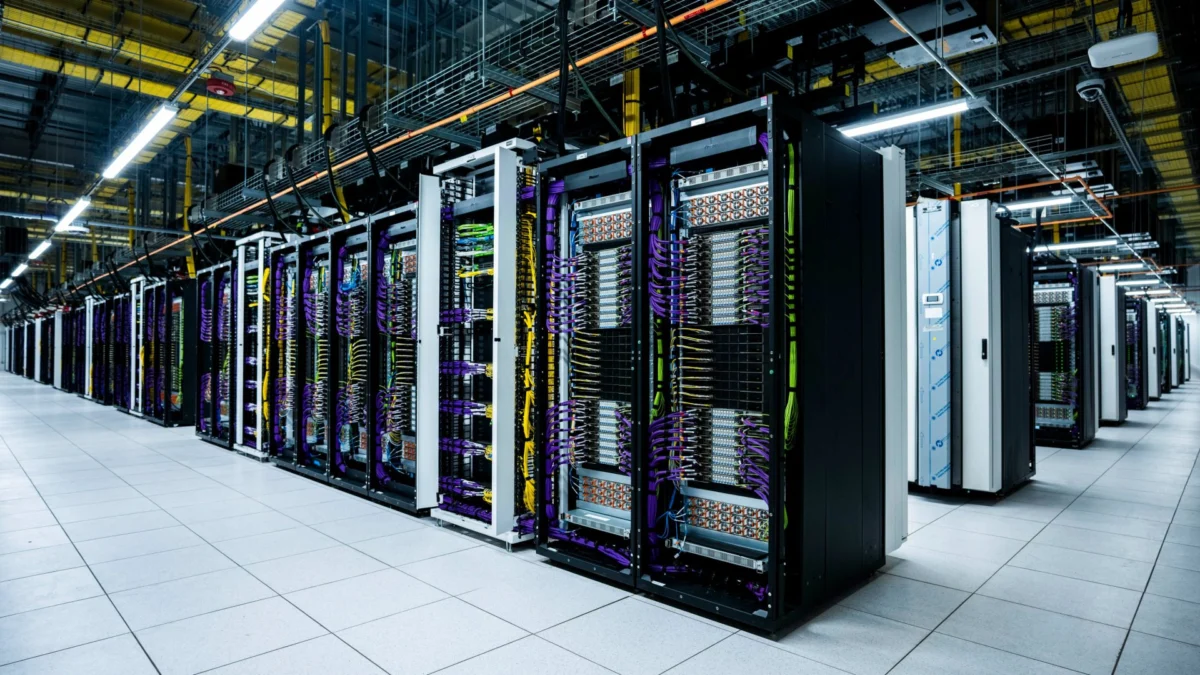
SpaceX is significantly broadening its operational scope by embarking on the construction of a massive terrestrial data center network while simultaneously advancing its plans for space-based artificial intelligence infrastructure. According to a recent report from The Information, the aerospace manufacturer and satellite communications company is looking to diversify its computing capacity to support its burgeoning role in the global AI ecosystem. This strategic pivot follows the firm’s initial public offering (IPO) earlier this year, during which SpaceX positioned itself not merely as a launch services provider, but as a sophisticated data center company with the unique capability to deploy and maintain computational facilities in low Earth orbit (LEO).
The expansion is driven by the newly formed entity SpaceXAI, which emerged following SpaceX’s acquisition of Elon Musk’s artificial intelligence startup, xAI, in February. This merger has transformed SpaceX into a major player in the AI software and hardware industries, providing it with the technical expertise to manage large-scale high-performance computing (HPC) environments. As the demand for AI training and inference grows exponentially, SpaceX is positioning itself to capture a significant share of the market by leveraging its orbital logistics and terrestrial land holdings.
The Evolution of SpaceXAI and the Colossus Infrastructure
The transition of SpaceX from a transport-focused entity to a computing powerhouse began in earnest with the integration of xAI. Now operating under the SpaceXAI banner, the division has quickly established a formidable presence in the terrestrial data center market. The centerpiece of its current operations is the "Colossus" data center facility located in Memphis, Tennessee. This facility is recognized as one of the most powerful AI supercomputers in the world, housing hundreds of thousands of NVIDIA’s latest H100 and Blackwell-series GPUs.
The Colossus facility serves as the primary engine for training large language models (LLMs) and providing raw compute power to third-party developers. To monetize this infrastructure, SpaceXAI has entered into high-stakes agreements with some of the industry’s leading AI laboratories. Notably, the firm has secured a contract with Google that is reported to generate approximately $920 million in monthly revenue. Under this agreement, SpaceXAI provides Google with access to 110,000 GPU units, a partnership scheduled to run through 2029.
Furthermore, SpaceXAI has finalized a deal with Anthropic, allowing the AI safety and research company exclusive access to the entire Colossus 1 facility for its developmental needs. These partnerships, which also include agreements with Reflection AI, underscore the massive scale at which SpaceX is now operating within the digital economy. The revenue generated from these terrestrial facilities is expected to provide the necessary capital to fund the company’s even more ambitious orbital projects.
Expansion into Texas and the Gigasat Facility
To complement its Tennessee operations, SpaceXAI is now exploring a major expansion in Texas. Internal reports indicate that the company intends to build a new large-scale data center facility near its corporate headquarters and Starbase launch site. This project involves evaluating several potential sites for ground-up construction, with the goal of creating a computing hub that matches or exceeds the scale of the Memphis Colossus facility.

The Texas expansion is inextricably linked to the "Gigasat" facility, a recently announced manufacturing plant dedicated to the production of high-capacity satellites. The Gigasat facility will be the primary production site for the AI1, SpaceX’s first dedicated "AI satellite." The AI1 is designed to be a revolution in orbital hardware, capable of delivering 150 kilowatts of peak compute payload. By manufacturing these units in-house and in close proximity to its terrestrial data centers, SpaceX aims to create a vertically integrated supply chain for AI compute that spans from the ground to the stars.
The choice of Texas for this expansion is strategic. The state offers a favorable regulatory environment, access to vast energy resources, and proximity to SpaceX’s primary engineering talent. By building multiple sites from the ground up, SpaceXAI can implement bespoke cooling solutions and power architectures specifically optimized for the high thermal output of modern AI chips.
The Economic Case for Orbital Computing
While terrestrial data centers are currently the industry standard, SpaceX is betting on the long-term viability of orbital compute. A comprehensive analysis by investment bank Morgan Stanley supports this vision, suggesting that space-based AI infrastructure could eventually become more cost-effective than its Earth-bound counterparts.
The report estimates that by 2031, the cost of orbital compute could drop to approximately $6.50 per Watt per year. In comparison, terrestrial data centers utilizing NVIDIA’s Blackwell architecture are projected to cost around $6.80 per Watt per year. This price advantage, though marginal at first, becomes significant when scaled across millions of units.
The economic efficiency of orbital compute is driven by several factors:
- Energy Harvesting: Satellites can harness unfiltered solar energy 24 hours a day without the atmospheric interference or weather patterns that affect terrestrial solar farms.
- Thermal Management: The vacuum of space provides a unique environment for heat dissipation, although it requires specialized radiative cooling systems.
- Land and Regulatory Savings: Orbital facilities do not require the acquisition of expensive real estate or the lengthy environmental impact studies associated with massive terrestrial buildings.
- Latency and Global Access: A distributed network of AI satellites can provide low-latency edge computing to any point on the globe, bypassing traditional fiber-optic bottlenecks.
Starship and the One Million Satellite Vision
The technical feasibility of SpaceX’s data center ambitions relies heavily on the success of the Starship Super Heavy lift rocket. Currently in its advanced testing phase, Starship is designed to drastically reduce the cost of delivering mass to orbit. For SpaceX’s "Orbital AI" vision to become a reality, the company must be able to launch thousands of tons of computing hardware at a fraction of current market rates.
SpaceX has already taken the first formal steps toward this future by filing a request with the Federal Communications Commission (FCC) to launch up to one million new satellites equipped with orbital computing capacity. This constellation would represent a paradigm shift in how the internet and AI services are delivered. Rather than simply acting as relays for data (as the current Starlink constellation does), these satellites would act as active processing nodes.

This plan has been described by some industry analysts as a step toward a Type II civilization on the Kardashev Scale—a theoretical framework that measures a civilization’s level of technological advancement based on the amount of energy it can harness. By moving compute power into space and directly tapping into solar energy, SpaceX is attempting to bypass the energy constraints currently facing terrestrial power grids, which are struggling to keep up with the demands of the AI boom.
Market Performance and Investor Sentiment
Despite these ambitious plans, SpaceX’s journey as a public company has faced challenges. Following its IPO, the firm’s stock experienced volatility as investors grappled with the high capital expenditure required for both Starship development and the new data center initiatives. However, the pivot toward AI has revitalized interest from institutional investors.
Morgan Stanley, one of SpaceX’s most vocal supporters, has argued that the market is currently undervaluing the company’s potential as a "compute utility." By providing the backbone for AI development for companies like Google and Anthropic, SpaceX is diversifying its revenue streams away from the highly competitive and cyclical launch market. The $920 million monthly revenue from the Google deal alone provides a stable cash flow that mitigates the risks associated with aerospace research and development.
Industry experts suggest that if SpaceX can successfully demonstrate the efficacy of the AI1 satellite, it could trigger a new "space race" centered not on exploration, but on computational sovereignty. National governments and private enterprises alike may soon view orbital compute as a critical strategic asset.
Broader Implications and Future Outlook
The expansion of SpaceXAI into terrestrial and orbital data centers represents a fundamental shift in the infrastructure of the digital age. As AI models become more complex, the limitations of Earth’s resources—land, water for cooling, and power grid capacity—become more apparent. SpaceX’s dual-track approach addresses these limitations by maximizing current terrestrial technology while building the foundation for an extraterrestrial alternative.
However, the path forward is not without obstacles. The plan to launch one million satellites has raised concerns among astronomers and environmentalists regarding space debris and light pollution. Furthermore, the technical challenge of maintaining high-performance GPUs in the harsh radiation environment of space remains a significant hurdle. SpaceX will need to develop advanced shielding and redundancy protocols to ensure the longevity of its orbital hardware.
As SpaceX continues to iterate on its Starship design and expand its Texas and Tennessee facilities, the company is effectively building a "closed-loop" ecosystem for AI. From the launch vehicles that carry the hardware to the satellites that process the data and the terrestrial centers that train the models, SpaceX is positioning itself to be the indispensable landlord of the AI era. The coming decade will determine whether the "Orbital AI" vision is a viable economic reality or an ambitious overreach, but for now, the firm’s aggressive expansion indicates a firm belief that the future of computing lies beyond the atmosphere.