Garick Elordi
During a recent industry appearance in New York City, Michael Eisner, the former Chairman and Chief Executive Officer of The Walt Disney Company, admitted to a surprising lapse in memory regarding the inception of one of the most successful video game collaborations in history. Eisner, who presided over Disney from 1984 to 2005, a period often referred to as the Disney Renaissance, revealed that he had little recollection of the specific pitch or the initial approval process for Kingdom Hearts, the long-running action role-playing series developed in partnership with Square Enix.
The revelation occurred during a promotional panel for Delphi Interactive, a burgeoning video game developer where Eisner serves as a primary investor. Delphi Interactive has recently positioned itself as a significant player in the gaming landscape, describing itself as the "architect" behind IO Interactive’s upcoming project, 007: First Light. Furthermore, the studio has made headlines by claiming a leadership role in the revival of the FIFA video game brand following the high-profile split between the international football governing body and Electronic Arts (EA). Delphi’s current portfolio includes the development of FIFA World Cup: Launch Edition, which debuted on the Netflix Games platform.
The Interaction and the Memory Jog
The conversation regarding Kingdom Hearts was sparked following the panel’s conclusion when Stephen Totilo, a veteran gaming journalist from Game File, approached Eisner. When asked if he remembered the moment he greenlit the crossover between Disney’s iconic animated characters and Square Enix’s Final Fantasy universe, Eisner initially responded in the negative. It was only after Totilo provided specific context—mentioning the legendary pitch delivered in Tokyo and the then-radical concept of Mickey Mouse and Donald Duck interacting with JRPG protagonists—that Eisner’s memory was partially jogged.
This lack of immediate recall highlights the vast scale of the Disney empire during the late 1990s and early 2000s. At the time, the company was navigating a rapidly diversifying media landscape, including the expansion of theme parks, the acquisition of ABC/Capital Cities, and the burgeoning digital frontier. For a CEO managing a multi-billion-dollar conglomerate, a single "experimental" video game pitch might have seemed like a routine administrative approval, despite the project eventually blossoming into a multi-decade franchise with over 36 million units sold worldwide.
The Unauthorized Origins: Shuji Utsumi’s Account
The historical context of the Kingdom Hearts approval process is further illuminated by anecdotes from Shuji Utsumi, the current Chief Operating Officer of Sega. In the late 1990s, Utsumi was a high-ranking executive at Disney’s Japanese division and was the individual tasked with bridging the gap between the ambitious developers at Square (now Square Enix) and the conservative corporate structure at Disney’s Burbank headquarters.
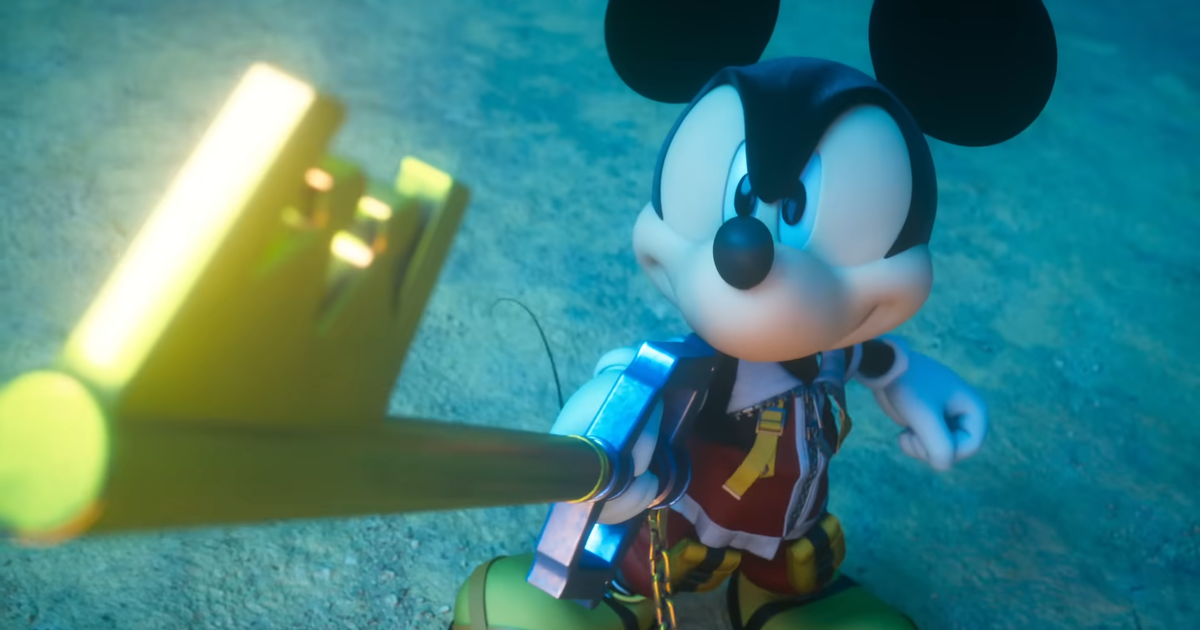
According to Utsumi, the development of Kingdom Hearts began under remarkably precarious circumstances. He noted in previous interviews that the project was essentially "unauthorized" by Disney’s central leadership during its early stages. Square had begun energetic development on the title before the formal licensing agreements and corporate blessings were fully secured. Utsumi recalled his surprise upon joining the company and finding a massive project already in motion without the explicit consent of the American head office.
Internal resistance within Disney Japan was reportedly significant. Veteran staff members cautioned Utsumi against pursuing the project, believing that the legal and creative hurdles of mixing Disney’s protected intellectual properties with a third-party developer’s characters would be insurmountable. They predicted the project would never receive Eisner’s signature. However, through a series of exhaustive meetings and what Utsumi describes as "thorough groundwork" with his U.S.-based superiors, the pitch was eventually presented to the executive suite.
When the pitch finally reached Eisner, the reaction was reportedly professional but understated. Rather than offering effusive praise for the creative vision of director Tetsuya Nomura, Eisner provided standard words of encouragement, essentially telling the team to "keep up the good work." This pragmatic approval paved the way for the release of the original Kingdom Hearts on the PlayStation 2 in 2002.
A Chronology of the Kingdom Hearts Franchise
The success of the initial game transformed a risky experiment into a cornerstone of Disney’s interactive strategy. The timeline of the franchise demonstrates a consistent expansion across multiple console generations:
- 2002: Kingdom Hearts launches on PlayStation 2, introducing Sora and the concept of the "Keyblade."
- 2004: Kingdom Hearts Chain of Memories (Game Boy Advance) bridges the narrative gap between the first and second mainline titles.
- 2005: Kingdom Hearts II (PlayStation 2) releases to critical acclaim, deepening the lore and expanding the roster of Disney worlds to include live-action properties like Pirates of the Caribbean.
- 2009–2012: The franchise expands into handhelds with 358/2 Days (Nintendo DS), Birth by Sleep (PSP), and Dream Drop Distance (Nintendo 3DS).
- 2019: After a long period of anticipation, Kingdom Hearts III launches on PlayStation 4 and Xbox One, concluding the "Dark Seeker Saga."
- 2020: Kingdom Hearts: Melody of Memory introduces a rhythm-action gameplay style to the series.
Throughout this timeline, the series has maintained a unique position in the market, blending the sentimental appeal of Disney’s storytelling with the complex, often labyrinthine narrative structures typical of Square Enix productions.
Commercial and Cultural Impact
The financial implications of Eisner’s "forgotten" approval are staggering. As of 2024, the Kingdom Hearts series remains one of Square Enix’s most profitable IPs. The franchise has not only generated billions in software sales but has also driven significant revenue through merchandise, soundtracks, and appearances in Disney theme parks.

From a cultural standpoint, Kingdom Hearts served as a gateway for many Western players to explore Japanese RPGs, while simultaneously revitalizing interest in classic Disney characters for a younger, tech-savvy generation. The "Keyblade" has become an iconic symbol in gaming culture, and the series’ protagonist, Sora, was famously added to the roster of Super Smash Bros. Ultimate in 2021 following a massive global fan vote—further cementing the character’s status as a gaming legend.
Recent Developments and the Path to Kingdom Hearts 4
While the franchise’s past is rooted in Eisner-era approvals, its future remains a focal point of industry speculation. The next major entry, Kingdom Hearts 4, was officially announced in 2022. Early trailers suggest a shift toward a more photorealistic art style, utilizing Unreal Engine 5, and introducing a new setting known as "Quadratum," which resembles a modern-day Tokyo.
However, the path to the future has not been without obstacles. Recently, the mobile title Kingdom Hearts: Missing-Link faced significant setbacks. While initially intended to expand the series’ lore on mobile platforms, reports surfaced last year that the project had been internally delayed or "canned" in its previous iteration because it failed to meet the high quality-bar expected by fans. Despite these rumors of cancellation, leaked footage appeared online in early 2024, showcasing "Keyblade-wielding astronauts" and large-scale "Heartless" battles, suggesting that elements of the project may still be in development or being repurposed for other entries.
Analysis: The Evolution of Disney’s Gaming Strategy
Eisner’s inability to recall the Kingdom Hearts pitch is reflective of a broader shift in how Disney views the gaming industry. During the Eisner years, Disney vacillated between licensing its IP to third parties (like Square Enix and Capcom) and attempting to build its own internal development studios.
In the years following Eisner’s departure, under the leadership of Bob Iger, Disney eventually shuttered most of its internal development (such as Disney Interactive Studios and the cancellation of Disney Infinity) in favor of a pure licensing model. This strategy led to massive successes with Electronic Arts (Star Wars) and Sony’s Insomniac Games (Spider-Man).
Most recently, Disney announced a $1.5 billion investment in Epic Games, signaling a move back toward deep integration within "persistent universes" and gaming ecosystems. In this context, Kingdom Hearts stands as the original blueprint for the "multiverse" concept that Disney is now chasing on a much larger scale. While the former CEO may not remember the specific afternoon he signed off on Sora and Mickey’s first adventure, the industry at large continues to feel the impact of that decision more than two decades later.