Metty Iskandar
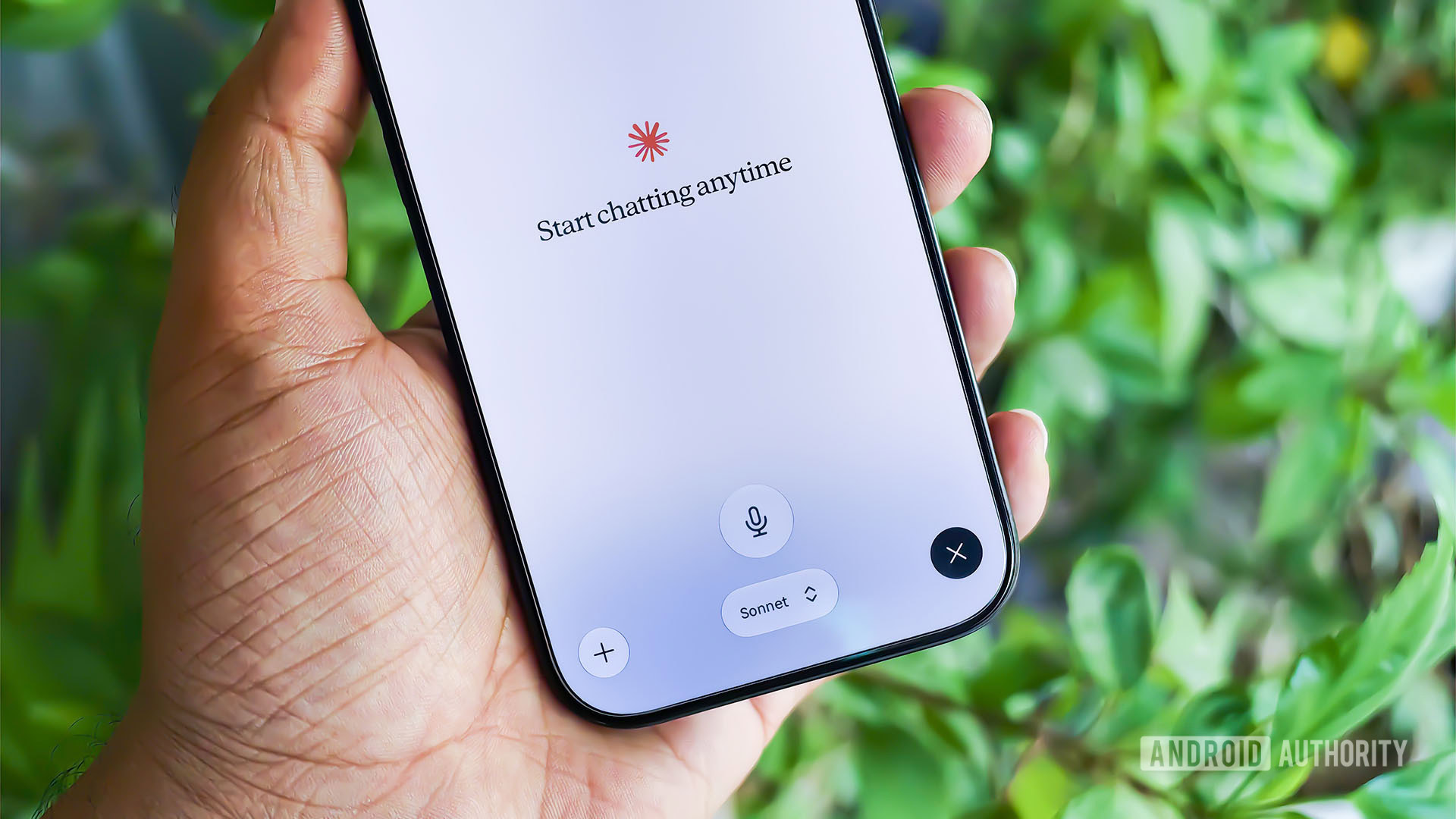
Anthropic, a leading artificial intelligence research company, has significantly enhanced its Claude AI chatbot’s voice mode, introducing a suite of upgrades designed to elevate user interaction and functionality. The latest advancements allow Claude’s voice capabilities to leverage its more sophisticated models, Claude Opus and Sonnet, in addition to the previously exclusive Haiku model. This integration promises more nuanced, extended, and complex conversational experiences for users. Furthermore, the enhanced voice mode now seamlessly connects with user-defined tools, enabling voice-activated actions across a range of integrated applications, marking a substantial leap forward in practical AI utility.
Evolution of Claude’s Voice Interface
The journey of Claude’s voice mode began with its initial launch last year, offering users an alternative to traditional text-based interactions. This was followed by the introduction of multilingual support in the preceding month, broadening its accessibility. The latest update, announced via an X (formerly Twitter) post from the official Claude AI account on July 29, 2024, represents a pivotal moment in the maturation of this feature. By enabling the use of Claude Opus and Sonnet, Anthropic is equipping its voice interface with the analytical power and comprehension capabilities of its most advanced large language models.
Historically, AI voice assistants have often been constrained by the processing power of the underlying models, sometimes leading to superficial responses or difficulties in handling intricate queries. The decision to integrate Opus and Sonnet into the voice mode directly addresses these limitations. Claude Opus, known for its superior reasoning and complex problem-solving abilities, and Sonnet, which offers a strong balance of performance and speed, are expected to translate into voice interactions that are not only more fluid but also capable of tackling more demanding tasks. This could range from in-depth research queries to detailed creative brainstorming sessions, all initiated and managed through spoken commands.
Enhanced Conversational Depth and Complexity
The strategic shift away from an exclusive reliance on the Haiku model for voice interactions is a significant development. While Haiku is optimized for speed and efficiency, Opus and Sonnet offer deeper cognitive functions. This means users can anticipate more comprehensive answers, longer and more coherent dialogues, and a greater capacity for Claude to understand context and nuance in their spoken input. For instance, a user might engage Claude in a lengthy discussion about a complex scientific topic, and with Opus or Sonnet powering the voice mode, Claude would be better equipped to maintain the thread of the conversation, offer detailed explanations, and even engage in critical analysis, all without the user needing to rephrase or simplify their queries.
This upgrade is particularly impactful for users who prefer an immersive, conversational approach to information retrieval and task completion. It moves Claude’s voice mode closer to a genuine dialogue partner rather than a simple command-response system. The implications for productivity, learning, and even creative exploration are substantial, as the barrier between thought and AI action is lowered through natural language.
Seamless Integration with Connected Tools
Perhaps the most transformative aspect of this update is the integration of connected tools within Claude’s voice mode. Users who have previously linked their Claude accounts with third-party applications such as Canva, calendar services, Notion, or Slack can now leverage these integrations using only their voice. This opens up a new frontier for AI-powered personal and professional assistance.
Imagine a scenario where a user is driving and needs to schedule a meeting. Instead of fumbling with their phone, they can simply ask Claude, "Schedule a meeting with John for next Tuesday at 10 AM to discuss the project proposal, and please add it to my Google Calendar." Claude, through its voice mode and connected calendar tool, could then confirm the details and add the event. Similarly, a user could dictate a draft for a new Notion document, request an image to be generated and added to a Canva design, or ask Claude to summarize recent Slack messages, all by speaking.
This functionality moves beyond simple information retrieval to active task execution. It positions Claude as a proactive assistant capable of managing and manipulating data across different platforms based on verbal instructions. This level of integration is a significant differentiator in the competitive AI landscape, where many voice assistants are still largely confined to their native ecosystems or offer limited third-party integration.
Real-World Application and Comparative Advantage
Early testing and anecdotal evidence suggest a tangible improvement in utility. One user reported interacting with Claude to check reminders. The AI not only identified a specific reminder to book movie tickets but also provided an overview of other pending tasks. This contrasts sharply with the experience of using ChatGPT’s voice mode for a similar task, which, according to the original report, merely offered instructions on how to check reminders on an iPhone, rather than directly accessing and relaying the information.
This difference highlights a key strategic advantage for Anthropic. By enabling direct interaction with user data and integrated applications via voice, Claude’s voice mode offers a more immediate and actionable experience. This is particularly valuable in scenarios where hands-free operation is crucial, such as during commutes, while cooking, or when engaged in physical activities. The ability to not just receive information but to act upon it through spoken commands is a significant step towards a more integrated and intuitive human-AI partnership.
Rollout and Accessibility
Anthropic has confirmed that these new voice mode capabilities are being rolled out across various platforms, including mobile applications, desktop interfaces, and the web version of Claude. Crucially, these enhancements are available to users on the free plan, signaling Anthropic’s commitment to making its advanced AI accessible to a broad audience.
However, the company has designated this rollout as a "public beta." This indicates that users might not immediately experience all the new features, and some functionalities may still be under refinement. This phased approach is common for major software updates, allowing developers to gather feedback and address any emergent issues before a full, stable release. Users who do not see the new capabilities right away are advised to be patient, as the rollout progresses.
Broader Implications for the AI Landscape
The strategic advancements in Claude’s voice mode have significant implications for the broader artificial intelligence industry.
Shifting User Expectations:
This update is likely to raise user expectations for voice-based AI interactions. As users become accustomed to more intelligent, context-aware, and action-oriented voice assistants, the baseline for what constitutes a useful voice interface will likely be recalibrated. Competitors may feel pressure to accelerate their own development in similar areas, particularly in deep tool integration and leveraging advanced LLMs for voice.
The Future of Human-AI Collaboration:
The seamless integration of voice with tool connectivity points towards a future where AI is not just a passive recipient of commands but an active collaborator. This could redefine how individuals manage their digital lives, moving towards a more fluid and less friction-filled interaction with technology. The ability to delegate complex tasks across multiple applications through natural conversation is a powerful paradigm shift.
Accessibility and Inclusivity:
By offering these advanced features on a free tier and focusing on natural language interaction, Anthropic is contributing to greater AI accessibility. Voice interfaces can be particularly beneficial for individuals with visual impairments or those who find typing cumbersome. The multilingual support further enhances global inclusivity.
The Arms Race for Conversational AI:
This move by Anthropic is another salvo in the ongoing competition to develop the most capable and user-friendly conversational AI. The emphasis on leveraging the most powerful LLMs for voice, combined with practical tool integration, sets a high bar. It suggests that the future of AI assistants will be characterized by not only linguistic fluency but also by their ability to understand intent and execute actions across a user’s digital ecosystem.
Data Privacy and Security Considerations:
As AI assistants become more deeply integrated with user data and applications, concerns around data privacy and security will inevitably grow. Anthropic’s approach to handling user data, especially when connecting to third-party tools, will be a critical factor in user trust and adoption. Transparent policies and robust security measures will be paramount.
In conclusion, Anthropic’s latest enhancements to Claude’s voice mode represent a significant evolution in conversational AI. By empowering its voice interface with more advanced language models and enabling seamless connectivity with external tools, the company is not only improving the user experience but also pushing the boundaries of what is possible with AI assistants. This development signals a clear direction for the future of human-AI interaction, one that is more intuitive, more powerful, and more integrated into our daily lives. The public beta phase will be crucial for refining these capabilities, but the trajectory suggests a future where our voices command an increasingly sophisticated digital world.