Lina Irawan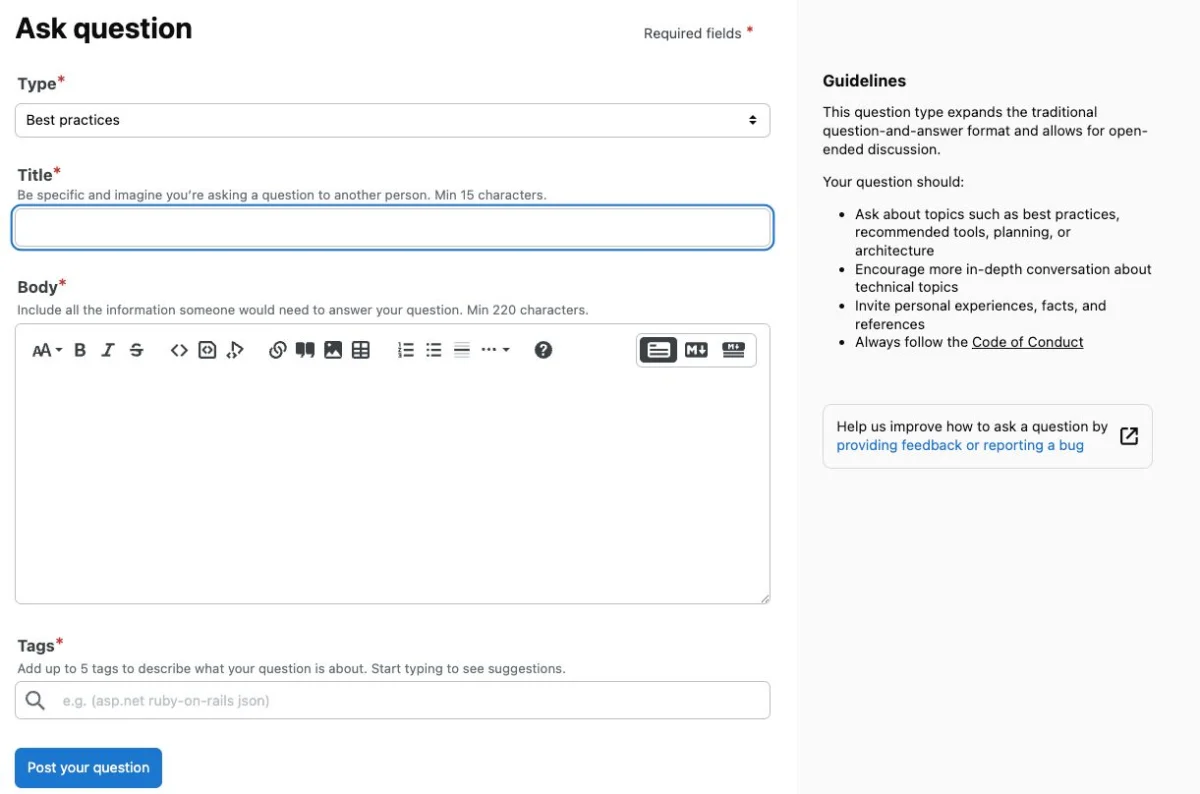
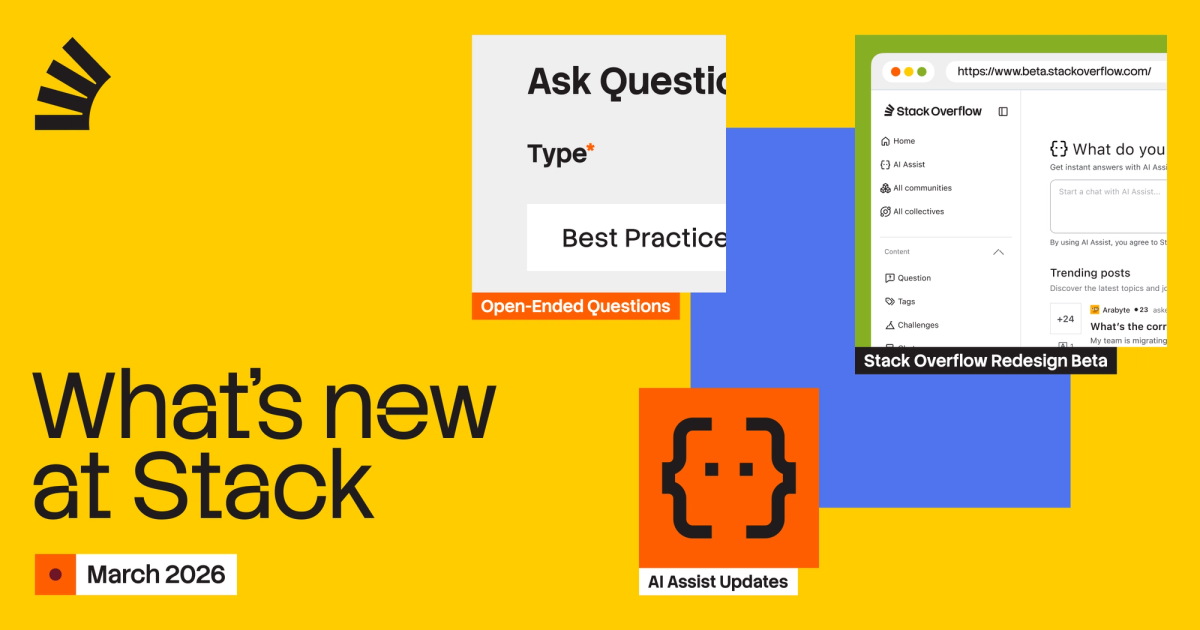
The global developer community is witnessing a fundamental shift in how technical knowledge is curated and shared following the March 2026 comprehensive update from Stack Overflow. This month’s developments represent one of the most significant architectural and philosophical pivots in the platform’s nearly two-decade history, marked by the release of a redesigned beta interface and the universal expansion of an experiment allowing for opinion-based questions. These changes aim to transition the site from a rigid repository of objective facts into a dynamic space for nuanced technical conversation, human-to-human connection, and AI-augmented troubleshooting.
The Redesigned Beta: A New Architecture for Technical Engagement
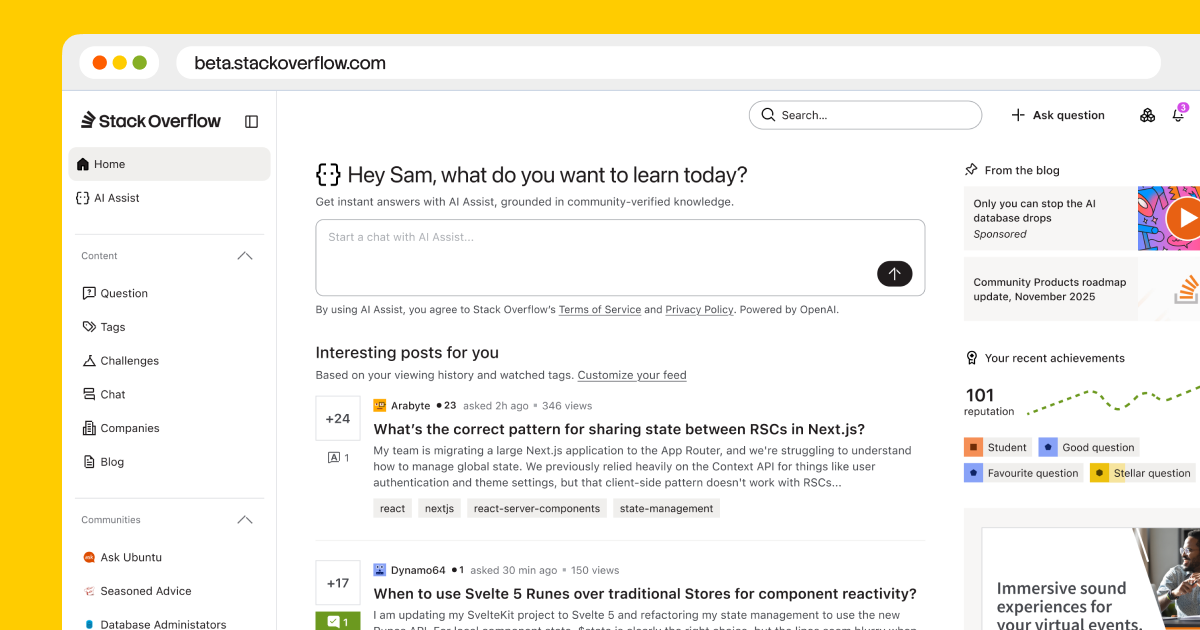
The centerpiece of the March update is the launch of the Stack Overflow Beta, a redesigned version of the site available at beta.stackoverflow.com. This new interface represents a departure from the "classic" look that has defined the site for years, focusing instead on a modernized "look and feel" designed to streamline how users engage with content and each other. The redesign is not merely aesthetic; it reflects a strategic move to accommodate the evolving ways in which developers consume information in an era dominated by rapid AI advancements and collaborative coding environments.
According to platform documentation, the primary goal of this redesign is to create a dedicated space for every technical conversation. This involves moving beyond the transactional nature of traditional Q&A and fostering a sense of community that prioritizes real human interaction. While AI is integrated into this new experience via the "AI Assist" tool, the platform emphasizes that artificial intelligence is intended to serve as a supportive layer rather than a replacement for human expertise.
The beta version introduces updated navigation patterns, refined content sharing mechanisms, and a more intuitive layout for creating questions and answers. Users currently have the option to toggle between the classic site and the beta experience, though developers have noted that most new features, particularly those related to AI Assist, are being optimized exclusively for the redesigned interface.
The Expansion of Opinion-Based Questions: Breaking a Decade of Tradition
In a move that challenges the long-standing "single right answer" dogma of the platform, Stack Overflow officially expanded its opinion-based questions experiment to all users on February 19, 2026. For years, the site’s moderation policies were famously strict, often resulting in the closure of questions deemed "subjective" or "opinion-based." The new policy acknowledges that modern technology stacks often require nuanced, experience-based recommendations rather than binary solutions.
The expansion allows all users to contribute questions and answers that include insights, peer perspectives, and experience-based recommendations. This change is designed to mirror how technologists actually work in professional environments, where the "best" solution often depends on specific constraints, legacy systems, or organizational culture. By welcoming a broader range of content types, Stack Overflow aims to lower the barrier to entry for new users who may have previously struggled with the site’s rigorous formatting requirements.
Industry analysts suggest that this shift is a direct response to the rise of Large Language Models (LLMs). While AI can provide syntactically correct code snippets, it often lacks the "wisdom of experience" that comes from developers who have managed systems at scale. By leaning into opinion-based content, Stack Overflow is doubling down on its unique value proposition: the collective, verified experience of human professionals.
AI Assist and the Integration of Generative Intelligence
The March recap also highlighted significant updates to AI Assist, the platform’s integrated generative AI tool. While specific technical specifications are detailed in the AI Assist changelog, the core of the update focuses on how the tool interacts with the new beta UI. Most of the recent enhancements—ranging from improved code summarization to more accurate context-aware suggestions—have been implemented specifically within the redesigned experience.
The platform’s strategy appears to be one of "Hybrid Intelligence," where AI assists in the drafting and refining of questions, but the final validation remains in the hands of the community. This approach seeks to mitigate the "hallucination" risks associated with standalone AI tools while leveraging the speed of generative models to help technologists find answers faster. Users are encouraged to report bugs and provide feedback via Qualtrics forms as the tool continues to evolve in the beta environment.
Community Incentives and the Custom Badge Rollout
Gamification has always been a pillar of Stack Overflow’s engagement strategy, and the latest updates introduce new ways to reward high-value contributions. As part of the "Community Asks Sprint," the platform rolled out four new custom badges specifically designed for the "Challenges" section of the site. These challenges represent a more interactive way for developers to test their skills and contribute to the community outside of the standard Q&A format.
The four new badges include:
- Coder: Awarded for successful participation in open challenges.
- Hacker: Reserved for those who provide winning entries in more complex, high-difficulty challenges.
- Virtuoso: A prestige badge for those who demonstrate exceptional mastery across multiple challenge categories.
- Creator: Awarded to users who author challenges, either through direct invitation by staff or by having their ideas selected from the "Challenges Sandbox."
This initiative aims to diversify the types of recognition users can receive, moving beyond reputation points to include badges that reflect creative problem-solving and community leadership.
The Populist Badge: Celebrating Knowledge Evolution
The March recap placed a special emphasis on the "Populist" badge, a prestigious honor that recognizes the dynamic nature of technical knowledge. The Populist badge is awarded to a user when their answer becomes the highest-scoring response on a question, outscoring an already "accepted" answer by more than double (provided the accepted answer has a score of at least 10).
In February 2026 alone, 21 community members earned this badge. The significance of the Populist badge lies in its role as a "correction mechanism" for the platform. As technologies evolve, the original "accepted" answer from five or ten years ago may no longer be the best or most secure solution. The Populist badge rewards users who take the time to provide modern, more efficient alternatives to legacy problems, ensuring that the Stack Overflow knowledge base remains current.
Chronology of the 2026 Q1 Transformation
The current state of the platform is the result of a deliberate timeline of releases and experiments:
- January 2026: The "Community Asks Sprint" begins, gathering feedback on site features and gamification needs.
- Early February 2026: The alpha phase of the opinion-based questions experiment begins with a limited user group.
- February 19, 2026: The opinion-based questions experiment is expanded to the entire global user base.
- February 25, 2026: Stack Overflow provides a "sneak peek" of the redesigned beta via its official blog.
- March 2026: Full beta access is granted to all users, and AI Assist updates are integrated into the new UI.
- Late March 2026: New custom badges for Challenges are fully implemented and awarded to the first cohort of winners.
Strategic Analysis and Future Implications
The shift toward a more conversational and subjective-friendly Stack Overflow marks a turning point for the developer community. For years, the platform’s reputation was built on being a "library of facts." However, as AI-driven search engines and coding assistants become the first stop for simple syntax questions, Stack Overflow is repositioning itself as a "forum of wisdom."
The inclusion of opinion-based questions is likely to increase the volume of traffic and engagement, but it also presents a significant moderation challenge. The platform will need to refine its guidelines and UI in the coming weeks to ensure that "opinion-based" does not translate to "low quality." We can expect to see further changes to the voting system and perhaps new categories of metadata to help users distinguish between a "fact-based fix" and an "architectural recommendation."
Furthermore, the focus on the "Populist" badge suggests that Stack Overflow is increasingly concerned with content decay. By incentivizing users to challenge accepted answers, the platform is attempting to automate the process of keeping information fresh—a task that is notoriously difficult for static documentation sites.
As the beta progresses, the developer community’s feedback will be the deciding factor in which features become permanent. The platform has made it clear that it is in a state of rapid iteration, with UI changes and guideline refinements expected to continue throughout the spring. For the millions of developers who rely on Stack Overflow, these changes represent a move toward a more inclusive, flexible, and human-centric future in technical problem-solving.