Clarissa Hana
An Illinois man has been sentenced to a significant prison term for his role in a widespread scheme to hack into the Snapchat accounts of hundreds of women, steal explicit images, and engage in the distribution of child sexual abuse material (CSAM). Kyle Svara, 26, was handed down a sentence of 76 months in prison, followed by three years of supervised release, by a federal court on Tuesday. The conviction stems from his admission to using sophisticated social engineering tactics to gain unauthorized access to the private accounts of over 750 women, a pattern of criminal activity that spanned nearly a year.
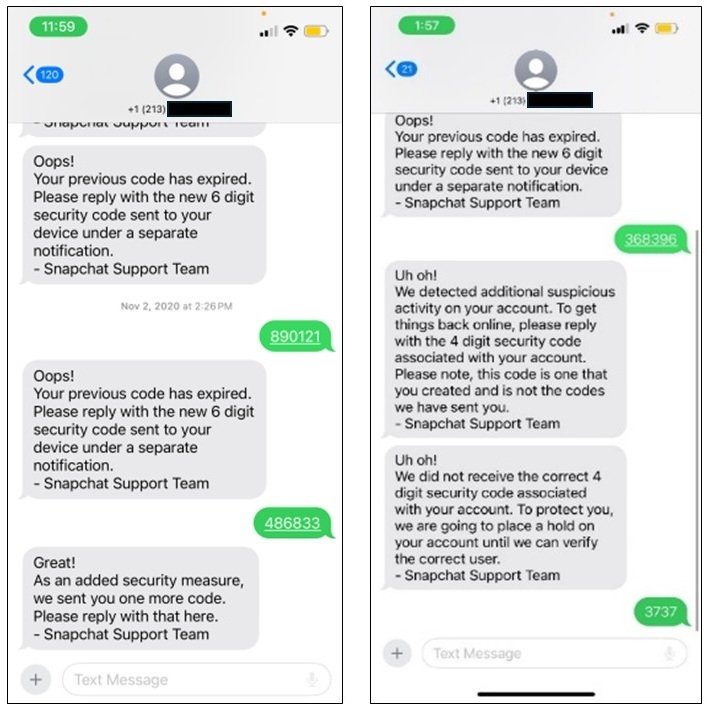
The case, which gained significant attention due to its invasion of privacy and the egregious nature of the secondary offenses, began to unfold when Svara was initially charged in December. By February, he had pleaded guilty to the charges, acknowledging his use of phishing techniques to pilfer Snapchat access codes. His operation, which ran from May 2020 to February 2021, targeted a staggering number of victims, exceeding 4,500 individuals. During this period, Svara impersonated a representative of Snap Inc., the parent company of Snapchat, and employed anonymized phone numbers to mask his identity and further his deceptive endeavors.
The Mechanics of the Breach: Social Engineering and Account Takeover
Svara’s modus operandi involved a calculated approach to social engineering, a method that preys on human psychology rather than technical vulnerabilities. By posing as an official representative of Snap Inc., he likely created a sense of legitimacy, coaxing unsuspecting users into divulging their login credentials. This could have involved creating fake login pages, sending phishing emails that mimicked official Snap Inc. communications, or directly contacting victims via phone, claiming to be from support or a verification department. The use of anonymized phone numbers would have further shielded him from immediate identification, making it more difficult for victims to trace the source of the fraudulent requests.

Once Svara successfully obtained a victim’s username and password, he proceeded to gain unauthorized access to their Snapchat accounts. Court documents revealed that he gained access to the accounts of approximately 517 women. The primary objective of these intrusions was to download nude or semi-nude photographs. In a particularly malicious act, Svara then proceeded to activate two-factor authentication (2FA) on these compromised accounts. This action served a dual purpose: it secured his continued access to the stolen content and, more devastatingly, locked the rightful owners out of their own accounts, preventing them from revoking access or securing their remaining data. This effectively trapped victims in a state of digital vulnerability, with their most private images now in the hands of an unknown perpetrator.
A Darker Dimension: CSAM Distribution and Deception
Beyond the invasion of privacy and the theft of intimate content, the investigation uncovered a far more disturbing aspect of Svara’s criminal enterprise. Investigators discovered that Svara was involved in the distribution of child sexual abuse material (CSAM). A search of his online storage account, identified as "Mega," revealed a substantial cache of illicit content, including approximately 530 images and 600 videos depicting CSAM. This discovery elevated the severity of his crimes significantly, placing him in the category of individuals who not only violate privacy but also contribute to the exploitation and abuse of children.
During initial interviews with investigators, Svara reportedly denied any knowledge of hacking Snapchat accounts and falsely claimed he had no interest in child pornography or had never actively sought or accessed CSAM. The Justice Department, in a February statement, highlighted the stark contradiction between his assertions and the evidence found. His subsequent plea and conviction directly refuted these denials, confirming his active participation in both the hacking scheme and the distribution of CSAM. This pattern of deception underscores a calculated effort to evade law enforcement and conceal the full extent of his illicit activities.
Online Services and a Network of Clients
The investigation also revealed that Svara actively advertised his illicit "services" online. He engaged in trading the stolen images and offered to "get into girls snap accounts," indicating a marketplace for his compromised data. Potential clients were instructed to reach out to him via Kik, an encrypted messaging app, which would have provided an additional layer of anonymity for both Svara and his customers. This suggests that Svara was not operating in isolation but was part of a network that facilitated and profited from the exploitation of personal data and the distribution of illegal content.

One notable client identified in the court documents is Steve Waithe, a former Northeastern University track and field coach. Waithe admitted to hiring Svara to hack the Snapchat accounts of students at Northeastern, specifically targeting members of the women’s track and field and soccer teams. Waithe’s involvement underscores how individuals in positions of authority can leverage such illicit services for nefarious purposes, further demonstrating the far-reaching consequences of Svara’s criminal enterprise. Waithe was subsequently sentenced in March 2024 to five years in prison for cyber fraud, cyberstalking, and sextortion, having been found guilty of targeting at least 128 women and stealing thousands of explicit photos from over 100 women.
A Pattern of Local and National Targets
Svara’s criminal activities were not confined to a specific geographic area or demographic. Beyond his large-scale phishing operations targeting women nationally, he also independently hacked into the accounts of numerous women in his local community of Plainfield, Illinois. This included individuals from his immediate social circle, such as neighbors, family friends, classmates, and even his own personal friends. Furthermore, his reach extended to students at Colby College in Waterville, Maine, indicating a broad and indiscriminate pattern of targeting. This personal targeting of individuals within his immediate sphere of influence highlights a particularly disturbing aspect of his behavior, suggesting a profound lack of empathy and a willingness to exploit even those closest to him.
Legal Ramifications and Broader Implications
The sentence handed down to Kyle Svara reflects the severity of his offenses, which encompass identity theft, wire fraud, and the distribution of CSAM. The 76-month prison sentence is a substantial penalty, intended to serve as a deterrent and to incapacitate him from further criminal activity. The three years of supervised release will ensure continued scrutiny of his actions upon his return to society.
This case serves as a stark reminder of the persistent threats posed by cybercriminals who exploit social engineering tactics and digital vulnerabilities. The ease with which Svara could impersonate a legitimate entity and trick victims into compromising their accounts highlights the ongoing need for robust cybersecurity education and awareness. Users are constantly reminded to be vigilant against phishing attempts, to use strong, unique passwords, and to enable two-factor authentication on all their online accounts. However, as Svara’s actions demonstrate, even with 2FA, determined attackers can find ways to circumvent security measures, especially when human factors are involved.
The inclusion of CSAM distribution in Svara’s criminal portfolio underscores the interconnectedness of various forms of online illicit activity. Perpetrators of privacy violations can often be involved in other, more heinous crimes. Law enforcement agencies continue to work collaboratively to combat these threats, employing advanced investigative techniques to track down individuals involved in online exploitation. The Justice Department’s pursuit of Svara and the subsequent conviction and sentencing demonstrate a commitment to holding those who engage in these offenses accountable for their actions.
The Evolving Landscape of Cybercrime
The Snapchat hacking case involving Kyle Svara is part of a broader trend of cybercrime that continues to evolve in sophistication and impact. As social media platforms become more integrated into daily life, the personal data and intimate content shared on them become increasingly attractive targets for malicious actors. The methods employed by Svara, while seemingly straightforward in retrospect, highlight the effectiveness of exploiting human trust and the inherent security challenges in maintaining privacy in the digital age.
The fact that Svara was able to trade and sell stolen images, and even advertise his hacking services, points to a hidden economy of illicit data. This underground market fuels further criminal activity and makes it challenging for law enforcement to dismantle these networks entirely. The use of encrypted messaging apps like Kik further complicates these investigations, providing a veil of secrecy for both the perpetrators and their clients.
Ultimately, the conviction of Kyle Svara is a significant victory for law enforcement and a measure of justice for his victims. However, it also serves as a critical lesson for individuals and organizations alike, reinforcing the importance of cybersecurity vigilance, ethical online behavior, and the ongoing need for robust legal frameworks to address the ever-evolving challenges of cybercrime. The battle against those who seek to exploit and harm others through digital means remains a continuous and complex undertaking.